Jazz Crazy Records

An Archive of Early Jazz on 78 RPM

Category: Uncategorized

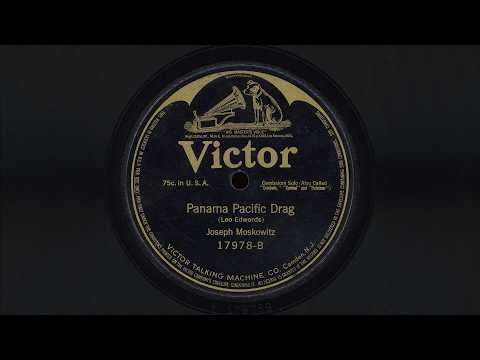
  • “Panama Pacific Drag” – Joseph Moskowitz (1916)

    “Panama Pacific Drag” – Joseph Moskowitz (1916)

    A ragtime composition performed on a unique instrument: The cimbalom: a large concert-sized dulcimer with metal strings played by striking two mallets against the strings.

    Romanian-born Joseph Moskowitz was from a family of klezmer musicians. He emigrated from Romania to the US, arriving in New York City with 17 cents in his pocket. He began finding work as a musician while also running a small restaurant on the lower east side of Manhattan.

    He recorded around 30 sides for Victor in 1916-17. This record (with “Operatic Rag” on the flip side) was his only ragtime recording. He recorded again for Brunswick in 1928.

    This lively tune shows the novel influence of ragtime music on performers of other musical genres. It also showcases Moskowitz’ ability to adapt his playing style to emulate the sound of a ragtime piano.

    Recorded in New York City on February 4, 1916.
    Released as Victor 17978

    Credits:
    Joseph Moskowitz – Cimbalom
    Edward T. King – piano

    Sources:
    https://www.josephmoskowitz.org/
    https://adp.library.ucsb.edu/index.php/mastertalent/detail/116680/Moskowitz_Joseph
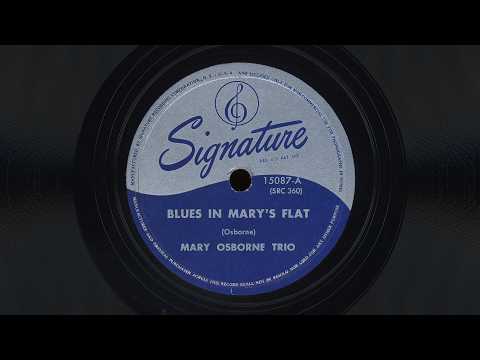
  • “Blues in Mary’s Flat” – Mary Osborne Trio (1946)

    “Blues in Mary’s Flat” – Mary Osborne Trio (1946)

    Another barn burner from jazz guitarist Mary Osborne and her trio. A blues in name only – you will feel anything but once Osborne’s boppy licks scorch any semblance of blues from your visage.

    A performance of this tune with an accompanying interpretative dance was recorded on film for the “Soundies” series that is worth a watch:
    https://www.youtube.com/watch?v=RgMZPmfGxOk

    Released as Signature 15087 in May, 1947.

    Credits:
    Mary Osborne – guitar
    Sanford Gold – piano
    “Frenchy” Cavette – bass

  • Drive-in Theater Promo – “10 Minutes to Showtime” – KELO Radio, Sioux Falls, South Dakota

    Drive-in Theater Promo – “10 Minutes to Showtime” – KELO Radio, Sioux Falls, South Dakota

    A promo – probably for a local drive-in movie theater – recorded by radio station KELO in Sioux Falls, South Dakota.

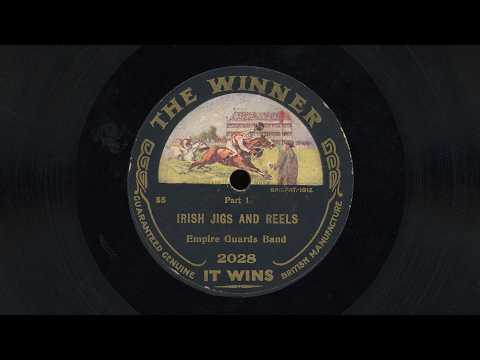
  • “Irish Jigs and Reels” Parts 1 + 2 –  Empire Guards Band (1912) ☘️

    “Irish Jigs and Reels” Parts 1 + 2 – Empire Guards Band (1912) ☘️

    Happy St. Patrick’s Day! ☘️

    Can’t remember how this British disc early in The Winner label’s catalog made it into the collection – probably part of a larger lot. I tend to hold on to interesting discs like this. Reminds me a bit of something the EMGColonel might play (R.I.P.).

    I’d dedicate it to my dear departed grandmother, Kathryn Rooney, but she likely would have disapproved of such cantankerous carrying on. She once sang in the choir for Pope John Paul II when he visited Des Moines in 1979. I recently found out my grandfather converted to Catholicism to marry her, so that gives you an idea of the radiant power of an Irish lass.

    Me, I love the whooping and hollering during the tune. These fellas were having a grand time while recording this one!

    Released as The Winner 2028 circa 1912 – at the twilight of the Edwardian era and the eve of the Great War.

    In any case, this one is suitable for playing on loop at St. Patrick’s Day dance parties.

    Slán go fóill!

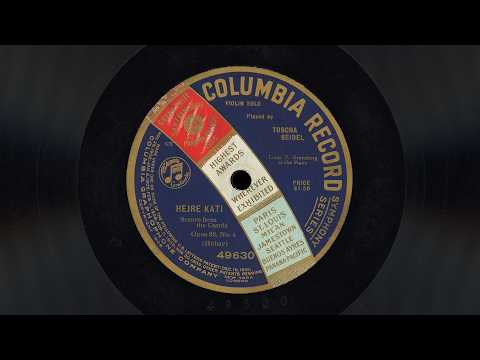
  • “Hejre Kati” – Toscha Seidel (1919)

    “Hejre Kati” – Toscha Seidel (1919)

    Hungarian violinist and composer Jenö Hubay composed “Hejre Kati” (literally “Hey, Katie”) in the 1880s. Here we have an early recording of the composition on a one-sided 12″ Columbia disc performed by Violinist Toscha Seidel in 1919.

    Lest you think me mad for the inclusion of this classical recording on the channel, stay with me, dear reader, as I shall connect it in short order to the realm of jazz.

    But first, listen, and appreciate this record, whose first 70 seconds begin with long flowing lyrical bowing before picking up to a sprightly pace.

    You see, the composer, Mr. Hubay, was still teaching in Budapest when American jazz violinist Eddie South was touring Europe from 1928 – 1931.

    For the rest of the story – watch my next video at:
    https://youtu.be/RhORBC_ztmo

    Recorded in New York City on May 7, 1919.
    Released as Columbia 49630.

    Credits:
    Toscha Seidel – violin
    Louis Gruenberg – piano

    Sources:
    https://adp.library.ucsb.edu/index.php/matrix/detail/2000143993/49630-Scenes_from_the_csarda

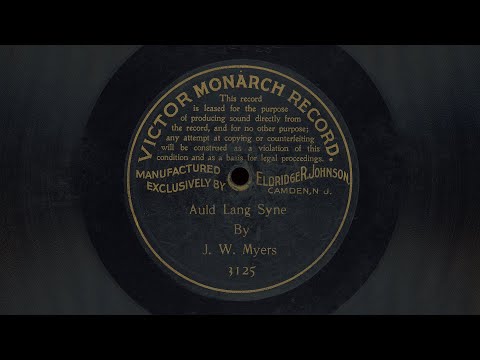
  • “Auld Lang Syne” – J.W. Myers (1901) Happy New Year! 🥂🍾 🎶

    “Auld Lang Syne” – J.W. Myers (1901) Happy New Year! 🥂🍾 🎶

    One of the oldest records in my collection – shared with you, my friends, on New Year’s Eve 2025.

    Happy New Year! 🥂🍾 🎶

    Recorded in Camden, New Jersey on February 20, 1901.
    Released as Victor Monarch 3125.

    Credits:
    J. W. Myers – baritone vocals
    Unknown artist – piano accompaniment

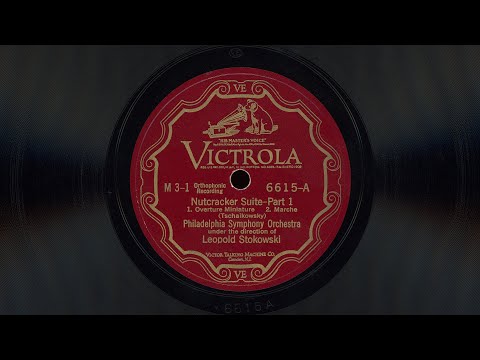
  • Nutcracker Suite – Philadelphia Symphony Orchestra w/ Leopold Stokowski (1926)

    Nutcracker Suite – Philadelphia Symphony Orchestra w/ Leopold Stokowski (1926)

    Ok – an ambitious and uncharacteristically unjazzy choice today – a little Christmas music from my man Tschaikowsky, who I first heard about after hearing Duke Ellington and Billy Strayhorn’s Nutcracker Suite 😉.

    While there were earlier recordings of selected passages from the Nutcracker ballet, this 1926 recording spanning three 12″ discs includes about 20 minutes of the score. It is one of the first multi-record album sets of the ballet to be issued to my knowledge.

    Also, it appears to have been recorded electrically – so also is a very early – perhaps the first – electrical recording of the music of the Nutcracker.

    A few jazzier holiday tunes to come this week – right up until Xmas.

    Recorded in Philadelphia, Pennsylvania on November 10, 1926.
    Released as a three disc album, Victrola M-3 (individual catalog numbers 6615, 6616, and 6617).

    Credits:
    Conductor: Leopold Stokowski
    Orchestra: Philadelphia Symphony Orchestra

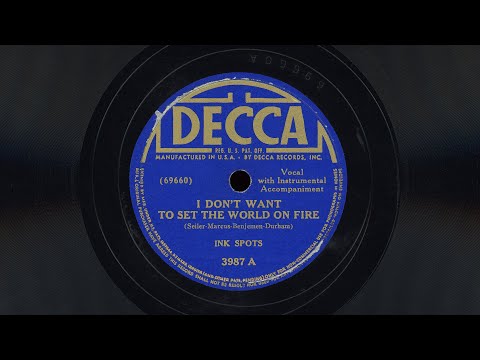
  • “I Don’t Want to set the World on Fire” – Ink Spots – ORIGINAL 78 rpm Version (1941)

    “I Don’t Want to set the World on Fire” – Ink Spots – ORIGINAL 78 rpm Version (1941)

    The Ink Spots were a massively popular vocal-driven quartet who got their start in Indiana and Ohio in the early 1930s. By the early 40s, they had sold millions of records and if you collect 78s, there seems to be at least one Ink Spots record in every collection.

    This song from 1941 has enjoyed quite a resurgence of interest over the past decade – especially from younger fans. It was included in the Fallout video game series and was featured in Fallout 3, Fallout New Vegas, Fallout 4, and Fallout 76 – as well as serving as the theme song to the Fallout television show.

    As a result, this record has become quite sought-after by a younger audience, which I think is wonderful way to introduce them to the music of the 78 rpm era.

    Thus, in a shameless attempt to gain younger viewers to the channel, I am posting a transfer of my copy – and am starting a new playlist of 78s used in movies and video games.

    Lyrics:
    I don’t want to set the world on fire
    I just want to start a flame in your heart
    In my heart I have but one desire
    And that one is you – no other will do

    I’ve lost all ambition for worldly acclaim
    I just want to be the one you love
    And with your admission that you feel the same
    I’ll have reached the goal I’m dreaming of, believe me!

    I don’t want to set the world on fire
    I just want to start a flame in your heart

    Recorded in New York City on August 27, 1941.
    Released as Decca 3987.

    Credits
    Bill Kenny – lead tenor vocals
    Charlie Fuqua – baritone vocals, guitar
    Deek Watson – tenor vocals, tenor guitar
    Orville Jones – bass vocals, cello

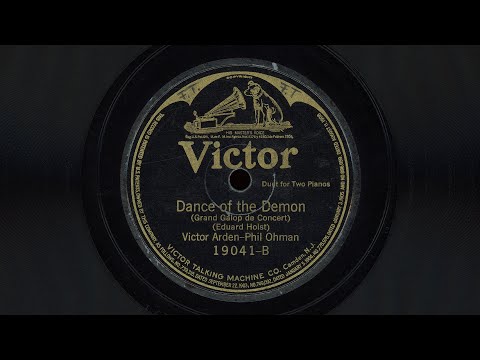
  • “Dance of the Demon” – Victor Arden Phil Ohman (1922)

    “Dance of the Demon” – Victor Arden Phil Ohman (1922)

    Adding a few spooky-themed records to my 78 rpm Halloween playlist today:
    https://www.youtube.com/playlist?list=PLSwGgF5a3aa_-7YmPtE_8PS6hY96fGhEP

    Victor Arden was born in Winona, IL in 1903 and attended the American Conservatory of Music before moving to NYC after WWI to make piano rolls and record with the All Star Trio and Green Brothers.

    Phil Ohman was born in New Britain, Connecticut in 1896 and was also working in NYC recording with Harry Yerkes, the Happy Six and the Paul Whiteman orchestra. He even pulled together his own dance orchestra to record a few sides for Edison in 1921-22.

    Arden and Ohman began playing together in 1921 and collaborated musically until the mid 30s. Both went on to have successful careers directing studio orchestras for radio and film.

    Here, they perform “Dance of The Demon” (Grand Galop de Concert) by Eduard Holst, composed in 1888. A lively duet!

    Recorded in Camden, New Jersey on December 5, 1922.
    Released as Victor 19041.

    Credits:
    Victor Arden, Phil Ohman – piano

    Sources:
    The Complete Encyclopedia of Popular Music and Jazz 1900-1950, Roger D. Kinkle
    The American Dance Band Discography 1917-1942, Brian Rust

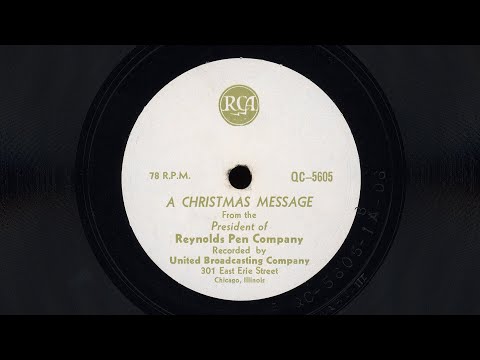
  • A Christmas Message from the President of Reynolds Pen Company f/ Georgie Price

    A Christmas Message from the President of Reynolds Pen Company f/ Georgie Price

    And now a word from our sponsors…

    But seriously – it’s kind of amazing that at one time, the ball point pen – considered nothing short of “miraculous” when it first came out – was one of the hottest new technologies you could buy. Invented by Hungarian László Bíró in 1944, it was very quickly reverse-engineered by Chicago businessman Milton Reynolds and offered for sale in the U.S. within months.

    According to the Reynolds website:
    “The first Reynolds pen debuted in New York on the morning of October 29, 1945. The day the pen went on sale, an estimated 5,000 shoppers stormed the shop, and approximately 50 NYPD officers had to be dispatched for crowd control.”

    Time magazine reported that Gimbels in NYC sold 30,000 of the pens (which went for $12.50 each) in the first week.

    While most Americans will be hard pressed to find a Reynolds pen to buy, the company is still in existence and is prospering in India.

    On this record you hear the voice of Franklin Lamb, President of Reynolds Pen Company. Before he joined Reynolds, Lamb worked as the Advertising Director of Gimbel’s department store. He left Reynolds in 1949, so that helps to date this record to some Christmas between 1946 and 1948.

    In this promotional disc, Lamb excitedly tells Reynolds’ retailers about a new promotional initiative that he has cooked up to promote Reynolds Pens – a radio show featuring singer Georgie Price, who by that point had been retired from the entertainment industry and working at a brokerage firm.