Jazz Crazy Records

An Archive of Early Jazz on 78 RPM

Tag: Duke Ellington and his Cotton Club Orchestra

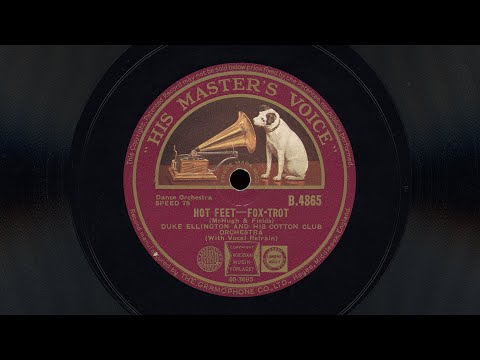
  • “Hot Feet” – Duke Ellington and his Cotton Club Orchestra (1929)

    “Hot Feet” – Duke Ellington and his Cotton Club Orchestra (1929)

    The scat vocals of Clarence Williams on “Candy Lips” I posted yesterday reminded me of a few other scatted choruses in early jazz – and when I put this record on I thought it made a nice companion piece to yesterday’s upload.

    This time, it is trumpeter Cootie Williams doing the vocalizing. Charles Melvin Williams had just joined the Ellington outfit a few weeks earlier, replacing the great growler Bubber Miley.

    The title of this one could refer to the Hot Feet Club – a downtown speakeasy in Greenwich Village that featured many black jazz and blues performers from 1928-1933.

    Recorded in New York City on March 7, 1929.
    Originally released as Victor V-38065.
    Released in the U.K. as His Master’s Voice B.4865.

    Credits:
    Duke Ellington – piano, arranger, director
    Cootie Williams, trumpet, vocals
    Arthur Whetsel, Freddy Jenkins – trumpet
    Joe Nanton – trombone
    Johnny Hodges – clarinet, soprano sax, alto sax
    Harry Carney – clarinet, alto sax, baritone sax
    Barney Bigard – clarinet, tenor sax
    Fred Guy – banjo
    Wellman Braud – string bass
    Sonny Greer – drums
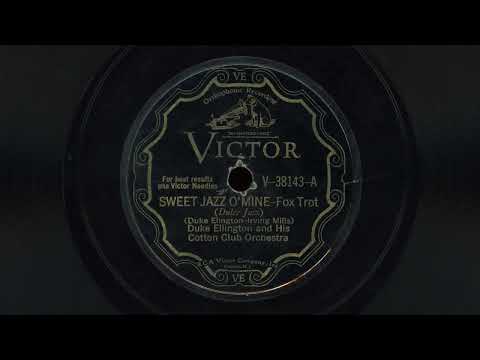
  • “Sweet Jazz O’Mine” – Duke Ellington and His Cotton Club Orchestra (1930)

    “Sweet Jazz O’Mine” – Duke Ellington and His Cotton Club Orchestra (1930)

    One of four excellent sides recorded by Ellington at a Victor session in June of 1930. It starts off on a tear – with the reeds and trumpets exchanging riffs before being calmed down by Duke’s piano at 0:52. This creates an opening for a silky clarinet entrance that leads to a dreamy sequence before heading into a proto-swing ending.

    Take 1
    Recorded in New York City on June 4, 1930.
    Released as Victor V-38143.

    Credits:
    Duke Ellington – piano, arranger, director
    Arthur Whetsel, Freddy Jenkins, Cootie Williams – trumpet
    Joe Nanton – trombone
    Juan Tizol – valve trombone
    Johnny Hodges – clarinet, soprano sax, alto sax
    Harry Carney – clarinet, alto sax, baritone sax
    Barney Bigard – clarinet, tenor sax
    Fred Guy – banjo
    Wellman Braud – string bass
    Sonny Greer – drums
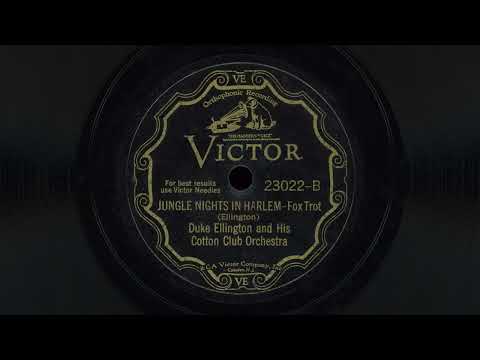
    If you’re interested in the other sides recorded on this same day, here is one other I’ve made transfers of:
    “Jungle Nights in Harlem” – Victor 23022
    https://youtu.be/_7Sjz3dOzYs

  • “Jungle Nights in Harlem” – Duke Ellington and his Cotton Club Orchestra (1930)

    “Jungle Nights in Harlem” – Duke Ellington and his Cotton Club Orchestra (1930)

    Recorded in Hollywood, California on June 4, 1930.
    Released as Victor 23022.

    Credits:
    Duke Ellington – piano, arranger, director
    Cootie Williams, Arthur Whetsel, Freddy Jenkins – trumpet
    Joe Nanton – trombone
    Juan Tizol – valve trombone
    Johnny Hodges – clarinet, soprano sax, alto sax
    Harry Carney – clarinet, alto sax, baritone sax
    Barney Bigard – clarinet, tenor sax
    Fred Guy – banjo
    Wellman Braud – bass
    Sonny Greer – drums

  • “Black Beauty” – Duke Ellington and his Cotton Club Orchestra (1928)

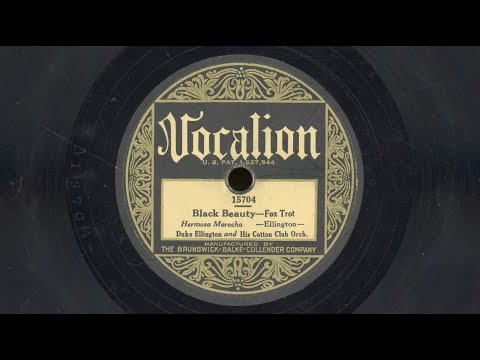
    “Black Beauty” – Duke Ellington and his Cotton Club Orchestra (1928)

    “Black Beauty” began as a tune with the working title “Firewater” that Ellington would play at the Cotton Club after an intermission. As he arranged the composition for his orchestra, he changed the title to “Black Beauty”, in tribute to “Queen of Happiness” Florence Mills, a singer, dancer, and comedian who died unexpectedly at a very young age in 1927. Mills was revered as an entertainer for her performances in Shuffle Along, Dixie to Broadway, Lew Leslie’s Blackbirds of 1926 and 1927, and many other productions.

    This is the first recording of the tune at an early 1928 session for Brunswick and is notable for the absence of Bubber Miley, whose growling trumpet was a calling card for the band. It also includes a piano solo by Duke himself.

    Ellington would re-record this tune for Victor a week later with Miley – and then again for Okeh in October arranged for solo piano. It remained in his repertoire throughout his life

    Recorded on in New York City on March 21, 1928.
    Released as Vocalion 15704 and Brunswick 4009.

    Duke Ellington – piano, arranger, director
    Arthur Whetsel, Louis Metcalf – trumpet
    Joe Nanton – trombone
    Otto Hardwick – soprano sax, alto sax, baritone sax, bass sax
    Harry Carney – clarinet, alto sax, baritone sax
    Barney Bigard – clarinet, tenor sax
    Fred Guy – banjo
    Wellman Braud – string bass
    Sonny Greer – drums
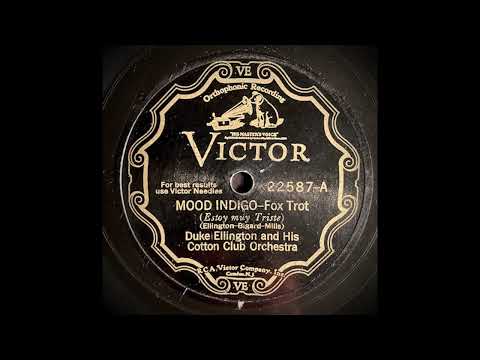
  • “Mood Indigo” – Duke Ellington and his Cotton Club Orchestra (1930)

    “Mood Indigo” – Duke Ellington and his Cotton Club Orchestra (1930)

    A remarkable tune that changed jazz forever – “Mood Indigo” by Duke Ellington and his Cotton Club Orchestra. Originally titled “Dreamy Blues”, it is a composition that makes a radical shift from the hot jazz idiom – evoking a serene melancholy with gentle wistful solos. A key moment in American music.

    This Victor release was not the first recording of the tune – in fact, it was the seventh recording (though three of the others were never issued on 78 rpm). Earlier versions were recorded on Brunswick (10/17), Okeh (10/30) and Victor (11/21 – though this take did not get released until much later on an Ellington RCA Victor album set).

    Recorded in New York on December 10, 1930.
    Released on Victor (22587, 24486, 44-0010) and HMV (B-4842, B-6354, EA-989, HN-207, K-6153)

    Credits:
    Duke Ellington – piano, arranger, director
    Arthur Whetsel, Freddy Jenkins, Cootie Williams – trumpet
    Joe Nanton – trombone
    Juan Tizol – valve trombone
    Johnny Hodges – clarinet, alto sax, soprano sax
    Harry Carney – clarinet, alto sax, baritone sax
    Barney Bigard – clarinet, tenor sax
    Fred Guy – banjo
    Wellman Braud – string bass
    Sonny Greer – drums