Jazz Crazy Records

An Archive of Early Jazz on 78 RPM

Tag: Ford Dabney’s Syncopated Orchestra

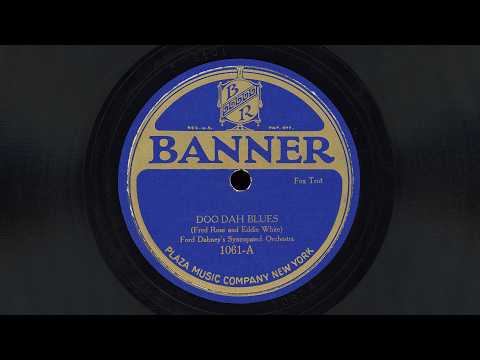
  • “Doo Dah Blues” – Ford Dabney’s Syncopated Orchestra (1922)

    “Doo Dah Blues” – Ford Dabney’s Syncopated Orchestra (1922)

    The last recording session of Ford Dabney’s band in 1922.

    A relatively straightforward blues tune delivered with raggy pep and a very enthusiastic tuba player.

    Recorded in New York City circa May 1922.
    Released as Paramount 20120, Puritan/Triangle 11122, and Banner 1061

    Credits:
    Ford Dabney – piano, director
    Pike Davis, Wesley Johnson – trumpet
    John Reeves – trombone
    Herschel Brassfield – clarinet, alto sax
    Casey Cooper or Willie Carroll – violin
    Mose Ross – drums
    Unknown artists – tenor sax, banjo, tuba
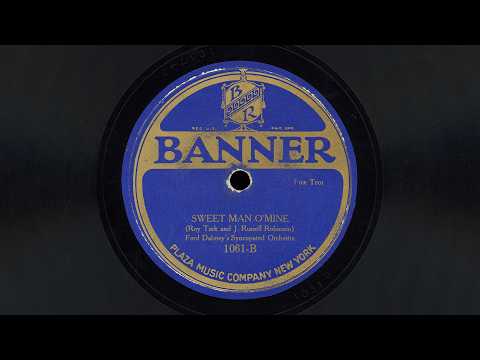
  • “Sweet Man O’Mine” – Ford Dabney’s Syncopated Orchestra (1922)

    “Sweet Man O’Mine” – Ford Dabney’s Syncopated Orchestra (1922)

    The second-to-last recording session of Ford Dabney’s band in 1922.

    Didn’t see a transfer of this one on YouTube yet – it’s a peppy lil’ number with some raggy edges and interesting instrumental breaks throughout.

    Recorded in New York City circa March 1922.
    Matrix 1017 Take 2
    Released as Paramount 20120, Puritan 11120 & 11121, Triangle 11121, Regal 9308, Famous 3114, Claxtonola 40120, and Banner 1061

    Credits:
    Ford Dabney – piano, director
    Pike Davis, Wesley Johnson – trumpet
    John Reeves – trombone
    Herschel Brassfield – clarinet, alto sax
    Casey Cooper or Willie Carroll – violin
    Mose Ross – drums
    Unknown artists – tenor sax, banjo, tuba
    Source:
    Jazz and Ragtime Records (1897-1942), 6th Ed, Brian Rust
    Ralph Wondraschek

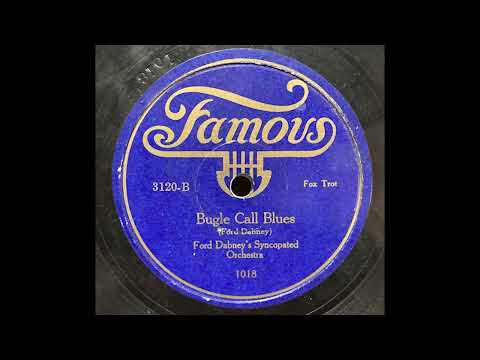
  • “Bugle Call Blues” – Ford Dabney’s Syncopated Orchestra (1922)

    “Bugle Call Blues” – Ford Dabney’s Syncopated Orchestra (1922)

    Ford Dabney was a ragtime pianist and composer known for his original compositions (“Haytian Rag”, “That’s Why They Call Me Shine”, “The Georgia Grind”) and his collaborations with James Reese Europe (such as “The Castle Walk”).

    Ford Dabney’s Syncopated Orchestra began recording jazz in 1917 on the Aeolian-Vocalion label and recorded over 50 sides betwen 1917 and 1919.

    Following the death of his friend and collaborator James Reese Europe in 1919, Dabney’s recorded output slowed to only three sides in 1920 and stopped altogether in 1921.

    This record (Famous 3120) was recorded in March of 1922 in New York City and was also released as Paramount 20120, Triangle 11124, and Puritan 11125.