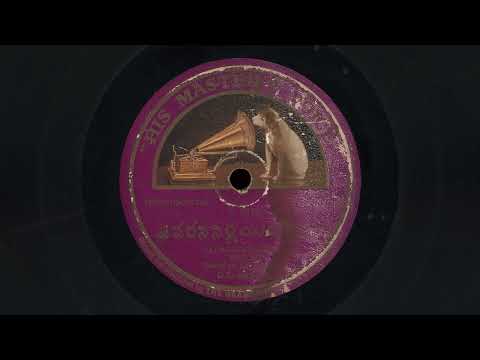
This is the other side of the Nagaraja Rao record of Carnatic flute I posted earlier today.
The title (if I have it correctly) ఎవరనినిర్ణయింఛదూ translates to “Who Can Decide?” or “Who Can Judge?”
This side features the Nadachintamani rāgam – which is said to be similar to the Hungarian minor scale in Western music.
Recorded in Bangalore, India, c. September 1912 by engineer Max Hampe. Originally released as Gramophone Concert Record G.C.-8-18916 (Matrix H 11268 R) Reissued as His Master’s Voice P. 2312 in the 1920s.
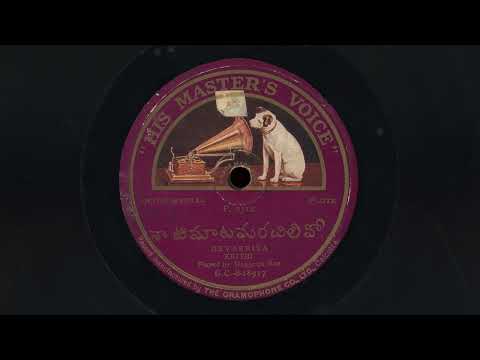
Let’s all take a breath together. Tomorrow is election day in the U.S. and this soothing and melodious Devakriya raag recorded over a century ago seems just the right music to center ourselves after a long and divisive year in American politics.
The flute of Nagaraja Rao is played beautifully – evoking serenity – in this Krithi composition of the Carnatic musical tradition of Southern India. It is not know which section of the Krithi we are hearing.
The title (if I have it correctly) నాటిమాటమరచిలివో translates to “Forget the Words of the Past” or “Let Go of Past Words.”
The Devakriya raag is also known as Shuddha Saveri, comprised of five notes (swaras). It is curious to Western ears (and particularly to jazz ears) as there is no minor or major third or minor or major seventh in the scale – only a second, a fourth, a fifth, and a sixth – so it has a kind of suspended 4th or sixth chord sound. As a guitarist who is learning jazz, the 3rd and the 7th are everything in jazz harmony. A scale that omits these notes is introduces a kind of harmonic uncertainty that is refreshing to hear as your ears adapt to its tonal language.
Recorded in Bangalore, India, c. September 1912 by engineer Max Hampe. Originally released as Gramophone Concert Record G.C.-8-18917 (Matrix H 11268 R) Reissued as His Master’s Voice P. 2312 in the 1920s.