Jazz Crazy Records

An Archive of Early Jazz on 78 RPM

Author: Professor M

  • “Midnight Rhythm” – Washboard Rhythm Band (1933)

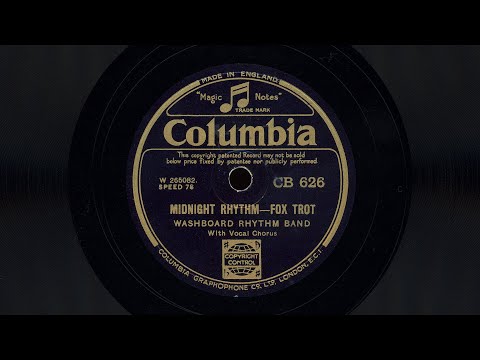
    “Midnight Rhythm” – Washboard Rhythm Band (1933)

    An oddball Columbia session for the Washboard Rhythm Kings – who usually recorded for Victor or Vocalion. Odder still – of the eight tunes recorded, only two were released domestically in the U.S. on Columbia’s 14000 series. Four sides, including this one, were only released in the U.K.

    This actually was the first WRK recording I ever heard – It came up on a Spotify playlist 8-9 years ago and I immediately began looking for other recordings by this group. It was the beginning of a long obsession!

    The main theme is relatively straightforward and the solos are all good – but honestly, it was the infectious energized vocal performance by Taft Jordan that won me over. While some feel he was doing his level best to deliver an impression of a Louis Armstrong vocal performance, I feel he adds his own character and spirit to it that makes it his own. I love his vocalized trombone-like slides into the lower register at the end of each line.

    I’m not sure as to the rarity of this one overseas, but this deep depression cut was not easy to find here in the U.S. – Not many come up for sale and I feel quite lucky to have this nice copy. Enjoy!

    Fun fact: Taft Jordan went on to have a long career in jazz – in 1959 he played trumpet on Miles Davis’ Sketches of Spain!

    Recorded in New York City on March 8, 1933.
    Released in the U.K. as Columbia CB 626 and in France as Columbia DF 1303.

    Credits
    Taft Jordan – trumpet, vocals
    Ben Smith – clarinet, alto sax
    Carl Wade – tenor sax
    Steve Washington – banjo, guitar
    John “Shorty” Haughton (?) – trombone
    Jerome Carrington (?) – alto sax
    Clarence Profit (?) – piano
    Unknown Artist – washboard
  • “Passion Flower” – Johnny Hodges and Orchestra (1941)

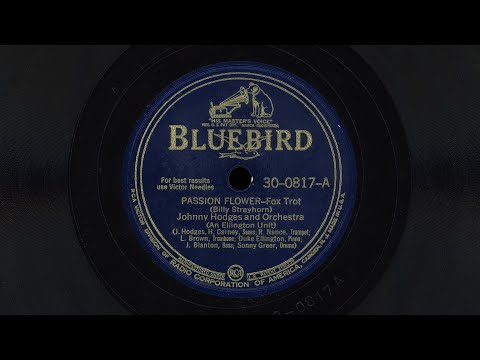
    “Passion Flower” – Johnny Hodges and Orchestra (1941)

    I was reading an old “Blindfold Test” interview with Charlie Parker from an old issue of Down Beat. For those unfamiliar, the Down Beat Blindfold Test was when an artist would come in and listen to a series of records – then give their unvarnished thoughts on each; sometimes trying to guess the players, other times just commenting on the arrangement or the playing itself.

    Bird was played this record at the end of the interview. The interviewer (Leonard Feather) noted that Parker’s face lit up in a beatific grin as he recognized the soloist. “That was Duke—featuring Johnny Lily Pons Hodges! I always took off my had to Johnny Hodges ’cause he can sing with the horn. Oh, he’s a beautiful person. That record deserves all the stars you can muster.”

    With Bird’s waxing rhapsodic about this record, I had to go pull this one off the shelf to give it a fresh listen. A beautiful Billy Strayhorn arrangement that begins with Duke at the keys. A lovely number, indeed. Hodges’ tone is pure and clear throughout – his timing impeccably lyrical.

    Recorded in Hollywood, California on July 3, 1941.
    Released as Bluebird 30-0817.

    Credits:
    Ray Nance – trumpet
    Lawrence Brown – trombone
    Johnny Hodges – soprano sax, alto sax
    Harry Carney – baritone sax
    Duke Ellington – piano
    Jimmy Blanton – string bass
    Sonny Greer – drums
    Billy Strayhorn – arrangement

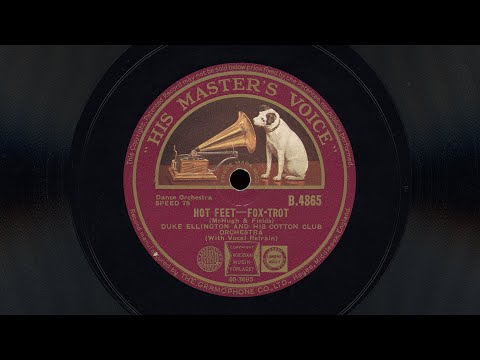
  • “Hot Feet” – Duke Ellington and his Cotton Club Orchestra (1929)

    “Hot Feet” – Duke Ellington and his Cotton Club Orchestra (1929)

    The scat vocals of Clarence Williams on “Candy Lips” I posted yesterday reminded me of a few other scatted choruses in early jazz – and when I put this record on I thought it made a nice companion piece to yesterday’s upload.

    This time, it is trumpeter Cootie Williams doing the vocalizing. Charles Melvin Williams had just joined the Ellington outfit a few weeks earlier, replacing the great growler Bubber Miley.

    The title of this one could refer to the Hot Feet Club – a downtown speakeasy in Greenwich Village that featured many black jazz and blues performers from 1928-1933.

    Recorded in New York City on March 7, 1929.
    Originally released as Victor V-38065.
    Released in the U.K. as His Master’s Voice B.4865.

    Credits:
    Duke Ellington – piano, arranger, director
    Cootie Williams, trumpet, vocals
    Arthur Whetsel, Freddy Jenkins – trumpet
    Joe Nanton – trombone
    Johnny Hodges – clarinet, soprano sax, alto sax
    Harry Carney – clarinet, alto sax, baritone sax
    Barney Bigard – clarinet, tenor sax
    Fred Guy – banjo
    Wellman Braud – string bass
    Sonny Greer – drums

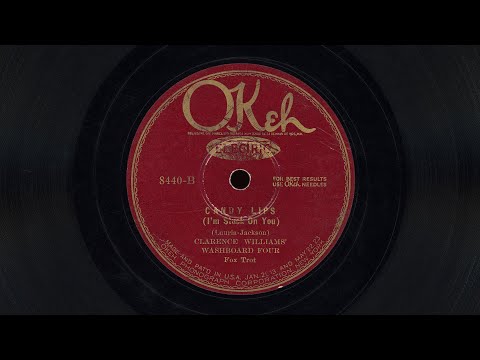
  • “Candy Lips (I’m Stuck On You)” – Clarence Williams’ Washboard Four (1927)

    “Candy Lips (I’m Stuck On You)” – Clarence Williams’ Washboard Four (1927)

    “Candy Lips” was originally recorded as a vocal performance by Eva Taylor, backed by Clarence Williams’ Blue Seven in late November of 1926 for Okeh, and then a second time as an instrumental by the debut of Clarence Williams’ Jazz Kings on the Columbia label in January of 1927 just four days before this session.

    I believe this is the first record under the “Washboard Four” moniker and it does not disappoint – there’s a lot of energetic fun on this number.

    It is a bit of a pastiche of instrumental version and vocal version, with Williams contributing a rousing scatted chorus in lieu of lyrics. The clarinet solo starts off a bit subdued and almost sorrowful – but injects the life back into the track with the help of Ed Allen’s carefully placed cornet growling.

    Interesting side note – the two sides on this record were master pressed by Parlophone in the U.K. and the band name was given as Louis Armstrong’s Original Washboard Beaters.

    Recorded in New York, January 29, 1927.
    Released as Okeh 8440.

    Credits:
    Ed Allen – cornet
    Benny Moten – clarinet
    Clarence Williams – piano, vocals
    Floyd Casey – washboard

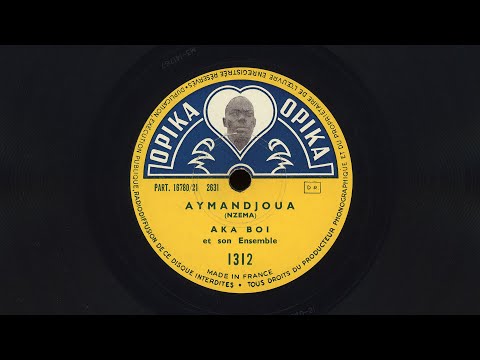
  • “Aymandjoua” – Aka Boi et son ensemble (~1950s)

    “Aymandjoua” – Aka Boi et son ensemble (~1950s)

    A Congolese artist about whom not much is known – Aka Boi recorded and released a total of eight sides on the Léopoldville-based Opika label in the mid 1950s. This was his last release.

    Recorded in Léopoldville, Belgian Congo in the mid-1950s.
    Released as Opika 1312.

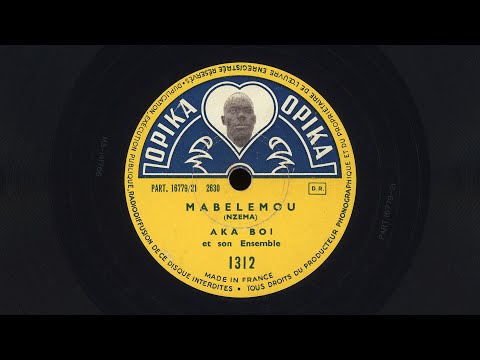
  • “Mabelemou” – Aka Boi et son ensemble (~1950s)

    “Mabelemou” – Aka Boi et son ensemble (~1950s)

    A Congolese artist about whom not much is known – Aka Boi recorded and released a total of eight sides on the Léopoldville-based Opika label in the mid 1950s. This was his last release.

    Recorded in Léopoldville, Belgian Congo in the mid-1950s.
    Released as Opika 1312.

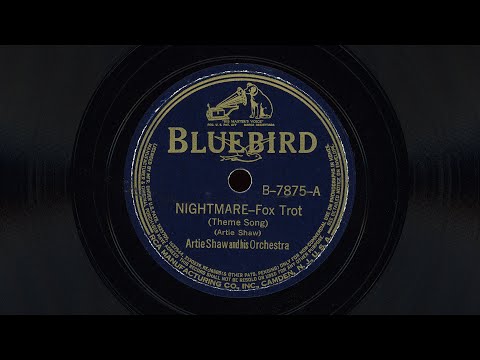
  • “Nightmare” – Artie Shaw (1938)

    “Nightmare” – Artie Shaw (1938)

    Adding a few spooky-themed records to my 78 rpm Halloween playlist today:
    https://www.youtube.com/playlist?list=PLSwGgF5a3aa_-7YmPtE_8PS6hY96fGhEP

    Here we find an interesting composition penned by Artie Shaw and recorded by his orchestra. It was first played in 1936 and functioned as the band’s theme song that began and ended their radio appearances for nearly 20 years. Ironic that it was used as a theme song, as the tune is dark and eerie, creeping forward in a somewhat ominous fashion.

    The highlight is Shaw’s assertive yet imploring clarinet solo – which report was inspired by Stravinsky’s Firebird. Shaw was quoted as saying “I was trying to sound like a violin, especially like Jascha Heifetz.”

    According to one source, Bud Freeman played this record for Benny Goodman and after the record finished, Goodman (who had a healthy competitive streak with Shaw) just said “F**k” and immediately wanted to hear it again. After the second listen, Goodman dismissed it: “No one will ever listen to that – it’s got no melody.”

    Recorded in New York City on September 27, 1938.
    Released as Bluebird B-7875.
    This copy is a slightly later repressing on the Bluebird label.

    Credits:
    Artie Shaw – clarinet, director
    Chuck Peterson, John Best, Claude Brown – trumpet
    George Arus, Russell Brown, Harry Rodgers – trombone
    George Koenig, Hank Freeman – alto sax
    Tony Pastor, Ronnie Perry – tenor sax
    Les Burness – piano
    Al Avola – guitar
    Sid Weiss – string bass
    Cliff Leeman – drums

    Sources:
    A great writeup on “Nightmare” by Mike Zirpolo can be found at Swing & Beyond: https://swingandbeyond.com/2025/04/28/nightmare-1938-artie-shaw/
    Lost Chords, Richard Sudhalter

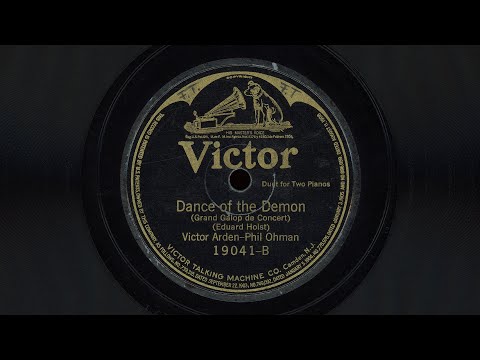
  • “Dance of the Demon” – Victor Arden Phil Ohman (1922)

    “Dance of the Demon” – Victor Arden Phil Ohman (1922)

    Adding a few spooky-themed records to my 78 rpm Halloween playlist today:
    https://www.youtube.com/playlist?list=PLSwGgF5a3aa_-7YmPtE_8PS6hY96fGhEP

    Victor Arden was born in Winona, IL in 1903 and attended the American Conservatory of Music before moving to NYC after WWI to make piano rolls and record with the All Star Trio and Green Brothers.

    Phil Ohman was born in New Britain, Connecticut in 1896 and was also working in NYC recording with Harry Yerkes, the Happy Six and the Paul Whiteman orchestra. He even pulled together his own dance orchestra to record a few sides for Edison in 1921-22.

    Arden and Ohman began playing together in 1921 and collaborated musically until the mid 30s. Both went on to have successful careers directing studio orchestras for radio and film.

    Here, they perform “Dance of The Demon” (Grand Galop de Concert) by Eduard Holst, composed in 1888. A lively duet!

    Recorded in Camden, New Jersey on December 5, 1922.
    Released as Victor 19041.

    Credits:
    Victor Arden, Phil Ohman – piano

    Sources:
    The Complete Encyclopedia of Popular Music and Jazz 1900-1950, Roger D. Kinkle
    The American Dance Band Discography 1917-1942, Brian Rust

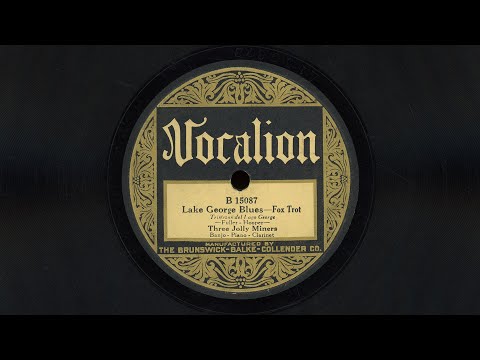
  • “Lake George Blues” – Three Jolly Miners (1925)

    “Lake George Blues” – Three Jolly Miners (1925)

    Here’s one for fans of the bluesy gaspipe clarinet style of Bob Fuller, who recorded many sides with variously-named trios that included Louis Hooper and Elmer Snowden.

    Lake George is a lovely little town in upstate New York at the edge of the Adirondacks. Years ago I spent a weekend with friends at a country house there and remember it fondly. It would be curious to know the history behind the Lake George blues, but I fear that story has likely been lost to the ages.

    The recordings of the Three Jolly Miners and other Fuller trios have only been partially reissued on a single vinyl LP release by Historical Records in 1967. That collection did not include this track.

    Bob Fuller stopped playing music in the 1930s and faded into jazz obscurity – likely in part due to the style of gaspipe clarinet falling into disfavor and relegated a mere novelty effect in the juvenilia of early jazz.

    I find it quite compelling as an exploration of both the instrument and the expressiveness of the blues form itself. Bob Fuller and other overlooked artists such as Wilton Crawley and Douglas Williams deserve more credit for their contributions to early jazz and blues.

    What’s your take? Let me know in the comments.

    Recorded in New York City on August 8, 1925.
    Released as Vocalion 15087.

    Credits:
    Bob Fuller – clarinet
    Louis Hooper – piano
    Elmer Snowden – banjo

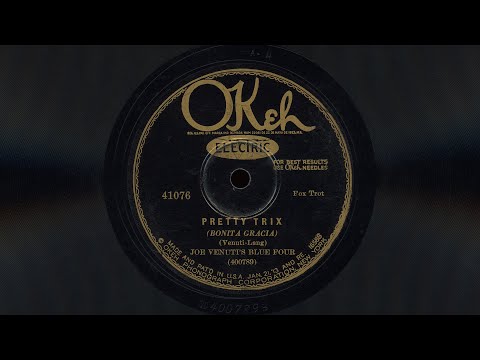
  • “Pretty Trix” – Joe Venuti’s Blue Four (1928)

    “Pretty Trix” – Joe Venuti’s Blue Four (1928)

    A lovely number by Venuti and Lang joined by Don Murray on baritone sax and pianist Rube Bloom (who even sings a number on the flip side).

    Richard DuPage, writing in the liner notes for the Columbia Stringing the Blues collection, wrote that Venuti and Lang were “founders of jazz in the chamber music category” who could “develop excitement through quiet and restraint as well as swing out with the best jazzmen.” We hear that on this track, with gentle passages that are delightful as well as bouncy passages that swing.

    After a soft intro, Venuti commands the first minute or so. at 1:15, Bloom takes a few short solo breaks and at 1:56 Lang steps forward and trades licks with Don Murray before the ensemble comes back together, reaching a crescendo in the final bars.

    Recorded in New York City on June 14, 1928.
    Released as OKeh 41076.

    Credits:
    Joe Venuti – violin
    Don Murray – baritone sax
    Rube Bloom – piano
    Eddie Lang – guitar
    Paul Graselli (?) – drums