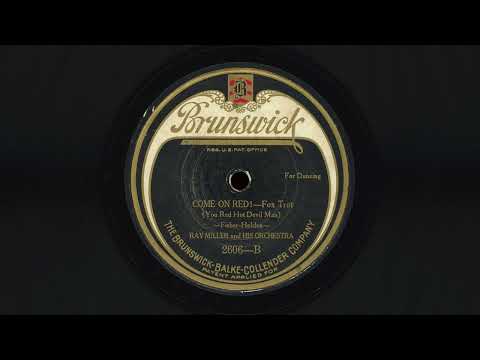
A toe tapper from Ray Miller featuring some fine trumpet work and a sax solo by Frank Trumbauer.
In early 1924 Miller had come to Trumbauer’s home in St. Louis when Tram was working with Gene Rodemich to offer him a job to join his band in NYC. Encouraged by his friend Red McKenzie’s entreaty to get out of St. Louis, and buoyed by Miller’s revealation that Miff Mole was also joining Miller’s band, Tram took the job.
Later that year, Billboard magazine wrote of the band: “The Miller combination is what is known as a ‘hot’ band. In fact they are so ‘hot’ that they sound and act as if they all wore flannel underwear. When they get steamed up the temperature begins to sizzle.”
Recorded in New York City on March 28, 1924. Released as Brunswick 2606.
Credits: Ray Miller – director Ray Lodwig, LeRoy “Roy” Johnston – trumpet Andy Sindelar – trombone Bernard J. “Lou” Dal(e)y – clarinet, alto sax, baritone sax, soprano sax, oboe Andy Sannella – clarinet, alto sax, soprano sax Frank Trumbauer – C-melody sax Harry Archer, Danny Yates – violin Tom Satterfield – piano Frank DiPrima – banjo Louis Chassagne – tuba Ward Archer – drums Lee Terry – arranger
Sources: That Growling Trumpet! A discography of Earle Preston Oliver (1894-1933) – Cyrus Bahmaie & Javier Soria Laso Tram: The Frank Trumbauer Story by Philip R. Evans and Larry F. Kiner with William Trumbauer.
A few weeks ago I uploaded an early jazz band led by a young Jimmy Durante. Today I am adding two more sides from an even earlier incarnation of the band known as the Original New Orleans Jazz Band.
One of the first jazz bands released on the Gennett label – which was done in a NYC recording studio two years before they built their own studio in Richmond, Indiana.
The 4500 series also marked a major change for the label. Previously, Gennett records were vertically cut like Pathé and Edison discs. For the 4500 series, they switched to lateral cut records. This disc is a very early example of Gennett’s lateral cut process.
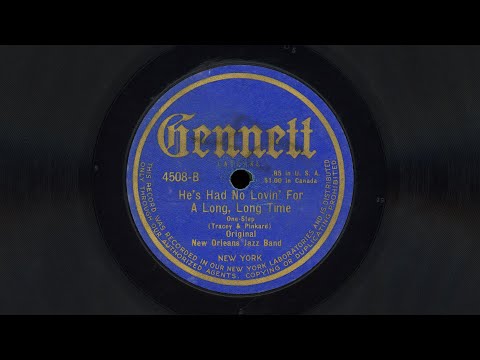
Recorded in New York City circa March 1919. This is matrix 6092a. Released as Gennett 4508.
Credits: Jimmy Durante – piano, director Frank Christian – cornet Unknown Artist – trombone Achille Baquet – clarinet Arnold Loyacano – drums
A few weeks ago I uploaded an early jazz band led by a young Jimmy Durante. Today I am adding two more sides from an even earlier incarnation of the band known as the Original New Orleans Jazz Band.
One of the first jazz bands released on the Gennett label – which was done in a NYC recording studio two years before they built their own studio in Richmond, Indiana.
The 4500 series also marked a major change for the label. Previously, Gennett records were vertically cut like Pathé and Edison discs. For the 4500 series, they switched to lateral cut records. This disc is a very early example of Gennett’s lateral cut process.
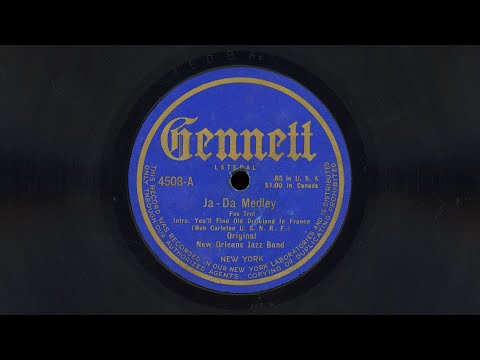
Recorded in New York City circa March 1919. This is matrix 6091a. Released as Gennett 4508.
Credits: Jimmy Durante – piano, director Frank Christian – cornet Unknown Artist – trombone Achille Baquet – clarinet Arnold Loyacano – drums
Over 650 videos on the channel and we’re just getting around to a Bing Crosby record now. 😀
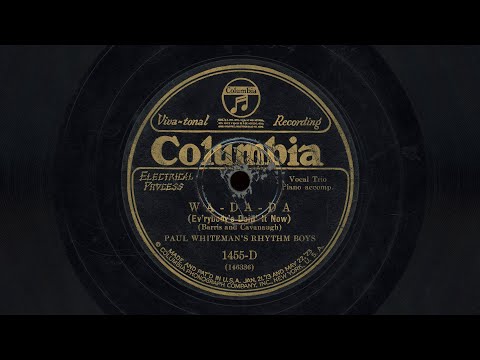
This is a fun vocal record by the Rhythm Boys – a trio that sang with the Paul Whiteman Orchestra made up of a young Bing Crosby, Al Rinker, and Harry Barris. Thought it’d make a good Monday morning listen.
Recorded in New York City on June 19, 1928. Two issued takes were recorded – this is take 6. Released as Columbia 1455-D.
Credits: Bing Crosby – baritone vocal Al Rinker – tenor vocal Harry Barris – tenor vocal, piano
I was feeling a bit melancholic this week and steeping myself in the beauty of Indian music helped me process.
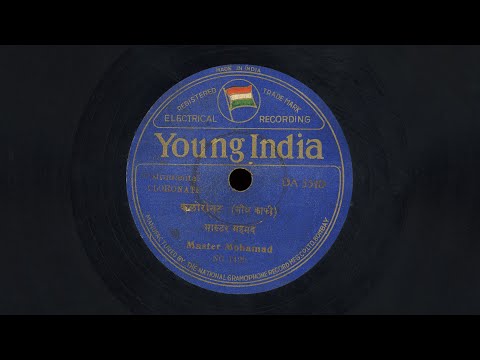
Here we have two raags from an Indian clarionet player from the early 1940s recorded on the indigenous Young India label – which released hundreds, if not thousands, of records in India from 1935 to 1955.
The first is labeled as “mixed” Kafi – meaning a variant of Raag Kafi that includes notes or phrases from other ragas. Raag Kafi is associated with the spring season and themes of love and longing.
Secondly we have Raag Tilang, which has a light and sweet nature that can evoke a lively or romantic mood.
Released as Young India DA 5510.
Credits: Master Mohamad – clarionet Unknown Artists – harmonium, tabla
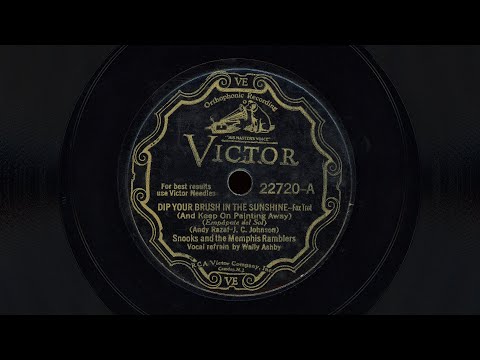
This band led by drummer “Snooks” Friedman recorded extensively for Victor and other labels in 1931-32. Around this same time the band played a long run at the Paramount Hotel in NYC, as well as recorded music for animated shorts and film. Snooks continued to play music until his retirement in 1972.
Recorded in New York City on May 21, 1931. Released as Victor 22720.
Credits: Ben Friedman (Snooks) – drums, director James Migliore, Estes Monasco – trumpet Ken Herlin – trombone Walter Ashby – vocals, clarinet, alto sax Elly Bellare – clarinet, alto sax Al Muller – tenor sax Rupe Biggadike – piano Bob Cooke – banjo, guitar Chuck Jordan – tuba, string bass
The final transfer of a record I included in a recent test of stylii for 78 rpm playback: https://youtu.be/HAEKTT7vgrI
I chose this one to test as it was in rougher shape with a lot of scratches. You can hear how it cleaned up. Not too shabby!
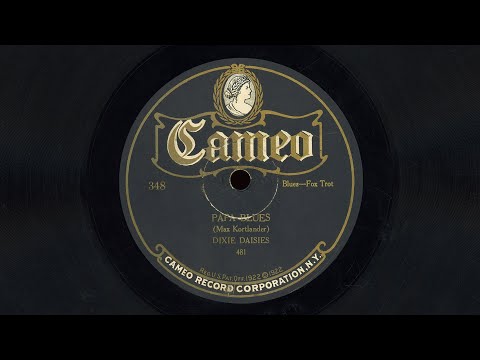
An interesting Max Kortlander composition with some nice trumpet and alto sax.
If anyone has personnel ideas, let me know!
Recorded in New York City in April, 1923. Released as Cameo 348.
Credits: Bob Haring (arr) dir: Earl Oliver, Herman “Hymie” Farberman – trumpet Eph(riam) Hannaford – trombone Morris Payes – clarinet Dick Schwartz – alto sax Morton Lichstein – piano Frank Reino – banjo Jules “Chin” Tott – tuba E. Lieberman – drums
Source: “Earl Oliver Discography” by Cyrus Bahmaie and Javier Soria Laso, based on Ralph Wondraschek’s research for the Rivermont BSW-1172 compilation “Hotsy Totsy Town: 1922-1923” and also drawn from Johnson-Shirley’s ADBORAF coupled with aural evidence.
Two months ago I posted a video showing the unboxing and setup of the Audio Technica AT-LP120XUSB turntable, a popular choice for those who are wanting to play 78 rpm records on modern equipment.
In today’s video, I will run you through the different output options you have to get sound from your turntable into your computer and discuss the importance of stylus size when it comes to playing 78 rpm records on modern turntables.
I test four different combinations: • 3 mil 78 stylus on AT-95E cartridge via analog line output • 3 mil 78 stylus on AT-95E cartridge via digital USB output • 0.7 x 0.3 mil elliptical LP stylus on AT-VM95E cartridge via analog line output • 0.7 x 0.3 mil elliptical LP stylus on AT-VM95E cartridge via digital USB output
We will listen to these options across three different records from different time periods, labels, and conditions: • An acoustically-recorded record in rough shape: Cameo 348 “Papa Blues” – Dixie Daisies • An electrically-recorded disc: Victor 22720 “Dip Your Brush in the Sunshine” – Snooks and his Memphis Ramblers • A modern African disc recorded in the 1950s: Gallotone KE.45 “Ndikhola Ndlwa” – Barthly Ojuang
Each recording represents the output from the turntable (with an EQ filter to adjust for the RIAA equalization applied by the phono preamps) with some gain adjustment so all samples are at an equal volume. No additional EQ filters, de-clicking, or noise reduction was applied.
My conclusions? LP stylus output is noticeably noisier though crisper and livelier in the high frequencies at these raw settings. 78 stylus is more reliable, much less noisy, and gives you more options to tweak once you’ve digitized it.
The noise differential was most noticeable for me on the record in rougher shape (Cameo 348). Here, the LP stylus performed at its worst, having to navigate across all of the scuffs and scratches of a 78 rpm record in rough shape.
Interested to hear your thoughts! Leave a comment. 🙂
0:00 Intro 1:15 AT-LP120 audio output options 5:13 Stylus options: LP vs 78 stylii 6:13 My mistake: AT-95E vs AT-VM95E cartridge 7:32 Stylus and Cartridge options for testing 7:52 How to compensate tracking force settings 9:02 Testing configurations 10:30 Test setup 11:12 Test 1: Victor 22720 14:15 Test 2: Cameo 348 17:30 Test 3: Gallotone KE.45 20:20 Reaction and Discussion
Some of the websites I’ve referenced in the video include:
Esoteric Sound https://www.esotericsound.com/ A site that has a wide variety of stylii sizes, cartridges, and other equipment for playing 78 rpm records.