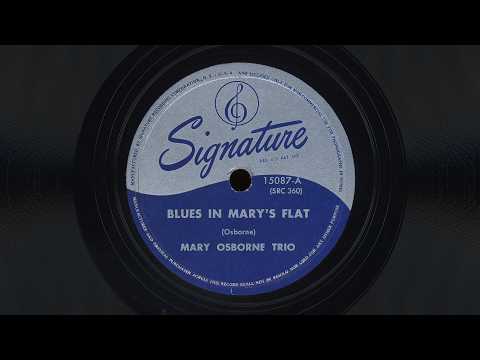
Another barn burner from jazz guitarist Mary Osborne and her trio. A blues in name only – you will feel anything but once Osborne’s boppy licks scorch any semblance of blues from your visage.
A performance of this tune with an accompanying interpretative dance was recorded on film for the “Soundies” series that is worth a watch: https://www.youtube.com/watch?v=RgMZPmfGxOk
Released as Signature 15087 in May, 1947.
Credits: Mary Osborne – guitar Sanford Gold – piano “Frenchy” Cavette – bass
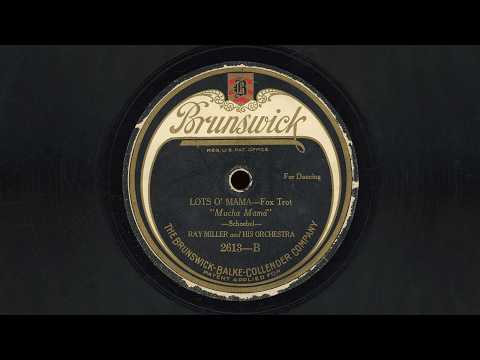
A rousing number featuring new members of the Ray Miller orchestra: Miff Mole and Frank Trumbauer.
Recorded in New York City on April 23, 1924. Released as Brunswick 2613.
Credits: Ray Miller – director Ray Lodwig, LeRoy “Roy” Johnston – trumpet Miff Mole, Andy Sindelar – trombone Bernard Daly, Andy Sannella – clarinet, alto sax Frank Trumbauer – C-melody sax Don Yates – violin Harry Perrella, Tom Satterfield – piano Frank di Prima – banjo Louis Cassagne – tuba Gus or John Helleberg – tuba Ward Archer – drums
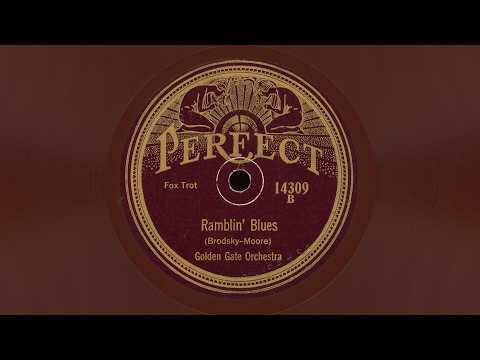
The California Ramblers, here recording under the name “Golden Gate Orchestra” for the Pathé-Perfect label.
This tune (sometimes titled “Them Rambling Blues”) was recorded a number of times by Ramblers-affiliated “band-within-a-band” groups in 1924 – often as small combo quintets that featured kazoo and goofus solos. The goofus – also known as a couesnophone – is a melodica-like instrument that sounds a bit like an accordion.
On July 3, The Little Ramblers recorded the first version for Columbia using a quintet with Rollini on goofus and kazoo) Subsequent sessions occurred on August 1 (The Kentucky Blowers), August 11 (Goofus Five) and September 10 (Varsity Eight w/ Jimmy Dorsey on clarinet).
Here we find the whole Ramblers outfit giving it the full treatment (sans kazoo or goofus). Depending on how you feel about kazoos and goofuses, this is either the best or worst version.
We get a panopoly of solos – highlights include a bass sax solo from Rollini at 1:24, a muted trumpet solo at 1:46, a banjo breakdown at 2:01 and a sax solo at 2:17.
An excellent number to ramble along to on a fine summer day. Happy rambling!
Recorded in New York City on July 22, 1924. Released as Perfect 14309, Pathé-Actuelle 036128, Harmograph 960, and Silvertone 1243.
Credits: Arthur Hand – violin, director Frank Cush, Bill Moore – trumpet Lloyd “Ole” Olsen – trombone Bobby Davis – clarinet, soprano sax, alto sax Arnold Brilhart – clarinet, alto sax Freddy Cusick – tenor sax Adrian Rollini – bass sax Irving Brodsky – piano Ray Kitchingman – banjo Stan King – drums
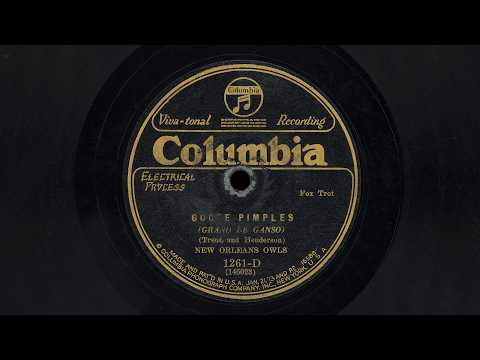
From the last recording session of the New Orleans Owls – in New Orleans, no less.
As pointed out in an excellent article in Syncopated Times referenced below, this Fletcher Henderson / Jo Trent composition (which some suspect may have been originally written by Fats Waller) was recorded by three bands in three consecutive days in late 1927:
October 24: Fletcher Henderson (as Dixie Stompers) in NYC October 25: Bix Beiderbecke and his Gang in NYC October 26: New Orleans Owls in New Orleans
The bands each interpreted the stock arrangement in their own unique manner. The Owls’ version was played at a bit slower tempo. Read the article below for more discussion!
I post this as I am missing the Bix jazz festival this weekend – which will feature a New Orleans Owls set tomorrow night. Very sad about this as I love going to hear 20s jazz played live by some of the most talented players in the world! Hope to be there next year, fellas!
Recorded in New Orleans, Louisiana on October 26, 1927. Released as Columbia 1261-D.
Credits: Red Bowman, Bill Padron – cornet Benjie White – clarinet, alto sax, director Frank Netto – trombone Pinky Vidacovich – clarinet – alto sax Lester Smith – tenor sax Sigfre Christensen – piano Nappy Lamare – banjo Dan LeBlanc – tuba Earl Crumb – drums
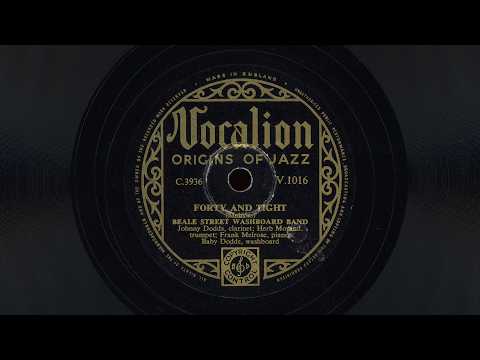
In addition to his well-known work with King Oliver’s Creole Jazz Band and Louis Armstrong and his Hot Five, clarinetist Johnny Dodds recorded with a number of small combos in Chicago during the late 1920s.
Two sides were recorded by a casual studio group calling themselves the Beale Street Washboard Band in the summer of 1929. The band was comprised of three black New Orleanian musicians joined by white pianist “Kansas City” Frank – who is also credited as the composer of this number.
Dodds on clarinet is masterful – his melodic lines flow effortlessly and effusively.
Apparently this was cornetist Herb Morand’s first recording session – and first time playing with a group outside of New Orleans. He later went on to play with the Harlem Hamfats.
Friends of the channel know I love the loose and laid-back feel of washboard bands from the late 1920s and early 30s. The performances still feel fresh today, nearly 100 years later.
Recorded in Chicago, Illinois on July 24, 1929. Originally released as Vocalion 1403. Reissued in the U.K. on Vocalion’s “Origins of Jazz” series V.1016.
Credits: Herb Morand – cornet Johnny Dodds – clarinet Frank Melrose – piano Baby Dodds – washboard, drums
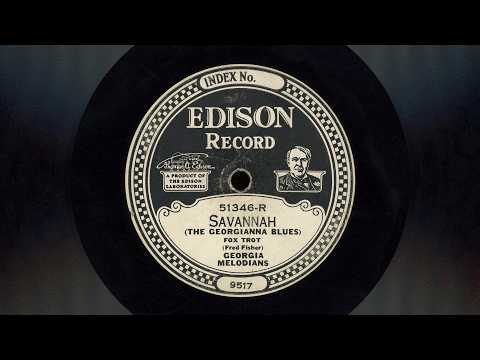
An early Georgia Melodians recording from their second session with Edison. This one was also released as an Amberol cylinder!
After a bit of drama in the intro section, this tune starts out with an immediately likable melody and jaunty, charming playing.
At 1:03 a muted trumpet cranks up the rizz and is followed by an animated piano solo, trombone solo, and a sax solo before being handed back to the rizzler on trumpet. Not to be outdone, we get a finale section involving some slap-tongue sax soloing.
Recorded in New York City on May 15, 1924. Released as Edison 51346.
Credits: Charles Boulanger – violin, director Ernie Intlehouse, (usually) Mickey Bloom – trumpet Herb Winfield – trombone Merritt Kenworthy – clarinet Clarence Hutchins – tenor sax, baritone sax Oscar Young – piano Elmer Merry – banjo Unknown Artist – tuba Carl Gerold – drums
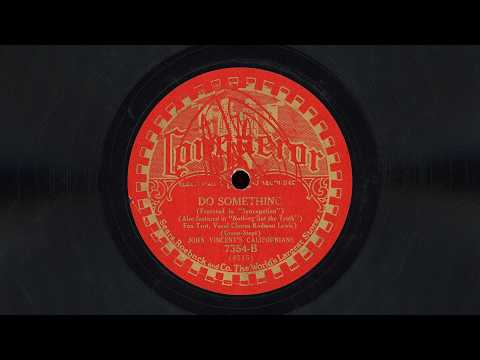
Sam Lanin’s Orchestra, here playing under the pseudonym John Vincent’s Californians.
Dedicated to Javier Soria Laso, who has been “doing something” about the accuracy of Lanin entries in Johnson-Shirley’s ADBORAF discography this past month. 🫡
He will no doubt have amendments to the credits below, which I welcome. 🙏
Recorded in New York City on April 26, 1929. Released as Conqueror 7354, Cameo 9158, Romeo 960, Pathé-Actuelle 36990, Perfect 15171, and Lincoln 3185.
Credits: Sam Lanin – director Phil Napoleon – trumpet Tommy Dorsey – trombone Jimmy Dorsey, Andy Sannella – clarinet, alto sax Merle Johnson – clarinet, tenor sax Arthur Schutt – piano Tony Colucci – banjo Jimmy Mullen – tuba Stan King – drums Scrappy Lambert – vocals
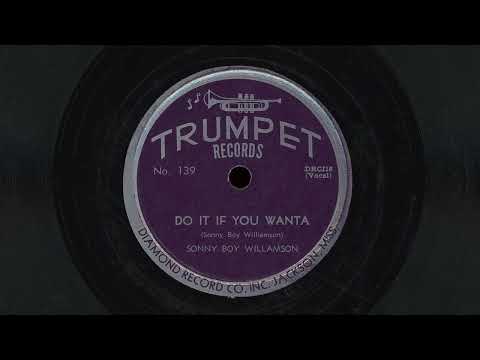
Not to be confused with John Lee Curtis “Sonny Boy” Williamson, who recorded for Bluebird and RCA Victor in the late 30s and 40s and passed away in 1948, *this* Sonny Boy Williamson was born in Mississippi as Alex Ford.
He performed in Mississippi and Arkansas in the 30s, consorting with Robert Johnson, Big Joe Williams, and Elmore James. Radio station KFFA in Arkansas hired him as a performer and starting promoting him as Sonny Boy Williamson (while the original Sonny Boy was still alive).
Willard and Lillian McMurry started Trumpet records in Mississippi from the makeshift recording studio in the back room of the Record Mart, their little record store in Jackson.
This rockin’ tune was recorded when Bill Haley was still playing western swing with the Saddlemen and Elvis was still a high school student. It’s a reminder of how influential, important, and prescient blues players like Williamson were in the history of rock and roll.
Not a record I usually go out of my way to look for, but this one showed up at a garage sale at a price I couldn’t say no to.
Recorded in Jackson, Mississippi on August 5, 1951. Released as Trumpet 139.
Credits: Sonny Boy Williamson – harmonica Willie Love or David Cambell – piano Elmore James, Joe Willie Wilkins – guitar Leonard Ware – bass Unknown Artist – drums
A few of my audiophile friends have wondered about just how good the 78 rpm format can sound. Well, here is exhibit A: a VERY clean virtually unplayed copy of an EmArcy disc from 1954 that I got at the Austin Record Convention earlier this summer from Justin from the Antique 78 rpm Record Shop. Justin has a store in Wichita Falls, Texas that I hope to visit some day.
I did not do *any* declicking, gain adjustment, compression, or summing to mono to this transfer. Pretty much the raw transfer with equalization adjusted.
This is almost a perfect record to really critically listen to, as there are both quiet sections with Blakey’s drums or Heath’s bass solo and louder passages with Henry Durant’s tenor sax. You can also hear Blakey shouting out encouragement to the band in the background.
This tune was originally released on 7″ 45 rpm and 10″ 78 rpm only. It finally made it to LP/CD in the late 80s, where it was included with the eight songs on the 10″ LP “Blakey” from 1955 and presented as “The Complete Art Blakey on EmArcy”.
Recorded in New York City on March 24, 1954. Released as Emarcy 16007.
Credits: Henry Durant – tenor sax Horace Silver – piano Percy Heath – bass Art Blakey – drums
A swingin’ number from a North Carolina territory band that will rouse you from your sleepy Sunday morning!
This outfit played jazzy western swing and recorded two sessions for Victor/Bluebird in 1937 and 1938. Trumpet player Dave Durham was also a regular, but is not listed as performing on this side.
This one has a Lang-Venuti feel – rollicking rhythm and real virtuosity on the violin. A great listen!
Buck Houghins is listed as both the tenor sax and violin player on this number. At first listen I felt it was so instructive to hear his melodic mind at work within the confines of both instruments on the same tune.
Then sharp listener Dan Weinstein noted that toward the end of the song, the tenor sax can be heard playing legato notes in the background as the fiddle solos. So now I wonder: Is that Buck Houghins on fiddle or tenor sax? And if so, who is playing the other instrument?
Recorded in Charlotte, North Carolina on August 2, 1937. Released as Bluebird B-7160
Credits: Buck Houghins – tenor sax, violin Jerry Collins – piano Larry Dowing – guitar Cliff Stein – string bass
Sources: Jazz and Ragtime Records (1897-1942), 6th Ed., Brian Rust