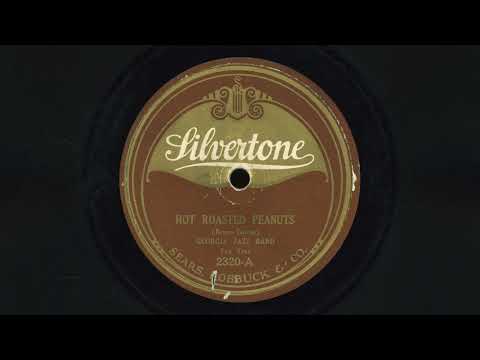
This recording of a popular novelty number by Louis Breau and Charles Tobias really starts to cook with the help of cornetist Jules Levy, Jr. and clarinetist Joe Samuels.
The Georgia Jazz Band recorded a number of jazzy sides for the Federal label from 1921-23.
Released as Silvertone 2320. Originally released as Federal 5320.
Credits: Jules Levy, Jr. – cornet Ephraim Hannaford – trombone Joe Samuels – clarinet, alto sax Larry Briers – piano Unknown artist – tuba Herman Berkin – drums
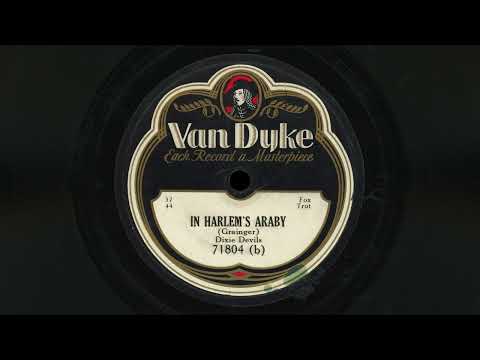
This mystery band has been the object of much debate over the last century. Pirate reissues on the Tempo and Biltmore labels have billed the band as one led by none other than King Oliver himself, though this is now regarded as a specious claim.
Andy Sanella was interviewed two weeks before his death in 1962 and said that it was himself and Mike Mosiello on this record – recording with the Grey Gull studio band.
More recently, it has been suggested that this is a hitherto unidentified band led by Porter Grainger, who is listed as the composer on all four songs recorded during this session.
While confirmation on personnel may never be a settled matter, what is clear is that this is a great record! The subdued yet bouncy piano, muted trumpet, alto sax, and beseeching clarinet all work to give this composition a unique sound of its own.
Recorded in New York City in November, 1929. Released as Van Dyke 71804. Also released as Grey Gull 1804, Radiex 1804, and Supreme 1804 (as the Memphis Jazzers).
An excellent summary of the attempts to identify personnel written by Laurens Hetrzdahl for Vintage Jazz Mart can be found at: https://www.vjm.biz/newpage4.htm
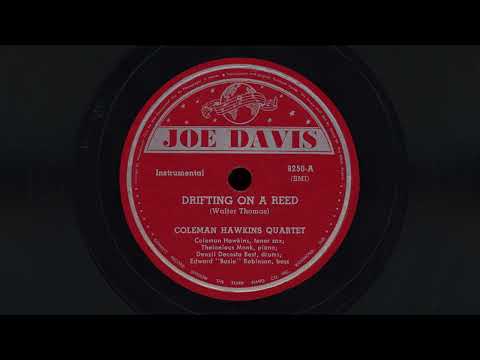
Here we have the Hawk performing “Drifting on a Reed” by Walter Thomas – not to be confused with the Charlie Parker composition that Bird would record three years later.
The composition starts with a descending piano line played by the young Thelonious Monk, who is appearing here on his first commercial recording.
Monk had been previously recorded in 1941-42 during jam sessions at Minton’s Playhouse by Columbia University’s student radio station WKCR by Jerry Newman. Newman recorded tunes on a portable Wilcox-Gay Recordio “disc cutter” that made recordings directly onto acetate discs and then ran them over to the radio station where they were broadcast.
While we hear a brief moment of Monk at the intro, for most of the record, Monk takes an accompanist’s role and just lets Hawk blow.
It’s clear from listening to Hawk’s lush breathy tone what Miles Davis was talking about when he said that “When I heard Hawk, I learned to play ballads.”
The Joe Davis label was created in 1945 by the music producer of the same name. They published jazz 78s in 1945-46 before changing the name to simply the Davis label.
Recorded in New York City on October 19, 1944. Released as Joe Davis 8250.
Coleman Hawkins – tenor sax Thelonious Monk – piano Edward “Basie” Robinson – bass Denzil Decosta Best – drums
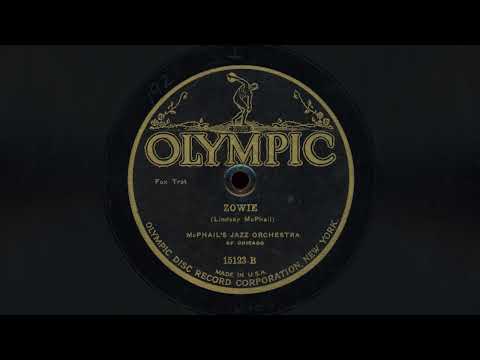
Lindsay McPhail is perhaps best known as the co-composer of the jazz standard “San”, which was performed by countless orchestras in the 1920s and beyond.
Here we find him leading a band in Chicago in the early 1920s, recording his original rag-a-jazz composition “Zowie” for the Olympic label with a small group of unknown musical collaborators.
Recorded at 156 Meadow Street, Long Island City, New York in June 1921. Released as Olympic 15123.
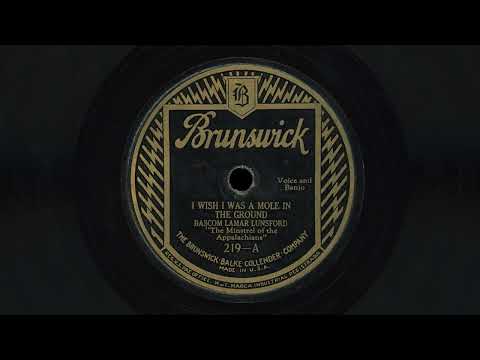
Pardon the break from jazz, but I wanted to post one of my desert island discs – a song about everything and nothing: “I Wish I Was A Mole in the Ground” by Bascom Lamar Lunsford.
I first discovered this song in the late 80s when I was taking a summer Physics class at a local university (where I now work, as fate would have it). I used my library card to check out records and recorded them to cassette tape. I checked out a Folkways record called Folk Music U.S.A. and a later recording of this tune was on it. I then heard this earlier version on Harry Smith’s legendary Anthology of American Folk Music. Something about it just really intrigued me and it became a real favorite.
The song was performed for Lunsford by a North Carolina neighbor named Fred Moody in 1901. His mother asked him to learn the banjo so he could play it for her. Lunsford said it was the last request she made to him before she passed away.
When I first started collecting 78s in 2017 I made a list of records I’d like to collect. The list was not long because I knew next to nothing about the music of the 78 rpm era: 1. Duke Ellington “Jack the Bear” 2. Fletcher Henderson “Phantom Fantasie” 3. This one.
It took a while, but earlier this month a copy finally found its way into my collection.
While my initial list is now completed, I now see that there are 2,772 records in my Discogs wantlist. 😂 I suppose desire is an unquenchable fire. Perhaps that’s why the writer of this song wished to be a mole in the ground.
Recorded in Ashland, Kentucky on February 6, 1928. Released as Brunswick 219.
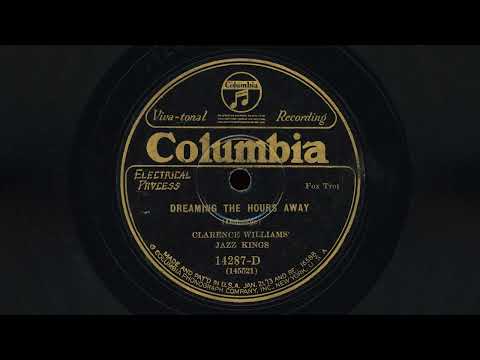
Here’s the original recording of “Dreaming the Hours Away” by Clarence Williams’ Jazz Kings. If you liked my video of the Jazz-O-Maniacs from yesterday it might interest you to hear it.
A fun fact about this session is that it included “The Hawk” Coleman Hawkins, who was playing with the Fletcher Henderson orchestra at this time.
This was from Williams’ first session of 1928 and it begins with a short ensemble intro before going into a 16 bar chorus with clarinetist Buster Bailey followed by 16 bars of cornetist Ed Allen stating the main melody. After 16 bars of ensemble playing, we hear Ed Allen solo followed by the Hawk on tenor. Ed Cuffee brings it home with a trombone solo accompanied by clarinets.
I had bid on this record a month ago and coincidentally, it arrived yesterday right as I was posting the Jazz-O-Maniacs version, which if you haven’t seen, you can view here: https://youtu.be/xkPPsT0-Isw
It’s a fairly clean copy – with some minor blasting during loud transients in a couple of passages.
Recorded in New York City on January 12, 1928. Released as Columbia 14287-D.
Credits: Ed Allen – cornet Ed Cuffee – trombone Buster Bailey – clarinet, alto sax Coleman Hawkins – clarinet, tenor sax Clarence Williams – piano Leroy Harris – banjo Cyrus St. Clair – tuba
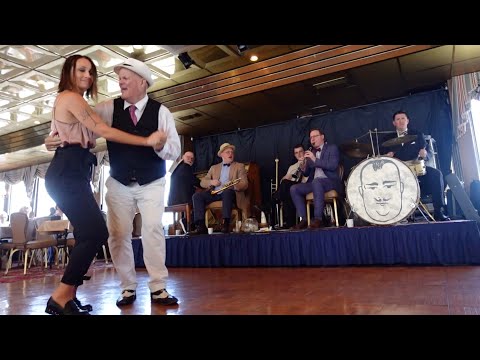
Here’s something different – a rousing live performance of “Dreaming the Hours Away” by T.J. Muller and his Jazz-O-Maniacs from the Bix Beiderbecke Jazz Festival!
This tune by William E. Dulmage was first recorded by Clarence Williams’ Jazz Kings in 1928 – and it is from the Williams recording that the band got its inspiration for this rendition. You can hear the original Clarence Williams’ Jazz Kings version here: https://youtu.be/dpfz4d855Y0
Recorded on the Celebration Belle riverboat on the Mississippi river north of Davenport, Iowa on August 2, 2024 as part of the Bix Beiderbecke Jazz Festival.
Credits Dave Kosmyna – cornet Michael McQuaid – clarinet Jeff Barnhart – piano T.J. Muller – banjo Josh Duffee – drums
If you love jazz and dance music from the 20s and 30s – you should really attend this festival next year! Three days of outstanding performances plus extracurricular events like this riverboat cruise and a graveside concert next to the Bix’s final resting place. Hearing this music performed live (often on vintage instruments) by musicians who are all passionate about this era is a real treat.
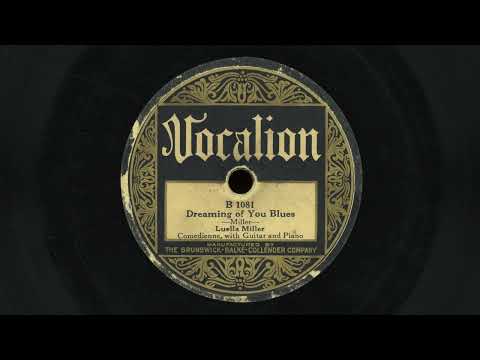
Here is side B of the Luella Miller record I posted this morning – a tune called “Dreaming of You Blues” that features Lonnie Johnson on guitar.
There is much mystery about Luella Miller – she first recorded for Vocalion in St. Louis in 1926, then did six sessions in 1927-28 resulting in the release of 24 songs over 12 records – and 11 unissued matrices. After August of 1928 it is not clear what happened to Miss Miller as no further recordings were made.
Recorded in New York City on January 28, 1927. Released as Vocalion 1081.
Credits: Luella Miller – vocals James Johnson – piano Lonnie Jonson – guitar