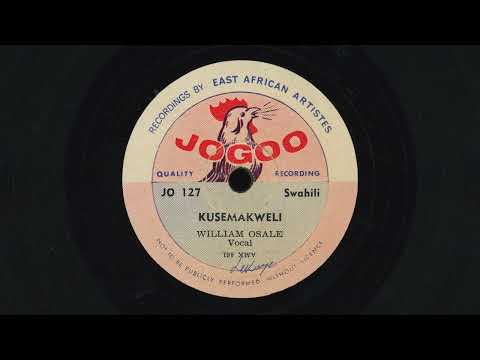
William Osale was a fingerstyle guitarist who performed and recorded in Kenya during the 1950s and 60s. Osale was a rural musician who played in the ‘sukuti’ style – a rhythmic style of finger-style playing invented by George Mukabi that results in a light, ‘bouncy’ sound.
In his “A History of Kenyan Guitar Music: 1945-1980”, John Low writes, “Some rural finger-stylists like George Mukabi and William Osale also had success in the towns, providing Swahili versions of songs that they might sing in local languages back home. The appeal of their songs lay in the fact that many town dwellers had (and still have) strong links with the land, and the themes of these songs, often conservative and sometimes nostalgic, reminded them of the old values.”
The title of this song, “Kusemakweli” can be translated as “To Tell The Truth”.
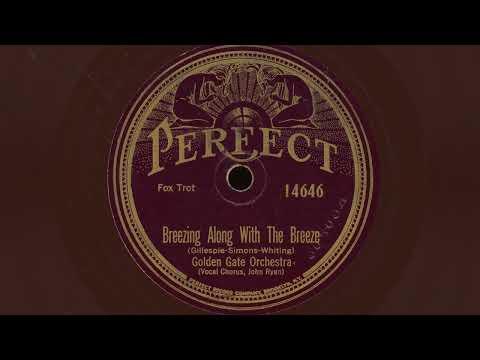
A peppy classic by the California Ramblers using one of their many aliases: Golden Gate Orchestra. Great ensemble playing, hot breaks, and solos throughout.
As with many Perfect discs, this one has some shortcomings – surface noise notwithstanding, the bass rolloff seems to be around 200 Hz so Rollini’s bass sax is not as prominent in the rhythm section as it is on other recordings.
Recorded in New York City, June 9, 1926. Released as Perfect 14646.
Credits: Roy Johnston – trumpet Abe Lincoln – trombone Bobby Davis – clarinet, soprano sax, alto sax Bunny Drown – tenor sax Adrian Rollini – bass sax Jack Russin – piano Tommy Felline – banjo Herb Weil – drums John Ryan – vocals
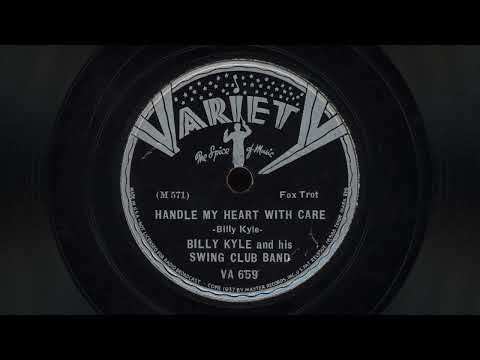
This tune is jumpin’! A real upbeat tune with lots of fine solos. If you haven’t heard of Billy Kyle, you’re not alone. But don’t let that stop you from giving this disc a listen!
Part of the joy of collecting 78s is discovering labels and artists you’d be hard pressed to find any other way. Ever since I learned about the excellent (but short-lived) Variety label, I always am on the lookout for their releases.
A local record store owner who knows I collect 78s let me know a crate had just come in – and I found this one among an otherwise unremarkable collection of postwar pop and country.
Billy Kyle is a pianist who was a prolific sideman in the 1930s, playing with the Mills Blue Rhythm Band and Lucky Millinder. After the war, he had a long gig playing with Louis Armstrong’s All Stars. He worked as a bandleader only a few times – and a handful of sides for the Variety label represent perhaps over half of those sessions.
Charlie Shavers is on point throughout – and Billy Kyle’s piano sounds fantastic. Danny Barker’s rhythm guitar is four-to-the-floor Freddie Green style but later in the tune he gets a short chord melody break.
Nice record all around – Enjoy!
Recorded in New York City on July 23, 1937. Released as Variety VA 659.
Credits Charlie Shavers – trumpet Tab Smith – alto sax Ronald Haynes – tenor sax Billy Kyle – piano, leader Danny Barker – guitar John Williams – string bass Fran Marx – drums
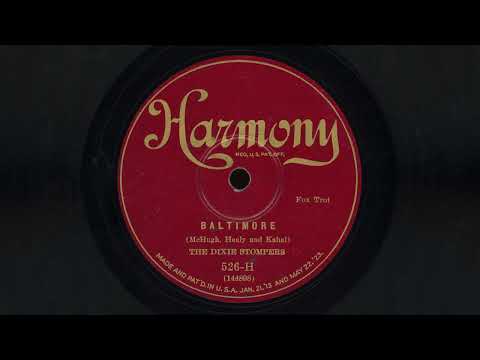
A Jack Purvis arrangement of the Jimmy McHugh tune “Baltimore” by Fletcher Henderson and his Orchestra, recording for the Harmony label under the alias “The Dixie Stompers”.
This lineup of the Henderson orchestra performs with the excellent trumpeter Tommy Ladnier, who gets a short solo in. Coleman Hawkins’ solo is also worthy of note.
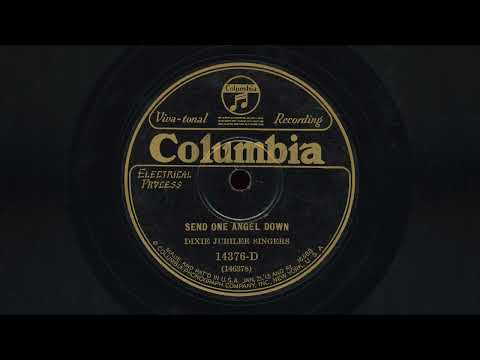
A little Sunday morning music courtesy of my friend @wlsallnight who dropped off a box of records at my doorstep last weekend that included this later 14000 series Columbia. 🙏 Thank you!
Nothing is known about the artists who performed in the Dixie Jubilee Singers. Even a backslidin’ non-believer such as myself can’t help but see a little earthly glory in their divine artistry.
Recorded in New York City on Thursday, May 31, 1928. Released as Columbia 14376-D.
Credits: Unknown artists – six male singers, two female singers
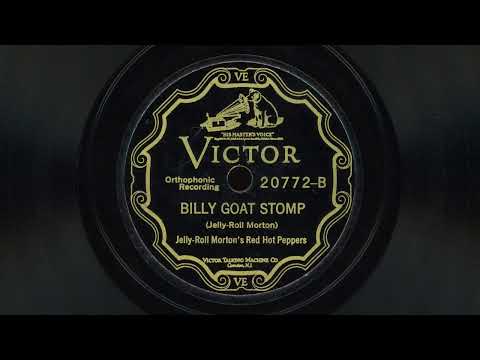
It is not known how or why Morton decided to include Lew LeMar, the Master of Entertainment at the Cafe de Paris in Chicago, on both sides of this record for vocal effects. On the flip side, “Hyena Stomp”, LeMar laughs throughout the song – echoing a novelty tradition going back to George W. Johnson’s “Laughing Song” and the Okeh laughing record.
This side, “Billy Goat Stomp”, opens with LeMar bleating like the eponymous billy goat – followed by a band member shouting: “Man, get that goat outta here!” LeMar continues to bleat at irregular intervals throughout the song – as though a goat really had invaded the recording session and was wreaking havoc around the studio while being chased by staffers while the band plays on! As jarring as his bleats can be, I have to say, I find the whole thing to be hilarious – and pretty punk rock.
Sadly, in an interview in 1936 with Kenneth Hulsizer (Jazz Music magazine, Feb-Mar 1944) Morton apparently told Hulsizer that “he wasn’t proud of the record. I think he was sorry he had made it.” Despite this, every time I hear a band cover the tune – and leave out the bleating goat sounds – it somehow feels diminished. Imagine leaving the bugle part out of the “Bugle Call Rag”! Thus, my message for today is: Respect the GOAT! Baaaaaa-aaaa-aaa!
Once the music starts in earnest, we hear a series of starts and stops punctuated with inventive percussive effects by Baby Dodds – leading into call and responses between band members while goat bleats comedically fill the air. A series of solos follow, each ending with the ensemble joining in. It’s a fun romp that ends up being musically engaging and flippantly challenging simultaneously.
Baby Dodds was playing a trap kit with Chinese Tom-Toms and cymbals – and his solo work here is quite interesting for the time.
Interestingly, Morton had originally composed this tune as a solo piano piece. Baaaaaa-aaaa-aaa!
Ben Selvin grew up on Ludlow Street on the Lower East Side of Manhattan. It is said that he couldn’t afford violin lessons as a boy so he started playing harmonica. He eventually learned the violin – along with several other instruments – and at age 15 began playing in night clubs, restaurants, hotels, and dance halls in New York.
Selvin hit it big with the hit “Dardanella” in 1919, recorded for Victor with his Novelty Orchestra. He also performed under names such as the Bar Harbor Society, the Harmonians, and the Frisco Syncopators. He quickly became one of the most prolific artists of the 78 rpm era. The New York Times estimated in 1964 that Selvin had “played, made, or otherwise produced more than 9,000 records.”
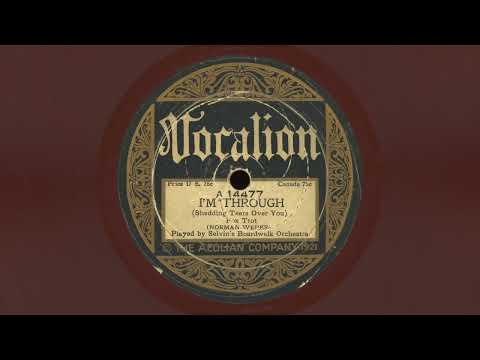
By the time this side was recorded for Vocalion in late 1922, Selvin had already recorded just short of 200 sides for a variety of labels, including Victor, Paramount, Emerson, Arto, Grey Gull, Lyric, Okeh, Vocalion, Pathé Actuelle, Brunswick, Banner, Regal, Broadway, Perfect, and Puritan.
There’s some great solo and ensemble playing on this record – starting with the growling trumpet at the 0:12 mark. Throughout the song, the interplay between the trumpet and the swooning reeds is excellent. Though the solo sections seem to closely follow the melody – they do so with a nod to the hot and expressive side – and only seem to truly improvise during certain short hot breaks.
Despite this, or perhaps because of it, this tune was left out of Rust’s Jazz and Ragtime Records discography. Some great playing on this one! Certainly with plenty of “jazz interest” in my book!
Recorded in New York City in November, 1922. Released as Vocalion 14477.
Credits: Ben Selvin – violin, director Jules Levy, Jr. (?), Hymie Farberman (?) – trumpet Eph Hannaford – trombone Bernie Daly – alto sax Joe Winshup – tenor sax Norman Spencer – piano John Cali – banjo Jack Helleberg – tuba Unknown Artist – drums
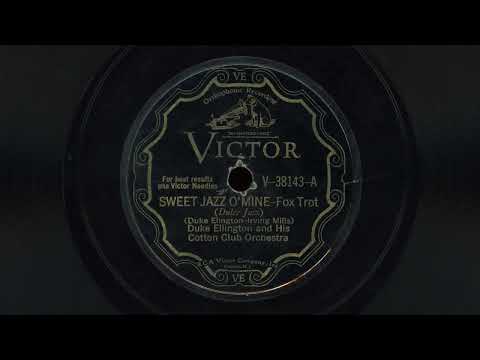
One of four excellent sides recorded by Ellington at a Victor session in June of 1930. It starts off on a tear – with the reeds and trumpets exchanging riffs before being calmed down by Duke’s piano at 0:52. This creates an opening for a silky clarinet entrance that leads to a dreamy sequence before heading into a proto-swing ending.
Take 1 Recorded in New York City on June 4, 1930. Released as Victor V-38143.
Credits: Duke Ellington – piano, arranger, director Arthur Whetsel, Freddy Jenkins, Cootie Williams – trumpet Joe Nanton – trombone Juan Tizol – valve trombone Johnny Hodges – clarinet, soprano sax, alto sax Harry Carney – clarinet, alto sax, baritone sax Barney Bigard – clarinet, tenor sax Fred Guy – banjo Wellman Braud – string bass Sonny Greer – drums
If you’re interested in the other sides recorded on this same day, here is one other I’ve made transfers of: “Jungle Nights in Harlem” – Victor 23022 https://youtu.be/_7Sjz3dOzYs
In 1913, Art Hickman convinced the manager of the San Francisco Seals (then in spring training at Boys Hot Springs) to organize a series of dances to add some excitement to the training season. The manager agreed – and the band Hickman got together was so popular – that after the training season was over were promptly booked at the posh St. Francis Hotel in downtown San Francisco for the rest of the summer.
They kept playing at the St. Francis for many years. The elegant ballroom at the St. Francis was known as the Rose Room – and in 1917 Hickman would compose a tune in honor of the band’s home.
Hickman added more instruments and gained an even wider audience as the hotel’s house band during the San Francisco World’s Fair of that year. Florenz Fiegfeld was visiting San Francisco and heard the band – and in 1919 the band was in New York playing at the Biltmore Hotel and the Siegfeld Roof.
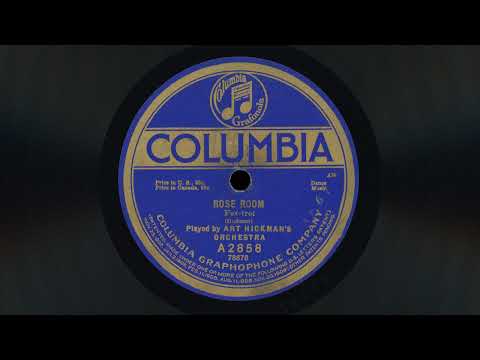
It was during this time that Hickman’s orchestra went into the studio for Columbia for a marathon six day session that resulted in twenty three recordings – seventeen of which were released. This tune, “Rose Room” had already been recorded by several bands in 1918 and early 1919 – but here we have it performed by the composer himself and the Rose Room orchestra who gave that ballroom a legendary status in dance band – and jazz – history.
The tune has a wonderful chord structure and became a jazz standard after being revived first in 1932 by Duke Ellington (who also later used its chord progression to create the contrafact “In A Mellotone” in 1940) and most famously by Benny Goodman, who recorded it during his first session with Charlie Christian on guitar in 1939.
Hickman retired from big band work in late 1921 but the orchestra continued with his name under the direction of Earl Burtnett – and later, Walter Rosner – until the late 20s. Hickman died at the age of 43 in early 1930.
Recorded in New York City on September 20, 1919. Released as Columbia A2858
Credits Walter Rosner – trumpet Fred Kaufman – trombone Bert Ralton, Clyde Doerr – alto saxophone Steve Douglas – violin Frank Ellis – piano Ben Black – banjo Bela Spiller – tuba Art Hickman – drums, leader