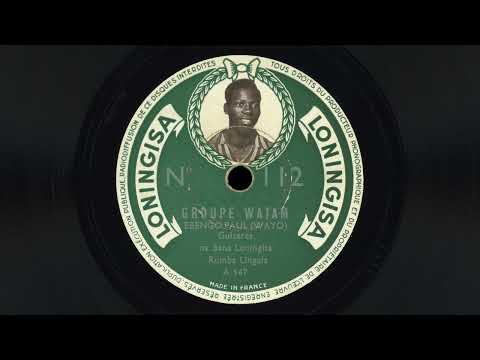
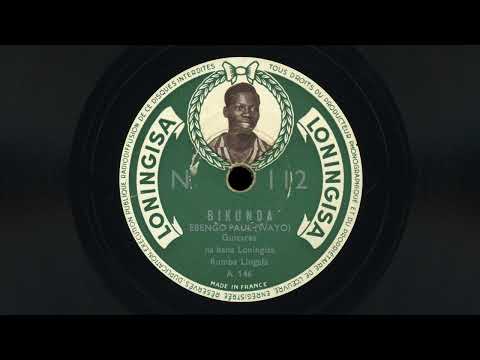
This is truly one of the gems of the collection: a Loningisa issue by Paul Ebengo (aka Wayo, or De Wayon) that came with an original sleeve!
Ebengo Isenge Paul was born in 1934 in the Maï-ndombe province of Belgian Congo, the eldest of four brothers. He became a well-known guitarist who had a flamboyant personality, described as a “Boute-en-train” (party animal) by the Dictionnaire Des Immortels De La Musique Congolaise Moderne. He is credited as being the musician who instilled in Franco (of OK Jazz) the passion for the guitar, though he was not his direct mentor on the instrument.
In 1952 he formed the Watam Group, who performed frequently at wedding festivities, mourning events or at other popular celebrations.
In 1953, Ebengo – via Henri Bowane – signed a long term contract with Basile Papadimitriou (owner of the Loningisa label). They immediately started recording for the label – and this disc was among their first records for Loningisa.
After a long musical career, Ebengo passed away in Kinshasa, on June 29, 1990.
Recorded in Léopoldville, Belgian Congo on August 12, 1953. Released as Loningisa 112 and His Master’s Voice LON 1019.
Credits (based on personnel in Groupe Watam): Paul Ebengo (aka Wayo, aka De Wayon) – guitar Franco (?) – guitar Mutombo (?), Ganga Mongwalu (?), Bikunda (?), Nganga (?), Kadiadia (?), Sébastien (?) – vocals, maracas Nicolas Bossuma Dessoin (?) – tam-tam
This is truly one of the gems of the collection: a Loningisa issue by Paul Ebengo (aka Wayo, or De Wayon) that came with an original sleeve!
Ebengo Isenge Paul was born in 1934 in the Maï-ndombe province of Belgian Congo, the eldest of four brothers. He became a well-known guitarist who had a flamboyant personality, described as a “Boute-en-train” (party animal) by the Dictionnaire Des Immortels De La Musique Congolaise Moderne. He is credited as being the musician who instilled in Franco (of OK Jazz) the passion for the guitar, though he was not his direct mentor on the instrument.
In 1952 he formed the Watam Group, who performed frequently at wedding festivities, mourning events or at other popular celebrations.
In 1953, Ebengo – via Henri Bowane – signed a long term contract with Basile Papadimitriou (owner of the Loningisa label). They immediately started recording for the label – and this disc was among their first records for Loningisa.
After a long musical career, Ebengo passed away in Kinshasa, on June 29, 1990.
Recorded in Léopoldville, Belgian Congo on August 12, 1953. Released as Loningisa 112 and His Master’s Voice LON 1019.
Credits (based on personnel in Groupe Watam): Paul Ebengo (aka Wayo, aka De Wayon) – guitar Mutombo (?), Ganga Mongwalu (?), Bikunda (?), Nganga (?), Kadiadia (?), Sébastien (?) – vocals, maracas Nicolas Bossuma Dessoin (?) – tam-tam
It’s Monday and we all need that jolt of joy that only bebop can deliver.
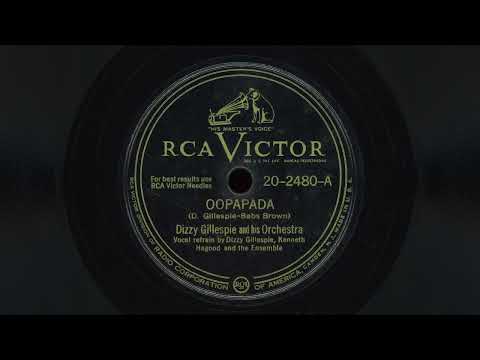
Here’s Dizzy Gillespie with Oopapada – an infectious number involving some creative vocalizing from his heyday in 1947. Had a beat copy of this one for years and finally found a nice upgrade for it.
Recorded in New York City on August 22, 1947. Released as RCA Victor 20-2480.
Dizzy Gillespie – director, vocal Kenny Hagood – vocal Dave Burns, Matthew McKay, Ray Orr, Elmon Wright – trumpet Taswell Baird, William Shepherd – trombone John Brown, Howard Johnson – alto sax Joe Gayles, James Moody – tenor sax Cecil Payne – baritone sax Milt Jackson – vibes John Lewis – piano John Collins – guitar Ray Brown – bass Joe Harris – drums
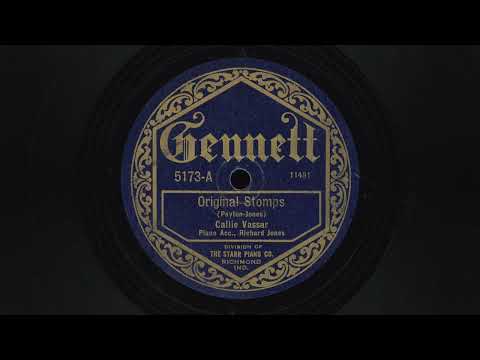
The last of four sides recorded by Chicago blues vocalist Callie Vassar for Gennett at a single session in 1923 with New Orleans jazz pianist Richard M. Jones (his debut recording at that).
Record companies began recording blues artists in 1921 with Mamie Smith’s hit for Okeh, “Crazy Blues”. Okeh cranked out blues records on their 8000 series throughout 1921-22. A second wave began when Columbia signed Bessie Smith and her recording of “Downhearted Blues” became a huge seller in early 1923.
Gennett began recording blues artists of its own in March of 1923 when it began recording vocalist Viola McCoy. This was followed by sessions with Sammie Lewis and Mandy Randolph in April and Callie Vassar at the end of May. Jones was working out of Chicago and I am guessing that Vassar must have been performing there as well.
“Original Stomps” is a Richard M. Jones original composition – co-credited to Dave Peyton – and Jones plays the introduction and a middle solo. He would later re-record it with vocalist Thelma La Vizzo as “The Stomps” for Paramount in 1924.
Music publisher Melrose featured Vassar on the cover of the sheet music for “All Night Blues” (another Jones composition that Vassar recorded at this session). It is the only known photo of her. Gennett featured both Vassar and Jones with photographs in their 1924 catalog. Despite this, sales of the Vassar records were not strong.
She never recorded again.
Recorded in Richmond, Indiana on May 31, 1923. Released as Gennett 5173.
Credits: Callie Vassar – vocals Richard M. Jones – piano
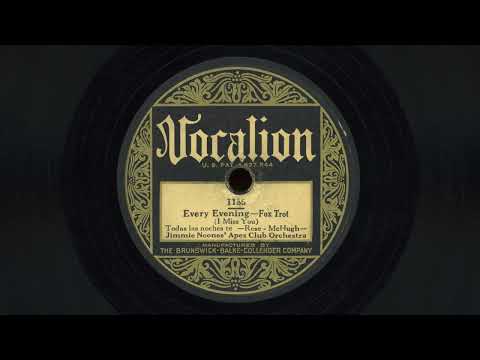
A lively session from Jimmie Noone and his Apex Club Orchestra.
One thing that always stands out in Noone’s records of this era is his incredibly adept rhythm section. Here we have Earl Hines, Bud Scott, and Johnny Wells who really drive this one home. Hines takes an extended solo starting at the minute mark, and is followed by a dextrous solo by Noone.
Recorded in Chicago, Illinois on May 16, 1928. Released as Vocalion 1185.
Credits: Jimmie Noone – clarinet, director Joe Poston – clarinet, alto sax Earl Hines – piano Bud Scott – banjo Johnny Wells – drums
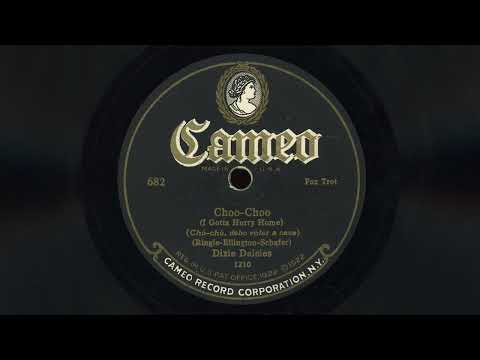
A Sam Lanin band given the pseudonym of Dixie Daisies on a release for the Cameo label that features Duke Ellington’s first recorded composition: “Choo-Choo” – which Ellington also recorded the same month with The Washingtonians.
In an article for Record Research in 1957, writer Woody Backensto recounted a discussion he had with Victor d’Ippolito, who recalled playing first trumpet on this tune, with Red Nichols beside him covering the “hot” solo that starts at 1:37.
Recorded in New York City on November 14, 1924. Released as Cameo 682.
Credits: Sam Lanin – director Vic d’Ippolito, Red Nichols – trumpet Mike Durso – trombone Clarence Heidke, Alfie Evans – clarinet, alto sax, soprano sax George Slater – clarinet, tenor sax Bill Krenz – piano Tony Colucci – banjo Joe Tarto – tuba Vic Berton – drums
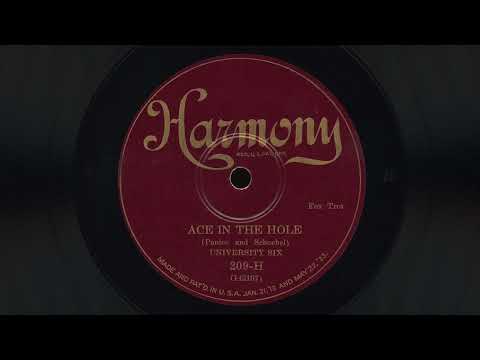
University Six were one of the many aliases that members of the California Ramblers used when recording on various labels. This moniker was used on the Harmony – Velvet Tone – Diva labels, which were Columbia’s budget labels.
This lively tune, composed by fellow jazz-bos Louis Panico and Elmer Schoebel, is performed with a festive panache that exudes the optimism and confidence of the jazz age. Panico (the lead trumpet player with Isham Jones’ Orchestra famous for his “laughing” effects on the hit “Wabash Blues”) and Schoebel were playing at Guyon’s Paradise Ballroom in Chicago in 1926 – which is ostensibly where they must have collaborated on this tune. Anyone know the backstory there?
This session was Tommy Dorsey’s first with the University Six, and he takes a nice trombone solo starting at 1:52. Roy Johnson and Bobby Davis do fine work throughout – and of course Adrian Rollini can be heard on bass sax stoking the engine in the rhythm section.
All in all – this one’s a real ace in the hole.
Recorded in New York City on May 12, 1926. Released as Harmony 209-H.
Credits Roy Johnston – trumpet Bobby Davis – clarinet, soprano sax, alto sax Tommy Dorsey – trombone Sam Ruby – tenor sax Adrian Rollini – bass sax Irving Brodsky – piano, arranger Tommy Felline – banjo Herb Weil – drums
As 1928 drew to a close, Louis Armstrong had recorded his last session with his famed Hot Five – thus ending one of the most influential and pioneering sprees of recorded jazz in history. The new year also saw Louis move from Chicago – where he had built a name for himself after leaving the Fletcher Henderson band in 1925 – back to New York City, where a new chapter of his career would unfold.
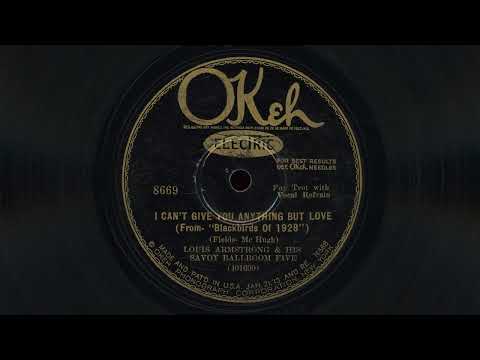
In March of 1929, he recorded two songs during an Okeh session with Luis Russell and members of Russell’s excellent orchestra. Though the performers numbered nine in total, they were credited as “Louis Armstrong & His Savoy Ballroom Five”. One of the songs was this recording of “I Can’t Give You Anything But Love” – a popular show tune which was only a year old at that point and had been recorded by many others throughout the year.
In his book on Louis Armstrong, French jazz critic Hugues Panassié writes that this song “is one of Louis Armstrong’s most celebrated recordings. Except for the second half of the first chorus played by Higginbotham on trombone, Louis solos all the time, while in the background the saxophone section softly states the theme. This uninterrupted statement of the theme behind the trumpet and vocal gives one a chance to realize easily the richness of Louis’ invention in his variations as when, for instance, his attack on some of his phrases is held back as late as possible, thus creating a strong tension. Louis plays the first half of the first chorus with a mute, sings the whole of the second, and without mute plays with terrific power in the third, ending by a progressive ascension up to high F.”
I’d also add that Louis’ vocals during this recording are quite remarkable. They start off earnest and plaintive, then he begins to scat and improvise over the melody – giving the vocals a decidedly instrumental feel. While his famous scatted verse on 1926’s “Heebie Jeebies” made this technique well-known, here we hear a more refined version that makes the vocal line decidedly his own.
Recorded in New York City on March 5, 1929. Released as Okeh 8669.
Credits: Louis Armstrong – trumpet, vocals J. C. Higginbotham – trombone Albert Nicholas, Charlie Holmes – alto sax Teddy Hill – tenor sax Luis Russell – piano Eddie Condon – banjo Pops Foster – string bass Paul Barbarin – drums
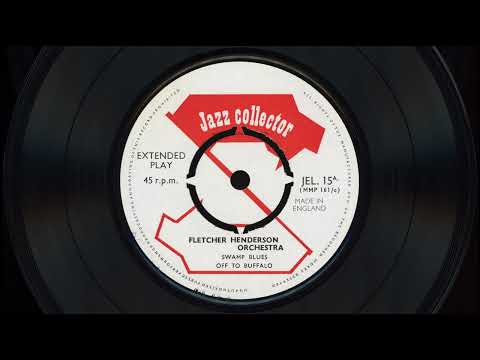
Another gift from friend of the channel @wlsallnight – A pair of Fletcher Henderson sides from Paramount masters bootlegged in 1963 on 45 rpm 7″ vinyl disc on the Jazz Collector label. These are pirated copies on a different format entirely made from dubs of original releases.
These excellent tunes come from two *very* scarce Henderson sides originally released on the Paramount label – and I was very excited to hear them. The band was at this time recording with Columbia and with the Harmony – Velvet Tone – Diva labels using the pseudonym the Dixie Stompers.
As I listened to the transfer I realized that in an attempt to limit surface noise of the source material, the JC label applied severe high pass and low pass filters that kill any frequencies below 200 Hz and above 3 kHz. This severely limits the bass response and gives it that “wet blanket” effect on the higher frequencies. No amount of futzing with the EQ settings is going to bring those frequencies back. 😭
As a result, the sound quality is greatly diminished. I was able to bring up some bass frequencies and highs so that it is at least a bit more listenable. But I share it just so you can hear these great Henderson sides – even in their diminished state.
Recorded in New York City circa April, 1927. Released by Jazz Collector Records as JEL 15. Originally issued as Paramount 12486, Broadway 5020, Domino 3999 and Regal 8360.
Credits: Fletcher Henderson – piano, arranger, director Joe Smith, Russell Smith (?) – trumpet Benny Morton (?) – trombone Buster Bailey, Don Redman – clarinet, alto sax Coleman Hawkins – clarinet, tenor sax Charlie Dixon – banjo June Cole – tuba Kaiser Marshall – drums
A good friend picked this up for me on a trip to the west coast. Thanks, @wlsallnight !
There are lots of rather silly and soppy “Whiffenpoofish” Yale songs that were recorded in the 78 rpm era – which I find eminently ignorable as a general rule – even as a Yalie myself. But this one has quite an interesting history.
In July of 1927, Cecil H. Taylor, President of the Imperial Society of Teachers of Dancing (ISTD), debuted a new “Yale Dance” set to a blues rhythm in London. Songwriters Collie Knox and Vivian Ellis wasted no time in composing a tune called “The Yale Blues” to accompany Taylor’s dance. They sent a copy to Taylor and he responded by saying “I consider it very good indeed and the rhythm absolutely perfect for the new Yale Dance invented by me.”
Unfortunately for Taylor, many other teachers were introducing new dances around the same time – many of which, such as the Black Bottom, that were imported from American jazz culture. There was an outcry, as “Many professionals feared that the incessant flurry of silly new dances threatened their artistic integrity, and undermined their authority with the dancing public.” (1)
As a result, the ISTD passed a resolution to coordinate efforts so that a single new dance could be introduced every season. The Dancing Times reported: “We don’t want any more ‘freak’ dances exploited by individuals for the sake of personal publicity. They confuse the public.” (1)
While that may have thrown cold water on future dance fads, it certainly did not stop the popularity and success of this song. The tune first made rounds in late 1927 among British dance bands such as the Savoy Orpheans, Harry Bidgood And His Broadcasters, Harry Hudson’s Melody Men, Jack Payne And His Hotel Cecil Orchestra, The Piccadilly Revels Band, and The Savile Dance Orchestra. It made it to the U.S. in early 1928 where it was recorded by Waring’s Pennsylvanians and Jimmy Joy and his Orchestra before being taken up by Emerson Gill and his Bamboo Garden Orchestra.
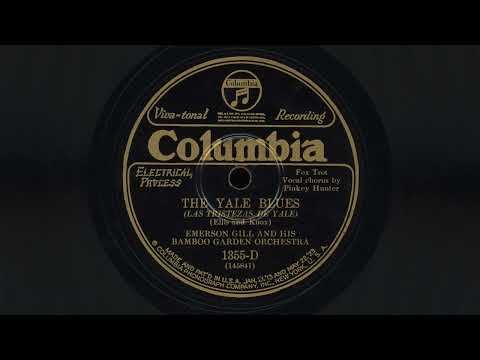
Emerson Gill led this Cleveland Ohio outfit which performed at the Bamboo Gardens club on East 88th Street and on local radio station WTAM. They recorded sixteen sides for Okeh from 1924-26 and then one session for Columbia in 1928 that resulted in five sides – including this one.
The song lyrics cleverly extol the new dance while managing to get in a dig at those agitated and envious Harvard rivals.
“They say the Yale is like the walk of any snail upon a stalk Those are the views of all who do the new Yale Blues
Just close your eyes you’ll do it soon a world of sighs is in the tune When daylight dies the stars are dancing those new Yale Blues
When Harvard knew That syncopation It sent them simply wild Their anger grew When ev-ry nation And ev’ry little child Said that the Yale had put to rest Beyond the pale it is the best Put on your shoes Suppose you try those new Yale Blues.” (2)
Recorded in Chicago, Illinois on March 27, 1928. Released as Columbia 1355-D
Credits: Emerson Gill – violin, director Joe Aumend, Duke Krovonas, Unknown – trumpet Don Dupre – trombone Menden Frye, Willard Pott – clarinet, alto sax Jim Harry – clarinet, tenor sax Eddie Robinson – piano Pinkey Hunter – banjo, vocals Imo Smith – tuba Andy Picard – drums
Source: 1. Dancing in the English Style : Consumption, Americanisation and National Identity in Britain, 1918–50 by Allison Abra, Manchester University Press, 2017, p. 72 2. “The Yale Blues” original sheet music, published by Leo Feist, Inc., lyrics by Collie Knox.