Jazz Crazy Records

An Archive of Early Jazz on 78 RPM

Author: Professor M

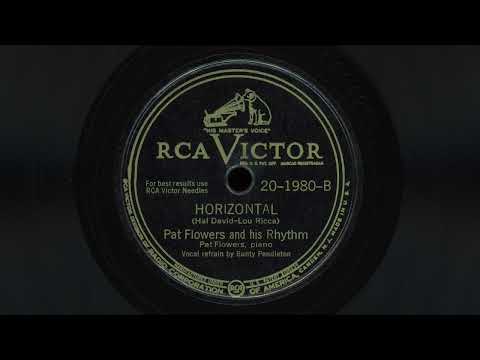
  • “Horizontal” – Bunty Pendleton with Pat Flowers and his Rhythm (1946)

    “Horizontal” – Bunty Pendleton with Pat Flowers and his Rhythm (1946)

    Artists chase fame and immortality hoping that one day something they create – even if only one work – will be remembered. Some achieve that and more – while untold thousands toil away with hundreds of hidden gems that the world may never see or hear.

    Lucy “Bunty” Pendleton was a pianist and vocalist who played in NYC clubs, restaurants, and hotel bars in the 1940s and 50s. There are photos of her jamming with Baby Dodds and Albert Nicolas. She was married to music critic Bob Sylvester, who “covered the nightclub circuit of 52nd Street when its string of jazz clubs earned the label Swing Street.”

    Despite all of that – The whole of Miss Pendleton’s recorded oeuvre is represented here in this three minute video. I discovered this record in a stash of mine that I was sifting through and seeing the RCA Victor label, I nearly chucked it in the “to sell or re-home” pile. The song title was intriguing and something about the names of Bunty Pendleton and Pat Flowers dredged up a Dickensian curiosity that caused me to put the record on.

    Thank goodness I did – because this tune has become a real favorite. The slow-paced chill vibe is the perfect backdrop for Pendleton’s warm and silky voice as she opines on the joy of being horizontal.

    Part of the beauty of this tune is certainly also due to the lyrics of Hal David – who later went on to collaborate with Burt Bacharach on tunes such as “The Look Of Love” and “Raindrops Keep Fallin’ On My Head”.

    In any case, most everyone who hears it may wonder why she didn’t do more recording. I’ll say that this one record – in all its beauty – is enough in my mind to earn Miss Pendleton a fond and worthy remembrance in the immortal halls of artists who made their mark. In any case, here we are seventy-eight years later still talking about it.

    Recorded in New York City on July 15, 1946.
    Released as RCA Victor 20-1980.

    Credits
    Bunty Pendleton – vocals
    Pat Flowers – piano, director
    Herman Autrey – trumpet
    Gene Sedric – clarinet, tenor sax
    Jimmy Shirley – guitar
    Cedric Wallace – double bass
    Willmore “Slick” Jones – drums
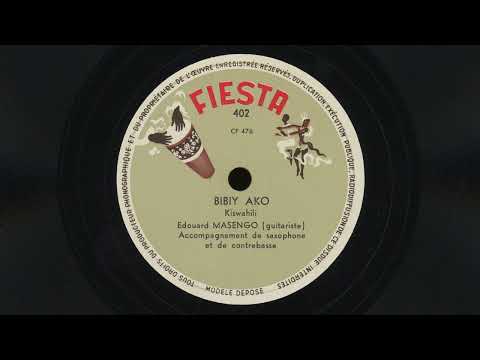
  • “Bibiy Ako” – Edouard Masengo (1950s) Congolese Guitarist

    “Bibiy Ako” – Edouard Masengo (1950s) Congolese Guitarist

    Edouard Masengo was born in 1933 in the village of Kafubu in the Katanga province in the southern Copperbelt region of Congo – so named for the many mining camps in the region. He started playing guitar when he was eleven.

    He formed a group called JECOKE – The Young Comedians of Katanga – who first sang at the Regina Hotel in Léopoldville. One of their signature tunes was a cover of “Paper Doll”, the hit song made famous in the U.S. by the Mills Brothers. Masengo ultimately ended up in Nairobi, Kenya, where he recorded extensively with Gallotone Records and partnered with advertising agencies to promote Coca-Cola as a kind of celebrity spokesperson.

    Along with his cousin, Jean Bosco Mwenda, Masengo became a dominant force in the African music scene in the 1950s and early 1960s. Both were known as progenitors of the wildly popular Katanga guitar style that also went on to greatly influence the music of Kenya and Tanzania.

    The Fiesta label was a Fonior / Decca France sublabel that began in 1947 specializing in North African artists. In 1950 their focus shifted to West Africa and Congo and I believe this record was released at some point in the early 1950s.

    Released as Fiesta 402.

    Credits:
    Edouard Masengo – guitar, vocals
    Unknown artists – saxophone, bass, glass bottle

    The flip side of this record, “Mapendano” can be found at:
    https://youtu.be/Bc6zpxgpLYA

    Sources:
    “Revisiting the Katanga Guitar Style(s) and Some Other Early African Guitar Idioms” by David Racanelli, Black Music Research Journal, Vol 36, No. 1. Spring 2016.

    Amazing interview with Edouard Masengo:
    https://www.youtube.com/watch?v=gOtwTNBy1o8

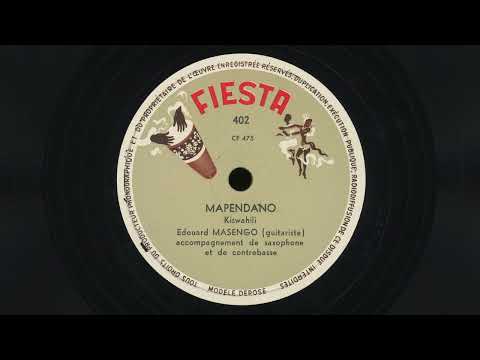
  • “Mapendano” – Edouard Masengo (1950s) Congolese guitarist

    “Mapendano” – Edouard Masengo (1950s) Congolese guitarist

    Edouard Masengo was born in 1933 in the village of Kafubu in the Katanga province in the southern Copperbelt region of Congo – so named for the many mining camps in the region. He started playing guitar when he was eleven.

    He formed a group called JECOKE – The Young Comedians of Katanga – who first sang at the Regina Hotel in Léopoldville. One of their signature tunes was a cover of “Paper Doll”, the hit song made famous in the U.S. by the Mills Brothers. Masengo ultimately ended up in Nairobi, Kenya, where he recorded extensively with Gallotone Records and partnered with advertising agencies to promote Coca-Cola as a kind of celebrity spokesperson.

    Along with his cousin, Jean Bosco Mwenda, Masengo became a dominant force in the African music scene in the 1950s and early 1960s. Both were known as progenitors of the wildly popular Katanga guitar style that also went on to greatly influence the music of Kenya and Tanzania.

    The Fiesta label was a Fonior / Decca France sublabel that began in 1947 specializing in North African artists. In 1950 their focus shifted to West Africa and Congo and I believe this record was released at some point in the early 1950s.

    Released as Fiesta 402.

    Credits:
    Edouard Masengo – guitar, vocals
    Unknown artists – saxophone, bass, glass bottle

    The flip side of this record, “Bibiy Ako” can be found at:
    https://youtu.be/Wc-dEbHzuv4

    Sources:
    “Revisiting the Katanga Guitar Style(s) and Some Other Early African Guitar Idioms” by David Racanelli, Black Music Research Journal, Vol 36, No. 1. Spring 2016.

    Amazing interview with Edouard Masengo:
    https://www.youtube.com/watch?v=gOtwTNBy1o8

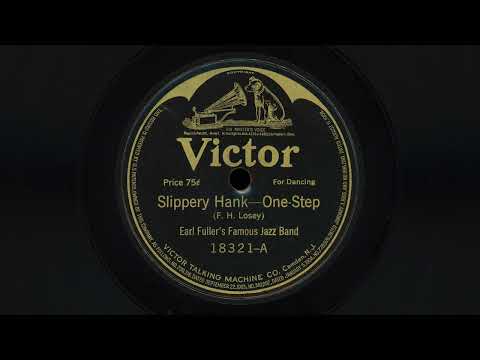
  • “Slippery Hank” – Earl Fuller’s Famous Jazz Band (1917) Madcap Rag-a-Jazz Romp!

    “Slippery Hank” – Earl Fuller’s Famous Jazz Band (1917) Madcap Rag-a-Jazz Romp!

    After the Original Dixieland Jazz Band (ODJB) recorded what is considered the first jazz record with Victor in late February of 1917, they began playing at Reisenweber’s Cafe in New York to growing crowds interested in this new music.

    Earl Fuller led his DeLuxe Orchestra at Rector’s Restaurant. After hearing ODJB, Fuller formed an impromptu small combo jazz act to compete with the upstart New Orleans band at the competing venue.

    While many jazz historians write off Fuller’s band as a crude attempt to imitate jazz, I’d like to suggest perhaps it had a more expansive role. I’ve loved this record since I first heard it – and can’t imagine what the reaction to this wild spastic noise-fest must have been in 1917!

    To me, the beauty of Earl Fuller’s Famous Jazz Band was that at base, it was a fun chaotic romp. The unbridled cacophony of “Slippery Hank” may have used jazz as cover – but this was music that was not trying to cloyingly ingratiate itself to the general public – rather, it beat the audience over the head with thundering spastic snare drums, howling warbling clarinet lines, and a dive-bombing trombone that sends the listener running for cover without warning.

    This was all by design – Victor Records in its promotional materials described the sound of Ted Lewis’ clarinet as “a dog in his dying anguish.” The punk rocker in me adores this no-holds-barred assault on musical sensibilities. This was music that I find as culturally relevant to the time as the Dadaists performing at the Cabaret Voltaire in Zürich.

    Fuller’s band recorded several more records for Victor, Emerson, Gennett, and Edison from 1917-1918 before members went their separate ways. Ted Lewis poached Kahn, Raderman, and Lucas to start his own band at the end of 1918 – and they released their first record in September of 1919.

    Recorded in New York City on June 4, 1917.
    Released as Victor 18321.

    Credits:
    Earl Fuller – piano, director
    Walter Kahn – cornet
    Harry Raderman – trombone
    Ted Lewis – clarinet
    John Lucas – drums

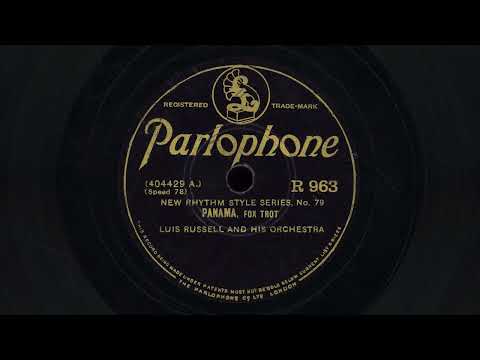
  • “Panama” – Luis Russell and his Orchestra (1930) Hot! 🔥🔥🔥

    “Panama” – Luis Russell and his Orchestra (1930) Hot! 🔥🔥🔥

    The last – and hottest – of three recordings the great Luis Russell orchestra made during a fantastic 1930 session that I highlighted this week.

    “Panama” was originally published in 1912 by ragtime composer William Henry Tyers and was recorded by New Orlean’s Rhythm Kings in 1922, quickly becoming standard fare and was subsequently recorded by W. C. Handy in 1923 Johnny De Troit, Henry Halstead, and McKenzie’s Candy Kids in 1924 – and by Fletcher Henderson in 1925.

    Things really get cookin’ around 0:41 as a hot Pops Foster bass break leads into a Henry “Red” Allen trumpet solo, followed by a trombone solo from J.C. Higginbotham, a tenor sax solo from Greely Walton, a clarinet solo from Albert Nicholas, an alto solo from Charlie Holmes, and a wild ensemble show-stopper ending that brings the house down and then some.

    Surely a recording that showcases the Russell band at the top of their game!

    Recorded in New York City on September 5, 1930.
    Released in the U.K. as Parlophone R 963.
    (Original domestic release = Okeh 8849)

    Credits
    Luis Russell – piano, director
    Otis Johnson, Henry “Red” Allen – trumpet
    J.C. Higginbotham – trombone
    Charlie Holmes – alto sax
    Albert Nicholas – alto sax, clarinet
    Greely Walton – tenor sax
    Will Johnson – banjo, guitar
    George Pops Foster – string bass
    Paul Barbarin – drums

    The two other recordings from this same session:

    “High Tension”
    https://youtu.be/yei7nN1iRL0

    “Muggin’ Lightly”
    https://youtu.be/uezEjgzmt8E

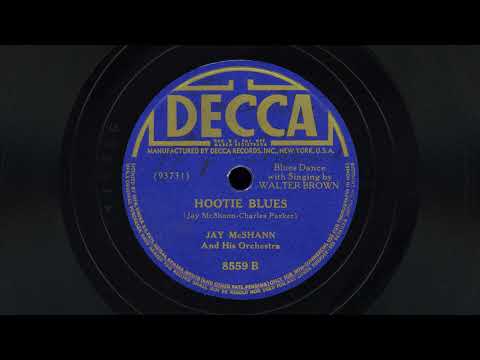
  • “Hootie Blues” – Jay McShann and his Orchestra (1941) Featuring Charlie Parker

    “Hootie Blues” – Jay McShann and his Orchestra (1941) Featuring Charlie Parker

    While technically not the first recording of Charlie Parker, this was the first released recording that he appeared on with a solo – and an arranger credit.

    Parker’s tone is unmistakeable and starts around the 0:36 mark. He is relaxed and confident – with a few flourishes within his blues lines that serve as foreshadowing for his later work.

    Jay McShann had been active in the Kanasas City music scene throughout the 1930s, and he formed his own unit in 1939. His nickname was “Hootie” – so this tune is his blues.

    Recorded in Dallas, Texas on April 30, 1941.
    Released as Decca 8559.

    Credits:
    Jay McShann – piano, leader
    Buddy Anderson, Harold Bruce, Orville Minor – trumpet
    Joe Taswell Baird – trombone
    John Jackson, Charlie Parker – alto sax
    Harold Ferguson, Bob Mabane – tenor sax
    Gene Ramey – bass
    Gus Johnson – drums
    Walter Brown – vocals

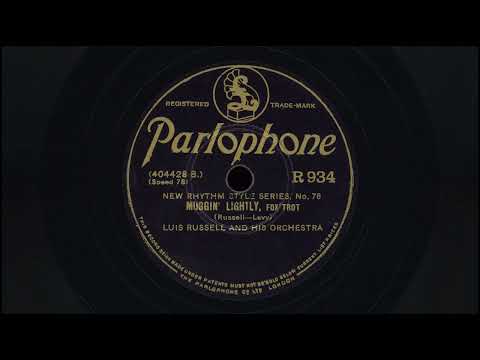
  • “Muggin’ Lightly” – Luis Russell and his Orchestra (1930)

    “Muggin’ Lightly” – Luis Russell and his Orchestra (1930)

    The second of three recordings the great Luis Russell orchestra made during a fantastic 1930 session that I am highlighting this week.

    “Muggin’”, according to Cab Calloway’s 1938 Hepster’s Dictionary, is defined as “making ’em laugh, putting on the jive.” while “Muggin’ Lightly” is defined as a “light staccato swing” and as such, this tune composed by Russell is a relaxed romp that has some very interesting compositional elements.

    Jazz Historian K.B. Rau analyzed the composition on his excellent website, “Investigating Jazz Recordings” at https://www.harlem-fuss.com/ and I’ve attempted to translate his analysis into YouTube chapters to help facilitate understanding how this complex composition is arranged:

    0:00 A section: “Simple smooth melody presented by the tenor sax” (8 bars)
    0:10 A section: “Interrupted by some trumpet led saxes” (8 bars)
    0:20 A section: Repeat (8 bars)
    0:30 A section: “Swinging jazzy tenor sax phrase” (8 bars)
    0:41 Trombone chorus – J.C. Higginbotham (16 bars)
    1:01 Alto sax chorus – Charlie Holmes (16 bars)
    1:21 B section: Modulation of the ensemble from B major to Bb major (8 bars)
    1:32 C section: “A beautifully swinging tutti” (24 bars)
    2:03 D section: Closely arranged ensemble (16 bars)
    2:23 E section: For the sax section – starting in F sharp (16 bars)
    2:44 D section: Ensemble in “smoothly swinging laidback back-beat phrasing. Simply Great!” (8 bars)

    Recorded in New York City on September 5, 1930.
    Released in the U.K. as Parlophone R 934.
    (Original domestic release = Okeh 8830)

    Credits
    Luis Russell – piano, director
    Otis Johnson, Henry Red Allen – trumpet
    J.C. Higginbotham – trombone
    Charlie Holmes – alto sax
    Albert Nicholas – alto sax, clarinet
    Greely Walton – tenor sax
    Will Johnson – banjo, guitar
    George Pops Foster – string bass
    Paul Barbarin – drums

    The two other recordings from this same session:

    “High Tension”
    https://youtu.be/yei7nN1iRL0

    “Panama”
    https://youtu.be/WeryW5ri6yU

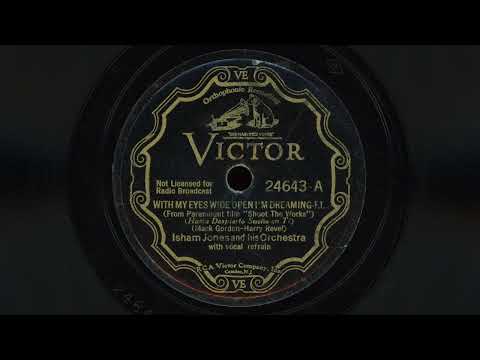
  • “With My Eyes Wide Open I’m Dreaming” – Isham Jones and his Orchestra (1934)

    “With My Eyes Wide Open I’m Dreaming” – Isham Jones and his Orchestra (1934)

    The recorded output of Isham Jones on the Victor label is known as some of the finest dance music recorded during the depths of the Great Depression.

    Jones led his band in Chicago from 1920-1927 and 1929-1932 in Chicago and recorded extensively on the Brunswick label. After regrouping in New York, Jones signed with the Victor label and recorded over 50 sides over two years, until switching to the Decca label in the summer of 1934.

    This show tune was from the film “Shoot the Works”, a Paramount comedy in which the song plays a role, sung by Dorothy Dell accompanied by the Ben Bernie orchestra. The 19-year-old Dell was tragically killed in a car accident in June of 1934 – a month before the film’s public release.

    Recorded in New York City on May 10, 1934.
    Released as Victor 24643

    Credits
    Isham Jones – leader, tenor sax
    George Thow, Johnny Carlson, Joe Hostetter – trumpet
    Mark Bennett, Russ Jenner – trombone
    Milt Yaner, Victor Hauprich – clarinet, alto sax
    Saxie Mansfield – tenor sax
    Eddie Stone – violin
    Harold Smith or James Noble – piano
    George Wartner or Jack Blanchette – guitar
    Richard Kissinger – tuba
    Walter Lageson – drums
    Joe Martin – vocals

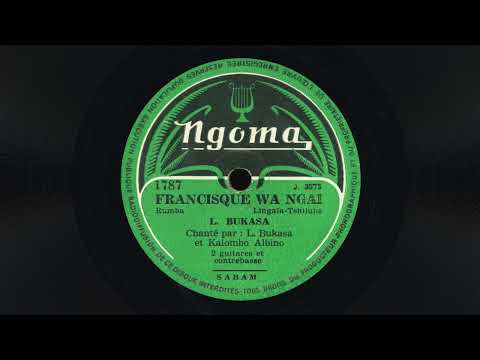
  • “Francisque Wa Ngai” – Léon Bukasa (1957)

    “Francisque Wa Ngai” – Léon Bukasa (1957)

    Another excellent track by Léon Bukasa with a perfectly iconic intro – a delightful guitar line by Papa Noël.

    Recorded in Léopoldville, Belgian Congo on May 6, 1957.
    Released as Ngoma 1789.

    Credits:
    Léon Bukasa – guitar, vocals
    Kalombo Albino – vocals
    Antoine Nedule aka Papa Noël – guitar
    Mwena Joseph – bass

    The flip side of this record is a great tune, “Monique Wa Baba” – which can be heard at:
    https://youtu.be/Zl6hNQ0xtv8

    If you are also a fan of Rumba Congolaise, you will want a copy of this release:
    https://planetilunga.bandcamp.com/album/the-soul-of-congo-treasures-of-the-ngoma-label-1948-1963

    If you’d like to hear more, be sure to check out my interview with producer Alastair Johnson:
    https://youtu.be/2BSsWpb49AA

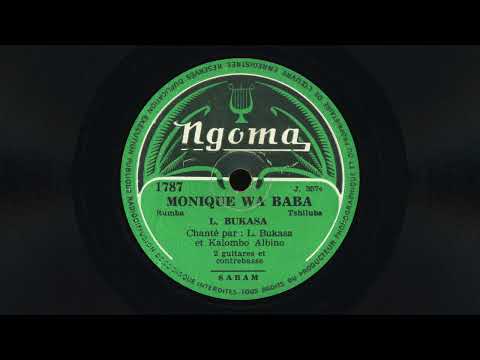
  • “Monique Wa Baba” – Léon Bukasa (1957)

    “Monique Wa Baba” – Léon Bukasa (1957)

    When I first heard this track by Léon Bukasa on the amazing Planet Ilunga release “The Soul of Congo – Treasures of the Ngoma label (1948​-​1963)” I was immediately a huge fan.

    From the first bass line, you know this is going to be a good. and then when the guitar joins in, you realize it’s even better.

    I despaired at probably never being able to locate a copy of this amazing record but was incredibly lucky to find a very decent copy earlier this year.

    Sung in the Tshiluba language spoken in the central Kasai region.

    Recorded in Léopoldville, Belgian Congo on May 6, 1957.
    Released as Ngoma 1789.

    Credits:
    Léon Bukasa – guitar, vocals
    Kalombo Albino – vocals
    Antoine Nedule aka Papa Noël – guitar
    Mwena Joseph – bass

    The flip side of this record, “Francisque Wa Ngai” can be heard at:
    https://youtu.be/TtOofKHKWoA

    If you are also a fan of Rumba Congolaise, you will want a copy of this release:
    https://planetilunga.bandcamp.com/album/the-soul-of-congo-treasures-of-the-ngoma-label-1948-1963

    If you’d like to hear more, be sure to check out my interview with producer Alastair Johnson:
    https://youtu.be/2BSsWpb49AA