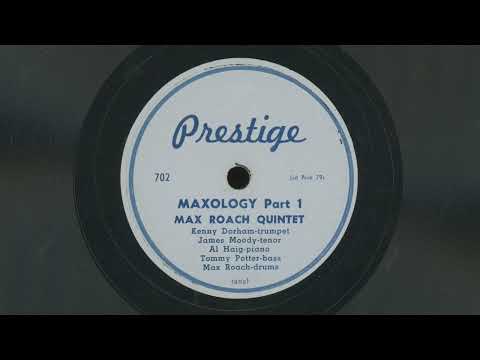
What I believe to be the first Max Roach Quintet record on a very early Prestige label release from 1949 featuring Kenny Dorham and James Moody.
After playing on many of the seminal bebop records of the mid to late 40s (with Charlie Parker, Dizzy Gillespie, Miles Davis, and Bud Powell), on this record, Max Roach fronts his own band. Though curiously later Prestige pressings of this title were attributed to “The James Moody Quintet” instead.
Recorded in Studio Technisonor, Paris, France on May 15, 1949. Released as Prestige 702. Found in the 78 crates at the back of Bob’s Blues and Jazz Mart in Chicago, Illinois in January, 2023.
Credits Kenny Dorham – trumpet James Moody – tenor sax Al Haig – piano Tommy Potter – bass Max Roach – drums
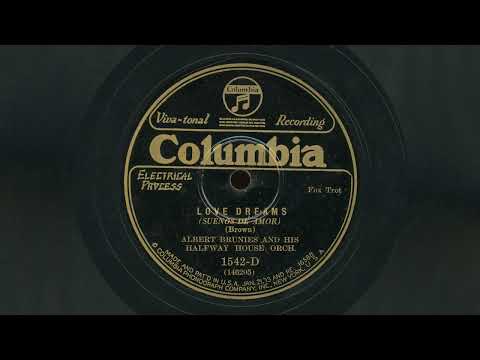
Albert “Abbie” Brunies was born into a musical New Orleans family in 1900. When his older brothers Merritt and Henry left town in 1920, Albert revived the name of the jazz band they had started in 1918, “The New Orleans Jazz Babies”. The band started playing at a roadhouse outside of New Orleans known for its hot dance music – The Halfway House – where they performed and recorded as the Halfway House Orchestra.
This snappy number was recorded with five other tunes in April of 1928 with clarinetist Sidney Arodin – who starts this dance number out with a solo right out of the gate, followed later on the record by Joe Loyacano (alto sax) and Abbie himself on cornet.
I was lucky to have found a copy of this one in excellent shape – sound quality is quite nice on this one!
“Love Dreams” – Albert Brunies and his Halfway House Orchestra Recorded in New Orleans on April 26, 1928. Released as Columbia 1542-D
Credits: Albert “Abbie” Brunies – cornet, director Sidney Arodin – clarinet Joe Loyacano – alto sax Glyn Lea “Red” Long – piano Angelo Palmisano – banjo Chink Martin – tuba Emmett Rogers – drums
Roza Eskenazi was a famous singer of Greek Rebetiko music who began performing in the cabaret nightclubs of Athens in the 1920s. Discovered by Vassilis Toumbakaris of Columbia Records, she began recording the first of a great many sides for Columbia and became one of Columbia’s most popular Greek artists.
This scorcher, “Scandalous Lily”, is believed to have been released on Columbia in the U.S. in 1934 on beautiful royal blue shellac – but it was most likely recorded earlier – perhaps in 1931. Released as Columbia G-56320-F on the green Columbia label – designated for ethnic musical releases.
The song seems to detail the life of a bold and tough woman, Lily (Λιλι), who declares her immunity to the puffed-up machismo that surrounds her. She’s not afraid of knives or smoking and likes to drink and hang out with the guys.
Roza’s vocal delivery is immediately compelling – she communicates so much without being overly expressive or dramatic.
It would be wonderful to get a good English translation of the lyrics, which I awkwardly deciphered via Google Translate with mixed results. There seem to be many instances of slang that don’t translate well. Here are the original lyrics in Greek:
Λιλι Η Σκανδαλιαρα
Δε με μέλλει εμένα αν είσαι αλάνι απ’ τον Κοπανά και τον ντούρο βρε μάγκα μη μου κάνεις και με φοβερνάς
Γιατί είμαι εγώ η αλανιάρα η Λιλή η πρώτη σκανταλιάρα που δε δίνω γρόσι για τους μάγκες και δεν τρώγω τρίχες ματσαράγκες
Βρε αλάνι να φύγεις από μένα κοίταξε κι αλλού μην πλερώσεις βρε μόρτη τα σπασμένα κι είμαι μπελαλού
Και δε φοβούμαι τα μαχαίρια τα νταήδικά σου τα μπεγλέρια και νταμίρα όσο κι αν φουμάρεις βρε αλάνι δε θα με τουμπάρεις
Μη σε μέλλει αν είμαι απ’ τον Περαία ή απ’ την Κοκκινιά κι αν μεθάω και κάνω εγώ παρέα με όλο τον ντουνιά
Εγώ είμαι εκείνη η αλανιάρα η Λιλή η πρώτη σκανταλιάρα που δε δίνω γρόσι για του μάγκες και δεν τρώγω τρίχες ματσαράγκες
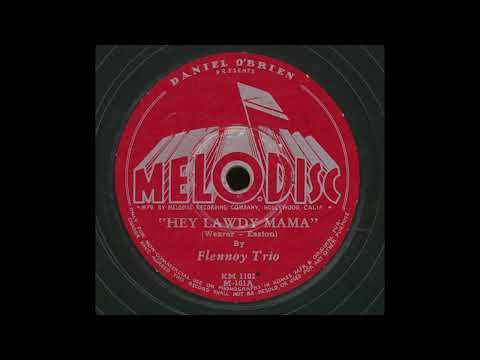
Lorenzo Flennoy was a Los Angeles pianist who was playing at the Savoy Ballroom fronting his own band when he was 22. His bands of various incarnations played frequently at California hotels and clubs throughout the 30s and early 40s with acts such as Earl Hines, Art Tatum, Stuff Smith, T-Bone Walker, Nellie Lutcher, and Meade Lux Lewis.
In the early 40s, Flennoy and his band started getting more national exposure by appearing in Hollywood movies such as Lady Luck (1942) and When Strangers Marry (1944).
In 1943, Flennoy formed a trio with Gene Phillips on Guitar and Robert Lewis on bass. Phillips was replaced in 1945 by Jimmie Edwards, who also sang.
In April (or May?) of 1945, while the rest of the world was watching WWII come to a close in the European theatre, The Flennoy Trio recorded two sides on a new local label called Melodisc – including this one called “Hey Lawdy Mama”.
When I first heard this lively and innovative song I was amazed by all of the prototypical elements of early rock and roll in this song from 1945. It’s catchy and also somewhat unpredictable. While Melodisc advertised the single in Billboard, no review followed and it seems to have disappeared off the radar.
Flennoy, on the other hand, continued to play music throughout the 40s, 50s, and 60s. He died at age 61 in 1971.
Released as Melodisc M-101 in May 1945.
Credits: Lorenzo Flennoy – piano Jimmie Edwards – guitar, vocals Robert Lewis – bass
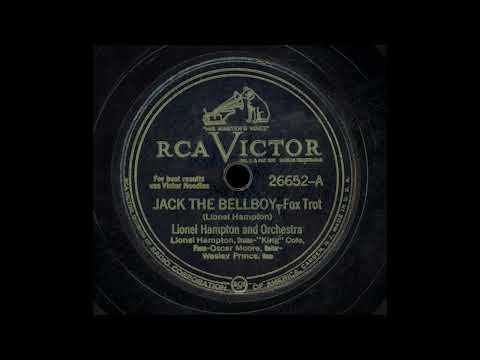
If you’ve only heard Nat King Cole from his later vocal records – if you’ve only heard Lionel Hampton on the vibes – if you’ve never heard the King Cole Trio with drums – you’ve gotta hear this!
Hamp is out of the gate at a furious pace – cymbals ablaze – he proceeds to tear up the room throughout with hot breaks, wild punctuations, seemingly spontaneous solos, and a whole range of percussive novelties. Pianist Nat “King” Cole and guitarist Oscar Moore come in at a clip, each trading high-energy solos – but amidst the continuous onslaught coming from the drum set, they seem to get lost in the vortex of Hamp’s masterful performance. At a couple points, one of them cries out in spontaneous joy – which no doubt was a whirlwind of inspiration for those present.
What a wild ride! Great record!
Recorded in Hollywood, California on May 10, 1940. Released as Victor 26652
Credits: Nat “King” Cole – piano Oscar Moore – guitar Wesley Prince – bass Lionel Hampton – drums
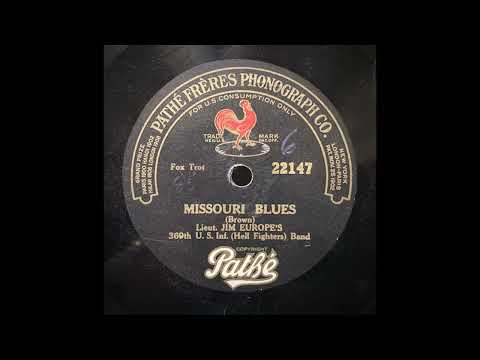
Toward the end of WWI in 1918, Lieutenant James Reece Europe’s regimental band of the 369th Infantry Regiment (the “Harlem Hellfighters”) toured France, playing countless concerts to new fans of their music – which was influenced by ragtime and itself was to become influential on the development of jazz music.
Returning to the United States in early 1919, Europe’s band recorded twenty-four sides for Pathé Records – including this one – and embarked on a tour of American cities.
Though Europe was a composer himself and co-wrote many compositions with Ford Dabney, “Missouri Blues” was composed by Polish-born Harry Finkelstein (using the pseudonym “Harry Brown”), who was the seventh unofficial member of the Canadian saxophone sextet and ragtime-influenced circus troupe Six Brown Brothers.
Tragically, only two days after “Missouri Blues” was recorded, Europe was stabbed in the neck by Herbert Wright, a drummer in the band who he had an argument with during intermission of a concert in Boston. He was taken to the hospital and died shortly thereafter.
After his death, he was given a public funeral in New York City. He is buried at Arlington National Cemetery.
Recorded in New York City on May 7, 1919. Released as Pathé 22147 (vertical cut).
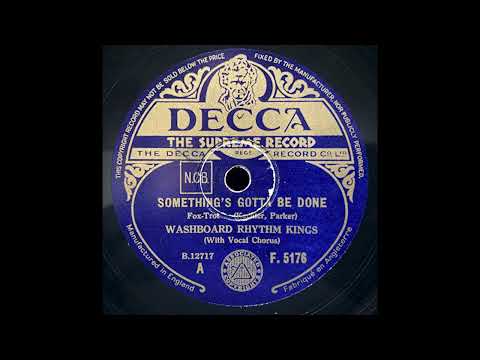
I know I have some WRK fans on the channel – so here is a great one that will resonate with everyone coming after the annual life re-evaluation we do as we write new year’s resolutions.
Lots of unknown players on this track – but Steve Washington delivers an excellent vocal performance with Ghost Howell keeping the rhythm swingin’ on bass.
Recorded in NewYork City on December 14, 1932.
Originally released in the U.S. as Vocalion 1730. Here we have a U.K. master pressing on Decca F.5176.
Credits: Carl Wade – tenor sax Steve Washington – banjo, vocals Ghost Howell – bass Unknown Artist – trumpet Unknown Artist – clarinet, alto sax Unknown Artist – alto sax Unknown Artist – piano Unknown Artist – washboard
A very short-lived band that only recorded two sides.
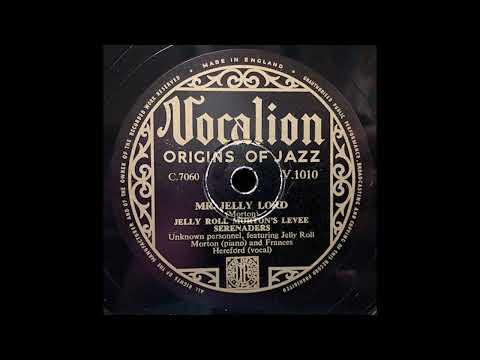
According to Banjo player Lesley Corley, Jelly Roll Morton took over Louis Taylor’s band in Chicago, “dispensed with the pianist”, and took them on tour, which Lesley (who was still in high school) skipped a term in order to complete.
On that tour, trumpet player Punch Miller had “a little disturbance” and was left behind in Ohio. When they returned they recorded two sides with singer Frances Hereford – who Walter Thomas says Jelly picked up in Chicago.
A week later the Baltimore Afro-American reported this group planned to head to Los Angeles for a 40 week engagement at the Orpheum Circuit. However, for unknown reasons the band broke up – with Lesley returning to finish high school and Jelly Roll leaving for New York City, where he recorded with Johnny Dunn in March of 1928.
Despite the breakup, the record was released by Vocalion in May. An ad in the May 5 Chicago Defender announced: “Just bend your ear to this tantalizing slow fox-trot and you’ll say ‘Mr. Jelly Lord’ is one of the best dance numbers you’ve ever heard. Some tune! Some Rhythm! And the Levee Serenaders play it in a way that will make you dance, whether you want to or not.”
Recorded in Chicago, Illinois on January 21, 1928. Originally released as Vocalion 1154. Here reissued in the U.K. on Vocalion’s “Origins of Jazz” series from 1952.
Credits: Jelly Roll Morton – piano Edwin Swayzee – trumpet Walter Thomas – clarinet Louis Taylor – trombone Hayes Alvis – tuba Lesley Corley – banjo Wallace Bishop – drums Frances Hereford – vocals
Source: Mr. Jelly Lord by Laurie Wright, Storyville Publications, 1980 pp 50 – 53.
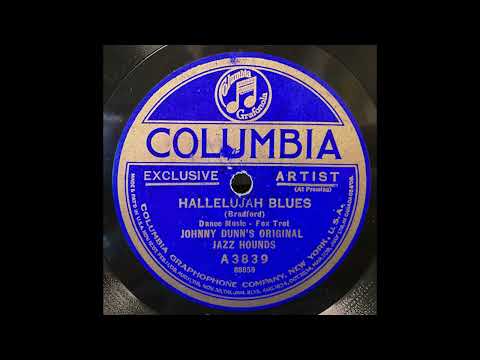
Here’s a 100 year old track to celebrate the new year – happy 2023! Hallelujah! We made it through 2022!
“Hallelujah Blues” – Johnny Dunn’s Original Jazz Hounds Recorded in New York City on February 14, 1923. Released as Columbia A3839.
Credits Perry Bradford and unknown artist – vocals Johnny Dunn – cornet Earl Granstaff – trombone Herschel Brassfield – clarinet, soprano sax, alto sax, arranger Rollen Smith – tenor sax George Rickson – piano Sam Speed – banjo Harry Hull – tuba
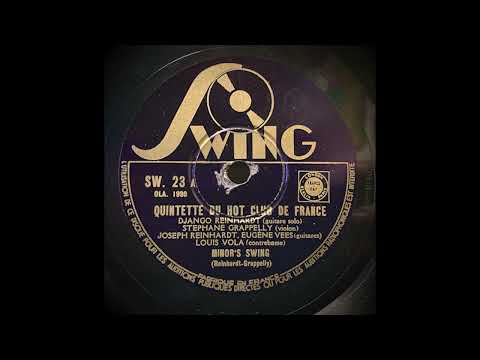
Presenting the classic hot number “Minor Swing” (Here misspelled as “Minor’s Swing”) by the masters of gypsy jazz, Quintette Du Hot Club De France featuring guitarist Django Reinhardt and violinist Stéphane Grappelli.
Being the first tune by Django I ever heard, this record was on my want list for a very long time. If you’ve heard a Djano tune, chances are it is this one. I recently found a beautiful copy and share it with you here.
Recorded in Paris, France on November 25, 1937. Released as Swing 23.
Credits: Stephane Grappelly – violin Django Reinhardt, Joseph Reinhardt, Eugène Vees – guitar Louis Vola – bass
![Ρόζα Εσκενάζυ [ROZA ESKENAZI] – Λιλι Η Σκανδαλιαρα [“Scandalous Lily”] (1931)](https://www.jazzcrazy.org/wp-content/uploads/2026/03/3963_thumbnail.jpg)