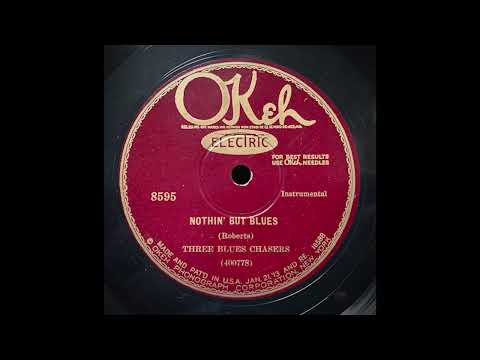
Here’s a rarity by a trio more popularly known for their 1925-26 recordings as “Three Jolly Miners”. They also recorded under names such as “Choo Choo Jazzers”, “Rocky Mountain Trio”, “Three Monkey Chasers” and “Three Hot Eskimos”.
Recorded in New York City on June 11, 1928. Released as Okeh 8595.
Credits: Bob Fuller – clarinet Louis Hooper – piano Elmer Snowden – banjo
The second side of this wonderful record gives each instrument more room to expand – for the first 45 seconds, we hear the piano taking the lead on melody. Then the violin comes to the forefront, accompanied beautifully by the piano. Finally, all three instruments come together energetically.
A wonderful hybrid of Indian musical sensibilities and Western instrumentation. The first time I heard this I was absolutely delighted. Perhaps you will be too.
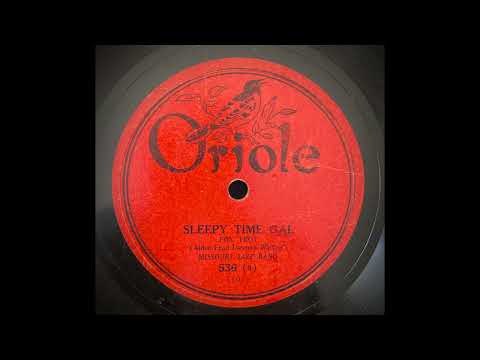
Their first recording session of Fletcher Henderson’s orchestra (under the pseudonym “Missouri Jazz Band”) after Louis Armstrong left the band. Though the loss of Satch was acute, you can hear clearly that he taught them much during his time with the band. The band is good form here, and all three hot solos have real spark.
0:00 Sax trio lead 0:46 Trumpet solo (Joe Smith) 1:07 Brass quartet 1:46 Clarinet trio 2:04 Trombone solo (Charlie Green) 2:25 Sax solo (Coleman Hawkins) 2:42 Coda – saxes
The flip side contains a number by Sam Lanin’s Arcadians – with whom they shared top billing at the Roseland during this time period.
Recorded in New York City on November 16, 1925.
Credits: Fletcher Henderson – piano, arranger, director Elmer Chambers, Joe Smith, Russell Smith – trumpet Charlie Green – trombone Buster Bailey – clarinet, alto sax Don Redman – alto sax, tenor sax Coleman Hawkins – tenor sax Charlie Dixon – banjo Bob Escudero – tuba Kaiser Marshall – drums
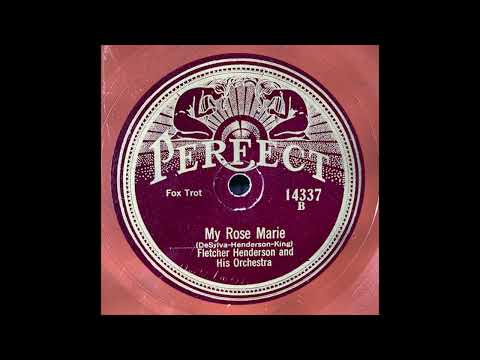
While Columbia 228-D (Manda/Go ‘Long Mule) is known as Louis Armstrong’s first recorded appearance with the Fletcher Henderson band, here we have Satchmo’s second Henderson recording session a few days later.
Armstrong reportedly had a few initial issues with the difficult arrangements in Henderson’s book, in some cases arising from his unfamiliarity with the formal musical notations used.
In a 1950 interview, Henderson tells it: “We had a medley of Irish waltzes in the book, an intricate, well-marked arrangement. One passage began triple fortissimo, and then it suddenly softened down on the next passage to double pianissimo. The score was marked ‘PP’ to indicate the pianissimo, but when everybody else softened down, there was Louis, still blowing as hard as he could. I stopped the band, and told him – pretty sharply, I guess – that in this band we read the marks as well as the notes. I asked him if he could read the marks and he said he could. But then I asked him: ‘What about “PP”?’ and he answered: ‘Why, it means pound plenty!’”
Here we have “My Rose Marie”, a relaxed tune that featured Armstrong in two solos. Biographer Walter C. Allen notes that the various takes of recordings at this session were quite similar, indicating that perhaps Armstrong may have been reading his solo or playing a pre-composed solo from memory. Still, in contrast to the sweet tenor sax solo that precedes his, Armstrong takes the tune in a new energetic direction, while effortlessly keeping the relaxed feel of the dance number.
Allen also noted – the tenor sax solo “does not particularly sound like [Coleman] Hawkins” – and that it may have been Cecil Scott.
0:00 Intro 0:11 Saxes & Brass 1:08 Tenor Sax solo (Coleman Hawkins) 1:26 Banjo and brass 1:44 Trumpet solo (Louis Armstrong) 2:19 Clarinet obbligato (Buster Bailey) over ensemble
Recorded in New York City circa October 10-13, 1924. Released as Perfect 14337. Also released as Pathé Actuelle 036156 and later as Silvertone 1298.
Credits: Fletcher Henderson – piano, arranger, director Louis Armstrong, Elmer Chambers, Howard Scott – trumpet Charlie Green – trombone Buster Bailey – clarinet, alto sax Don Redman – clarinet, alto sax, arranger Coleman Hawkins (or perhaps Cecil Scott) – clarinet, tenor sax Charlie Dixon – banjo Ralph Escudero – tuba Kaiser Marshall – drums
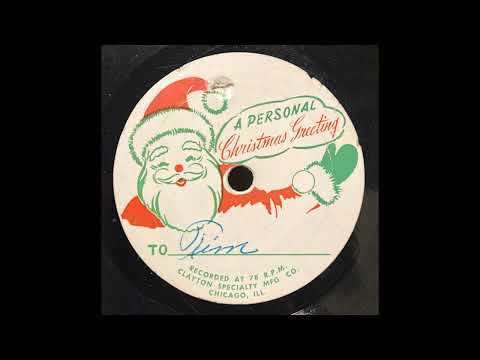
Here’s a fun 78 rpm 6″ record that was custom-made for children. Each record included the name of the child in the recording.
At the 1:00 mark, Santa asks “Whose chimney is this, my little elf?” and a guy with a Long Island accent chimes in over a cheap microphone: “It’s TIM’S chimney, Santa Claus.”
My guess is this poor guy had to manually dub each record, chiming in at the appropriate point in the pre-recorded soundtrack.
Merry Christmas, everyone! Thanks for all the comments and support this past year on the channel. I’ve got lots of great jazz records to post in 2023 so stay tuned.
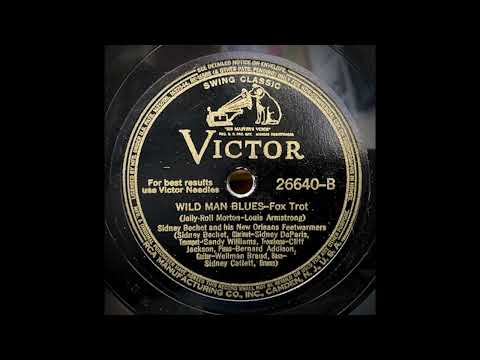
Recorded in New York City on June 4, 1940. Released as Victor 26640
Credits Sidney de Paris – trumpet Sandy Williams – trombone Sidney Bechet – clarinet Cliff Jackson – piano Bernard Addison – guitar Wellman Braud – bass Sidney Catlett – drums
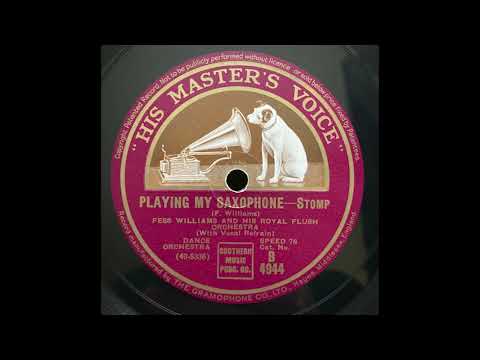
An original composition from a very late Fess Williams session that was released on his very last record for Victor. A wild ride that includes one of Fess’ more memorable performances – including a demonstration of circular breathing (heard starting at 2:07) where he holds a note for over 16 seconds.
Recorded in New York, New York on July 10, 1930. Originally release was issued as Victor 24153. This U.K. master pressing was released as HMV B.4944.
Credits Fess Williams – clarinet, alto sax, vocals, director Emanuel Clark, John Brown – trumpet David “Jelly” James – trombone Bobby Holmes – clarinet, alto sax Ralph Brown or Felix Gregory – alto sax Perry Smith – clarinet, tenor sax Walter “Fats” Pichon – piano Andy Pendleton or Ollie Blackwell – banjo Emanuel Casamore – tuba Ralph Bedell – drums
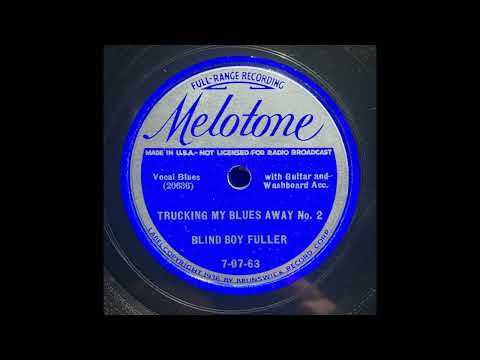
Blind Boy Fuller (aka Fulton Allen) was a popular blues artist who prolifically recorded over 100 records between 1935-1940. Like many blues artists of the 30s, a number of his tunes used double-entendres to suggest more risqué content.
He first recorded “Trucking My Blues Away” in 1936 – and it was such a hit that no doubt his record company convinced him to capitalize on its popularity and record it again in 1937 as “Trucking My Blues Away No. 2”.
This rousing version with washboard accompaniment is a little brighter than the original, with a good-spirited Fuller seeming to have a little fun and giving a more enthusiastic performance overall.
Recorded in New York City on February 9, 1937. Released as Melotone 7-07-63
Credits: Blind Boy Fuller – Vocals, Guitar George Washington (“Bull City Red”) – Washboard
“Between 1930 and 1935… the Casa Loma Orchestra dominated the dance band world with a blend of intensely played hot jazz specialties and smoothly scored ballads. No other band of the day… could rival it for popularity, precision, and team spirit, or for the ability to bring dancers to the floor and raise the temperature of any gathering. No band of those years was more frequently discussed, more widely admired, or emulated.” – Richard M. Sudhalter “Lost Chords”
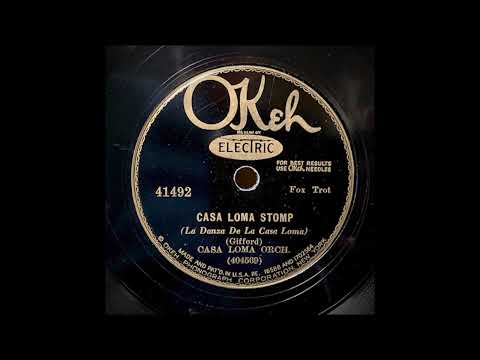
Here we have the original recording of the intricately arranged “Casa Loma Stomp”, called by some “the national anthem of 1930s jazz.”
0:00 Intro 0:35 Pee Wee Hunt Trombone solo 0:51 Pat Davis Tenor Sax solo 1:06 Ensemble arrangement 1:40 Trumpet solo 1:57 Clarinet solo 2:12 Ensemble arrangement
Recorded in New York, New York on December 6, 1930. Released as Okeh 41492.
Credits: Henry Biagini – Director Joe Hostetter, Dub Shoffner, Bobby Jones, trumpet Pee Wee Hunt, Billy Rauch – trombone Glen Gray, Ray Eberle – alto sax Pat Davis – tenor sax Mel Jenssen – violin Joe Hall – piano Gene Gifford – guitar, arranger Stanley Dennis – string bass Tony Briglia – drums