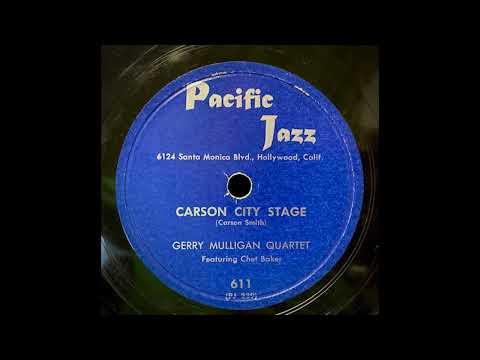
After working with Miles Davis’ influential nonet in NYC from 1948 – 1951, Gerry Mulligan moved to L.A. in 1952. He started playing at a local jazz club with a young trumpeter from Oklahoma named Chet Baker. They hit it off and began recording for the fledgling Pacific Jazz label.
Their collaboration came to an abrupt end a few months later when Mulligan was arrested on a narcotics charge that sent him to prison for six months.
Here we have an original composition by bassist Carson Smith that starts off with a driving descending bass riff. The two horns seem to glide and meander like a pair of ice skaters circling one another on a frozen pond, resulting in a mesmerizing performance.
Recorded in Hollywood, Gold Star Studios on February 24, 1953 Released as Pacific Jazz PJ 611.
Credits Chet Baker – trumpet Gerry Mulligan – baritone sax Carson Smith – bass Larry Bunker – drums
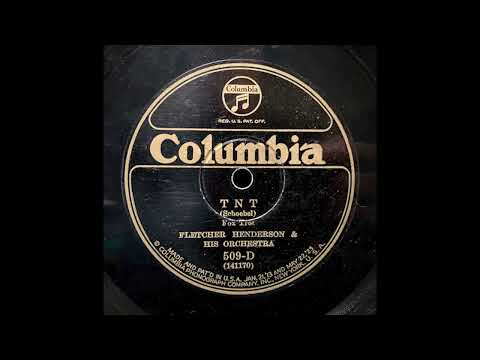
From the last recording session of the Fletcher Henderson orchestra with Louis Armstrong.
Louis’ wife Lil Armstrong had already left NYC to move back to Chicago and had formed her own band that was booked at the Dreamland Cafe for November dates. Henderson drummer Kaiser Marshall said that Louis missed Lil and wrote her every day.
Lil encouraged Louis to join her band in Chicago. In early November, he did, ending a prolific year of collaboration with Henderson in New York. His influence on the New York jazz scene had been huge – and he would return to New York many times before moving to Queens permanently in 1943.
0:00 Intro/head 0:21 Louis Armstrong (trumpet breaks) 0:34 Clarinet trio & brass 0:51 Louis Armstrong (trumpet) & saxes 1:08 Restated head 1:33 Coleman Hawkins (tenor sax break) 1:46 Charlie Green (trombone breaks) 1:59 Clarinet trio 2:15 Joe Smith (trumpet) 2:31 Outro
Recorded in New York on October 21, 1925. Released as Columbia 509-D under Columbia matrix Ⓦ141170.
Credits: Fletcher Henderson – piano, director, arranger Louis Armstrong, Elmer Chambers, Joe Smith – trumpet Charlie Green – trombone Buster Bailey – clarinet, alto sax Don Redman – alto sax, tenor sax Coleman Hawkins – clarinet, tenor sax, bass sax Charlie Dixon – banjo Bob Escudero – tuba Kaiser Marshall – drums
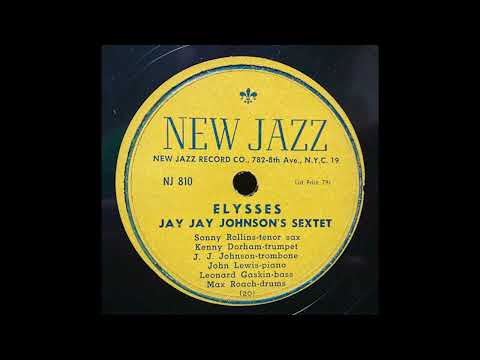
A 19-year-old Sonny Rollins plays here with master trombonist J. J. Johnson’s sextet featuring trumpeter Kenny Dorham, Leonard Gaskin, John Lewis, and Max Roach on a boppin’ New Jazz side from 1949.
0:00 Intro / head 0:38 Kenny Dorham trumpet solo 1:11 John Lewis piano solo 1:26 Sonny Rollins tenor sax solo 1:43 J.J. Johnson trombone solo 2:13 Max Roach drum breaks punctuating trombone solo continuation 2:35 Outro
Recorded in New York City on May 26, 1949. Released on the New Jazz label as NJ 810.
Another great haunting track for your 78 rpm Halloween playlist.
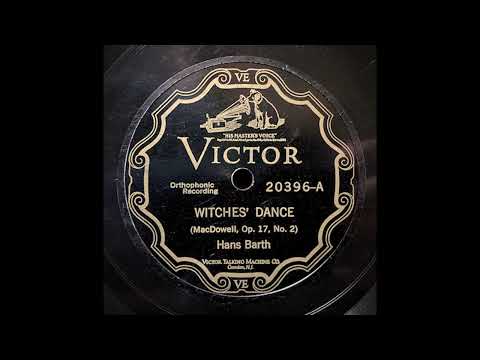
German-born pianist Hans Barth takes on Edward MacDowell’s composition from the 1880s: “Witches’ Dance”.
Recorded in Camden, New Jersey on December 4, 1926. Released as Victor 20396 in January, 1927. Stayed in print in the Victor / RCA Victor catalog until 1944.
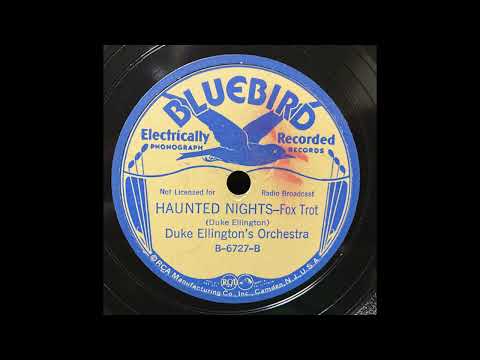
For your78 rpm Halloween playlist: “Haunted Nights” by Duke Ellington’s Orchestra.
Recorded in New York on September 16, 1929. Originally released as Victor V-38092 – but this reissued Bluebird master pressing sounds mighty fine (B-6727).
Credits : Duke Ellington – piano, director, arranger Arthur Whetsel, Cootie Williams – trumpet Joe Nanton – trombone Teddy Bunn – guitar Johnny Hodges -clarinet, soprano sax, alto sax Harry Carney – clarinet, alto sax, baritone sax Barney Bigard – clarinet, tenor sax Fred Guy – banjo Wellman Braud – string bass Sonny Greer – drums
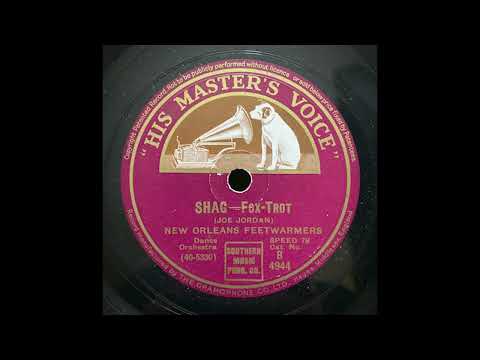
In May 1932, Sidney Bechet and Tommy Ladnier formed an orchestra called “The Harlem Feetwarmers” that included former Fletcher Henderson trombonist Teddy Nixon. That fall, the band landed a contract at the Savoy Ballroom and a recording date with Victor.
That session, on September 15, yielded six vibrant and exciting tracks of which “Shag” is the last. Bechet notes in an interview that the band was “feeling pretty good” by the time they started recording “Shag” – and that confidence is audible.
Unfortunately, an sound engineering mistake (or snub, depending on whose account is accurate) found Tommy Ladnier (and to a lesser extent, Nixon) standing off-mike – and as a result, their instruments appear at a reduced volume lower in the mix.
The net effect is that Sidney Bechet has the full spotlight – and he makes the most of it, turning in an inspired performance throughout.
0:00 Intro (Bechet and ensemble) 0:34 Teddy Nixon trombone solo 0:48 Henry Duncan piano break + continuation of Nixon solo 1:03 Wilson Meyers scat vocals 1:33 Sidney Bechet solo 2:29 Whoo! 2:50 Outro
The energy of the band, even with the attenuated trumpet, was at a fever pitch on this tune – and it is a shame they made so few recordings. After this session, they continued their gig at the Savoy until early 1933, when their contract was terminated and the band folded.
Recorded in New York on September 15, 1932. Originally released in the U.S. as Victor 24150. This master pressing was released in the U.K. as HMV B.4944.
Credits: Tommy Ladnier – trumpet Teddy Nixon – trombone Sidney Bechet – clarinet, soprano sax Henry Duncan – piano Wilson Myers – string bass, vocals Morris Morland – drums
Source: “Traveling Blues: The Life and Music of Tommy Ladnier” by Bo Lindström and Dan Vernhettes.
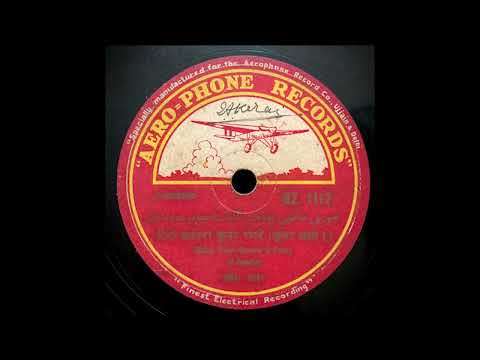
I don’t know a lot about this wonderful record from India – perhaps one of my viewers can tell me more about this artist or this beautiful devotional Qawwali?
Released as Aero-Phone Records NZ.1112
Other than the credited lead vocalist Mohd. Yasin Quawal, the other vocalists and musicians are unknown to me.
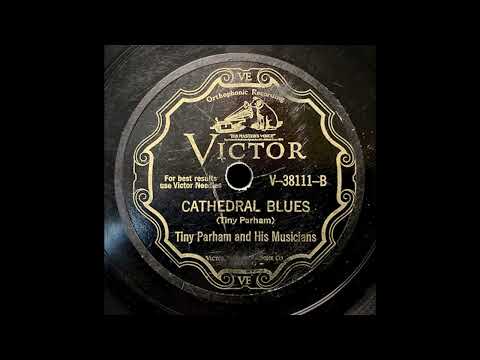
A majestic opening leads to a jaunty blues tune with Punch Miller and Dalbert Bright trading solos – backed by a strident rhythm section kept in line by Quinn Wilson’s tuba.
The transformative magic happens at the two minute mark when we hear Tiny Parham’s precious celesta solo! Absolutely entrancing.
Recorded in Chicago on December 3, 1929. Released as Victor V-38111.
Credits Tiny Parham – director, piano, celesta, Punch Miller – cornet Charles Lawson – trombone Dalbert Bright – clarinet, soprano sax, alto sax, tenor sax Elliott Washington – violin Mike McKendrick – banjo Quinn Wilson – tuba Ernie Marrero – drums