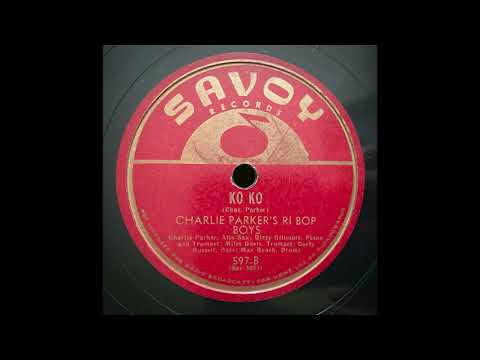
Bird bursts on the scene: the fantastic “Ko Ko” on the Savoy label recorded in New York City on November 26, 1945. One of the first bebop recordings and Charlie Parker’s first session as a bandleader.
Pianist Bud Powell couldn’t make the session and alternate Sadik Hakim didn’t have a union card – so Dizzy Gillespie wound up playing both trumpet and piano on this revolutionary track.
Miles Davis gets a trumpet credit but wrote later that he didn’t play on this date, feeling that he wasn’t ready to play complex changes at this hyperfast tempo of 300 bpm.
This copy originally belonged to novelist and poet Robley Wilson, who I was lucky enough to briefly correspond with in 2018 before he passed away. He was a fan of big band but bought his first Charlie Parker record, “Billie’s Bounce” in the late 40s. He started collecting the records of Bird and Diz and wrote: “Those old labels, Savoy and Dial and Musicraft, I can still see in my mind’s eye.”
After retiring from teaching creative writing at @northern_iowa, Robley moved to Florida. He gave his 78s to one of the movers, and they ended up at a local record store. Robley had put stickers with his name and address on every record – so I took a chance and looked him up. It’s nice when records can tell their story.
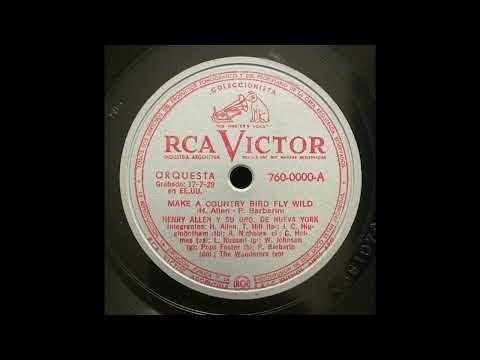
Gorgeous laminated Argentinian master pressing of a classic Henry “Red” Allen side from 1929.
Recorded in New York on September 24, 1929. Originally released as Victor V-38107. Reissued in Argentina as RCA Victor 760-0000.
Credits Henry Allen – trumpet, vocals J. C. Higginbotham – trombone Albert Nicholas – clarinet, alto sax Charlie Holmes – clarinet, soprano sax, alto sax Teddy Hill – clarinet, tenor sax, baritone sax Luis Russell – piano, celeste Will Johnson- banjo, guitar Pops Foster- string bass Paul Barbarin – drums, vibes Victoria Spivey and The Four Wanderers (Herman Hughes, Charles Clinkscales, tenor voices / Maceo Johnson, baritone voices / Oliver Childs, bass voice) – vocals
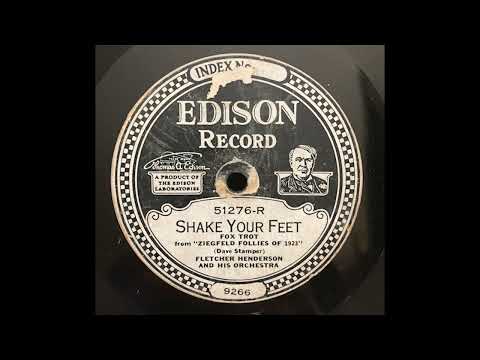
On Tuesday, November 27, 1923, Fletcher Henderson and his Orchestra recorded their only two tunes for Edison, doing three takes of each (which were all mastered and issued). This is take C.
We hear quite a bit of Coleman Hawkins on tenor sax, Teddy Nixon on trombone, Charlie Dixon on Banjo, and Billy Fowler on bass sax.
Released as Edison 51276.
Credits Fletcher Henderson – piano, director Howard Scott – cornet Elmer Chambers – cornet Teddy Nixon – trombone Don Redman (?) – clarinet, alto sax Coleman Hawkins – clarinet, tenor sax Billy Fowler – bass saxophone Charlie Dixon – banjo Kaiser Marshall – drums
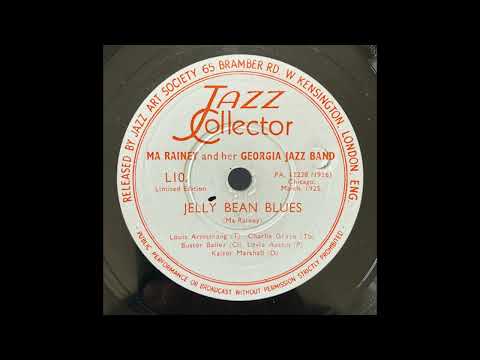
“Jelly Bean Blues” by Ma Rainey and her Georgia Jazz Band featuring Louis Armstrong, Charlie Green, Buster Bailey, and (uncredited on this label), Charlie Dixon on banjo.
“I can sit right here and look a thousand miles away – I just can remember what my baby had to say”
Originally released on Paramount in 1926, this dubbed pressing from the private Jazz Collector label in the UK is from the late 1940s.
Credits: Ma Rainey – Vocals Louis Armstrong – cornet Charlie Green – trombone Buster Bailey – clarinet Fletcher Henderson – piano Charlie Dixon – banjo
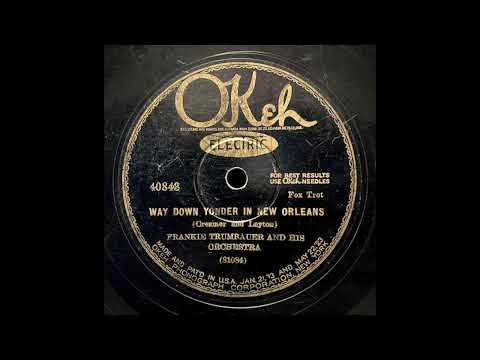
Bix and Tram take us “Way Down Yonder in New Orleans” in one of the many universally beloved sessions recorded by Frank Trumbauer and his Orchestra in 1927.
This copy looks beat but plays mighty fine.
Recorded in New York on May 13, 1927. Originally released as Okeh 40843.
Credits Frank Trumbauer – C melody sax, director Bix Beiderbecke – cornet Bill Rank – trombone Don Murray – clarinet, baritone sax Doc Ryker – alto sax Irving “Itzy” Riskin -piano Eddie Lang – guitar Chauncey Morehouse – drums
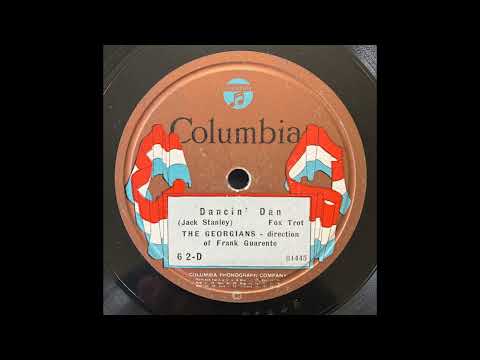
An unsung hero of early jazz: trumpeter Francisco Saverio “Frank” Guarente taking a beautifully exquisite solo on “Dancin’ Dan” with The Georgians in this session for Columbia from December of 1923.
Guarente was born in Italy but emigrated to the US and spent some time in New Orleans in 1914 befriending Nick LaRocca and King Oliver before eventually making his way to New York where he played in Paul Specht’s orchestra. Specht started featuring small-combo hot sets in between the full orchestra sets which proved quite popular. The Georgians – a “band-within-a-band” – were born.
Guarente recorded many excellent sides with The Georgians on Columbia from through 1924, when he left for a long fruitful period of touring and playing in Europe. Upon returning to the U.S. in 1928, he found a very different scene than the one he left and although he continued to work with Specht and Victor Young in the 30s, was never quite able to re-establish himself as the leading man he once was.
Recorded on December 28, 1923. Released as Columbia 62-D
Credits Frank Guarente – trumpet, director Archie Jones – trombone Johnny O’Donnell – clarinet, bass clarinet, alto sax Dick Johnson – clarinet, tenor sax Harold Saliers – clarinet, alto sax, tenor sax Arthur Schutt – piano Russell Deppe – banjo Chauncey Morehouse – drums