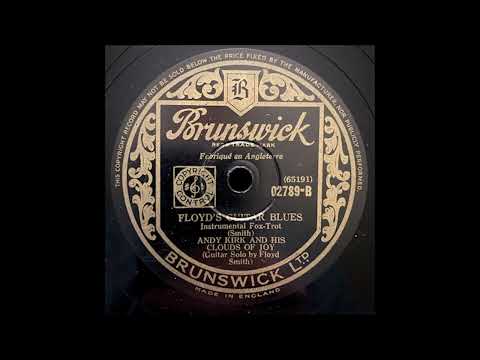
Recorded in New York on March 16, 1939. Master pressing released in the UK as Brunswick 02789.
Andy Kirk – director, bass sax Floyd Smith – electric guitar Earl Thomson, Harry Lawson, Clarence Trice – trumpet Ted Donnelly, Henry Wells – trombone John Harrington – clarinet, alto sax, baritone sax Don Byas – alto sax, baritone sax Earl Miller – alto sax Dick Wilson – tenor sax Claude Williams – violin Mary Lou Williams – piano Booker Collins – string bass Ben Thigpen – drums
Equipment used in the transfer: • Lenco L75 turntable with Shure M91ED cartridge • Focusrite Scarlett 2i2 • Audacity (for digitization, de-clicking, and De-RIAA/Re-EQing) • Logic (for additional EQ tweaks, light compression, and stereo mixdown to mono) • Adobe Premiere (for adding label image and final export to MP4)
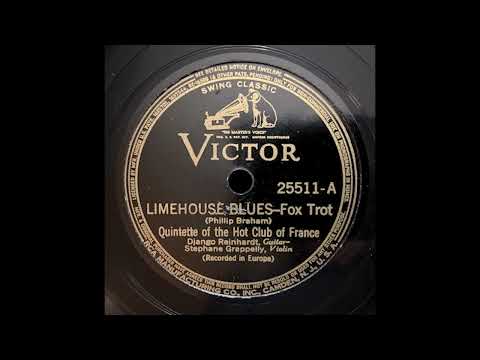
Recorded on May 4, 1936 in Paris, France. Released in the U.S. on Victor 25511.
Credits Arthur Briggs, Alphonse Cox, Pierre Allier – Trumpet Eugene d’Hellemmes – Trombone Stephane Grappelly – Violin Django Reinhardt, Pierre Ferret, Joseph Reinhardt – Guitar Lucien Simoens – String Bass
Equipment used in the transfer: • Lenco L75 turntable with Shure M91ED cartridge • Focusrite Scarlett 2i2 • Audacity (for digitization, de-clicking, and De-RIAA/Re-EQing) • Logic (for additional EQ tweaks, light compression, and stereo mixdown to mono) • Adobe Premiere (for adding label image and final export to MP4)
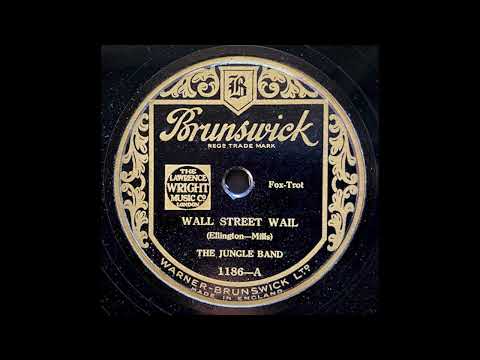
Recorded on December 10, 1929 in New York, New York. Released as Brunswick 1186 in the UK.
Rough month for the market – fortunately, we’ve been there before – Duke Ellington’s Jungle Band shows us how to respond to market downturns.
A wild ride recorded on December 10, 1929 (just a few weeks after the crash that started the Great Depression), this side gives us a wealth of solos and hot breaks by Johnny Hodges, Cootie Williams, Barney Bigard, Joe Nanton, and Wellman Braud.
Duke Ellington – Piano, Arrangement, Director Arthur Whetsel, Freddy Jenkins, Cootie Williams – Trumpet Joe Nanton – Trombone Juan Tizol – Valve Trombone Johnny Hodges – Clarinet, Soprano Sax, Alto Sax Harry Carney – Clarinet, Alto Sax, Baritone Sax Barney Bigard – Clarinet, Tenor Sax Fred Guy – Banjo Wellman Braud – String Bass Sonny Greer – Drums
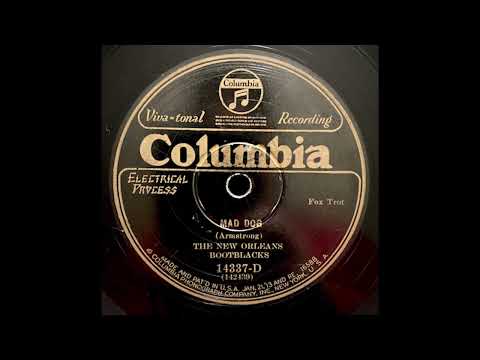
Columbia 14337-D Recorded in Chicago on July 14, 1926.
Credits George Mitchell – cornet Kid Ory – trombone Johnny Dodds – clarinet Joe Clark – alto saxophone Lil Armstrong – piano Johnny St. Cyr – banjo
Equipment used in the transfer: • Lenco L75 turntable with Shure M91ED cartridge • Focusrite Scarlett 2i2 • Audacity (for digitization, de-clicking, and De-RIAA/Re-EQing) • Logic (for additional EQ tweaks, light compression, and stereo mixdown to mono) • Adobe Premiere (for adding label image and final export to MP4)
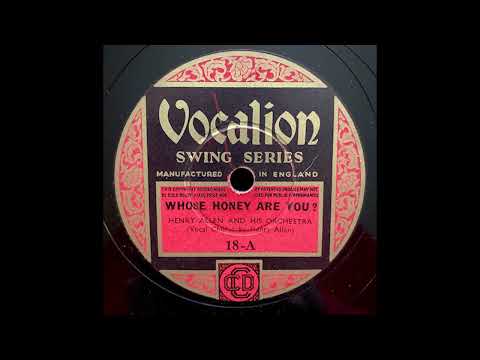
Vocalion S-18 (matrix 16682-1) UK Master Pressing Recorded in New York on January 23, 1935
A lovely UK master pressing of the infectious “Whose Honey Are You?” by Henry “Red” Allen and his Orchestra.
Recorded in January of 1935 and released in the UK on the colorful “Swing Series”, this recording features a Buster Bailey clarinet solo bursting with energy sandwiched between two contrasting trumpet solos by Allen and Pee Wee Erwin. The excellent rhythm section of Pops Foster and Paul Barbarin keeps the swing swung.
Credits Henry Allen – trumpet, vocals Pee Wee Erwin – trumpet George Washington – trombone Buster Bailey – clarinet Luis Russell – piano Danny Barker – guitar Pops Foster – string bass Paul Barbarin – drums
Also released as Banner 33355, Conqueror 8474, Melotone MT-13322, Oriole 3097, Perfect 16080, Romeo 2471, and Imperial 6041.
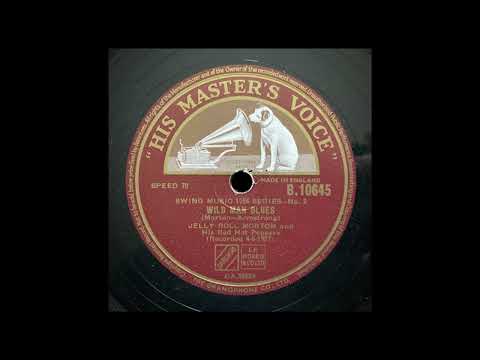
HMV B.10645 Recorded in Chicago, Illinois on June 4, 1927.
If the Hot Seven version of “Wild Man Blues” took its sweet time slowly and masterfully unraveling its tale, the Jelly Roll Morton and his Red Hot Peppers version, recorded about a month later, seems to take a lighter approach.
It begins with a startling cacophonous series of knocks followed by a warning to “get away from that, boy, ‘fore the wild men get you” punctuated by a wild roar for good measure.
This tune clips at a faster pace with George Mitchell leading us through the first solo on cornet. Jelly and Johnny Dodds cut back and forth while proceedings are often interrupted by the novel acrobatics of Stump Evans on alto sax. The many starts, stops, and breaks also showcase the syncopations and fills of drummer Baby Dodds.
Though recorded in June of 1927, this side does not seem to have been released domestically on Bluebird until 1941. Here we have transferred a UK dub pressing.
Credits Jelly Roll Morton – piano George Mitchell – cornet Johnny Dodds – clarinet Gerald Reeves – trombone Stump Evans – alto saxophone Bud Scott – guitar Quinn Wilson – tuba Baby Dodds – drums Lew LeMar – effects
Equipment used in the transfer: Lenco L75 turntable with Shure M91ED cartridge Focusrite Scarlett 2i2 Audacity (for digitization, de-clicking, and De-RIAA/Re-EQing) Logic (for additional mild EQ tweaks, a light touch of compression, and stereo mixdown to mono) Adobe Premiere (for adding label image and final export to MP4)
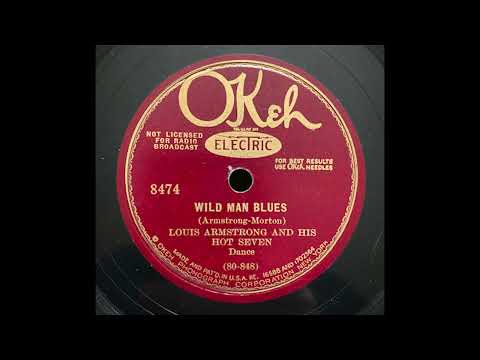
Okeh 8474 Recorded in Chicago, Illinois on May 7, 1927.
The Hot Seven version of “Wild Man” is a tour-de-force of extended contrasting solos by an increasingly exuberant Louis Armstrong and a dark “almost secretive” Johnny Dodds playing at the top of their game.
Louis Armstrong – Trumpet, Vocals Johnny Dodds – Clarinet Kid Ory – Trombone Lil Hardin – Piano Johnny St. Cyr – Banjo Pete Briggs – Tuba Baby Dodds – Drums