A lovely guitar solo by Eddie Lang, accompanied by Frank Signorelli on piano.
A UK-only Parlophone release of a track recorded in New York.
Recorded on March 29, 1928.
Released as Parlophone R 208.

An Archive of Early Jazz on 78 RPM
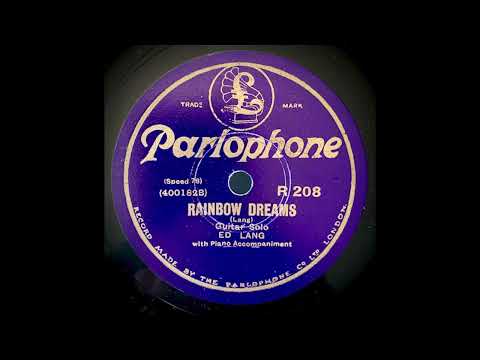
A lovely guitar solo by Eddie Lang, accompanied by Frank Signorelli on piano.
A UK-only Parlophone release of a track recorded in New York.
Recorded on March 29, 1928.
Released as Parlophone R 208.
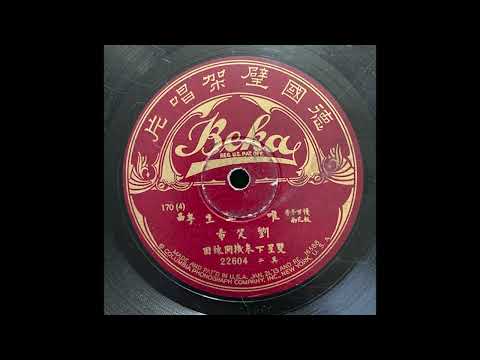
A US-made Chinese record that was recorded sometime between 1925 – 1930 on the Beka label, which was acquired by Columbia in 1926.
The vocalist Liu Siu Hei (劉笑希) is accompanied by a small trio (or quartet?) of flutes and percussion performing the song “雙星下卷機關被困” from a Cantonese opera.
A lovely little tune that I wish I knew more about!
Viewer @dbadagna reports the key: D diao (a little flat) and that “One of the leading instruments in the accompanying ensemble seems to be a houguan (喉管), which is a double-reed pipe, and I think there is also at least one huqin (胡琴, vertical fiddle).”
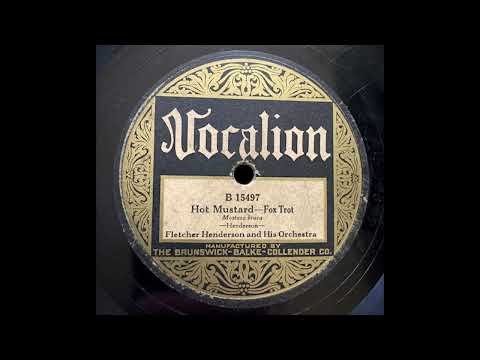
An original Henderson composition (though some say he may have bought the tune – then “The Thundermug Stomp” – from Fats Waller) here wonderfully arranged by Don Redman.
Joe Smith’s trumpet leads us into the tune, followed by a bit of Coleman Hawkins’ Tenor Sax. An exhilarating clarinet trio leads a call-and-response with June Cole’s strikingly recorded tuba. Fine trumpet work by Tommy Ladnier leads eventually to a beautiful piano solo by Smack himself – followed by the Hawk restating the lead before the coda.
Recorded in New York on Wednesday, December 8, 1926.
Released as Vocalion 15497 and Vocalion 1065.
Credits
Fletcher Henderson – piano
Russell Smith, Joe Smith, Tommy Ladnier – trumpet
Benny Morton – trombone
Buster Bailey – clarinet, soprano sax, alto sax
Don Redman – clarinet, alto sax
Coleman Hawkins – clarinet, tenor sax
Charlie Dixon – banjo
June Cole – tuba
Kaiser Marshall – drums
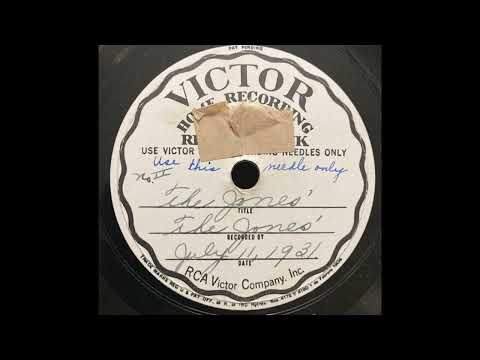
A Victor home recording made by an unidentified female and “Dr. Frank” Jones while on what sounds like a lovely vacation in California during the summer of 1931.
It’d be pretty cool to figure out who this was and get a copy to their descendants! It was found in an album with a collection of Little Wonder records in a thrift store in Iowa in March of 2022.
At 78rpm the voices sounded like Alvin and the Chipmunks, so slowed it down until it sounded close to normal – which came out to be around 60-62 rpm.
Transcript:
Side I
“This is Friday, July 11, 1931. Hello, Uncle Jim and Mrs. Woolsey and Dorothy. Well, here we are in Long Beach. It is cool on the ocean, but back a mile or so, it’s plenty hot. I had (weenies? Wheaties?) for supper last night and I thought of you. We just went to the big boat California – it arrived from New York. It was wonderful. We saw Etsy Bowne(?) and Mrs. Springfield and Leila(?). Mrs. Springfield says she feels better now. We are going to visit (?) this afternoon. We went to Tijuana, Mexico last Monday. I am glad I live in the Good ole’ U.S.A. I never knew how I loved the grand old flag – and how much it really meant to us all. We are going to start north to Portland about next Wednesday. We expect to stay a day or so in Oakland and may stop in San Francisco a day. We are going up the Redwood drive – they say it is one of the most beautiful drives in the world. Mother hasn’t done very… but very little back seat driving, although, um… at times she has done… there’s been a little (?) in the backseat as we crossed over the big Nevada mountains. We wish you all were here with us. I wonder how my Sunday school class is coming along. I visited…”
Side II
“(?) will say something to you.”
“Hello Jim, Mrs. Woolsey and Dorothy. Well, here we are, and uh, everything’s fine – mother’s gained about five, ten pounds and (?) has gained about the same and we’re on our way up north – I guess, uh, Wednesday. We want to stop, uh, see (?) if we have time although we saw her on the way down – they have a beautiful home and uh… everybody’s getting along fine up there. We expect to go on through Glacier Park and down through the Yellowstone Park and we’ll probably be home, oh uh, the last of August – maybe about the first of September. Well, it’s good and hot if you get away from the coast then, I wish you was out here and lots of love to all of you and this is Doctor Frank.”
#victorhomerecording #homerecording #audiopostcard
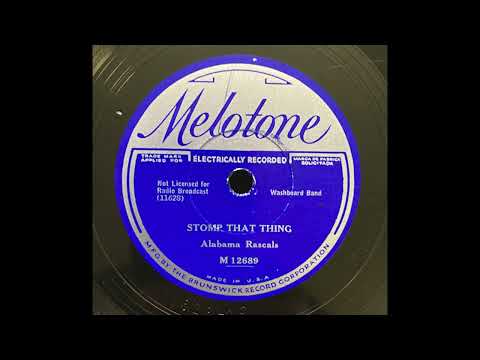
(aka Roy Palmer’s Memphis Nighthawks)
Recorded in New York on March 31, 1932.
Released as Melotone 12689.
Credits
Unknown artist – cornet
Roy Palmer – trombone
Darnell Howard – clarinet, alto sax, violin
Unknown artist – clarinet, tenor sax
Bob Hudson and/or W. E. (Buddy) Burton, piano / banjo
Jimmy Bertrand – drums, washboard
Unknown artist – vocals
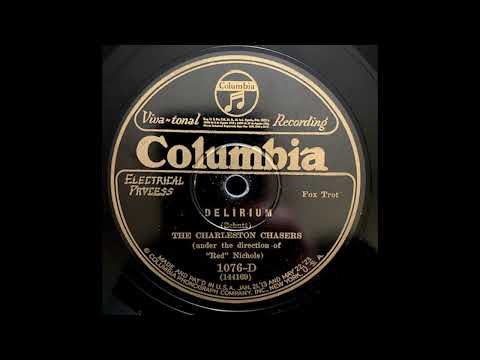
A delightful original composition by pianist Arthur Schutt – first recorded with Carl Fenton and his Orchestra (with most of the players on this record) in April of 1927. Subsequently recorded later that same year by California Ramblers, Jack Hylton, and Willard Robison.
Recorded in New York on May 18, 1927.
Released as Columbia 1076-D.
Credits
Red Nichols – trumpet
Miff Mole – trombone
Jimmy Dorsey – clarinet, alto sax
Arthur Schutt – piano
Dick McDonough – banjo, guitar
Vic Berton – drums
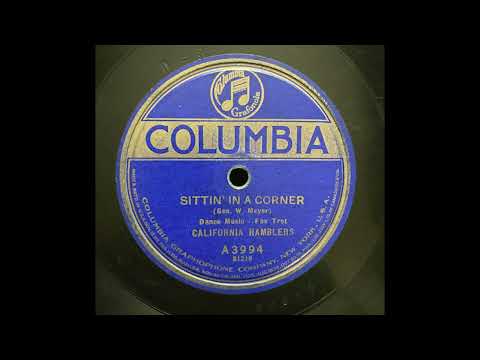
California Ramblers generally played stock arrangements of song sheets – though dazzling improvised solos began to appear on records starting in 1923.
“Sittin’ On A Corner” from late 1923 is one of those sides: things start off elegantly as the theme is stated – but at the 1:00 mark we hear something quite different: a hot and lively interchange between Adrian Rollini’s bass sax and Frank Cush’s trumpet. The conversation lasts for over 30 seconds, with each instrument effortlessly crisscrossing over the lines of the other. The “saucy” melody and “bouncing” rhythm create new musical ideas that bring this tune to life and make it so much more than a stock “dance orchestra” number.
Recorded in New York on September 18, 1923.
Released as Columbia A3994.
Credits:
Arthur Hand – director, violin
Frank Cush, Bill Moore – trumpet
Lloyd “Ole” Olsen – trombone
Bobby Davis – clarinet, soprano sax, alto sax
Arnold Brilhart – clarinet, alto sax
Freddy Cusick – tenor sax
Adrian Rollini – bass sax
Ed Sutton, Joe LaFaro, Sid Harris – violin (when used)
Irving Brodsky – piano
Ray Kitchingman – banjo
Stan King – drums
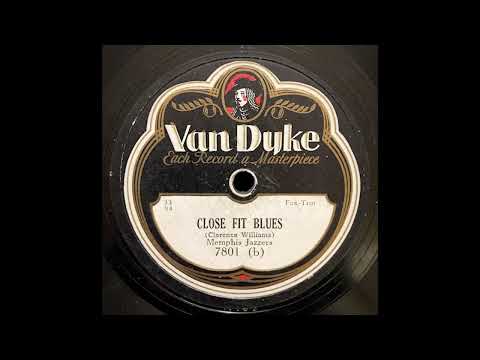
“Memphis Jazzers” here is a pseudonym for Clarence Williams and his orchestra, who had previously recorded this Williams composition, “Close Fit Blues”, in 1927 (Okeh 8510) and 1928 (Columbia 14287-D).
This hard-to-find 1929 release was the only side Clarence Williams recorded for the Grey Gull label (which included Madison, Radiex, and Van Dyke). These budget labels were known for their grainy playing surface, resulting in more surface noise.
The tune begins with a stately blues cornet theme by Ed Allen, which develops into a clarinet duet between Arville Harris and an unknown player. Ed Cuffee adds a somber trombone solo followed by a wonderful articulated passage by Cyrus St. Clair on tuba supported by Leroy Harris on banjo, punctuated by the rest of the band.
Credits:
Ed Allen – cornet
Ed Cuffee – trombone
Arville Harris – clarinet, alto sax
Unknown Artist – clarinet, tenor sax
Clarence Williams – piano
Leroy Harris – banjo
Cyrus St. Clair – tuba
Recorded in March of 1929 in New York
Released as Van Dyke 7801.
Also released as Grey Gull 1718, Madison 1718, and Radiex 1713.
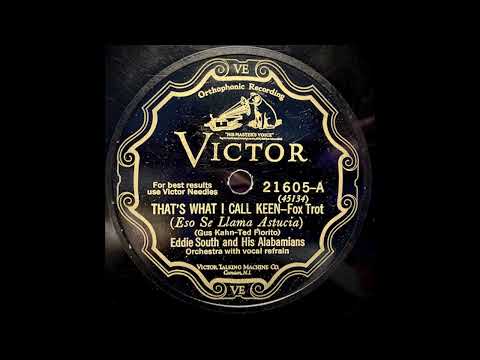
Hot jazz violinist Eddie South. Things really get swingin’ around 1:42.
“When I saw her first I nearly fainted – and I’ve been unconscious since we got acquainted.”
Recorded in New York on May 10, 1928.
Released as Victor 21605
Credits
Eddie South – violin, vocals
Henry Crowder – piano
Mike McKendrick – guitar
Jerome Bourke – drums, vocals
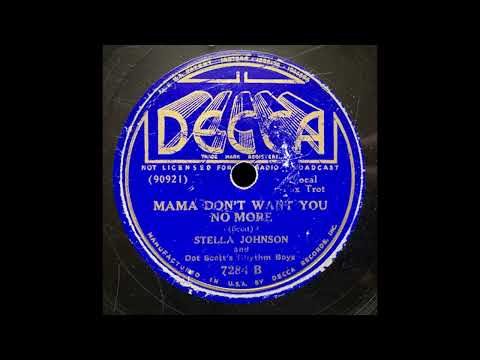
One of only three saucy sides recorded by this excellent Chicago jazz singer in 1936.
Recorded in Chicago on October 13, 1936.
Released as Decca 7284
Credits
Stella Johnson – vocals
Randolph Scott – trumpet
Dorothy Scott – piano
Unknown – alto saxophone, guitar, string bass, drums