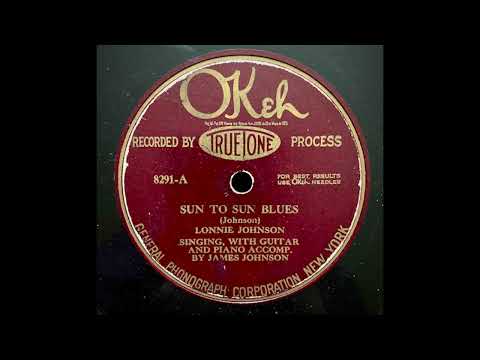
A very early record by Lonnie Johnson documenting a lovely piano and guitar duet between Messrs Johnson and Johnson. This session was recorded by Okeh’s “TrueTone” process – and it is unclear whether this session was acoustically or electrically recorded.
At 1:20, you can hear an unidentified voice in the background (James Johnson?) shout out “How you gonna (unclear)?”, to which Lonnie replies, “I’m gonna kick (keep?) that thing!”
The last lyric beautifully articulates the risks of love: “Love feels very light, but it drives like a weight of iron. Sometimes it drives so heavy, you can’t help from crying.”
Recorded in New York, New York on January 19, 1926. Released as Okeh 8291
Credits Lonnie Johnson – guitar, vocals James Johnson – piano
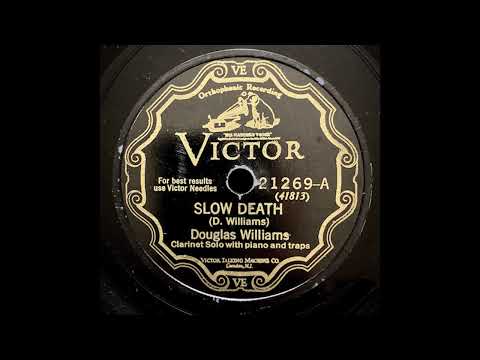
Memphis clarinetist Douglas Williams’ first Victor session. The first of many records of original compositions that he would make with Victor from 1928-1930 before fading into complete obscurity thereafter.
The first time I heard this side, the plaintive bleating of his gaspipe clarinet starting around 0:45 hit me hard – so expressively mournful!
Recorded in Memphis, Tennessee on January 31, 1928 Released as Victor 21269 and reissued as Bluebird BB B-6151
Credits Douglas Williams – clarinet Blaine Elliott – piano Sam Sims – drums
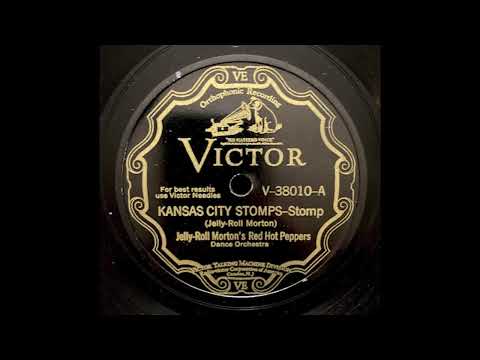
Recorded in New York on June 11, 1928. Released as Victor V-38010. Later reissued as Bluebird BB B5109-A and B-7757-A.
The infectious optimism of this performance of “Kansas City Stomps” by Jelly Roll Morton’s Hot Peppers is a wonderful listen.
After a rondo-style introduction, we are introduced to the lively theme. Omer Simeon treats us to a clarinet solo, solidly backed by the rhythm section. Jelly Roll then takes a piano solo punctuated by sharp drum beats. Lee Blair gives us a frenetic banjo solo followed by a trumpet solo by Ward Pinkett frequently interrupted by tremulant rejoinders from Blair’s banjo.
Credits Jelly Roll Morton – piano, director Ward Pinkett – trumpet Geechie Fields – trombone Omer Simeon – clarinet Lee Blair – banjo Bill Benford – tuba Tommy Benford – drums
For fun, also listen to Jelly Roll’s earlier 1923 solo piano recording of this same tune: https://youtu.be/R_DLXeFu8l8
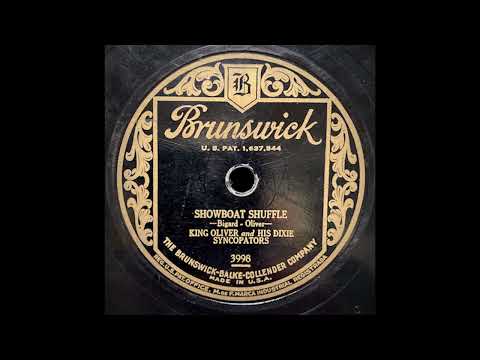
Recorded in Chicago on April 22, 1927. Released as Brunswick 3998.
A short piano phrase from Luis Russell starts this tune off, handing it off to Joe Oliver’s cornet to introduce the head. Other highlights include a forlorn trombone solo from Kid Ory and a blues tuba run by Lawson Buford.
Credits King Oliver, Thomas “Tick” Gray – cornet Kid Ory – trombone Omer Simeon – clarinet, soprano sax, alto sax Paul Barnes – clarinet, alto sax Barney Bigard – clarinet, tenor sax Luis Russell – piano Junie Cobb – banjo Lawson Buford – tuba Paul Barbarin – drums
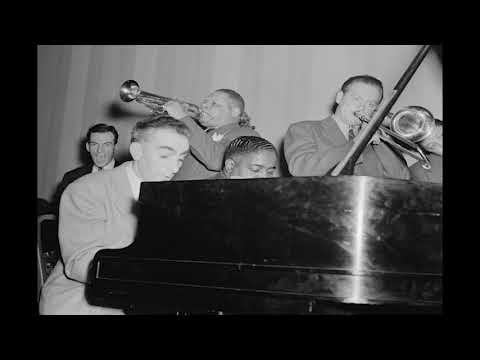
Ukrainian-born jazz pianist Art Hodes spent most of his life in Chicago – but I share today a tune to celebrate this Ukrainian contribution to jazz, the unique connection between the U.S. and Ukraine, and to share a message to all those bravely resisting invading forces today in Ukraine: “Slow ‘Em Down”! 🇺🇦🇺🇦🇺🇦
Credits Max Kaminsky – trumpet Ray Conniff – trombone Rod Cless – clarinet Art Hodes – piano Jack Bland – guitar Bob Haggart – bass Danny Alvin – drums
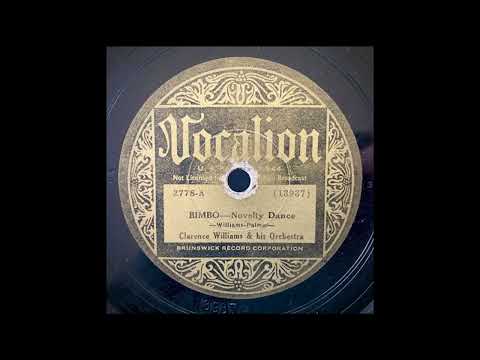
Recorded on September 1, 1933 Released as Vocalion 2778
Whenever I hear a Clarence Williams record start off with the scratchy syncopated washboard playing of Floyd Casey, I know it’s gonna be good.
This record is no exception: “Bimbo” by Clarence Williams and a small washboard band (labeled as an “orchestra”) that also featured Ed Allen on cornet, Cecil Scott on clarinet, and an unknown guitarist.
A real treat to listen to – enjoy!
Credits Ed Allen – cornet Cecil Scott – clarinet Clarence Williams – piano Floyd Casey – washboard Unknown artist – guitar
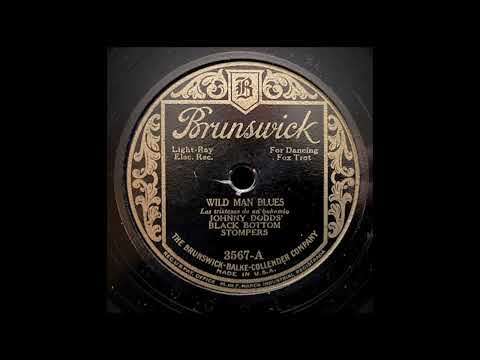
Recorded in Chicago on April 22, 1927. Released as Brunswick 3567
A few weeks before the Hot Seven version of “Wild Man Blues”, Louis Armstrong and Johnny Dodds recorded the first version under Dodd’s band In Chicago in April of 1927.
This version follows the same basic structure as the Hot Seven version, with Armstrong and Dodds taking extended solos. Armstrong seems to hang back just a bit and takes a shorter solo while Dodds plays an exquisitely haunting solo that is one of my favorites.
Credits Louis Armstrong – cornet Roy Palmer – trombone Johnny Dodds – clarinet Barney Bigard – tenor sax Earl Hines – piano Bud Scott – banjo Baby Dodds – drums
Equipment used in the transfer: • Lenco L75 turntable with Shure M91ED cartridge • Focusrite Scarlett 2i2 • Audacity (for digitization, de-clicking, and De-RIAA/Re-EQing) • Logic (for additional EQ tweaks, light compression, and stereo mixdown to mono) • Adobe Premiere (for adding label image and final export to MP4)
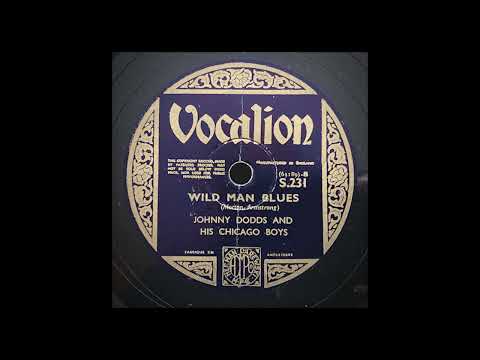
Recorded in New York in January of 1938 (one of Johnny’s last recording sessions). Released in the UK as Vocalion S.231
The 1930s were not kind to Johnny Dodds – as New Orleans-style hot jazz faded in popularity, he did not record at all for nearly nine years. During these depression years, he and his brother Baby Dodds kept up their livelihood as musicians by playing popular tunes from stock arrangments in “various obscure night spots” in Chicago.
In January of 1938 Dodds was invited to New York (his only visit to that city in his lifetime!) to lead a session for Decca with Lil Armstrong, guitarist Teddy Bunn, and a group of studio players who played in styles quite different than the bluesy New Orleans ensemble players Dodds worked best with.
The result is a “Wild Man Blues” seemingly out of time altogether – but nonetheless quite enjoyable. From the first, this “Wild Man” swings hard with a surprisingly brash and upbeat solo from Dodds himself – with trumpeter Charlie Shavers following with a muted but debonair solo.
Next, Teddy Bunn treats us to a guitar solo that reinforces the optimism of this “Wild Man” – and we end with a duet between Dodds and Shavers in a more modern vein that gives us a glimpse of how Dodds may have prospered in the Dixieland revival of the 1940s and beyond.
Sadly, Johnny suffered a stroke in 1939 and a few weeks after recording one last session in June of 1940, Johnny had a second stroke and died on August 8, 1940.
Here’s to the original wild man: Johnny Dodds. May he rest in peace.
Credits Charlie Shavers – trumpet Johnny Dodds – clarinet Lil Armstrong – piano Teddy Bunn – guitar John Kirby – string bass O’Neil Spencer – washboard
Equipment used in the transfer: • Lenco L75 turntable with Shure M91ED cartridge • Focusrite Scarlett 2i2 • Audacity (for digitization, de-clicking, and De-RIAA/Re-EQing) • Logic (for additional EQ tweaks, light compression, and stereo mixdown to mono) • Adobe Premiere (for adding label image and final export to MP4)
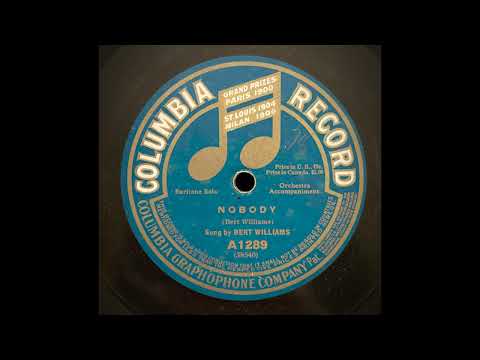
Recorded on January 7, 1913. Released as Columbia A1289 in May 1913.
“Nobody” was a wildly popular song written by Bert Williams and Alex Rogers in 1905. It became Williams’ signature tune – and he was very closely associated with it his entire career.
The song represents the struggles black performers experienced and the discrimination they endured during the time it was written.
Sales of this record exceeded 100,000 copies and stayed in the Columbia catalog for over two decades.