Jazz Crazy Records

An Archive of Early Jazz on 78 RPM

Category: African

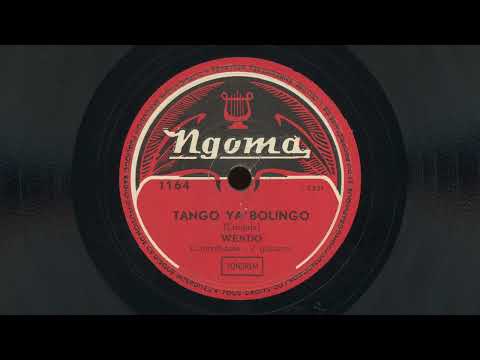
  • “Tango Ya Bolingo” – Wendo (c. 1951-52)  – Ngoma 1164

    “Tango Ya Bolingo” – Wendo (c. 1951-52) – Ngoma 1164

    Wendo (whose real name was Antoine Kolosoyi) was born in the village of Mushie – about 150 miles upriver from Léopoldville in Congo. He worked as a riverboat mechanic and sometimes would play his guitar for audiences on his riverboat journeys.

    In the late 40s, he was introduced to Ngoma by his friend Henri Bowane and recorded their first big hit record: “Marie Louise”, a song which Gary Stewart writes “brought the spirits out of the cemetery to listen.” Wendo’s beautiful singing voice and guitar playing quickly made him a popular Ngoma recording artist.

    Here we hear a Wendo record from the early 1950s on Ngoma’s red label. Wendo was by then a big star in the Congolese music scene. The title roughly translates as “The Time of Love”.

    Released as Ngoma 1164.
    Matrix J 2331

    The other side of this 78 rpm record can be found at:
    https://youtu.be/qvzC0w2cnKo

    Credits
    Wendo (Antoine Kolosoyi) – vocals, guitar
    Unknown performers – guitar, contrebasse

    If you enjoyed this music, please check out my interview with Alastair Johnston, producer of the 3CD/3LP set “The Soul of Congo: Treasures of the Ngoma Label”:
    https://youtu.be/2BSsWpb49AA
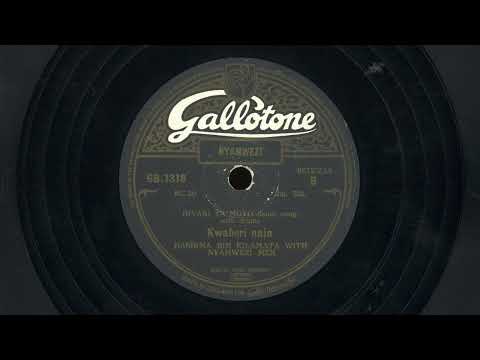
  • “Wacheza Lada / Kwaheri Naja” – Hashima Bin Kilamata With Nyamwezi Men

    “Wacheza Lada / Kwaheri Naja” – Hashima Bin Kilamata With Nyamwezi Men

    Special transfer request from viewer @78s_TheArtists_AndTheHistory

    Gallotone GB.1318
    A – Wacheza Lada
    B – Kwaheri Naja

    Hiyari Ya Moyo – dance song with drums

    I’m afraid I don’t know much else about this record – though I hope to learn more in the future. It was released in the early 1950s.

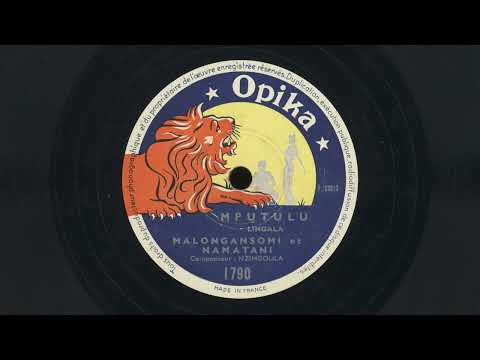
  • “Mputulu” – Malongansomi et Namatani (~1956)

    “Mputulu” – Malongansomi et Namatani (~1956)

    These immediately lovable tunes make me want to dance!

    Listen for the Mbira – a type of lamellaphone similar to the Westernized kalimba – and what sounds like an early electric organ of some kind.

    The Opika label was active in what was then the Belgian Congo from 1950-1957.

    Malongansomi and Namatani were musicians and performers who recorded a number of sessions – including this one – for the Opika label circa 1956-57.

    Released as Opika 1790.

    Be sure to listen to the other side at:
    https://youtu.be/hwbKn38x6uE

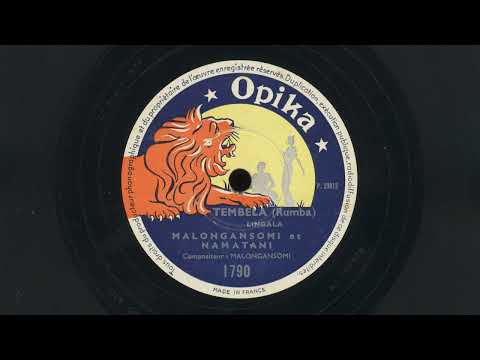
  • “Tembela” – Malongansomi et Namatani (~1956)

    “Tembela” – Malongansomi et Namatani (~1956)

    These immediately lovable tunes make me want to dance!

    Listen for the Mbira – a type of lamellaphone similar to the Westernized kalimba – and what sounds like an early electric organ of some kind.

    The Opika label was active in what was then the Belgian Congo from 1950-1957.

    Malongansomi and Namatani were musicians and performers who recorded a number of sessions – including this one – for the Opika label circa 1956-57.

    Released as Opika 1790.

    Be sure to listen to the other side at:
    https://youtu.be/_PIHeu__TNI

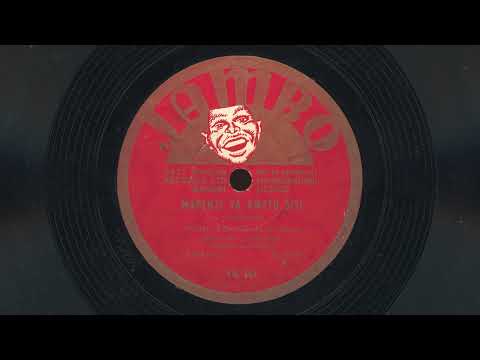
  • “Mapenzi Ya Kwetu Sisi” – Fundi Konde

    “Mapenzi Ya Kwetu Sisi” – Fundi Konde

    Fundi Konde was a Kenyan guitarist, singer, and composer who became a popular performer in Kenya the 1950s. “Mapenzi Ya Kwetu Sisi” was a tune that appeared in the Peter Colmore film “Nyimbo za Kisasa” (“Today’s songs”) in the early 1950s.

    His voice is one that immediately commands attention through its relaxed presence and effortless gravitas. Coupled with his soft fingerstyle guitar accompaniment, this exceptional tune feels familiar and intimate. Almost ageless.

    East African Sound Studios (and their label Jambo) was the first completely independent record company in East Africa outside of EMI and other multinational companies. From 1948-1951 they released over 200 records – pressed in the U.K. by Decca.

    Distribution logistics shipping records to and from London led the company to change their name to East Africa Records Ltd. and to build a pressing plant in Nairobi in 1952, where this record was pressed.

    Recording date is unknown – my guess is sometime in 1950-51.
    Released as Jambo EA.245.

    Credits:
    Fundi Konde – guitar, vocals

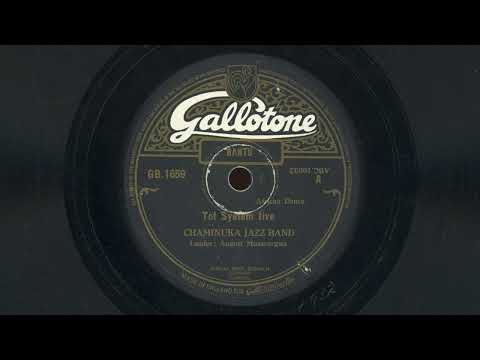
  • “Tot System Jive / Chaminuka” – Chaminuka Jazz Band – Gallotone GB.1659

    “Tot System Jive / Chaminuka” – Chaminuka Jazz Band – Gallotone GB.1659

    The first request by @tomtick from my unboxing video (see link below) has been fulfilled!

    Led by August Musarurwa, who also is featured on alto saxophone, the Chaminuka Jazz Band is an excellent example of Bulawayo Jazz – a style developed in Southern Rhodesia – now Zimbabwe.

    Recorded in the early 1950’s for Gallotone, this video contains both sides of GB.1659:
    0:00 Side A – Tot System Jive
    2:53 Side B – Chaminuka

    As I understand it, Bulawayo Jazz was an informal celebratory type of music played by ordinary musicians purely for entertainment after hours. You won’t hear a lot of improvisation – though there is some – and you will hear a rhythm section dominated by the banjo – an instrument long since abandoned by most American jazz performers at this time.

    Writing of Musarurwa’s saxophone playing in a review of an SWP Records release of Bulawayo Jazz in 2015, jazz writer Ken Waxman states, “His vibrato is wide enough to ferry across and his tone makes equivalent solos from his Jump Band progenitors like Pete Brown sound as if their solos are as cerebral and forbidding as Anthony Braxton’s work sounds to the uninitiated.”
    https://www.jazzword.com/reviews/august-musarurwa/

    If you haven’t watched my unboxing video of over 60 African 78 rpm records, take a look and tell me which ones you’d like to hear next!
    https://youtu.be/WCwGfTM8hXc