Jazz Crazy Records

An Archive of Early Jazz on 78 RPM

Category: Jazz

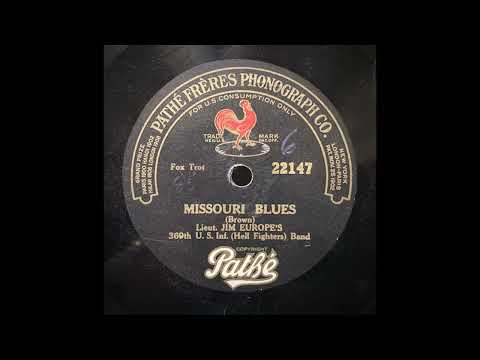
  • “Missouri Blues” – Lieut. Jim Europe’s 369th U. S. Inf. (Hell Fighters) Band (1919)

    “Missouri Blues” – Lieut. Jim Europe’s 369th U. S. Inf. (Hell Fighters) Band (1919)

    Toward the end of WWI in 1918, Lieutenant James Reece Europe’s regimental band of the 369th Infantry Regiment (the “Harlem Hellfighters”) toured France, playing countless concerts to new fans of their music – which was influenced by ragtime and itself was to become influential on the development of jazz music.

    Returning to the United States in early 1919, Europe’s band recorded twenty-four sides for Pathé Records – including this one – and embarked on a tour of American cities.

    Though Europe was a composer himself and co-wrote many compositions with Ford Dabney, “Missouri Blues” was composed by Polish-born Harry Finkelstein (using the pseudonym “Harry Brown”), who was the seventh unofficial member of the Canadian saxophone sextet and ragtime-influenced circus troupe Six Brown Brothers.

    Tragically, only two days after “Missouri Blues” was recorded, Europe was stabbed in the neck by Herbert Wright, a drummer in the band who he had an argument with during intermission of a concert in Boston. He was taken to the hospital and died shortly thereafter.

    After his death, he was given a public funeral in New York City. He is buried at Arlington National Cemetery.

    Recorded in New York City on May 7, 1919.
    Released as Pathé 22147 (vertical cut).
  • “Something’s Gotta Be Done” – Washboard Rhythm Kings (1932)

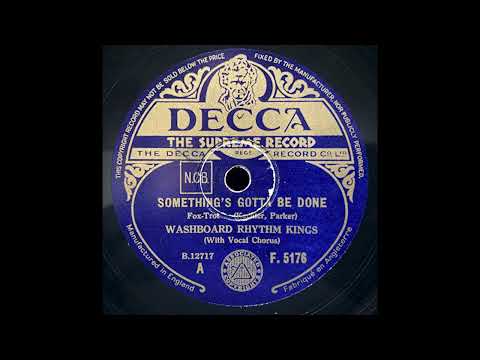
    “Something’s Gotta Be Done” – Washboard Rhythm Kings (1932)

    I know I have some WRK fans on the channel – so here is a great one that will resonate with everyone coming after the annual life re-evaluation we do as we write new year’s resolutions.

    Lots of unknown players on this track – but Steve Washington delivers an excellent vocal performance with Ghost Howell keeping the rhythm swingin’ on bass.

    Recorded in NewYork City on December 14, 1932.

    Originally released in the U.S. as Vocalion 1730. Here we have a U.K. master pressing on Decca F.5176.

    Credits:
    Carl Wade – tenor sax
    Steve Washington – banjo, vocals
    Ghost Howell – bass
    Unknown Artist – trumpet
    Unknown Artist – clarinet, alto sax
    Unknown Artist – alto sax
    Unknown Artist – piano
    Unknown Artist – washboard

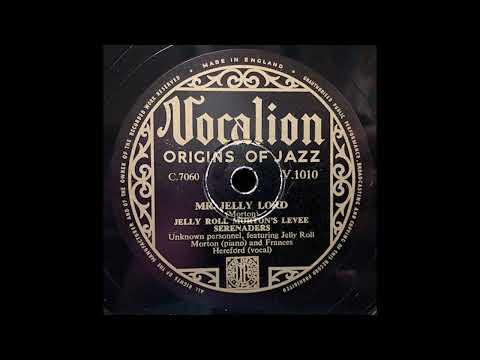
  • “Mr Jelly Lord” – Jelly Roll Morton’s Levee Serenaders (1928)

    “Mr Jelly Lord” – Jelly Roll Morton’s Levee Serenaders (1928)

    A very short-lived band that only recorded two sides.

    According to Banjo player Lesley Corley, Jelly Roll Morton took over Louis Taylor’s band in Chicago, “dispensed with the pianist”, and took them on tour, which Lesley (who was still in high school) skipped a term in order to complete.

    On that tour, trumpet player Punch Miller had “a little disturbance” and was left behind in Ohio. When they returned they recorded two sides with singer Frances Hereford – who Walter Thomas says Jelly picked up in Chicago.

    A week later the Baltimore Afro-American reported this group planned to head to Los Angeles for a 40 week engagement at the Orpheum Circuit. However, for unknown reasons the band broke up – with Lesley returning to finish high school and Jelly Roll leaving for New York City, where he recorded with Johnny Dunn in March of 1928.

    Despite the breakup, the record was released by Vocalion in May. An ad in the May 5 Chicago Defender announced: “Just bend your ear to this tantalizing slow fox-trot and you’ll say ‘Mr. Jelly Lord’ is one of the best dance numbers you’ve ever heard. Some tune! Some Rhythm! And the Levee Serenaders play it in a way that will make you dance, whether you want to or not.”

    Recorded in Chicago, Illinois on January 21, 1928.
    Originally released as Vocalion 1154. Here reissued in the U.K. on Vocalion’s “Origins of Jazz” series from 1952.

    Credits:
    Jelly Roll Morton – piano
    Edwin Swayzee – trumpet
    Walter Thomas – clarinet
    Louis Taylor – trombone
    Hayes Alvis – tuba
    Lesley Corley – banjo
    Wallace Bishop – drums
    Frances Hereford – vocals

    Source: Mr. Jelly Lord by Laurie Wright, Storyville Publications, 1980 pp 50 – 53.

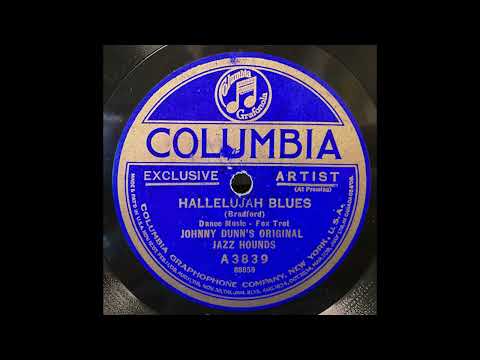
  • “Hallelujah Blues” – Johnny Dunn’s Original Jazz Hounds (1923)

    “Hallelujah Blues” – Johnny Dunn’s Original Jazz Hounds (1923)

    Here’s a 100 year old track to celebrate the new year – happy 2023! Hallelujah! We made it through 2022!

    “Hallelujah Blues” – Johnny Dunn’s Original Jazz Hounds
    Recorded in New York City on February 14, 1923.
    Released as Columbia A3839.

    Credits
    Perry Bradford and unknown artist – vocals
    Johnny Dunn – cornet
    Earl Granstaff – trombone
    Herschel Brassfield – clarinet, soprano sax, alto sax, arranger
    Rollen Smith – tenor sax
    George Rickson – piano
    Sam Speed – banjo
    Harry Hull – tuba

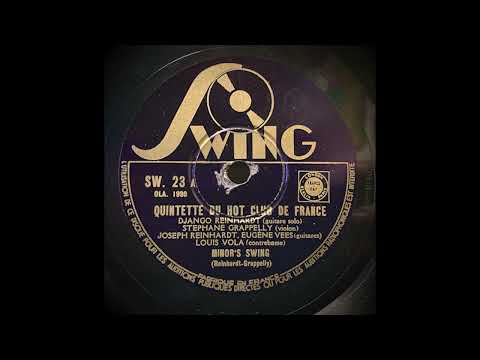
  • “Minor Swing” – Quintette Du Hot Club De France featuring Django Reinhardt (1937)

    “Minor Swing” – Quintette Du Hot Club De France featuring Django Reinhardt (1937)

    Presenting the classic hot number “Minor Swing” (Here misspelled as “Minor’s Swing”) by the masters of gypsy jazz, Quintette Du Hot Club De France featuring guitarist Django Reinhardt and violinist Stéphane Grappelli.

    Being the first tune by Django I ever heard, this record was on my want list for a very long time. If you’ve heard a Djano tune, chances are it is this one. I recently found a beautiful copy and share it with you here.

    Recorded in Paris, France on November 25, 1937.
    Released as Swing 23.

    Credits:
    Stephane Grappelly – violin
    Django Reinhardt, Joseph Reinhardt, Eugène Vees – guitar
    Louis Vola – bass

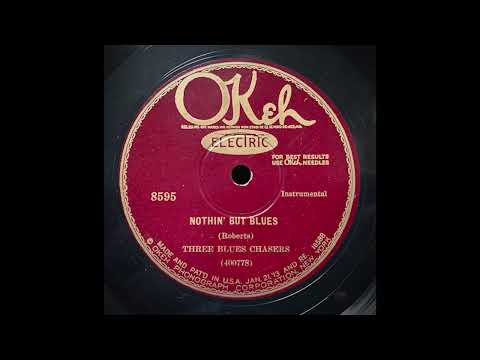
  • “Nothin’ But Blues” – Three Blues Chasers (1928)

    “Nothin’ But Blues” – Three Blues Chasers (1928)

    Here’s a rarity by a trio more popularly known for their 1925-26 recordings as “Three Jolly Miners”. They also recorded under names such as “Choo Choo Jazzers”, “Rocky Mountain Trio”, “Three Monkey Chasers” and “Three Hot Eskimos”.

    Recorded in New York City on June 11, 1928.
    Released as Okeh 8595.

    Credits:
    Bob Fuller – clarinet
    Louis Hooper – piano
    Elmer Snowden – banjo

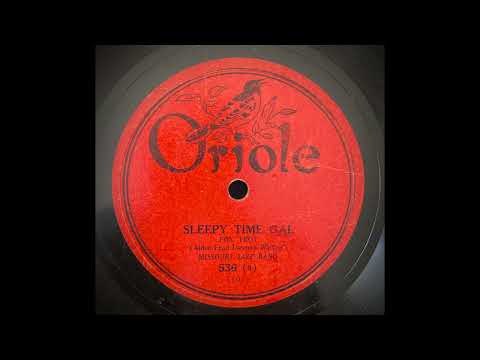
  • Sleepy Time Gal – Fletcher Henderson and his Orchestra (1925)

    Sleepy Time Gal – Fletcher Henderson and his Orchestra (1925)

    Their first recording session of Fletcher Henderson’s orchestra (under the pseudonym “Missouri Jazz Band”) after Louis Armstrong left the band. Though the loss of Satch was acute, you can hear clearly that he taught them much during his time with the band. The band is good form here, and all three hot solos have real spark.

    0:00 Sax trio lead
    0:46 Trumpet solo (Joe Smith)
    1:07 Brass quartet
    1:46 Clarinet trio
    2:04 Trombone solo (Charlie Green)
    2:25 Sax solo (Coleman Hawkins)
    2:42 Coda – saxes

    The flip side contains a number by Sam Lanin’s Arcadians – with whom they shared top billing at the Roseland during this time period.

    Recorded in New York City on November 16, 1925.

    Credits:
    Fletcher Henderson – piano, arranger, director
    Elmer Chambers, Joe Smith, Russell Smith – trumpet
    Charlie Green – trombone
    Buster Bailey – clarinet, alto sax
    Don Redman – alto sax, tenor sax
    Coleman Hawkins – tenor sax
    Charlie Dixon – banjo
    Bob Escudero – tuba
    Kaiser Marshall – drums

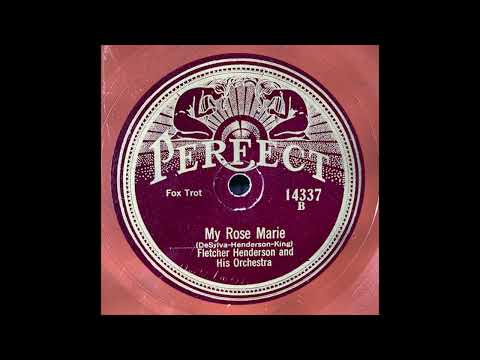
  • “My Rose Marie” – Fletcher Henderson and his Orchestra f/ Louis Armstrong (1924)

    “My Rose Marie” – Fletcher Henderson and his Orchestra f/ Louis Armstrong (1924)

    While Columbia 228-D (Manda/Go ‘Long Mule) is known as Louis Armstrong’s first recorded appearance with the Fletcher Henderson band, here we have Satchmo’s second Henderson recording session a few days later.

    Armstrong reportedly had a few initial issues with the difficult arrangements in Henderson’s book, in some cases arising from his unfamiliarity with the formal musical notations used.

    In a 1950 interview, Henderson tells it: “We had a medley of Irish waltzes in the book, an intricate, well-marked arrangement. One passage began triple fortissimo, and then it suddenly softened down on the next passage to double pianissimo. The score was marked ‘PP’ to indicate the pianissimo, but when everybody else softened down, there was Louis, still blowing as hard as he could. I stopped the band, and told him – pretty sharply, I guess – that in this band we read the marks as well as the notes. I asked him if he could read the marks and he said he could. But then I asked him: ‘What about “PP”?’ and he answered: ‘Why, it means pound plenty!’”

    Here we have “My Rose Marie”, a relaxed tune that featured Armstrong in two solos. Biographer Walter C. Allen notes that the various takes of recordings at this session were quite similar, indicating that perhaps Armstrong may have been reading his solo or playing a pre-composed solo from memory. Still, in contrast to the sweet tenor sax solo that precedes his, Armstrong takes the tune in a new energetic direction, while effortlessly keeping the relaxed feel of the dance number.

    Allen also noted – the tenor sax solo “does not particularly sound like [Coleman] Hawkins” – and that it may have been Cecil Scott.

    0:00 Intro
    0:11 Saxes & Brass
    1:08 Tenor Sax solo (Coleman Hawkins)
    1:26 Banjo and brass
    1:44 Trumpet solo (Louis Armstrong)
    2:19 Clarinet obbligato (Buster Bailey) over ensemble

    Recorded in New York City circa October 10-13, 1924.
    Released as Perfect 14337.
    Also released as Pathé Actuelle 036156 and later as Silvertone 1298.

    Credits:
    Fletcher Henderson – piano, arranger, director
    Louis Armstrong, Elmer Chambers, Howard Scott – trumpet
    Charlie Green – trombone
    Buster Bailey – clarinet, alto sax
    Don Redman – clarinet, alto sax, arranger
    Coleman Hawkins (or perhaps Cecil Scott) – clarinet, tenor sax
    Charlie Dixon – banjo
    Ralph Escudero – tuba
    Kaiser Marshall – drums

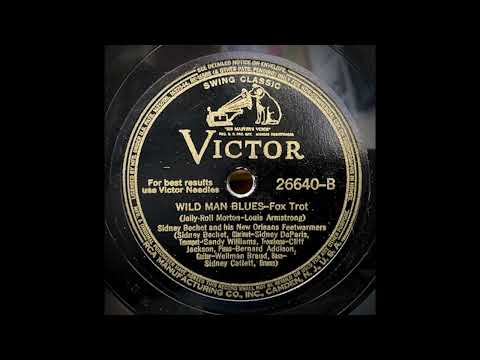
  • Sidney Bechet and his New Orleans Feetwarmers – “Wild Man Blues” (1940)

    Sidney Bechet and his New Orleans Feetwarmers – “Wild Man Blues” (1940)

    Recorded in New York City on June 4, 1940.
    Released as Victor 26640

    Credits
    Sidney de Paris – trumpet
    Sandy Williams – trombone
    Sidney Bechet – clarinet
    Cliff Jackson – piano
    Bernard Addison – guitar
    Wellman Braud – bass
    Sidney Catlett – drums

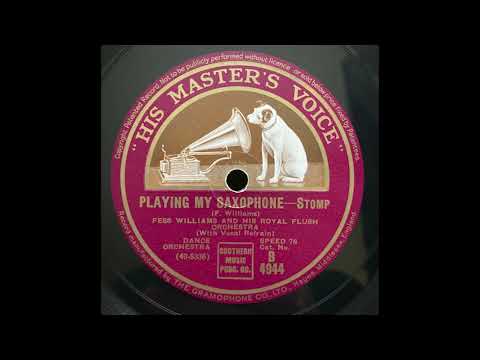
  • Fess Williams and his Royal Flush Orchestra – “Playing My Saxophone” (1930)

    Fess Williams and his Royal Flush Orchestra – “Playing My Saxophone” (1930)

    An original composition from a very late Fess Williams session that was released on his very last record for Victor. A wild ride that includes one of Fess’ more memorable performances – including a demonstration of circular breathing (heard starting at 2:07) where he holds a note for over 16 seconds.

    Recorded in New York, New York on July 10, 1930.
    Originally release was issued as Victor 24153.
    This U.K. master pressing was released as HMV B.4944.

    Credits
    Fess Williams – clarinet, alto sax, vocals, director
    Emanuel Clark, John Brown – trumpet
    David “Jelly” James – trombone
    Bobby Holmes – clarinet, alto sax
    Ralph Brown or Felix Gregory – alto sax
    Perry Smith – clarinet, tenor sax
    Walter “Fats” Pichon – piano
    Andy Pendleton or Ollie Blackwell – banjo
    Emanuel Casamore – tuba
    Ralph Bedell – drums