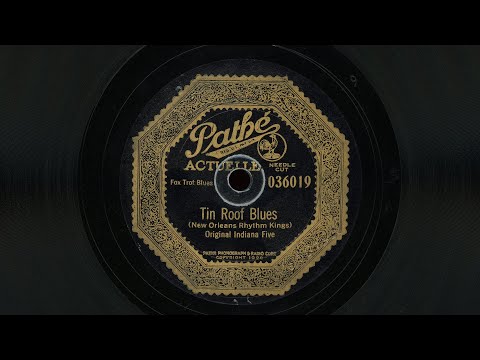
An early recording by the Original Indiana Five when it was led by Johnny Sylvester. Here, the OI5 give us their take on “Tin Roof Blues”, a tune made famous by the New Orleans Rhythm Kings earlier that year. (And if you haven’t heard it, you can hear that recording here: https://youtu.be/V7VbDFw5Udk )
Charlie Panelli takes a trombone solo at 0:55, then hands it to Nick Vitalo for a clarinet solo at 1:18. Sylvester gives us a trumpet solo at 2:07.
If you own a copy of Brian Rust’s “Jazz and Ragtime Records” 6th ed – make a note – this record appears listed there as Pathé Actuelle 036029 rather than the correct catalog number shown here (036019).
Recorded in New York City on November 6, 1923. Released as Pathé Actuelle 036019.
Credits: Johnny Sylvester – trumpet, director Charlie Panelli – trombone Nick Vitalo – clarinet, alto sax Harry Ford – piano Tony Colucci (?) – banjo Tom Morton – drums
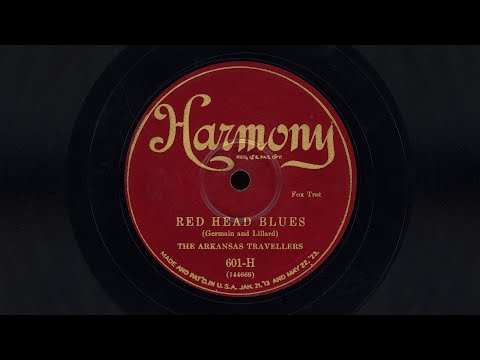
Wow – I really love this flip side of the Harmony disc I posted yesterday! A real pick-me-up that will brighten your day and is well-worth a good listen.
From the last recorded session under the Arkansas Travellers moniker, this band was a variation of Red Nichols and his Five Pennies that featured most of its key players. The standouts here include a clarinet solo at 0:42, Red on trumpet at 1:01, a sparkly piano solo from Rube Bloom at 1:38, and a Miff Mole trombone solo at 1:56.
Recorded in New York City on September 14, 1927. Released as Harmony 601-H. Also released as Velvet Tone 1601-V and Diva 2601-G.
Credits: Red Nichols – trumpet Miff Mole – trombone Pee Wee Russell or Fud Livingston – clarinet Fred Morrow – alto sax Rube Bloom – piano Vic Berton – drums
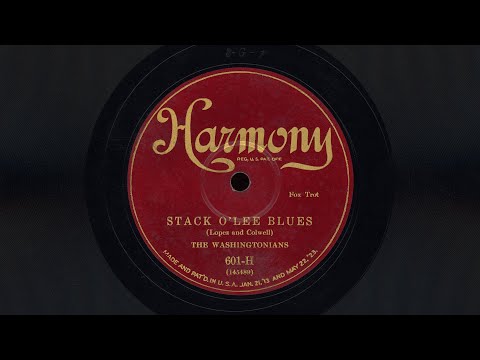
About a month after Duke Ellington’s band famously started at the Cotton Club in Harlem, he recorded three tunes for what I believe was his only session for the Harmony label (Columbia’s budget line which also included the Velvet Tone and Diva labels).
It’s a slow burn – at 0:56 Bigard gives us a plaintive clarinet solo and then at 1:18 Ellington launches into a double-time piano solo that builds momentum for an ensemble ending.
Recorded in New York City on January 9, 1928. Released as Harmony 601-H.
Credits: Duke Ellington – piano, arranger, director Bubber Miley, Louis Metcalfe – trumpet Joe Nanton – trombone Otto Hardwick – soprano sax, alto sax, baritone sax Harry Carney – clarinet, alto sax, baritone sax Barney Bigard – clarinet, tenor sax Fred Guy – banjo Wellman Brand – string bass Sonny Greer – drums
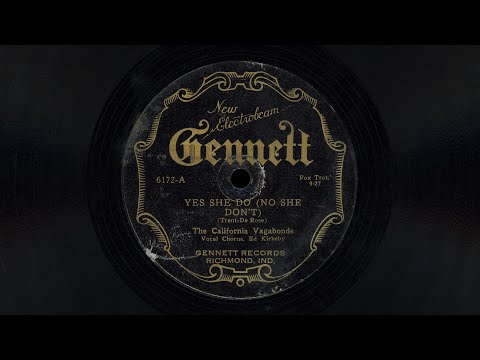
You might have heard the Columbia version of this Peter DeRose and Jo Trent composition recorded by the California Ramblers in March of 1927 – or possibly the Edison version recorded on May 3 – one day after this version.
But this hotter version on Gennett Electrobeam has a 🔥 16 bar Rollini bass sax solo starting at 1:32 that’s quite worth giving a listen to. There’s also an uncredited kazoo (?) solo directly following.
Adrian Rollini by this time was the highest paid member of the California Ramblers, earning anywhere from $125-175 / week during engagements and another $27-35 per recording session with Ed Kirkleby. But Kirkleby filed for bankruptcy in March 1927 due to considerable debt accrued through his various business ventures, and Rollini, who had up unto this point agreed to record exclusively with Kirkleby-managed groups, was about to begin life as a free agent.
Recorded in New York City on May 2, 1927. Released as Gennett 6172.
Credits: Chelsea Quealey, Frank Cush – trumpet Eddie Lappe – trombone Bobby Davis, Pete Pumiglio – clarinet, soprano sax, alto sax Sam Ruby – tenor sax Adrian Rollini – bass sax Jack Russin – piano Tommy Felline – banjo Stan King – drums, kazoo Ed Kirkleby – vocals (these are from Rust from their May 3, 1927 Edison session. Not sure about these – if you have better info than this please send my way!)
Sources: “Adrian Rollini: The Life and Music of a Jazz Rambler” by Ate Van Delden, University Press of Mississippi, 2020
Roy Palmer was a trombonist from New Orleans who played with Lawrence Duhe’s New Orleans Jazz Band in New Orleans and Chicago in the late teens. In the 20s, he recorded with greats such as Jimmie Blythe, Ida Cox, Johnny Dodds, Richard M. Jones, and Jelly Roll Morton.
He is best known for a series of washboard jazz recordings made in 1932 with the Memphis Night Hawks (alternatively known as the Alabama Rascals) and the State Street Ramblers. These deep depression washboard jazz records, along with those produced by spasm bands and jug bands, would prove to be influential to later skiffle artists in the U.K. that would themselves influence the future of rock and roll.
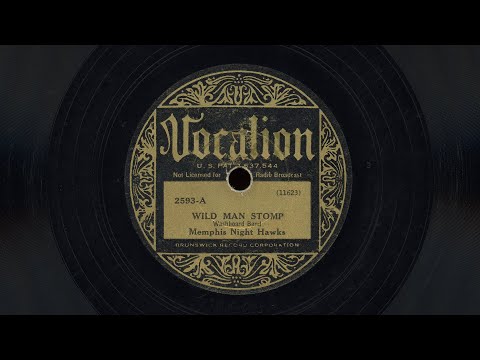
Interestingly, Palmer does not play on this tune, “Wild Man Stomp”, from their second session. A “wild” piano start things off and an ebullient clarinet quickly takes the lead. The banjo gets some spotlight at 0:28 and the washboard swings throughout. An inspired scat vocal by an unknown performer starts at 1:48.
All told, it’s a wild thrilling ride.
Recorded in New York City on March 30, 1932. Released as Vocalion 2593.
Credits: Roy Palmer – director Darnell Howard – clarinet, alto sax Bob Hudson and/or W. E. Burton – piano Unknown Artist – banjo Jimmy Bertrand – washboard
Here’s an Original Indiana Five track you may not have heard – it was not included on the extensive four volume OI5 Jazz Oracle series released on CD in 2000 – though it does appear on the 1999 Frog CD release “Everybody Stomp: The Harmony Recordings 1925-1929”.
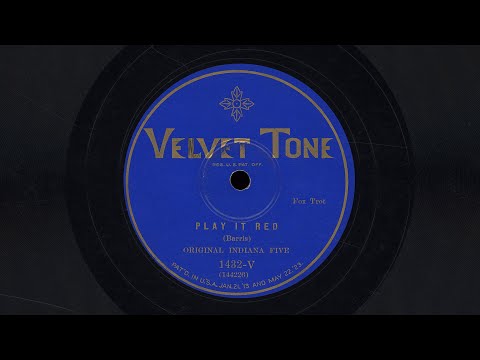
Here, we hear the Harry Barris tune (and you’ll recognize the name of one of Paul Whiteman’s Rhythm Boys) “Play It Red” delivered with a kind of exacting elegance. The clear precise tone of Tony Tortomas’ trumpet sounds almost baroque at times.
Other performers of note include Pete Pellizzi (who solos on trombone at 0:40), pianist Harry Ford (who solos on piano at 2:22), and the unknown bass saxophonist who keeps things moving along.
Recorded in New York City on May 26, 1927. Released as Velvet Tone 1432-V. Also released as Harmony 432-H and Diva 2432-G.
Credits Tom Morton – drums, director Tony Tortomas – trumpet Pete Pellizzi – trombone Nick Vitalo – clarinet, alto sax Unknown Artist – bass sax Harry Ford – piano Tony Colucci – banjo
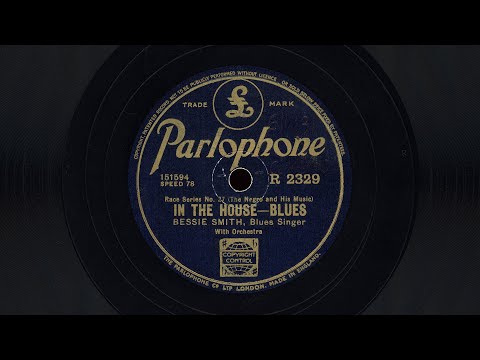
A deep depression recording of blues phenomenon Bessie Smith and a talented group of “growlers” accompanying her performance. Louis Metcalf seems to be confirmed on trumpet – and the rest question marks. Metcalf remembered Charlie Irvis on trombone – but the Chicago Defender on July 18, 1931, it was noted that “William W. Christian, trombonist has just finished recording with Bessie Smith.”
As this session was her only recording date of the summer, released during a very tough time for the record industry, it is nearly impossible to find on the original Columbia Viva Tonal pressing. Luckily, we have this master-pressed Parlophone to enjoy.
Recorded in New York City on June 11, 1931. Released in the U.K. as Parlophone R2329 (master pressing). Originally released in the U.S. as Columbia 14611-D.
Credits: Bessie Smith – vocals Louis Metcalf – trumpet William W. Christian (?) or Charlie Irvis (?) – trombone Clarence Williams (?) – piano Unknown Artist – drums
Source: Clarence Williams, by Tom Lord, Storyville Publications, 1974.
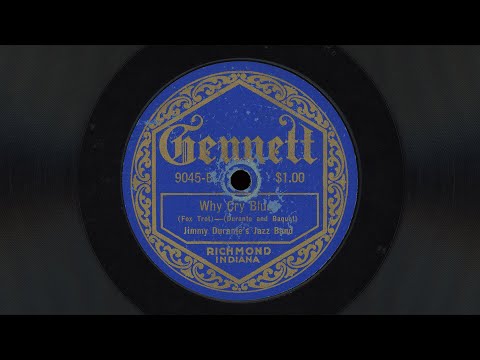
Here’s an early Gennett recording of Jimmy Durante’s first jazz band from 1920. Achille Baquet’s clarinet really leads the charge on this one – with a brash, confident tone complete with novelty effects reminiscent of Louis Panico’s “laughing” cornet that were popular in such early rag-a-jazz outfits.
Durante had recorded for Okeh and Gennett with slightly different personnel under the name Original New Orleans Jazz Band in 1918 and 1919. Here, they showcase a composition written by Durante and Baquet called “Why Cry Blues”.
Less than ideal surface noise on this copy, but glad to have acquired it all the same!
Recorded in New York City circa May, 1920. Released as Gennett 9045.
Credits: Alfred Laine – cornet Joe Loyocano – trombone Achille Baquet – clarinet Jimmy Durante – piano Arnold Loyocano – drums
Source: Jazz and Ragtime Records, Brian Rust, 6th Ed.
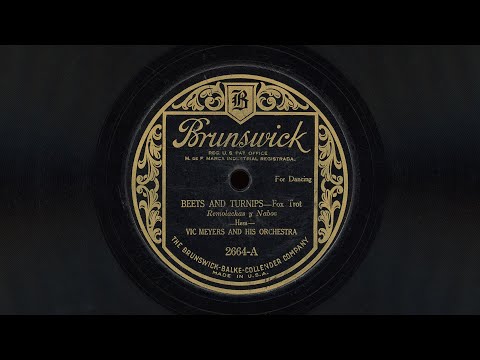
Brunswick scouts discovered Vic Meyers’ band in Seattle in 1923 during a trip to the West Coast to look for new talent to record. Meyers was leading a band at Seattle’s Hotel Butler.
A year later the band recorded again for Brunswick in Los Angeles in a temporary studio over a period of several days, May 7-14, 1924. They recorded nine selections (some with multiple takes) over those seven days – including this one.
“Beets and Turnips” is a fun ragtime piano composition composed by by Cliff Hess and Fred E. Ahlert that was published in 1915 that enjoyed a brief resurgence in 1924 with this recording and a Varsity Eight version on Cameo. Some nice cornet and banjo work on this one, among other things!
Some fascinating information on Meyer’s political career can be found at the link below.
Recorded in Los Angeles, California on May 7, 1924. Released as Brunswick 2664
Credits: Vic Meyers – director Billy Stewart, Bill Zimmerman – cornet Jim Taft – trombone Art Kenton – clarinet, alto sax, arranger Cecil Harnack – alto sax Bob Gordon – tenor sax, bass sax Al Newman – piano Unknown Artist – banjo “Chief” – tuba Bob Goodwin – drums
The late spring and early summer of 1928 found the Fletcher Henderson orchestra in residence at the Roseland Ballroom in NYC, playing oposite Billy Lustig’s Scranton Sirens and other bands – engagements that were broadcast on radio stations WHN, WOR, and WPAP.
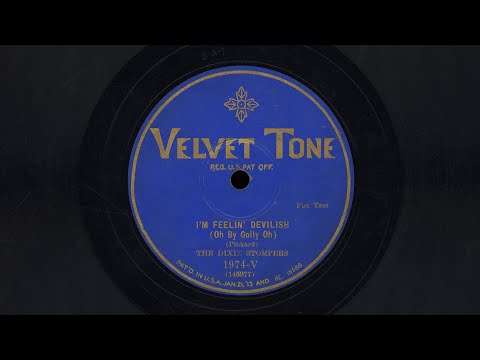
This session, under the alias “The Dixie Stompers” was made for the budget Columbia label trio of Harmony, Velvet Tone, and Diva. These labels used laminated shellac and often have a very nice sound as a result – even though they were acoustically recorded in an era when most labels had graduated to electric recording.
This disc looked a bit worn but holds up quite well. I dug this out of Vintage Music Company in Minneapolis a few years ago. Lots of hot energy in this one – and probably one of my favorites of the Dixie Stomper sessions.
Hendersonia notes that trumpeter Bobby Stark “claimed these as his best recordings” and you can hear right away the confident tone and unique style he had cultivated. Jerome Pasquall does a fine job filling in on bass sax while Bailey, the Hawk and Green each takes solos. There’s even a fun percussion hot break by Kaiser Marshall at 1:08
0:00 Intro 0:20 Trumpet solo (Stark) 0:38 Clarinet solo (Bailey) 1:09 ensemble 1:33 Tenor sax solo (Hawkins) 1:50 Trombone solo (Green) 2:05 Trumpet solo (Stark) 2:23 Bass sax hot break (Pasquall) and outro
After this session, the band toured extensively for the rest of the summer and did not get back into the recording studio until September, during a stop in Chicago.
Recorded in New York City on April 6, 1928. Released as Harmony 974-H, Velvet Tone 1974-V and Diva 2974-G.
Credits: Fletcher Henderson – piano, director, arranger Rex Stewart, Bobby Stark – trumpet Charlie Green – trombone Buster Bailey – clarinet, alto sax Coleman Hawkins – tenor sax Jerome Pasquall – bass sax Charlie Dixon – banjo Kaiser Marshall – drums