In celebration of Pride month 🏳️🌈 all of my posts this month will feature the music of LGBTQ+ artists of the 78 rpm era!
I mentioned in my last post that the amazing Gladys Bentley recorded her four sides for Okeh records in 1928-29 – well before her peak as a performer in the 1930s, for which no recordings exist. This was due to her notoriously ribald lyrics that were considered “indecent” and “perverse” by some at the time – along with her penchant to “send up” popular songs in parody, running afoul of copyright protections.
However – one recording from the 1930s does exist – a 1930 session in which Bentley scatted to a washboard jazz band backing led by Harold Randolph and Bruce Johnson which also featured an early appearance of guitarist Teddy Bunn, who had started his recording career with Duke Ellington and Jimmie Johnson in 1929.
This tune finds Bentley in an exuberant state – showing off her scatting abilities right off the bat at 0:06 and again at 2:15. The driving frenetic rhythms of the band keep things in high spirits throughout and a splendid time is had by all.
Bentley actually performed with the Washboard Serenaders at the Harlem Opera House in the 1930s – where she often was featured as the headliner. Bentley became a celebrated fixture of the Harlem community, performing at many popular Harlem clubs, including the Clam House, the King’s Terrace, the Ubangi Club, and even the Apollo Theatre.
“Gladys Bentley is grand. I heard her three nights, and will never be the same.” – Eslanda Robeson
“For two or three amazing years, Miss Bentley sat, and played a piano all night long, literally all night, without stopping – singing songs like ‘St. James Infirmary’ from ten in the evening until dawn, with scarcely a break between the notes, sliding from one song to another, with a powerful and continuous underbeat of jungle rhythm.”
– Langston Hughes
“When Gladys sings ‘St. James Infirmary,’ it makes you weep your heart out.” – Harold Jackman
While these unrecorded performances of the 1930s can only be imagined, this record at least gives us a brief glimpse of Bentley in true form: a commanding performer unapologetically herself.
Indeed, her celebrity and reputation as a performer gave her the confidence to express her sexuality and gender in very public ways. “She could be seen any day marching down Seventh Avenue attired in men’s clothes and she seemed to thrive on the fact that her odd habits was the subject of much tongue wagging.” – Wilbur Young, 1939
Thank you, Gladys Bentley for courageously being yourself!
Happy Pride!! 🏳️🌈🏳️⚧️
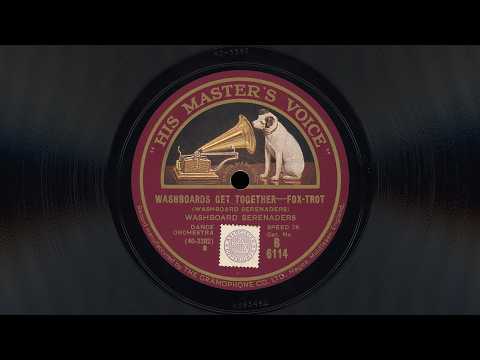
Recorded in New York City on March 24, 1930.
Originally released in the U.S. as Victor V-38127.
Released in the U.K. as His Master’s Voice B.6114
Credits:
Gladys Bentley – vocals
Harold Randolph – kazoo
Clarence Profit – piano
Teddy Bunn – guitar
Bruce Johnson – washboard, vocals
Sources:
Jazz and Ragtime Records (1897-1942), Brian Rust, 6th Ed
“In My Well of Loneliness: Gladys Bentley’s Bulldykin’ Blues” from Bulldaggers, Pansies, and Chocolate Babies: Performance, Race, and Sexuality in the Harlem Renaissance, James F. Wilson, University of Michigan Press, 2010 [By the way – EXCELLENT book – highly recommended!]
Leave a Reply