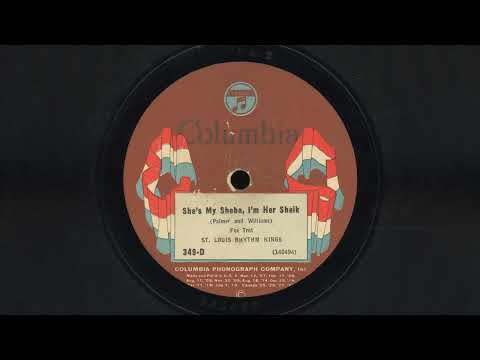
One of only two sides cut by this studio band made up of Mickey Bloom (the younger brother of pianist Rube Bloom) – who played with California Ramblers, Cotton Pickers, and Georgia Melodians – and Pete Pellizzi – who played with Johnny Sylvester and the Original Indiana Five.
Like many early jazz bands, though their band name might suggest otherwise, they were all New York studio musicians.
Lots of New Orleans-style ensemble playing on this bouncy and lively track!
Recorded in New York City on April 4, 1925. Released as Columbia 349-D – this copy with the beautiful flag label.
Credits: Mickey Bloom – trumpet Pete Pellizzi – trombone Louis Maesto – clarinet Nick Moleri – piano Christian Maesto – drums
Digitally transfered from original 78 rpm shellac record.
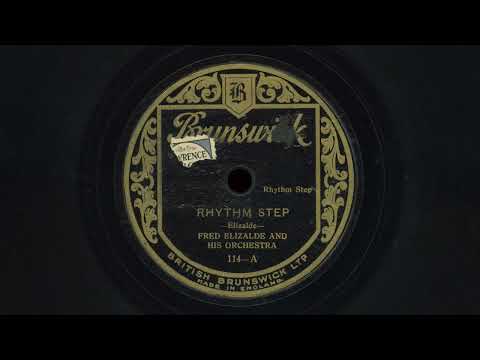
Frederico “Fred” Elizalde was born to a wealthy family in the Philippines who sent him to study Law at Stanford University in the early 1920s, where he also continued his piano studies and played at the Biltmore Hotel in Los Angeles and recorded for Brunswick with the Cinderella Roof Orchestra in San Francisco. He then moved to London to study at Cambridge, but soon found himself focusing full-time on his music.
His London band included his brother “Lizz” on alto sax and was hired to play at the Savoy Hotel. In 1927 alone, his band (under various names) recorded 34 tunes and released 14 records for Brunswick and one for HMV.
This original tune by Elizalde, “Rhythm Step”, showcases his admiration of the swingin’ jazz rhythms that he was exposed to in the U.S. While the track does include extended piano and trumpet solos, the emphasis is always firmly on the rhythm.
Elizalde also recorded a solo piano version of this tune around the same time.
A few months later, Elizalde would famously bring over Americans Adrian Rollini, Bobby Davis, and Chelsea Quealey of the California Ramblers to play in his orchestra – a story for another time.
Recorded in London circa July-August, 1927. Released in the U.K. as Brunswick 114.
Credits: Fred Elizalde – piano, arranger, director Henry Levine, George Ratcliffe – trumpet Jack Miranda, Manuel “Lizz” Elizalde – clarinet, alto sax Joe Crossman – tenor sax, baritone sax George Hurley – violin Joe Brannelly – banjo Tiny Stock – tuba Max Bacon – drums
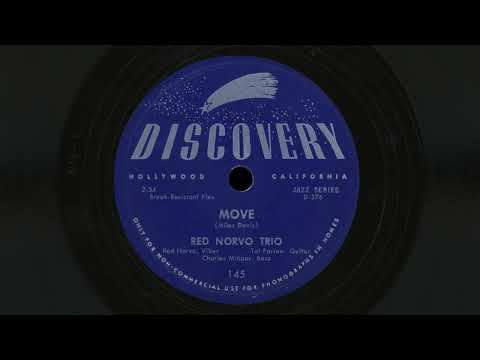
The Red Norvo Trio is one of those underrated jazz bands that can get lost in the shuffle. I love everything they recorded – which unfortunately isn’t a whole lot.
Norvo had been playing jazz since the 1920s, so by 1950 I suppose by this time he was a bit of an old timer. And vibes can sometimes unfairly get a bad rap by jazz fans who need to hear horns to deliver adequate dopamine to their jazzistic nerve. So there are two strikes already against this act. Not to mix metaphors here, but Norvo found two aces to play a winning hand.
He started the trio with Mundell Howe (g) and Red Kelly (sb) but they left and he turned to two relatively unknown artists who turned out to be future deities in the pantheon of jazz.
Talmage “Tal” Farlow, only started learning guitar in 1943 and was working the night shift as a sign painter before Norvo invited him to join the trio – which turned out to be his big break.
Mingus had been playing as a sideman in the NYC scene for years with cats like Howard McGhee, Illinois Jacquet, Dinah Washington, Ivie Anderson, and Lionel Hampton – even leading a few of his own sessions. But he was far from the legendary status and fame that he would go on to earn later that decade and beyond.
This tune “Move” was here oddly credited to Miles Davis but was written by drummer Denzil Best (part of the excellent rhythm section of the George Shearing Quintet) and arranged by John Lewis.
“Move” was famously recorded by the Miles Davis Nonet in early 1949 and was released on Capitol records as a 78 rpm single. It later famously started off the seminal “Birth of the Cool” album which compiled eleven tunes from these early sessions but was not released as an LP until 1957.
The original arrangement for nonet called for tuba and french horn – and the stripped down instrumentation of a trio might at first cause some alarm. However, the trio here clips through the tune like an ice storm – driven by Mingus’ furious bop tempo – and it’s telling how immaculately cool they sound while playing so hot!
0:00 Intro 0:28 Vibe solo (Red Norvo) 1:18 guitar solo (Tal Farlow) 2:08 Outro
Recorded in Chicago on October 31, 1950. Released as Discovery 145.
Credits: Red Norvo – vibes Tal Farlow – guitar Charles Mingus – bass
African jazz in what was then called Belgian Congo was equally inspired by American jazz and Cuban rumba. The very interesting combination is augmented by the unique perspective of the artists prospering in a hotbed of music across prolific record labels such as Ngoma, Opika, and Loningisa in Léopoldville, the capital of a dying colonial empire.
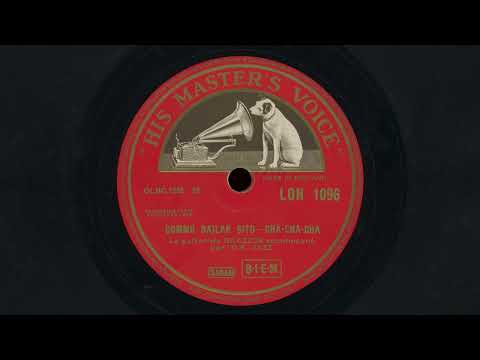
Originally recorded for the Congolese Loningisa label, here we have the guitarist Armando Brazzos playing an infectious cha cha with O.K. Jazz reissued for wider distribution on the HMV LON series.
This catchy dance tune hooks you from the very first few bars and never lets go. Around 1:50, Issac Musekiwa provides a wailing sax solo on top of the never-ending groove. Then at the exact three minute mark, everything comes to an abrupt halt.
A real treat to listen to! But be warned – once the contagious cha cha rhythm gets in your head you may find yourself shaking your hips all day long as the groove goes on and on in your head.
Recorded in Léopoldville (now Kinshasa), Congo on February 27, 1959. Originally released as Loningisa N° 252. Reissued as His Master’s Voice LON 1096.
Credits (mostly based on personnel of O.K. Jazz in the late 50s) Armando Brazzos – guitar Issac Musekiwa (?) – saxophone Victor “Vicky” Longomba (?), Edouard “Edo” Ganga (?) – vocals Célestin Kouka (?) – maracas, vocals De La Lune (?) – Bass Nicolas “Dessoin” Bosuma (?) = percussion
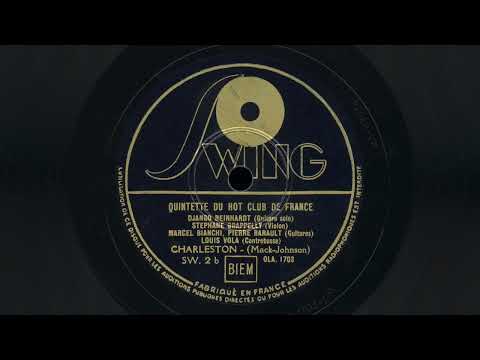
I’ve had the Charleston on my mind ever since I posted that Ben Selvin version last week. Here’s a much later version from a surprising source: Django Reinhardt and the Quintet of the Hot Club of France.
Some great hot rhythms and energetic riffing here by both Grappelli and Reinhardt. Starting at 1:35, Reinhardt even starts playing in octaves, foreshadowing a style that Wes Montgomery would make famous twenty years later.
This record was never issued concurrently on HMV or Victor and this issue on the Swing label represented its only release.
Recorded in Paris, France on April 21, 1937. Released as Swing 2.
Credits Stéphane Grappelli – violin Django Reinhardt, Marcel Bianchi, Pierre Barault – guitar Louis Vola – bass
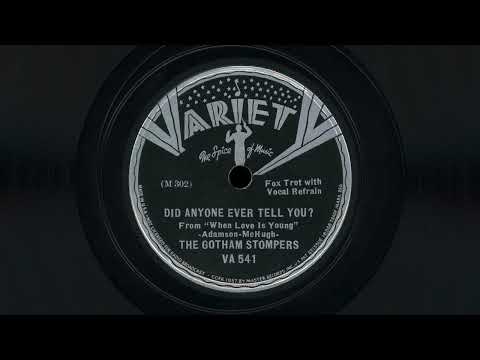
The short-lived Variety label released some great jazz records in 1937. It was produced by Irving Mills’ Master Records, Inc. – so it makes sense that we see a lot of pickup bands with personnel from the Duke Ellington orchestra.
Ivie Anderson, who had been singing with the Ellington orchestra dating back to 1931, sings on this track – and shows her remarkable talent and charm.
The vocals are followed by a quick succession of solos: trombone, alto sax, piano, and a few bars of Barney Bigard’s clarinet.
When it was released in June of 1937, the record was panned by Billboard, who wrote: “For that undiluted swing The Gotham Stompers fail to send. In spite of such star swingsters as Johnny Hodges, Barney Bigard, Harry Carney and Cootie Williams, from Duke’s Ellingtonians, with Ivy Anderson’s piping to boot, tooters never once take their jammin’ seriously. And even the presence of drummer Chuck Webster, nee Chick Webb, fails to inspire ’em.”
Recorded in New York City, March 25, 1937. Released as Variety 541.
Credits: Ivie Anderson – vocals Cootie Williams – trumpet Sandy Williams – trombone Barney Bigard – clarinet Johnny Hodges – alto sax Harry Carney – baritone sax Tommy Fulford piano Bernard Addison – guitar Billy Taylor – bass Chick Webb – drums Wayman Carver – arranger
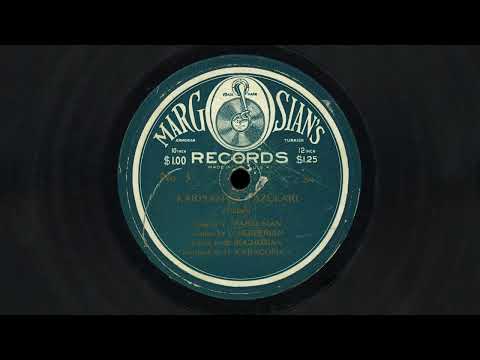
Vartan Margosian was born in an Armenian village in the region of Kharpert in what was then the Ottoman Empire. He immigrated to the United States in 1908 and settled in New York City.
Margosian’s was Vartan’s record label that recorded and pressed Armenian and Turkish folk music on 78 rpm shellac records in the early 1920s.
Acoustically recorded in the New York City area circa 1923. Released as Margosian’s No. 3.
This scarce copy is a bit worn, and some blasting is audible during louder vocal passages at first – it improves after 30-40 seconds. I also left the brief announcement in at the beginning of the record – which I cannot quite decipher.
Credits: Vartan Margosian – vocals D. Perperian – clarinet B. Boghosian – kanon H. Karagosian – dumback
The flip side (no. 00) find the same musical ensemble recording a dance tune without Vartan’s vocals: https://youtu.be/f0MvHsyNulE
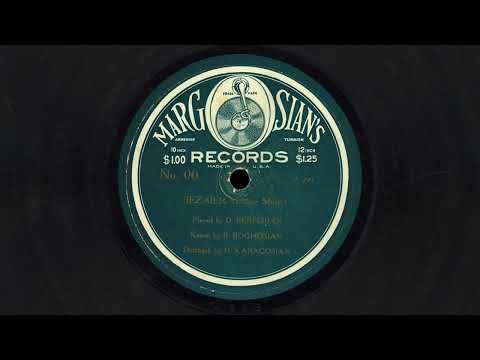
Vartan Margosian was born in an Armenian village in the region of Kharpert in what was then the Ottoman Empire. He immigrated to the United States in 1908 and settled in New York City.
Margosian’s was Vartan’s record label that recorded and pressed Armenian and Turkish folk music on 78 rpm shellac records in the early 1920s.
This instrumental features a clarinet and kanon (a type of large zither) with rhythm provided by a dumback (a goblet-shaped drum).
Acoustically recorded in the New York City area circa 1923. Released as Margosian’s No. 00.
Credits: D. Perperian – clarinet B. Boghosian – kanon H. Karagosian – dumback
The flip side (Margosian No. 3) contains this same musical ensemble with Vartan Margosian on vocals. https://youtu.be/tD5VEvcVy5U