Jazz Crazy Records

An Archive of Early Jazz on 78 RPM

Author: Professor M

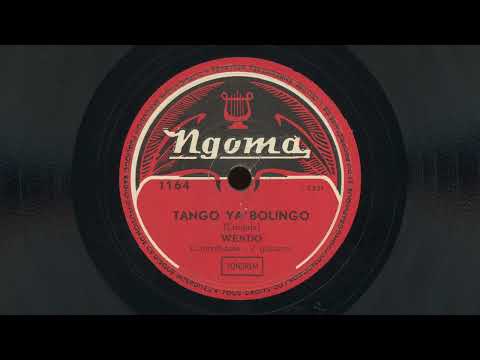
  • “Tango Ya Bolingo” – Wendo (c. 1951-52)  – Ngoma 1164

    “Tango Ya Bolingo” – Wendo (c. 1951-52) – Ngoma 1164

    Wendo (whose real name was Antoine Kolosoyi) was born in the village of Mushie – about 150 miles upriver from Léopoldville in Congo. He worked as a riverboat mechanic and sometimes would play his guitar for audiences on his riverboat journeys.

    In the late 40s, he was introduced to Ngoma by his friend Henri Bowane and recorded their first big hit record: “Marie Louise”, a song which Gary Stewart writes “brought the spirits out of the cemetery to listen.” Wendo’s beautiful singing voice and guitar playing quickly made him a popular Ngoma recording artist.

    Here we hear a Wendo record from the early 1950s on Ngoma’s red label. Wendo was by then a big star in the Congolese music scene. The title roughly translates as “The Time of Love”.

    Released as Ngoma 1164.
    Matrix J 2331

    The other side of this 78 rpm record can be found at:
    https://youtu.be/qvzC0w2cnKo

    Credits
    Wendo (Antoine Kolosoyi) – vocals, guitar
    Unknown performers – guitar, contrebasse

    If you enjoyed this music, please check out my interview with Alastair Johnston, producer of the 3CD/3LP set “The Soul of Congo: Treasures of the Ngoma Label”:
    https://youtu.be/2BSsWpb49AA
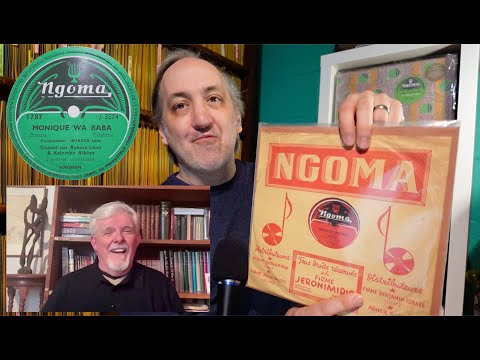
  • Interview with Alastair Johnston about the Ngoma label & “The Soul of Congo” – Jazz Chat Episode 005

    Interview with Alastair Johnston about the Ngoma label & “The Soul of Congo” – Jazz Chat Episode 005

    My guest today is Alastair Johnston, producer of “The Soul of Congo: Treasures of the Ngoma Label” on Planet Ilunga Records – a incredible retrospective of the music of the legendary Congolese record label, Ngoma. This release is made up of all-new digital transfers from 78 rpm and 45rpm original records – some of which are nearly impossible to find.

    Alastair is full of so much amazing information and so many stories – it was a true pleasure to speak with him and learn more about Congolese Rumba, the origin of the Ngoma label, and much more. I hope you enjoy our conversation! I tried to break it up with short samples of some of the tracks on the set to keep things interesting.

    0:00 Intro
    0:32 My interest in the Ngoma label
    1:18 Planet Ilunga release
    2:12 Sample: Groupe de Flutistes Bayeke Lulua Jazz (Fulukayi, Tshisuisa)
    2:32 The MUSIC!
    3:21 Introduction: Alastair Johnston
    4:25 How Alastair became interested in African music
    8:35 Sample: “Anna Yaya” Trio BOW (Bukasa – Oliveira – Wendo)
    9:00 How did “the Soul of Congo” project start?
    15:04 Story of “Marie Tchebo” (Ngoma 110) by G. Edouard and M. Oliveira
    15:58 Selecting tracks for the release
    17:42 The history of the Ngoma label
    23:50 Sample: “Tuwayilanga Kimpwanza” – San Salvador (G. Edoward, M. Oliveira, H. Freitas, Bila accompagné par l’orchestre Beguen Band
    24:10 Cuban musical influence
    27:53 Social and historical context in Congo
    29:24 Discussion of “Mokili Ekobaluka” by Adou Elenga
    30:27 Sample: “Mokili Ekobaluka” by Adou Elenga
    31:09 Paul Mwenga and political music in Kizomba
    31:46 Getting lyrics translated for the project
    34:04 How lyrics add to understanding of the music
    36:00 What happened to the Ngoma masters and file copies?
    38:00 What made Ngoma special?
    40:08 Discussion of “Monique Wa Baba” by Léon Bukasa with a young Papa Noel on guitar
    40:46 Sample: “Monique Wa Baba” – Léon Bukasa
    42:18 Ngoma studio engineers and recording technology
    43:09 Testimonials in the liner notes
    44:29 The joy of Ngoma label music
    46:52 Will there be a second volume?
    50:39 Franco “Les Editions Populaires” release on Planet Ilunga
    51:27 Wrap up
    51:54 “Suwavecito Mambo” – Charles Lembe & son orchestre
    52:24 Where to get a copy of “The Soul of Congo” for your collection
    53:14 Announcement about Ngoma transfers posted on Jazz Crazy YouTube channel this coming week!
    53:44 Learning more about the history of African recorded music
    54:59 So long, farewell, auf wiedersehen, good bye

    A huge thanks to Alastair Johnston for taking the time to talk with me – and to Bart Cattaert of Planet Ilunga for his support of this interview. Also – my eternal gratefulness and thanks to all legendary musical performers of the Ngoma label! 🙏 Thank you!

    Learn more:
    “The Soul of Congo: Treasures of the Ngoma Label” on Bandcamp
    https://planetilunga.bandcamp.com/album/the-soul-of-congo-treasures-of-the-ngoma-label-1948-1963

    Alastair Johnston’s website: MUZIKIFAN
    http://www.muzikifan.com/

    Afrodisc (Discographies and label histories of African 78 rpm labels)
    http://afrodisc.com/

    Planet Ilunga Website
    https://planetilunga.com/

    Rumba on the River website
    http://rumbaontheriver.com/

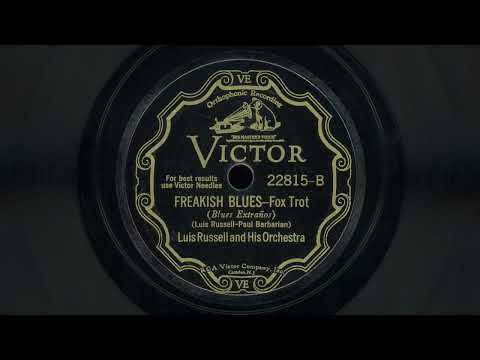
  • “Freakish Blues” – Luis Russell and his Orchestra (1931)

    “Freakish Blues” – Luis Russell and his Orchestra (1931)

    A deep depression cut from Luis Russell and his Orchestra from the summer of 1931. This beautiful record had the misfortune to be released during a tough time for the music biz. The record industry was on the skids and sales had plummeted from 100 million records sold in 1929 to only 6 million in 1932. Radio was taking over as a free source of continuous music, news, and entertainment.

    Luis Russell was a pianist born in Panama who spent time in both New Orleans and Chicago before coming to New York and forming his own band.

    This record is full of great players – such as Henry “Red” Allen, Albert Nicholas, Pops Foster and Paul Barbarin. They showcase their abilities on this record through a mastery of control, restraint, and emotional resonance.

    The tune begins with a languid and almost pastoral vibe. The rhythm section trots gently along as the soloists seem to float past us as though walking on air.

    An alto sax (Albert Nicholas?) begins. Dicky Wells follows on trombone. Then a trumpet (Henry Allen?). Each interspersed with ensemble playing and ending with a call and response between a lone sax and the rest of the band. A trumpet starts plaintively growling toward the end, but the sun sets before it can make its full argument.

    Evocative and beautiful – almost a kind of programme music in the classical sense. One senses something new being born.

    Recorded in New York City on August 28, 1931.
    Released as Victor 22815.
    Only 2,460 copies of this record were sold.

    Credits
    Luis Russell – piano, director
    Henry Allen, Robert Cheek, Gus Aiken – trumpet
    Dicky Wells – trombone
    Albert Nicholas- clarinet, alto sax
    Henry Jones – alto sax
    Greely Walton – tenor sax
    Will Johnson – guitar
    Pops Foster – bass
    Paul Barbarin – drums, vibraphone

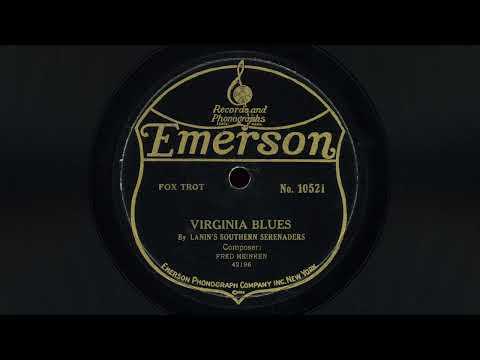
  • “Virginia Blues” – Lanin’s Southern Serenaders (1922)

    “Virginia Blues” – Lanin’s Southern Serenaders (1922)

    One of my favorite versions of “Virginia Blues” – and ironically recorded within a week of the Ladd’s Black Aces session with Cliff Edwards. The difference is that here, we lose Cliff Edwards’ eefin’ vocalizations for the alto sax of Loren McMurray. This trade is more than fair and results in a very interesting comparison between these versions produced on the same week by largely the same band.

    It should be noted that this Emerson copy is probably in a bit better shape than the Ladd’s Black Aces’ Gennett record and that factor should be taken into consideration.

    Recorded in New York City on February 15, 1922.
    Released as Emerson 10521 and Regal 9200.

    Credits:
    Phil Napoleon – trumpet
    Miff Mole – trombone
    Jimmy Lytell – clarinet
    Loren McMurray – alto sax
    Frank Signorelli – piano
    Jack Roth – drums

    If you’re interested in comparing these recordings – here are links to the other transfers from my collection:

    1. “Virginia Blues” – Superior Jazz Band
    https://youtu.be/DBf3buba9-A

    2. “Virginia Blues” – Ladd’s Black Aces (featuring Cliff Edwards aka “Ukulele Ike”)
    https://youtu.be/5hr-_9LwhhM

    3. “Virginia Blues” – The Benson Orchestra of Chicago
    https://youtu.be/zdqQ9C5m-yM

    4. “Virginia Blues” – Lanin’s Southern Serenaders
    https://youtu.be/uwP8JeaMNYg

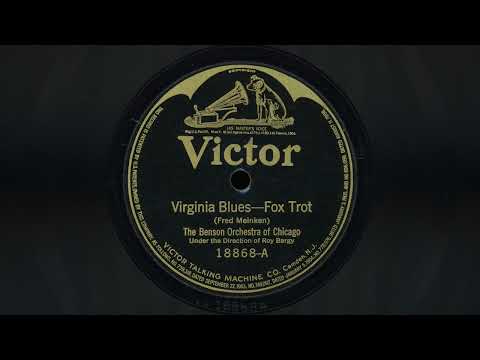
  • “Virginia Blues” – The Benson Orchestra of Chicago (1922)

    “Virginia Blues” – The Benson Orchestra of Chicago (1922)

    To continue my incessant listening-to of “Virginia Blues” that I started yesterday, here we have a version by the Benson Orchestra of Chicago from early 1922 under the direction of pianist Roy Bargy.

    The Benson Orchestra was a very popular dance orchestra in Chicago who recorded countless records for Victor from 1920 – 1925. Under Bargy’s leadership the Benson band put out many great records – and these are fun to hunt for because they sold well and supply seems to be plentiful.

    Five takes of this tune were attempted on January 28, we don’t know what happened at this session but all takes were destroyed. The band came back at it to try again on February 2 and recorded four more takes. The 9th take ended up being the winner – and it was pressed and released to the public in April of 1922.

    This version begins in an almost stately manner – and you quickly notice the skill of the musicians, who were all top-notch, and the precision of the arrangement. All of which makes you wonder if the eight failed takes of this tune can be attributed to Bargy’s high standards and perfectionism in his craft.

    While there are no heated improvised solos to be found here, it is clear that the objective here is getting people on the dance floor. The banjo is quite forward in the mix, and provides a real stomp to the rhythm. Bargy’s bouncy piano starting around 1:36 is quite fun and animated.

    You can imagine the dance floor at Marigold Gardens in Chicago was always full when the Benson Orchestra was in the house.

    Recorded in Chicago on February 2, 1922.
    Released as Victor 18868.

    Credits:
    Roy Bargy – piano, director
    Rick Adkins – trumpet
    Guy Carey – trombone
    Matthew Amaturo – clarinet, alto sax
    Thomas Thatcher – tenor sax
    Joe Baum – violin
    Joe Miller – banjo
    William Foeste – tuba
    Arthur Layfield – drums

    If you’re interested in comparing these recordings – here are links to the other transfers from my collection:

    1. “Virginia Blues” – Superior Jazz Band
    https://youtu.be/DBf3buba9-A

    2. “Virginia Blues” – Ladd’s Black Aces (featuring Cliff Edwards aka “Ukulele Ike”)
    https://youtu.be/5hr-_9LwhhM

    3. “Virginia Blues” – The Benson Orchestra of Chicago
    https://youtu.be/zdqQ9C5m-yM

    4. “Virginia Blues” – Lanin’s Southern Serenaders
    https://youtu.be/uwP8JeaMNYg

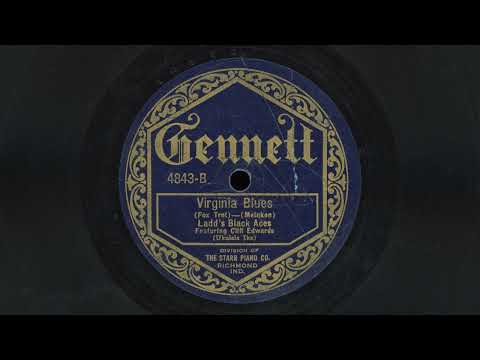
  • “Virginia Blues” – Ladd’s Black Aces (1922) f/ Cliff Edwards “Ukulele Ike”

    “Virginia Blues” – Ladd’s Black Aces (1922) f/ Cliff Edwards “Ukulele Ike”

    In a continuation of my Virginia-Blues-a-palooza, here we have the Original Memphis Five performing as Ladd’s Black Aces – and unlike the Superior Jazz Band recording I posted yesterday, here the personnel is a bit more nailed down.

    You can immediately sense an energy and confidence missing from the Superior record. There’s a festive quality to the record that gives it a relaxed sense of fun.

    We even get treated (or haunted, depending on your love of Cliff Edwards’ Eefin’ vocal technique) by the guest appearance of Ukulele Ike himself – Cliff Edwards – who musters up a hot vocal improvisation starting at 1:23.

    All in all, this record feels fresher and less stiff than the Superior record – and though my tolerance for Eefin’ can wane at times, it is a well-performed improvisation that breaks up the ensemble playing.

    What do you think of this one?

    Recorded in New York City on February 24, 1922.
    Released as Gennett 4843, Connorized 3059 (as Connorized Jazzers), Cardinal 517 and Starr 9229.

    Phil Napoleon – trumpet
    Miff Mole – trombone
    Jimmy Lytell – clarinet
    Frank Signorelli – piano
    Jack Roth – drums
    Cliff Edwards (“Ukulele Ike”) – vocal effects (Rust lists “Kazoo” but as @lukeholladay9596 astutely pointed out, this is a stylized vocal technique that Edwards developed called Eefin’. Kind of a combination of humming and scatting that mimics a kazoo using the voice alone. Edwards apparently claimed that he “learned it from street singers in his hometown of St. Louis.”)

    If you’re interested in comparing these recordings – here are links to the other transfers from my collection:

    1. “Virginia Blues” – Superior Jazz Band
    https://youtu.be/DBf3buba9-A

    2. “Virginia Blues” – Ladd’s Black Aces (featuring Cliff Edwards “Ukulele Ike”)
    https://youtu.be/5hr-_9LwhhM

    3. “Virginia Blues” – The Benson Orchestra of Chicago
    https://youtu.be/zdqQ9C5m-yM

    4. “Virginia Blues” – Lanin’s Southern Serenaders
    https://youtu.be/uwP8JeaMNYg

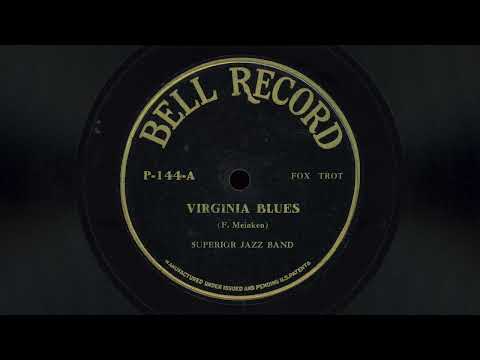
  • “Virginia Blues” – Superior Jazz Band (1922)

    “Virginia Blues” – Superior Jazz Band (1922)

    For some reason this past week I’ve been listening to various versions of “Virginia Blues” composed by Fred Meinken so thought I’d post a few and have fun comparing them.

    First up is a quaint recording from April of 1922 by a mysterious band called “Superior Jazz Band” on the Bell label. A fairly straightforward version of the tune – though the clarinetist seems a bit more adventurous than the other band members.

    Recorded in New York City on April 18, 1922.

    The only thing we know for certain about the personnel is that we don’t know who they are. We know the session was booked and directed by Ed Kirkeby – but that is where the conjecture begins.

    Rust lists no definitive personnel, but guesses the clarinetist could be Jimmy Lytell and pianist could be Frank Signorelli. Based on what evidence we’ll have to guess.

    A number of years ago on a message board someone suggested it could be an early incarnation of Original Memphis Five, but this seems to have been vigorously refuted by multiple knowledgable parties, including Mark Berresford and Ralph Wondraschek.

    In any case, give it a listen and check out some of the other versions I’ve posted. I find it quite instructive to listen to various versions back-to-back in order to really hear the differences between arrangements, bands, and players.

    If you’re interested in comparing these recordings – here are links to the other transfers from my collection:

    1. “Virginia Blues” – Superior Jazz Band
    https://youtu.be/DBf3buba9-A

    2. “Virginia Blues” – Ladd’s Black Aces (featuring Cliff Edwards “Ukulele Ike”)
    https://youtu.be/5hr-_9LwhhM

    3. “Virginia Blues” – The Benson Orchestra of Chicago
    https://youtu.be/zdqQ9C5m-yM

    4. “Virginia Blues” – Lanin’s Southern Serenaders
    https://youtu.be/uwP8JeaMNYg

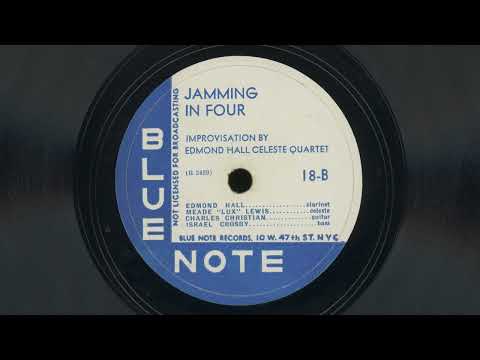
  • “Jamming in Four” – Edmond Hall Celeste Quartet (1941)

    “Jamming in Four” – Edmond Hall Celeste Quartet (1941)

    Early Blue Note 78s get a bad rap. Fans of later Blue Note hard bop on vinyl dismiss it as the label’s juvenilia and fans of early jazz find it too modern. Truth is – there’s some great music on early Blue Note – like this amazing record by the Edmond Hall Celeste Quartet.

    The celeste was sometimes used in 20s jazz recordings to add certain ornamental flourishes – often on the last chord of a song. And on rare occasion, we might even get to hear a short celeste solo, such as in Tiny Parham’s “Cathedral Blues”.

    Tiny Parham “Cathedral Blues”
    https://www.youtube.com/watch?v=FpKWOlsVsWk

    But here we get a full four minutes and twenty seconds of the rapturous Meade “Lux” Lewis playing a driven improvised blues on the celeste – jamming along with bandleader Edmond Hall on clarinet, the immortal Charlie Christian on guitar, and an energized Israel Crosby on bass. It’s a hedonistic romp that is a joy to listen to.

    Like many of Blue Note’s early records on 78 rpm, this was pressed on 12″ shellac, resulting in slightly longer run time.

    Recorded in New York City on February 5, 1941.
    Released as Blue Note 18.

    Credits:
    Edmond Hall – clarinet
    Meade Lux Lewis – celeste
    Charlie Christian – guitar
    Israel Crosby – string bass

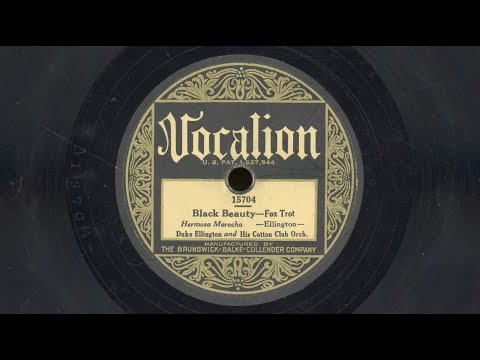
  • “Black Beauty” – Duke Ellington and his Cotton Club Orchestra (1928)

    “Black Beauty” – Duke Ellington and his Cotton Club Orchestra (1928)

    “Black Beauty” began as a tune with the working title “Firewater” that Ellington would play at the Cotton Club after an intermission. As he arranged the composition for his orchestra, he changed the title to “Black Beauty”, in tribute to “Queen of Happiness” Florence Mills, a singer, dancer, and comedian who died unexpectedly at a very young age in 1927. Mills was revered as an entertainer for her performances in Shuffle Along, Dixie to Broadway, Lew Leslie’s Blackbirds of 1926 and 1927, and many other productions.

    This is the first recording of the tune at an early 1928 session for Brunswick and is notable for the absence of Bubber Miley, whose growling trumpet was a calling card for the band. It also includes a piano solo by Duke himself.

    Ellington would re-record this tune for Victor a week later with Miley – and then again for Okeh in October arranged for solo piano. It remained in his repertoire throughout his life

    Recorded on in New York City on March 21, 1928.
    Released as Vocalion 15704 and Brunswick 4009.

    Duke Ellington – piano, arranger, director
    Arthur Whetsel, Louis Metcalf – trumpet
    Joe Nanton – trombone
    Otto Hardwick – soprano sax, alto sax, baritone sax, bass sax
    Harry Carney – clarinet, alto sax, baritone sax
    Barney Bigard – clarinet, tenor sax
    Fred Guy – banjo
    Wellman Braud – string bass
    Sonny Greer – drums

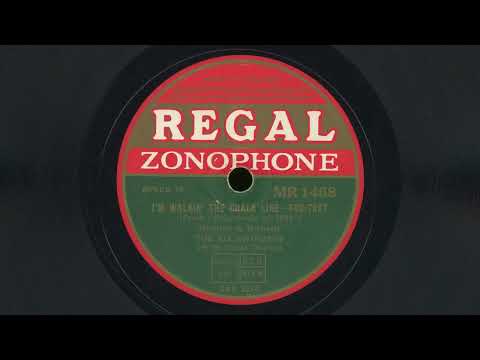
  • “I’m Walkin’ The Chalk Line” – The Six Swingers (1934)

    “I’m Walkin’ The Chalk Line” – The Six Swingers (1934)

    Hot British dance bands from the 1930s are a topic I am a little lax on, so I asked an English collector friend of mine for some recommendations. This record was one of them: The Six Swingers!

    Recorded in London on October 29, 1934.
    Released as Regal Zonophone MR 1468.

    Credits:
    George Scott Wood – director, piano
    Max Goldberg – trumpet
    Lew Davis – trombone
    Freddy Gardner – clarinet, alto sax, baritone sax
    Dick Ball – string bass
    Max Bacon – drums
    Sam Browne – vocals