Jazz Crazy Records

An Archive of Early Jazz on 78 RPM

Author: Professor M

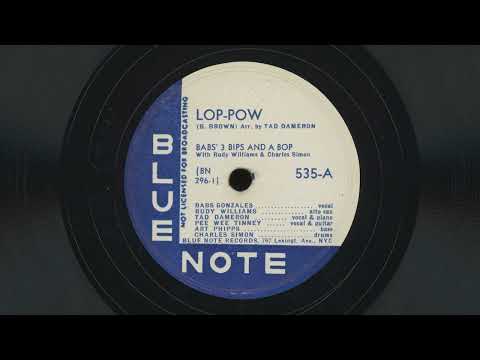
  • “Lop Pow” – Babs’ 3 Bips and a Bop (1947)

    “Lop Pow” – Babs’ 3 Bips and a Bop (1947)

    Lee Brown was the youngest of three brothers growing up in Newark, New Jersey and was nicknamed “Little Babs”. He changed his last name to “Gonzales” in the mid 40s to try to avoid discriminatory Jim Crow laws. Babs worked as a band boy for Jimmie Lunceford, Charlie Barnet, and Lionel Hampton’s bands out West, before moving to New York City in 1945 and meeting Dizzy Gillespie, who opened his eyes to the blossoming bebop scene.

    Babs decided to pursue a career in singing and formed this group with the intention of bringing bebop “to the people”. Though tunes like this are associated with scat vocals, Babs made a distinction between his improvised singing and traditional scat singing. Babs’ improvised vocal solo can be heard starting at 0:49.

    “Lop Pow” is an exuberant ear worm – you can’t help but feel and share the optimism and joy of the performers as they bop merrily along. If Babs’ goal was to make bebop more accessible to the masses – he certainly succeeded.

    Babs went on to work with a variety of jazz greats, including Bud Powell, Fats Navarro, Sonny Rollins, and Jimmy Smith. He went on to perform and release records throughout the 50s, 60s and early 70s.

    Recorded at WOR Studios in New York City on February 24, 1947.
    Released as Blue Note 535.

    Credits:
    Babs Gonzales – vocal
    Rudy Williams – alto sax
    Tad Dameron – vocal & piano
    Pee Wee Tinney – vocal & guitar
    Art Phipps – bass
    Charles Simon – drums
  • “Haunting Blues” – McMurray’s California Thumpers (1922)

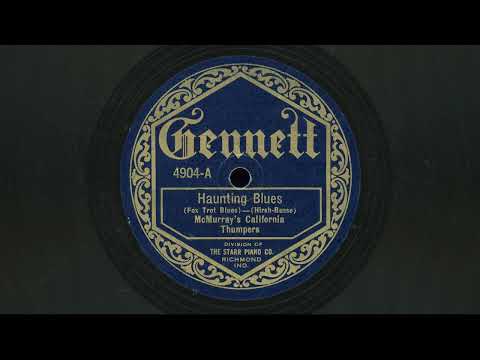
    “Haunting Blues” – McMurray’s California Thumpers (1922)

    To celebrate jazz saxophonist Loren McMurray, about whom there is a resurgence of interest following Archeophone Records recent CD release “The Moaningest Moan of them All: The Jazz Saxophone of Loren McMurray (1920-1922) – this is the last of three transfers from my own collection that I’m posting this week.

    Here we find Loren McMurray at a high point in his career: fronting his own band and recording for the Gennett record label. We also hear him at the top of his game: his bold melodic lines connecting and weaving through the harmonies effortlessly like no other recorded saxophonist at the time.

    Listening to him still feels fresh and surprising – a wonderful example of an early improvised solo. It’s no wonder this record sold well.

    As I learned from Colin Hancock, a great tragedy of jazz was McMurray’s untimely passing a week before he had scheduled his third recording session with the Thumpers. If the four songs we have are any indication of what might have been, I concur with Mssrs Hancock and Berresford that McMurray is deserving of more recognition and credit for his contribution to jazz.

    Rest in Peace, Mr. McMurray.

    Recorded in New York City on June 8, 1922.
    Released as Gennett 4904.

    Credits:
    Loren McMurray – alto saxophone
    Joseph Colling – Trumpet
    George Crozier – trombone
    Thomas Swift – piano
    Matt Grogan – banjo

    Be sure to check out my interview with producer Colin Hancock about his Loren McMurray CD release on Archeophone Records – “The Moaningest Moan of them All: The Jazz Saxophone of Loren McMurray (1920-1922)” – which was recently nominated for a GRAMMY award for Best Historical Album.
    https://youtu.be/j6WxtLP8PWM

  • “Lonesome Mamma Blues” – Original Memphis Five (1922)

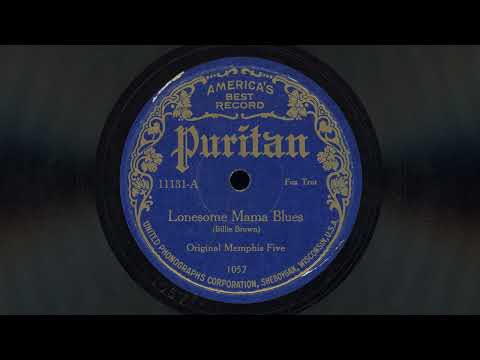
    “Lonesome Mamma Blues” – Original Memphis Five (1922)

    To celebrate jazz saxophonist Loren McMurray, about whom there is a resurgence of interest following Archeophone Records recent CD release “The Moaningest Moan of them All: The Jazz Saxophone of Loren McMurray (1920-1922) – this is the second of three transfers from my own collection that I’m posting this week.

    Here we have Loren McMurray joining a very early OM5 session. Mac had already recorded “Lonesome Mama Blues” twice earlier that year with both the Virginians and Markels Orchestra and was quite familiar with the tune.

    This peppy version features lively ensemble playing with plenty of interesting solos and breaks by McMurray.

    Recorded on May 10, 1922 in New York City.

    Released as Puritan 11131, Paramount 20131, Banner 1068, Broadway 11129, Famous 3125, and Regal 9301.

    Credits:
    Loren McMurray – alto sax, tenor sax
    Phil Napoleon – trumpet
    Miff Mole – trombone
    Jimmy Lytell – clarinet
    Frank Signorelli – piano
    Jack Roth – drums

    Be sure to watch my interview with producer Colin Hancock about the Loren McMurray CD release on Archeophone Records – which was recently nominated for a GRAMMY award for Best Historical Album.
    https://youtu.be/j6WxtLP8PWM

  • “Muscle Shoals Blues” – Harry Raderman’s Jazz Orchestra (1921)

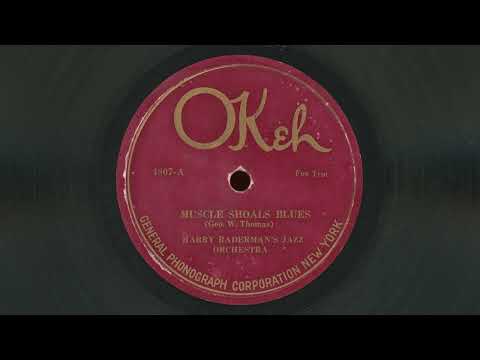
    “Muscle Shoals Blues” – Harry Raderman’s Jazz Orchestra (1921)

    To celebrate jazz saxophonist Loren McMurray, about whom there is a resurgence of interest following Archeophone Records recent CD release “The Moaningest Moan of them All: The Jazz Saxophone of Loren McMurray (1920-1922) – this is the first of three transfers from my own collection that I’m posting this week.

    New Orleans-born clarinetist Doc Berendsohn comes storming out of the gates on this one, sounding like an outcast coyote furiously demanding entry to the jazz club. Throughout, Doc and McMurray weave and circle around one another, sometimes with an interjection from Raderman’s trombone.

    Where Doc howls, sometimes careening the melody nearly off kilter, Mac’s lines are clean and flowing – always bringing the band back together. It’s an interesting look at how McMurray held his own alongside such a flamboyant and expressive player.

    Recorded on November 2, 1921 in New York City.
    Released as Okeh 4807 and 4477.

    Be sure to check out my interview with producer Colin Hancock about his Loren McMurray CD release on Archeophone Records – which was recently nominated for a GRAMMY award for Best Historical Album.
    https://youtu.be/j6WxtLP8PWM

  • A Chat with Colin Hancock about Loren McMurray – Jazz Chat Episode 3

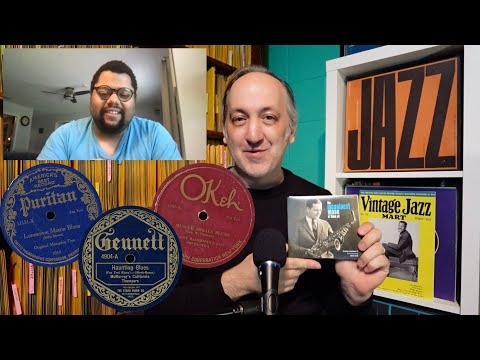
    A Chat with Colin Hancock about Loren McMurray – Jazz Chat Episode 3

    We hosted a very special guest this week on the channel to discuss an awesome new CD release of amazingly good digital transfers of 78 rpm records from the very early days of recorded jazz!

    Colin Hancock is the Producer of “The Moaninest Moan of Them All: The Jazz Saxophone of Loren McMurray, 1920-1922”, a Grammy-nominated 2 CD set by Archeophone Records of 50 early jazz tracks featuring saxophonist Loren McMurray.

    Thanks Colin for a wonderful chat – and good luck at the GRAMMYs in February!

    Where to buy this CD:
    Includes 80 page booklet with liner notes by Colin Hancock and Mark Berresford.
    https://www.archeophone.com/catalogue/loren-mcmurray-moaninest-moan/

    Colin Hancock’s YouTube Channel
    Fans of this channel should go and subscribe forthwith!
    https://www.youtube.com/@Desdemona202

    Colin Hancock’s Unboxing Video (of this set)
    https://www.youtube.com/watch?v=yO71fP16vpc

    0:00 Intro
    0:53 “The Moaningest Moan of them All” Release
    3:54 Introducing Colin Hancock
    6:10 The impact of Loren McMurray
    7:06 Who was Loren McMurray?
    11:10 McMurray’s style of playing
    13:07 The saxophone in jazz
    15:33 What could have been?
    18:35 Why was McMurray forgotten for so long?
    21:54 How the CD Project came together
    27:57 Colin’s Favorite Tracks: “Lonesome Mamma Blues”
    28:43 Colin’s Favorite Tracks: “High Brown Blues”
    29:56 Colin’s Favorite Tracks: “Truly”
    30:57 Who was influenced by Mac?
    33:42 GRAMMY nomination
    36:27 What’s next? New Projects.
    39:58 Conclusion

  • “Mapenzi Ya Kwetu Sisi” – Fundi Konde

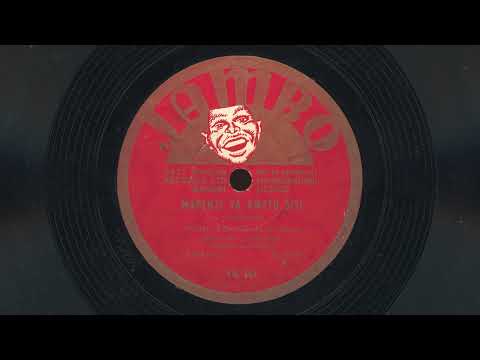
    “Mapenzi Ya Kwetu Sisi” – Fundi Konde

    Fundi Konde was a Kenyan guitarist, singer, and composer who became a popular performer in Kenya the 1950s. “Mapenzi Ya Kwetu Sisi” was a tune that appeared in the Peter Colmore film “Nyimbo za Kisasa” (“Today’s songs”) in the early 1950s.

    His voice is one that immediately commands attention through its relaxed presence and effortless gravitas. Coupled with his soft fingerstyle guitar accompaniment, this exceptional tune feels familiar and intimate. Almost ageless.

    East African Sound Studios (and their label Jambo) was the first completely independent record company in East Africa outside of EMI and other multinational companies. From 1948-1951 they released over 200 records – pressed in the U.K. by Decca.

    Distribution logistics shipping records to and from London led the company to change their name to East Africa Records Ltd. and to build a pressing plant in Nairobi in 1952, where this record was pressed.

    Recording date is unknown – my guess is sometime in 1950-51.
    Released as Jambo EA.245.

    Credits:
    Fundi Konde – guitar, vocals

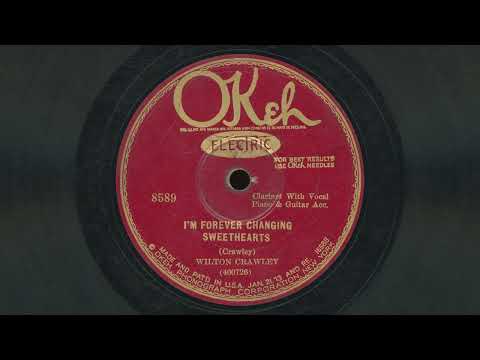
  • “I’m Forever Changing Sweethearts” – Wilton Crawley (1928)

    “I’m Forever Changing Sweethearts” – Wilton Crawley (1928)

    Wilton Crawley was a clarinetist known for his aggressive gaspipe style playing who recorded a number of records for Okeh and Victor from 1927-1930.

    While detractors belittle this style as all screeches and laughing effects – here we can hear some of the subtleties of his playing – especially at the end of this track – that show Crawley’s sensitive attention to tone and his almost vocalized or sung delivery.

    This tune “I’m Forever Changing Sweethearts”, an original composition by Mr. Crawley, gives us the crooning pillow talk of a would-be Don Juan to his latest conquest explaining his polyamorous nature.

    The last line is a ice cold knife-twister yet is delivered with such a charmingly gentle melancholy that one can see how his paramour would be unfazed by its impact.

    “I’m forever changing sweethearts
    by and by I’ll change you too.”

    As an extra bonus, we get the wonderful accompaniment of Eddie Lang on guitar throughout.

    Recorded in New York City on May 31, 1928.
    Released as Okeh 8589.

    Credits:
    Wilton Crawley – clarinet, vocals
    Eddie Heywood – piano
    Eddie Lang – guitar

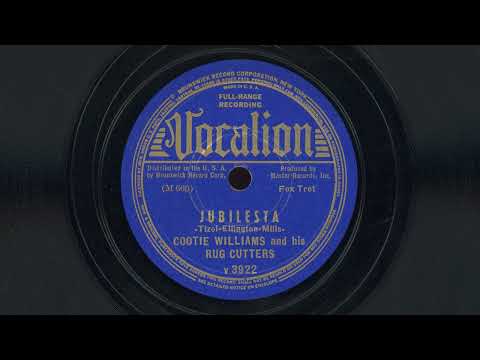
  • “Jubilesta” – Cootie Williams and his Rug Cutters (1937)

    “Jubilesta” – Cootie Williams and his Rug Cutters (1937)

    A very clean and enjoyable transfer of a pristine record.

    “Jubilesta” was a hot and moody composition by Puerto Rican trombonist Juan Tizol, who had found success the previous year with his composition “Caravan”, which he sold outright to Irving Mills for $25.

    The track was recorded with a smaller combination of players from the Duke Ellington band. Ellington himself is credited on the session – though his piano is not audible on this track to my ears.

    Excellent solos and a solid rhythm section make this record a real gem.

    0:00 Intro and Clarinet solo (Bigard)
    0:58 Trombone solo (Tizol)
    1:47 Trumpet solo (Williams)

    Recorded in New York City on October 26, 1937.
    Released as Vocalion 3922.

    Cootie Williams – trumpet
    Juan Tizol – valve trombone
    Otto Hardwick – alto sax
    Barney Bigard – clarinet, tenor sax
    Harry Carney – baritone sax
    Duke Ellington – piano
    Billy Taylor – string bass
    Sonny Greer – drums

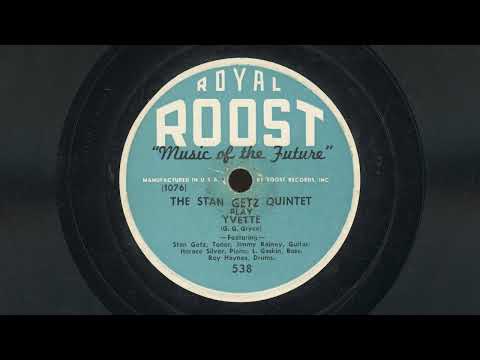
  • “Yvette” – The Stan Getz Quintet (1951)

    “Yvette” – The Stan Getz Quintet (1951)

    A cool tune with a warm vibe recorded by a very talented combo led by Stan Getz that included guitarist Jimmy Raney and pianist Horace Silver.

    Recorded in New York City on August 15, 1951.
    Released as Royal Roost 538.

    Credits
    Leonard Gaskin – Bass
    Roy Haynes – Drums
    Jimmy Raney – Guitar
    Horace Silver – Piano
    Stan Getz – Tenor Saxophone

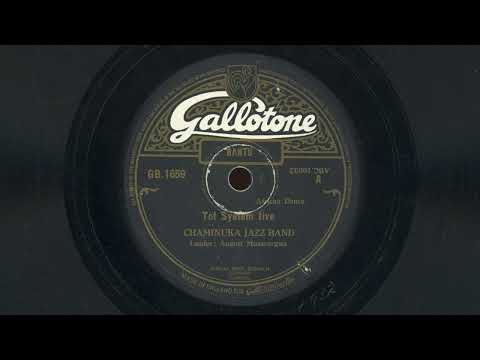
  • “Tot System Jive / Chaminuka” – Chaminuka Jazz Band – Gallotone GB.1659

    “Tot System Jive / Chaminuka” – Chaminuka Jazz Band – Gallotone GB.1659

    The first request by @tomtick from my unboxing video (see link below) has been fulfilled!

    Led by August Musarurwa, who also is featured on alto saxophone, the Chaminuka Jazz Band is an excellent example of Bulawayo Jazz – a style developed in Southern Rhodesia – now Zimbabwe.

    Recorded in the early 1950’s for Gallotone, this video contains both sides of GB.1659:
    0:00 Side A – Tot System Jive
    2:53 Side B – Chaminuka

    As I understand it, Bulawayo Jazz was an informal celebratory type of music played by ordinary musicians purely for entertainment after hours. You won’t hear a lot of improvisation – though there is some – and you will hear a rhythm section dominated by the banjo – an instrument long since abandoned by most American jazz performers at this time.

    Writing of Musarurwa’s saxophone playing in a review of an SWP Records release of Bulawayo Jazz in 2015, jazz writer Ken Waxman states, “His vibrato is wide enough to ferry across and his tone makes equivalent solos from his Jump Band progenitors like Pete Brown sound as if their solos are as cerebral and forbidding as Anthony Braxton’s work sounds to the uninitiated.”
    https://www.jazzword.com/reviews/august-musarurwa/

    If you haven’t watched my unboxing video of over 60 African 78 rpm records, take a look and tell me which ones you’d like to hear next!
    https://youtu.be/WCwGfTM8hXc