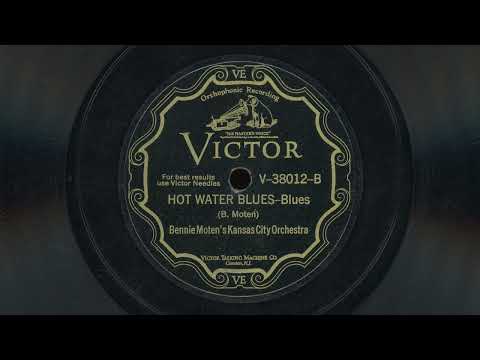
While some jazz historians have pooh-poohed the Moten band of 1928 for its lack of flashy soloists, it is important to remember: this is the band (and this is the session) that also yielded “South” – a title so popular that stayed in print until the 1950s and even was released as a 45 rpm 7″ single! There is staying power in this band’s craft, execution, rhythm, and bouncy performances!
Here we hear an excellent blues number filled with disciplined solos and a swingin’ beat that seems to literally bounce with the help of Vernon Page’s pulsing lyrical tuba lines.
Recorded in Camden, New Jersey on September 7, 1928. Released as Victor V-38012.
Credits: Bennie Moten – piano, director Ed Lewis, Booker Washington – cornet Thamon Hayes- trombone Harlan Leonard – clarinet, soprano sax, alto sax Jack Washington – clarinet, alto sax, baritone sax Woody Walder – clarinet, tenor sax Leroy Berry – banjo Vernon Page – tuba Willie McWashington – drums
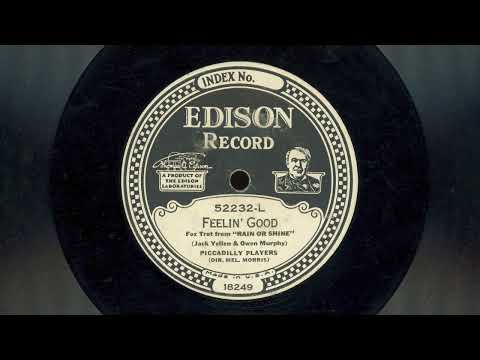
A real pick-me-up tune by Mel Morris’ Piccadilly Players which was electrically recorded for the Edison label. Please forgive that my copy has some slight warps in the laminate – and as a result, a slight “whooshing” can be heard for the first 30 seconds or so.
While Rust’s discographies do not list performers for Piccadilly Players outside of Director Mel Morris, cornetist Irving Peskin kept detailed records of the recording sessions he worked on and has been confirmed as the cornetist on the Piccadilly Players’ Edison records.
In a 2003 interview on the WFMU show “Thomas Edison’s Attic”, the 95-year-old Peskin was interviewed by telephone after listening to this very tune sent to him on CD.
Peskin says: “That is a good recording – You hear that the style is there – the refined jazz style! The saxophone solo – that style is about as forward-looking as existed at that time. It wasn’t wild the way they are these days. It stuck with a refined pattern.”
Peskin was asked if he knew who the sax player was and said that he did not. “No – sorry. I can only say this – I never took the time – I was so busy trying to do a good job that I wasn’t much on socialization.”
When asked what it felt like to hear the song 75 years after it was recorded, Peskin said: “I listen to this and I hear… the precision and quality of the instruments and playing – no mistakes – just about as top as you can get in precision playing wherever that is required… I call it articulation – there’s no flubs – no dubs – no ragged ends.”
Of his solo on this record, Peskin says “I was playing in the style of Bix, my idol of all the best jazz players in the world! Bix was a composer of absolutely fascinating beautiful music – [his playing] was so clear.”
Peskin had glowing words for director Mel Morris who he said he got along very well with.
Peskin also discussed the logistics and mechanics of how recording sessions worked at the time. He said he would get a call 1-2 days before the recording session to book him for the date – or would be asked in person at the musician’s union. He would travel to the recording session by subway alone. The musicians would sit down, run through the music once – and then do the recording. The money came after five days by post. The average pay was $20 for a three-hour session. However – the big money was playing what Peskin called “the society jobs” – where he could make $100 for a couple sets over the course of an evening.
Recorded in New York City on February 20, 1928. Released as Edison 52232. Directed by Mel Morris. Irving Peskin – cornet Don Murray – clarinet, alto sax, tenor sax Jimmy Dorsey (?) – clarinet
For the past two weeks, I’ve been hard at work on this new video – featuring an unboxing of three boxes of African 78 rpm records I acquired nearly a month ago.
After I shot the unboxing, I saw that some of the label shots were tough to read so I re-photographed all sixty record labels and added them in for more clarity.
I also felt the video was a little weak without any music – so I did something crazy – I went back and recorded quick “needle drop” digitizations (raw input – no EQ, no de-clicking) of all sixty records in this collection and added them to the video to make it a bit more interesting.
All of that took a while – and keeping all the sound files straight was a tough chore! But I think you will agree that it is sooooooo nice to immediately hear a sample of what is on the record.
Please let me know in the comments which of these records you’d like me to produce full digital transfers of first!
0:00 Introduction 1:02 The Story Behind This Collection 6:55 Box One – The Unboxing 19:22 Box Two – The Unboxing 35:19 Box Three – The Unboxing 50:44 Conclusion
I hope you vicariously enjoy the experience of discovering and experiencing this wonderful box of African music with me. I have so much to learn and have already identified some great resources online that I’ll share with you: http://afrodisc.com/ http://afrobib.com/ These two sites contain label discographies and bibliographies of books, articles, and dissertations written about African music.
Here are some things I learned about myself during the making of this video: * My hairline has receded even farther than I had thought 😂 * I clear my throat often and very annoyingly 😂 * I smack my lips a lot before starting a sentence 😂 * When you are live on camera, it is easy to misspeak and mispronounce words 😂 * Mon français est horrible 😂 * Sharp razor blades work much better than letter openers when cutting through reinforced packing tape * I need a haircut 😂
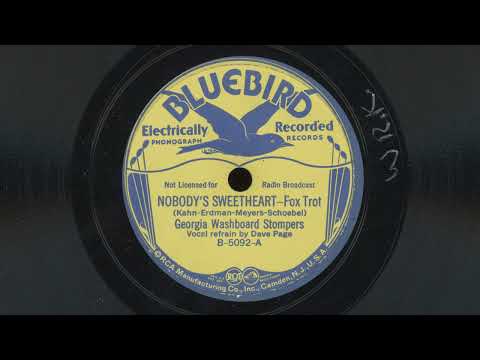
The Washboard Rhythm Kings were a studio band active during the heart of the Great Depression (1931-1933) made of a rotating retinue of players. As such, they went by a variety of pseudonyms, including this one: Georgia Washboard Stompers.
Here we have “Nobody’s Sweetheart”, a tune that first surfaced in 1923 in a Broadway revue played by Ted Lewis. It was covered by a number of notable jazz orchestras in the late 20s and early 30s, including Red Nichols, Paul Whiteman, Cab Calloway, and Fred Elizalde. It appeared in the Rudy Vallée film “Vagabond Lover” in 1929 and was a featured song in a Betty Boop cartoon in 1932 (sung by Ukulele Ike imatator “Red Pepper Sam”) – which also featured some scat verses.
The Washboard Rhythm Kings give it some pep straightaway, followed by a smooth trombone solo by John Haughton. Dave Page gives us the title line, followed by several crooned scat choruses. The ensemble comes back together and we hear short choruses from the saxes, clarinet, and piano. Throughout, the bass in the rhythm section keeps the joint jumpin’. Though Rust is not 100% sure if it is Ghost Howell on bass – it sure sounds like Ghost Howell to my ears!
Recorded in Camden, New Jersey on June 1, 1933. Released as Bluebird B-5092.
Credits: Dave Page – trumpet, vocals John Haughton – trombone Ben Smith – clarinet, alto sax Jerome Carrington (?) – alto sax Carl Wade – tenor sax Clarence Profit (?) – piano Steve Washington (?) – guitar Ghost Howell (?) – string bass Unknown Artist – washboard
A Monday night classic dance band tune to start the week off.
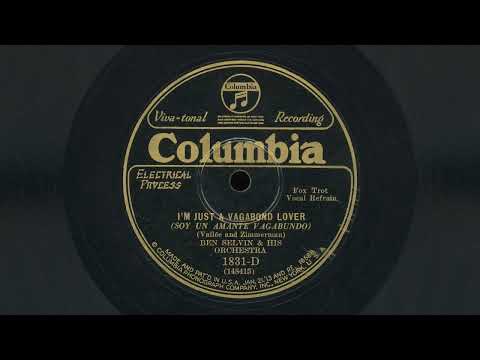
Written and recorded by Rudy Vallée earlier in 1929, this version of “I’m Just A Vagabond Lover” by Ben Selvin and his Orchestra is a bit more peppy and sweet. The vocalist delivers a studied performance that trades Vallée’s haunted melancholy for a more theatrical rendition.
No hot solos or breaks on this one – just a good memorable tune to fill the dance floor full of fox trotters with mischievous bedroom eyes.
I first heard this tune rather recently at the Bix Lives! Festival in Davenport, Iowa sung by the excellent @TJMullerMusic – and found this record the next day.
Recorded in New York City on May 3, 1929. Released as Columba 1831-D.
Ben Selvin was a prolific bandleader whose performers at this time included such notables as Tommy Dorsey, Manny Klein, Mike Mosiello, Tommy Gott, Andy Sannella, Arthur Schutt, Rube Bloom, Dick McDonough, Carl Kress, Joe Tarto, and Tony Colucci. Unfortunately, I don’t have a confirmed list of credits for this particular session.
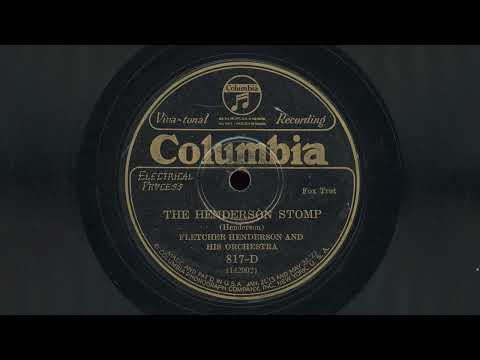
You’ve no doubt heard of the Moten Stomp, the Whiteman Stomp, and the Casa Loma Stomp. Well before those compositions came into being, there was the Henderson Stomp!
This original tune was first recorded in 1926 – and Henderson later recorded it with the Benny Goodman Orchestra in November of 1940 when he was working as an arranger.
Originally titled “Top and Bottom”, it was arranged by Don Redman and had what some have called tricky and difficult passages.
This recording session was also the first in which Fats Waller performed with the Henderson band – and he takes a jaunty solo in mid-tune.
0:00 Intro (Clarinets) 0:42 Chorus (Brass) 0:58 Piano solo (Fats Waller) 1:15 Trumpet solo (Joe Smith) 1:51 Clarinets 2:20 Coda
Recorded in New York City on November 3, 1926. Released as Columbia 817-D
Credits: Fletcher Henderson – director Russell Smith, Joe Smith, Tommy Ladnier – trumpet Benny Morton – trombone Buster Bailey – clarinet, soprano sax, alto sax Don Redman – clarinet, alto sax, arranger Coleman Hawkins – clarinet, tenor sax Fats Waller – piano Charlie Dixon – banjo June Cole – tuba Kaiser Marshall – drums
Hi Everyone – just wanted to post a quick update to tell you about a few recent problems I’ve been having with the channel – and let you know about some of the new videos I have planned going forward.
I’ll always keep uploading digital transfers from my 78 rpm record collection – but will also be doing some on-camera videos to talk about jazz, jazz history, record collecting, 78 rpm records, and perhaps even crop rotation in the 14th century.
The first video I have planned is an unboxing video where I’ll share with you the contents of three boxes containing around 60 African 78s I recently received from Europe. These boxes have been sitting unopened and really don’t know exactly what is in them – so I am absolutely going mad with anticipation and can’t wait to share them with you.
I promise video quality will get better as I get more experience with the new camera (better lighting is something I’m working on). Thanks for hanging in there with me and I hope these new videos will be fun and informative.
Let me know in the comments what you think of this addition to the channel.
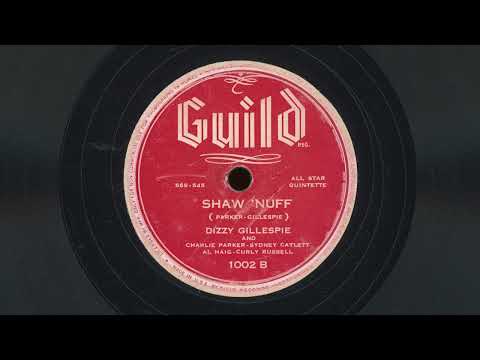
Hear the blazingly fast birth of bebop at the dawn of the postwar era – amazingly syncopated unison lines played by Diz and Bird at high velocity. Bursting with optimism and boldly leading the way forward – one has to marvel at the magnitude of a track like “Shaw ‘Nuff”.
Recorded in New York City on May 11, 1945 Released as Guild 1002.
Credits: Dizzy Gillespie – trumpet Charlie Parker – alto sax Al Haig – piano Curly Russell – bass Sidney Catlett – drums
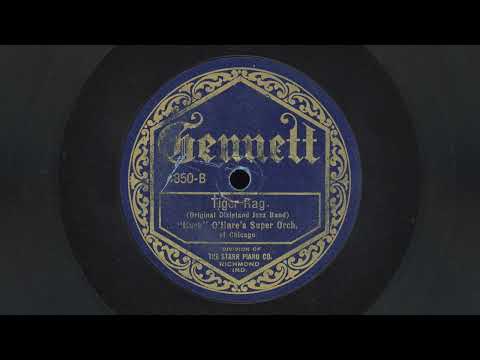
Husk O’Hare was a young Chicago promoter and bandleader in the early 1920s. His “super orchestra” traveled to Gennett studios in Indiana in early 1922 for a recording session.
Of the tracks recorded on March 9 session, three were unissued. Only “Boo Hoo Hoo” was released (on the flip side of this record). On the following day, March 10, they successfully recorded three additional issued tracks: “Tiger Rag” (as we hear here), San, and Russian Love Song.
Their version of “Tiger Rag” is a cacophonous rag-a-jazz romp, with energetic ensemble playing all around. The lively clarinet is the star of the show – though the tuba player merits special commendation for putting the band through a speed trial.
It’d be nice to know who the players were – but once again, a mystery of early jazz.
Recorded in Richmond, Indiana on March 10, 1922. Released as Gennett 4850, Cardinal 512, and Silvertone 9237.
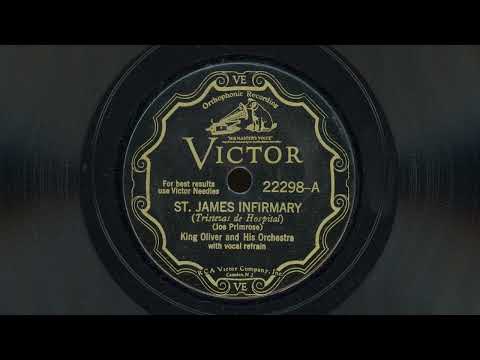
King Oliver, one of the pioneers of New Orleans jazz, made his name in New Orleans and Chicago with his Creole Jazz Band and Dixie Syncopators. He finally made the move to New York in 1929 at the age of 44.
Louis Armstrong felt that Oliver waited too long to make the move to New York – and that the innovations he had pioneered had since become commonly imitated by the time he hit the town. Regardless – he began in January of 1929 a prolific series of sessions with Victor that resulted in a large number of releases recorded with pick-up bands featuring a rotating retinue of excellent players, including trumpeters Henry “Red” Allen and Bubber Miley who could solo in place of the King himself, who was having dental issues that made playing more difficult.
“St. James Infirmary” is a song with a rich history – and is perhaps best known in a jazz context for Louis Armstrong’s 1928 version and Cab Calloway’s 1930 version which was featured in the Betty Boop cartoon “Snow White” that featured a rotoscoped Calloway providing dance moves for the animation.
The King Oliver version was recorded amidst a flurry of recorded versions in 1930 – Gene Austin recorded a version for Victor on the same day – and Duke Ellington’s version was recorded on the following day. Rube Bloom and his Bayou Boys, Carl Fenton’s Orchestra, Chick Bullock and Alphonse Trent and his Orchestra all recorded versions within a month or two. Calloway’s version was recorded later in the year.
Recorded at 46th Street Studio, New York City on January 28, 1930. Released as Victor 22298. Reissued as Bluebird B-5466.
Credits: Carroll Dickerson – violin, director King Oliver, Henry Allen, Bubber Miley – trumpet Jimmy Archey – trombone Bobby Holmes – clarinet, alto sax Glyn Paque – alto sax Walter Wheeler (?) – tenor sax Don Frye – piano Arthur Taylor – banjo Jean Stultz – guitar Clinton Walker – tuba Frank Marvin – vocals Unknown Artist – chimes