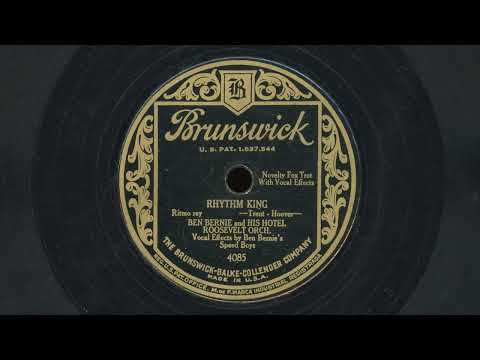
A wonderful late 20s pop tune from Ben Bernie and his Hotel Roosevelt Orchestra featuring Jack Pettis and the vocal harmonies and scatted stylings of “Ben Bernie’s Speed Boys”.
“Listen to the Rhythm King Listen to him play that thing Oh! He’s some sensation!”
Recorded in New York City on September 25, 1928. Released as Brunswick 4085
Credits: Ben Bernie – violin, vocals, director Donald Bryan, Phil Hart – trumpet Paul Weigan – trombone Len Kavash, Dick Stabile – clarinet, alto sax Jack Pettis – clarinet, C melody sax, tenor sax Nick Gerlach – violin Al Goering – piano Clay Bryson – banjo Merrill Kline – tuba, string bass Dillon Ober – drums, xylophone J. Kenn Sisson – arranger Scrappy Lambert, Billy Hillpot, Frank Luther – vocals
After late 1925, when both lead trumpet soloist and jazz catalyst Louis Armstrong and longtime trumpeter Elmer Chambers left the Henderson band, it was a time of re-calibration.
To shore up the trumpet section, Henderson added 35-year-old Russell “Pops” Smith, brother of trumpeter Joe Smith. This was the cause of some friction in the band, as Smith had been previously married to Leora Henderson – who was now married to Fletcher.
The band was playing regularly at the Roseland at Broadway & 51st St in Manhattan – and in the first week of January, 1926 was booked at the Roseland with an orchestra led by B.A. Rolfe.
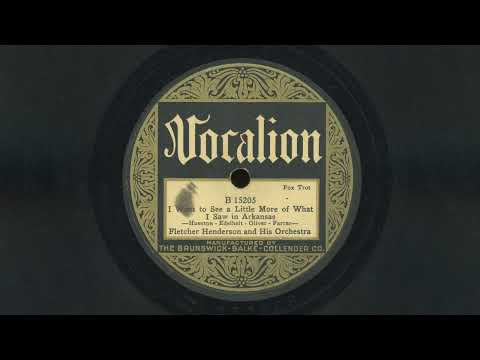
This recording session at the end of that week featured the full Henderson band and resulted in four sides that were released on both Vocalion and Brunswick. Three takes of “I Want to See a Little More of What I Saw in Arkansas” were recorded.
This tune no doubt was a popular dance number at the Roseland – but we hear many excellent soloists throughout to retain a sense of jazz vitality. The Hawk and Charlie Green figure most prominently, and Joe Green’s shorter trumpet solos perhaps remind us that the trumpet section is still adjusting to the loss of Armstrong.
0:00 Intro – Saxes 0:40 Tenor Sax solo (Coleman Hawkins) 1:00 Trumpet solo (Joe Smith) 1:09 Tenor Sax solo (Coleman Hawkins) 1:16 Ensemble 1:33 Trombone solo (Charlie Green) 2:08 Trumpet solo (Joe Smith) 2:28 Outro
Recorded in New York City on January 6, 1926. Released as Vocalion 15205.
Credits: Fletcher Henderson – piano, director Russell Smith, Joe Smith, Luke Smith (?) – trumpet Charlie Green – trombone Buster Bailey – clarinet, alto sax Don Redman, clarinet, alto sax Coleman Hawkins – clarinet, tenor sax Charlie Dixon – banjo Ralph Escudero – tuba Kaiser Marshall – drums
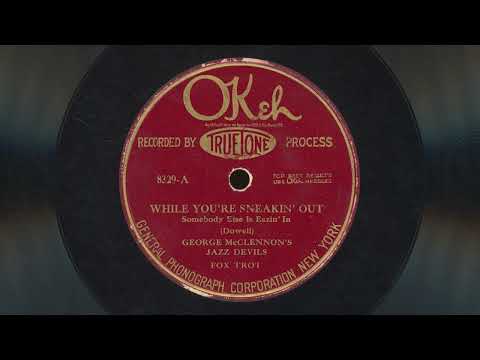
Yesterday I posted the A side of this great record – but the B side is equally intriguing so I shall include a transfer of it as well!
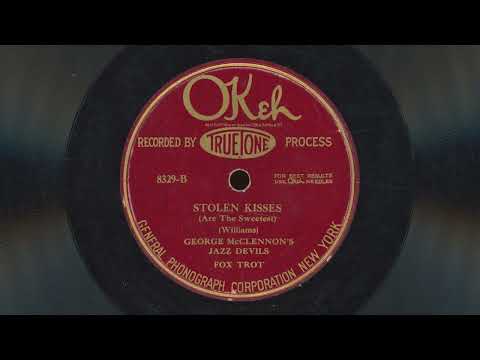
By title, we see it is a “sweet” number – but McClennon’s Jazz Devils add some spice into the tune – with ensemble playing that gives it more energy than your typical sweet dance number from this period.
A cornet solo drives us onward starting around 0:35 – and at 1:30 the banjo leads a syncopated breakdown. Toward the conclusion we hear McClennon’s clarinet wailing in the background like a fire alarm as the temperature rises ever hotter.
A very exciting addition to the Jazz Crazy archive from the collection of Joe Bussard.
Recorded in New York City on June 18, 1926. Released as Okeh 8329.
Credits George McClennon, clarinet Eddie Heywood (?) – piano Unknown Artist – cornet Unknown Artist – trombone Unknown Artist – alto sax Unknown Artist – banjo Unknown Artist – tuba Unknown Artist – drums
A rollicking hot number with a hilarious title from clarinetist George McClennon and his Jazz Devils from 1926. Wonderful ensemble playing and solos – has an intriguing energy that is both relentlessly vivacious and laid back at the same time.
What sounds like a tenor or baritone sax kicks in around the 0:52 mark and a rousing cornet drives it home at the 1:20 mark. I’ve been listening to this all afternoon and just love it!
Recorded with Okeh’s Truetone process – which in this case sounds pretty good to my ears!
A very exciting addition to the Jazz Crazy archive from the collection of Joe Bussard.
Recorded in New York City on June 18, 1926. Released as Okeh 8329.
Credits George McClennon, clarinet Eddie Heywood (?) – piano Unknown Artist – cornet Unknown Artist – trombone Unknown Artist – alto sax Unknown Artist – banjo Unknown Artist – tuba Unknown Artist – drums
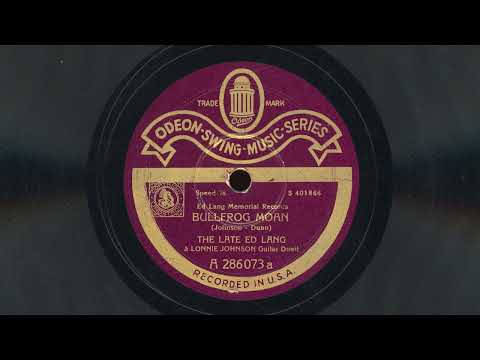
Eddie Lang and Lonnie Johnson were arguably the two most important jazz guitar players of the 1920s. Fans of both artists are fortunate that the two recorded several sessions together in 1928 and 1929 for the Okeh label.
“Bullfrog Moan” begins with a croaking rhythmic riff repeated throughout that serves as the foundation of a bluesy duet between the two great masters.
This German reissue was released on the curious “Odeon Swing Music Series” label sometime between 1938 and 1942. While some Nazi party leaders had banned jazz dancing outright – and others felt it was an “alien” music that should be rejected or prohibited, jazz found ways to survive.
The series was not listed in the main Odeon catalog – only via typewritten lists that interested parties could order from. The record stores that fulfilled the orders were not allowed to play the records in the stores. There were also Swiss and Italian pressings of this series.
Many people have asked me if you can save a 78 rpm record that has been broken or cracked. Here is my story of how I was able to repair this copy of “Wildwood Flower” by the Carter Family (Victor V-40000).
Last year I found this scarce Carter Family record in the wild – unfortunately, it was cracked in half! Fortunately, the crack was clean – and was still holding together somehow (by the label?) on its own. I really wanted to save this record if possible!
Here’s what I did:
First I very carefully placed the record between two sheets of smooth granite tile so that just one of the edges (with the crack) stuck out. After putting a heavy weight on top of the tile and carefully running my finger across the grooves to ensure they were perfectly smooth, I applied a small amount of elmer’s glue to the edge of the record across the crack.
I turned the record over and glued the bottom side – then did the same thing to the other end of the record. Once the crack was stabilized at both edges of the record, I applied a thick layer of glue across the label where the crack appeared to give it some additional stabilization.
You can see the parts that I glued in the video. When Elmer’s glue dries, it is clear, so it blends in pretty well with the record.
Playing the record was successful – though you could hear a very light audible tic. This tic was easy to remove when I made this transfer. The only downside of using Elmer’s glue is that it dissolves in water, so I won’t be cleaning this record anytime soon.
Have you repaired a broken 78? What’s your method?
As someone who remembers when you wanted a drink in Williamsburg, Brooklyn other than at the Turkey’s Nest, you had to take the L train into Manhattan, it is quite astonishing that there was a time during prohibition-era America where if you wanted a drink in Manhattan, taking a train to Montreal was one of your better options.
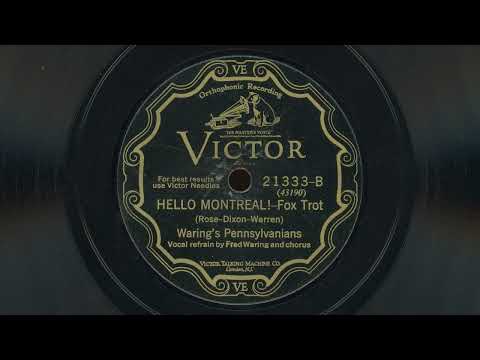
Regular listeners to this channel will forgive my occasional forays into non-jazz territory, and today we have what really was more of a novelty song by a popular dance band that would contain what Brian Rust might have called “little of jazz interest”. That said – it is a song about the jazz age in America, and certainly, the relationship between alcohol, speakeasies, and jazz has been well-documented.
Waring’s Pennsylvanians were an early collegiate dance band that was formed at Penn State University. Their prolific recorded output tended to feature popular tunes – often with college themes such as “Freshie”, “Collegiate”, “Collegiana”, “The Yale Blues” and “Collegiate Blues”.
This song reveals a plan to quietly escape the alcohol-free New York City to spend the summer and early fall drinking in Montreal.
“Speak easy, speak easy, I’m leaving town. I’m going right away – everything up there’s okay. Take it easy, take it easy – we’ve got a hunch. You won’t go east, you won’t go west, well, we’ll all go in a bunch! We’ll be leaving in the summer, and we won’t come back ’till fall. Goodbye Broadway, hello Montreal! There’ll be no more orange phosphates – You can bet your Ingersoll. Goodbye Broadway, hello Montreal!”
Later in the tune, clinking glasses are heard and punch-drunk voices devolve into a cartoonish scene of faux revelry.
This popular tune was also recorded during March and April of 1928 by Ted Lewis and his Band, Harry Reser’s Jazz Pilots, Arthur Fields and his Assassinators, The Happiness Boys, and Ben Selvin’s Harmonians.
Recorded in New York City on March 29, 1928. Released as Victor 21333.
Credits Fred Waring – director, vocals Nelson Keller, George Culley – trumpet Jim Gilliland – trombone Fred Campbell – clarinet, alto sax Will Morgan – clarinet, alto sax, vocals Earl Gardner – alto sax Elton Cockerill – clarinet, tenor sax Bill Townsend, Francis Foster, Fred Culley – violin Tom Waring – piano, vocals Fred Buck – banjo Ed Radell – tuba Poley McClintock – drums
The Synco Jazz Band, led by Tennessee-born band leader Joseph Samuels, released a number of jazzy dance sides between 1919 and 1926.
Here we have an early release on the Perfect label’s 14000 series with the older style octagonal frame label. The Perfect label was a budget label owned by Pathé.
“Clover Blossom Blues” was a tune written by Ernie Erdman and Fred Meinken in 1922 that was recorded by a number of bands that year, including the Benson Orchestra of Chicago, Husk O’Hare’s Super Orchestra of Chicago, the Oriole Terrace Orchestra, and Paul Biese.
Samuels is heard on clarinet adeptly adding improvised breaks and flourishes throughout and switching to baritone saxophone for a bit in the middle.
Recorded in New York City on August 10, 1922. Released as Perfect 14043 and Pathé Actuelle 020812.
Credits Joseph Samuels – clarinet, baritone clarinet, director Jules Levy, Jr. – cornet Ephraim Hannaford – trombone Larry Briers – piano John Cali – banjo Herman Berkin – drums Unknown performers – 2nd trumpet, tuba
Charlie Parker’s Dial and Savoy sessions can rightly be regarded as some of the most exciting jazz in recorded history – right up there with Louis Armstrong’s Hot Five and Hot Seven sessions in the 1920s. The deep underlying optimism of postwar America is perfectly expressed in the fleet-footed bebop of Bird.
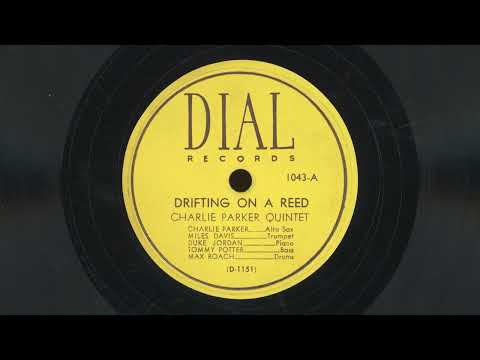
This tune, alternately known as “Big Foot”, “Giant Swing”, and “Air Conditioning”, was recorded at his very last session for Dial in late 1947. The label contains an omission: Trombonist J.J. Johnson was a part of this session (thus making it a sextet rather than a quintet) but was not listed on the label.
This session comes in the middle of a very prolific period in New York City after being hospitalized and returning from a tumultuous stay in California in 1946.
0:00 Head 0:27 Alto Sax solo (Charlie Parker) 1:07 Trombone solo (J.J. Johnson) 1:34 Trumpet solo (Miles Davis) 2:01 Piano solo (Duke Jordan) 2:27 Bass solo (Tommy Potter) 2:40 Outro
Matrix D1151-E Recorded at WOR Studios in New York City on December 17, 1947. Released as Dial 1043.
Credits: Charlie Parker – alto sax Miles Davis – trumpet Duke Jordan – piano Tommy Potter – bass Max Roach – drums