Jazz Crazy Records

An Archive of Early Jazz on 78 RPM

Author: Professor M

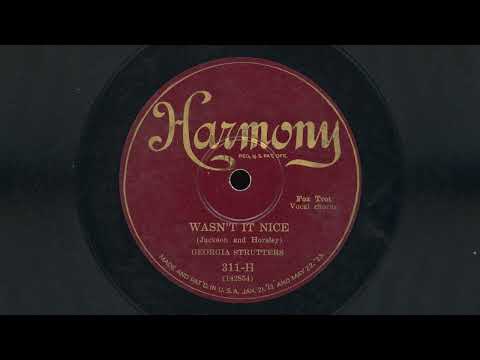
  • “Wasn’t It Nice” – Georgia Strutters (1926)

    “Wasn’t It Nice” – Georgia Strutters (1926)

    Perry Bradford was a talented performer and composer who directed a number of bands who recorded from 1923-27 such as Perry Bradford’s Jazz Phools, Perry Bradford and his Gang, The Gulf Coast Seven, and the Georgia Strutters.

    The Strutters recorded a total of six sides over three recording sessions for Harmony, a budget label owned by Columbia. Bradford grew up in Atlanta, Georgia – which is perhaps where the band’s name came from.

    This tune was written by Gus Horsley and Mike Jackson and sung by Mr. Bradford himself. It recounts the story of a romantic canoe trip taken by Dan Magoo and his sweetie.

    The song was covered later that year by Alberta Hunter and in 1940 by Frankie “Half Pint” Jaxon.

    Recorded in New York City on October 21, 1926.
    Released as Harmony 311-H and Velvet Tone 1311-V.

    Credits:
    Perry Bradford – vocals, director
    Jimmy Wade – cornet
    William Dover – trombone
    Arnett Nelson – clarinet, alto sax
    Antonia Spaulding – piano
    Stanley Wilson – banjo
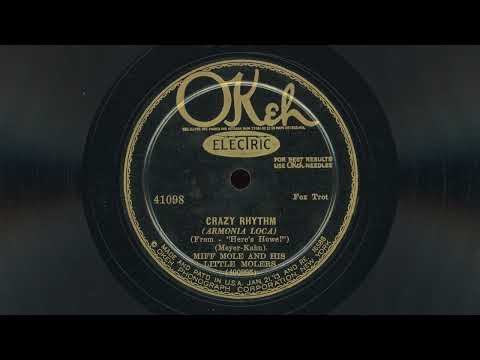
  • “Crazy Rhythm” – Miff Mole and his Little Molers (1928)

    “Crazy Rhythm” – Miff Mole and his Little Molers (1928)

    A delightful “Red and Miff” session from 1928 featuring a catchy head and excellent solos from each.

    Miff Mole was a trombonist from Long Island, New York who co-founded the seminal early jazz band the Original Memphis Five with Phil Napoleon and Frank Signorelli. He became a sought-after player in New York, performing and recording with bandleaders Sam Lanin and Ray Miller. He had a shy countenance with an iconic owlish look completed by a pair of black round spectacles.

    In 1925 he began a long period of collaboration with trumpeter Red Nichols – an up-and-coming hot player who also had a savvy business sense. From 1925-1929, the pair recorded with both Red’s bands (Red Nichols and his Five Pennies) and Miff’s band (Miff Mole and the Little Molers), as well as a band where each shared top billing (Red and Miff’s Stompers). They played together in numerous other iterations (The Red Heads, Lanin’s Red Heads, The Charleston Chasers, and Arkansas Travelers) until Mole decided in 1929 to accept a staff position at NBC in their studio orchestra.

    Nichols’ “almost manic” solo here was thought by writer Richard Sudhalter to have been inspired by a session three weeks earlier with a group of energetic Chicago musicians that included Frank Teschemacher, Joe Sullivan, and Gene Krupa.

    0:00 Intro / head
    0:47 Trombone solo (Miff Mole)
    1:27 Ensemble
    1:49 Trumpet solo (Red Nichols)
    2:10 Clarinet solo (Fud Livingston)
    2:31 Outro

    Recorded in New York City on July 17, 1928.
    Released as Okeh 41098.

    Credits:
    Red Nichols, Leo McConville – trumpet
    Miff Mole – trombone
    Dudley Fosdick – mellophone
    Fud Livingston – clarinet, tenor sax
    Arthur Schutt – piano
    Carl Kress – guitar
    Joe Tarto – tuba
    Stan King – drums

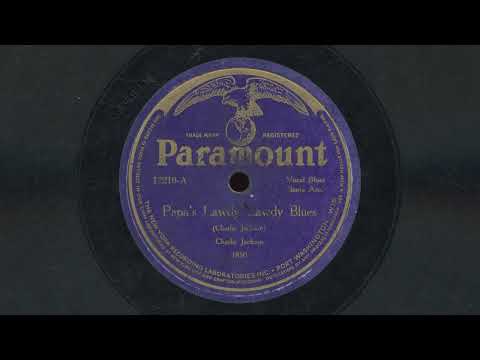
  • “Papa’s Lawdy Lawdy Blues” – Papa Charlie Jackson (1924)

    “Papa’s Lawdy Lawdy Blues” – Papa Charlie Jackson (1924)

    The very first record by early bluesman Papa Charlie Jackson on the Paramount label.

    The prolific Jackson went on to record some 66 more sides on 33 discs for Paramount between 1924 and 1930.

    Recorded in Chicago in August of 1924.
    Released as Paramount 12219.

    Credits:
    Charlie Jackson – banjo, vocals

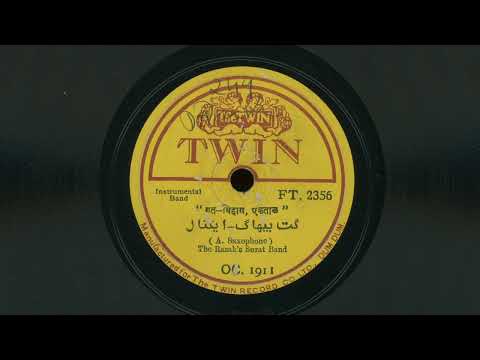
  • “गत बिहाग” (Gat – Raga Bihag) – The Razak’s Surat Band (1932)

    “गत बिहाग” (Gat – Raga Bihag) – The Razak’s Surat Band (1932)

    Long before Kadri Gopalnath popularized the use of the saxophone in Indian music in the late 1970s and 80s, Mr. Razak’s Surat Band recorded a number of records on the Twin label featuring saxophone solos.

    Such bands, associated with municipalities, are often hired to perform at cultural events and marriages in India. I do not have a lot of information on this band – though there is a band still performing in India today that traces its lineage to the year 1900 when it was founded by Mr. Abdul Razak Abdul Rahim in the city of Surat (hence the name Razak’s Surat Band).

    https://www.razakband.com/

    I always find it thrilling to hear how Indian musicians approach an instrument such as the saxophone, piano, or violin, and completely reinterpret and adapt its sound.

    Released as The Twin FT. 2356 circa 1932

    This video includes both sides of the release as follows:
    A गत बिहाग​, त्रिताल​ (Gat – Raga Bihag – Tritaal)
    B गत बिहाग​, एकताल​ (Gat – Raga Bihag – Ektaal)

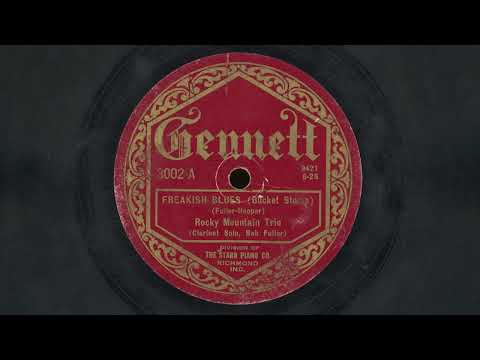
  • “Freakish Blues (Bucket Stomp)” – Rocky Mountain Trio (1925)

    “Freakish Blues (Bucket Stomp)” – Rocky Mountain Trio (1925)

    New York City clarinetist Bob Fuller recorded “Freakish Blues” a number of times for different labels under different names in early 1925, each time with frequent collaborators Louis Hooper and Elmer Snowden:
    February 1925 – as Slim Jackson Trio (on the Cameo and Lincoln labels)
    February 1925 – as Slim Perkins (on Banner, Domino, and Regal)
    March 9, 1925 – as Three Jolly Miners (Vocalion)
    March 27, 1925 – as Rocky Mountain Trio (Gennett)

    He went on to record six more tunes with Gennett under the Rocky Mountain Trio name, four of which were released (as Gennett 3184 and 3288).

    Recorded in New York City on March 27, 1925.
    Released as Gennett 3002.

    Credits:
    Bob Fuller – clarinet
    Louis Hooper – piano
    Elmer Snowden – banjo

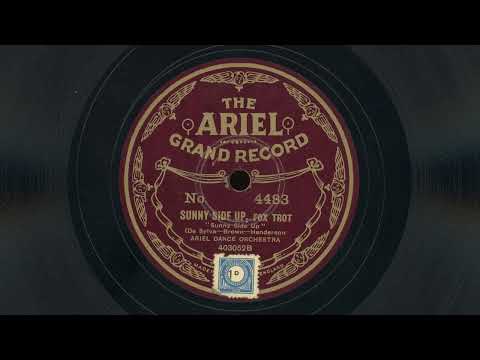
  • “Sunny Side Up” – Frankie Trumbauer and his Orchestra (1929)

    “Sunny Side Up” – Frankie Trumbauer and his Orchestra (1929)

    A lovely upbeat tune (from the 1929 musical of the same name) performed by Frank Trumbauer and his band under the alias of the “Ariel Dance Orchestra” released on the U.K. label The Ariel Grand Record.

    Highlights include a wily and lithe sax solo from Tram, a very audible rhythm guitar accompaniment by Snoozer Quinn, a celesta solo by Hoagy Carmichael, and crooning vocals by Smith Ballew of the light-hearted comical lyrics.

    “Stand upon your legs – be like two fried eggs – keep your sunny side up!”

    0:00 Intro
    0:23 Vocals
    0:56 Sax Break – ensemble
    1:18 Sax solo (Tram)
    1:52 Celesta solo (Hoagy Carmichael)
    2:25 Trumpet solo
    2:45 Outro

    Recorded in New York City on October 10, 1929.
    Originally released in the U.S. as Okeh 41313.
    Released in the U.K. as The Ariel Grand Record 4483.

    Credits
    Smith Ballew – vocals
    Frank Trumbauer – director, C-melody sax, alto sax
    Andy Secrest, Charlie Margulis – trumpet
    Bill Rank – trombone
    Chester Hazlett – alto sax
    Irving “Izzy” Friedman – clarinet, tenor sax
    Min Leibrook – bass sax
    Hoagy Carmichael – piano, celesta
    Joe Venuti, Matty Malneck, Kurt Dieterle – violin
    Snoozer Quinn – guitar
    George Marsh – drums

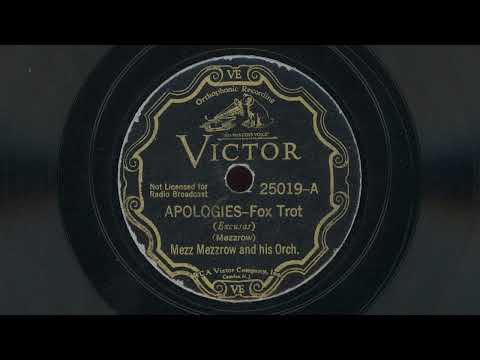
  • “Apologies” – Mezz Mezzrow and his Orchestra (1934)

    “Apologies” – Mezz Mezzrow and his Orchestra (1934)

    Not sure what there is to apologize for – this is a great tune! Featuring an all-star collection of great players here, turning in spirited performances one-and-all.

    Late in the track we hear a short solo by legendary stride pianist Willie “The Lion” Smith followed by a duet by the rhythm section made up of the excellent John Kirby on bass and Chick Webb on drums.

    Recorded in New York City on May 7, 1934.
    Released as Victor 25019 on June 5, 1935

    Mezz Mezzrow – clarinet, alto sax, arrangement
    Max Kaminsky, Reunald Jones, Chelsea Quealey – trumpet
    Floyd O’Brien – trombone
    Benny Carter – alto sax
    Bud Freeman – tenor sax
    Willie “The Lion” Smith – piano
    John Kirby – string bass
    Chick Webb – drums

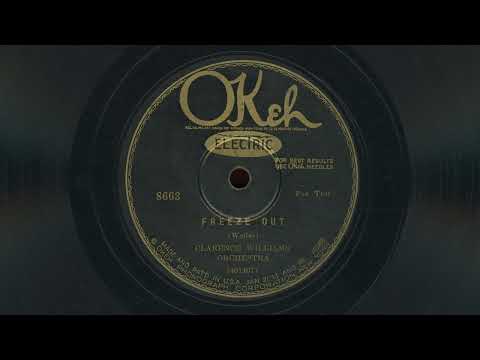
  • “Freeze Out” – Clarence Williams’ Orchestra (1928)

    “Freeze Out” – Clarence Williams’ Orchestra (1928)

    Clarence Williams records the Fats Waller tune “Freeze Out” with Ed Cuffee, Arville Harris, and many players who are debated or unknown.

    Recorded in New York City on December 19, 1928.
    Released as Okeh 8993

    Credits:
    Clarence Williams – director
    Ed Cuffee – trombone
    Arville Harris – clarinet, tenor sax
    Ed Anderson (?) – cornet
    Ben Whittet (?) – clarinet, alto sax
    Charlie Dixon (?) – banjo
    June Cole (?) – tuba
    Kaiser Marshall (?) – drums
    Unknown Artist – clarinet, alto sax
    Unknown Artist – piano

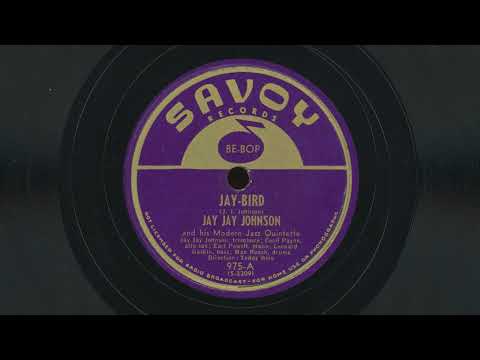
  • “Jay Bird” – Jay Jay Johnson (1946)

    “Jay Bird” – Jay Jay Johnson (1946)

    I haven’t posted much bebop lately – so here’s a great track from 1946 from trombonist J. J. Johnson’s band featuring Max Roach and Bud Powell.

    0:00 Intro
    0:40 Alto Sax solo (Cecil Payne)
    1:14 Trombone solo (J.J. Johnson)
    1:47 Piano solo (Bud Powell)
    2:19 Outro

    Recorded in New York City on June 26, 1946.
    Released as Savoy 975.

    Credits:
    J.J. Johnson – trombone
    Cecil Payne – alto sax
    Bud Powell – piano
    Leonard Gaskin – bass
    Max Roach – drums

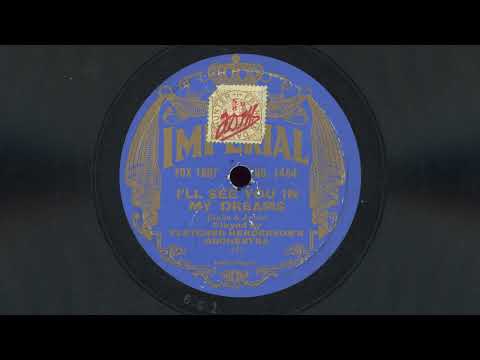
  • “I’ll See You In My Dreams” – Fletcher Henderson’s Orchestra f/ Louis Armstrong (1925)

    “I’ll See You In My Dreams” – Fletcher Henderson’s Orchestra f/ Louis Armstrong (1925)

    An excellent juxtaposition of the refined Henderson band playing a popular sweet dance number (composed by Chicago bandleader Isham Jones) and their relatively new hot soloist Louis Armstrong.

    Most of the tune is performed in the manner of a straightforward dance band – until we hit the Armstrong solo – and suddenly, we are transported somewhere else and are hearing something altogether new.

    0:00 Intro
    0:40 Clarinet and banjo
    0:50 Tenor Sax (Coleman Hawkins)
    1:24 Trumpet solo (Louis Armstrong)
    1:44 Clarinet-Sax Trio
    2:21 Ensemble Coda

    Recorded in New York City in mid-January, 1925.
    Released in the U.K. as Imperial 1454.
    Released in the U.S. as Banner 1470, Regal 9775, and Domino 3445.

    Credits:
    Fletcher Henderson – piano, director
    Louis Armstrong, Elmer Chambers, Howard Scott – trumpet
    Charlie Green – trombone
    Buster Bailey, Don Redman – clarinet, alto sax
    Coleman Hawkins – clarinet, tenor sax
    Charlie Dixon – banjo
    Ralph Escudero – tuba
    Kaiser Marshall – drums