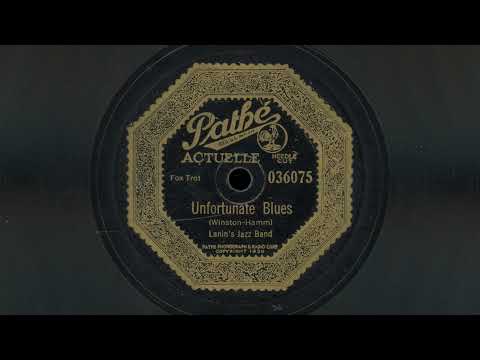
A rousing tune by Sam and the boys with a fine arrangement, ornate breaks, and crowd-pleasing solo and ensemble work all around.
Recorded in New York City circa March 11, 1924. Released as Pathé Actuelle 036075
Credits Sam Lanin – director Mike Mosiello – trumpet Miff Mole – trombone Larry Abbott – clarinet Harry Perrella – piano Tony Colucci – banjo Sam Wishnuff – drums
We often hear about the epicenters of early jazz: New Orleans, Chicago, Kansas City, and New York City. Here we find a delightful example of a peppy hot dance tune from the Twin Cities in Minnesota.
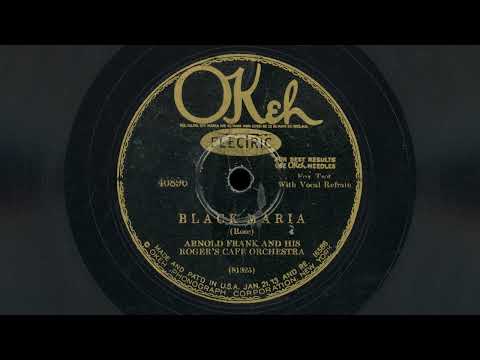
Arnold Frank led a dance orchestra at Roger’s Cafe which was located on Nicollet Avenue in St. Paul, Minnesota. This excellent record was advertised by Okeh in an ad alongside three blues releases as “Dance music refreshed with beguiling syncopation” in the November 1927 issue of Talking Machine World.
Brian Rust’s “Jazz and Ragtime Records” noted that this song was recorded at the lavish Radisson Hotel in downtown Minneapolis, but this has been disputed and it is believed that the correct recording location is the Lowry Hotel in St. Paul, Minnesota.
A “black maria” was slang for the paddy wagon that transported prisoners – either from where they were arrested to jail, or from jail to court. This tune by Fred Rose (who later became a notable songwriter in Nashville with Roy Acuff, penning songs for Hank Williams and Wanda Jackson, among others) was written in his Tin Pan Alley days in 1927. The lyrics (unheard in this instrumental version) find the narrator bemoaning his imminent arrest and relating anxious thoughts about the jail time he is facing.
Recorded at the Lowry Hotel in St. Paul, Minnesota on September 9, 1927. Released as Okeh 40896 in October 1927.
Credits: Arnold Frank – piano, director Swanny Swenumsen – cornet Stan Thompson – banjo Russ Reed – drums Unknown – trombone, clarinet, saxophones, tuba
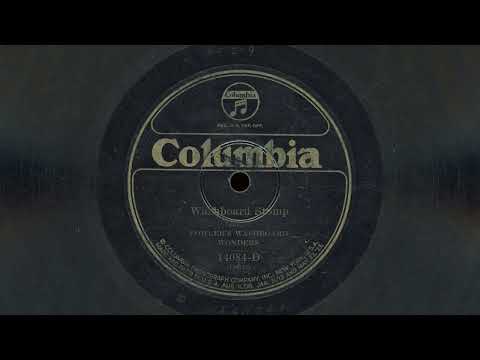
Lem Fowler was a very active composer and musician in New York from 1922-1932 – recording over 50 sides and scores of player piano rolls. The composition that put him on the map was “He May Be Your Man But He Comes To See Me Sometimes”, which he sold to Perry Bradford immediately after copyrighting it. Bradford published it and it rapidly became a favorite among blues singers and jazz bands alike.
Despite this, very little is known about his life – and he completely dropped off the radar of jazz world for the rest of his life. It is not even known when or where he died.
On this tune, we hear Fowler and his instrumental trio playing “Washboard Stomp” by Relphow James. Percy Glascoe solos in the gas pipe clarinet style, sometimes using the instrument to emit “laughing” sounds. Fowler and Harding serve as the rhythm section, keeping the tune swingin’ along.
Recorded in New York City on July 2, 1925. Released as Columbia 14084-D.
Credits: Lemuel Fowler – piano Percy Glascoe – clarinet, alto sax Stanley Harding – washboard
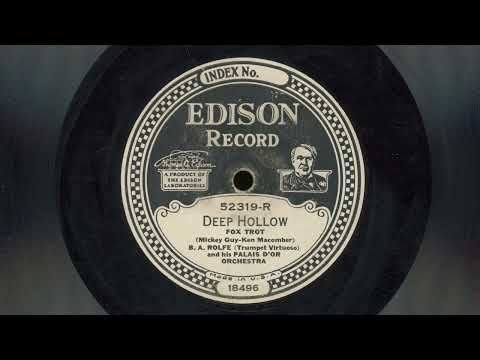
Benjamin Albert Rolfe worked in vaudeville and the motion picture business before starting a dance orchestra in New York City in 1926. While many of their releases over the course of their three year recording career with Edison Records were sweet dance music, there are a number of titles that are quite hot – “Deep Hollow” being one of them.
Hot trumpet, trombone, and bass sax solos can be heard within a delightful arrangement that ends with a few wild punctuations by an unruly slide whistle of some kind.
Edison Diamond Discs were electrically recorded with microphones starting with Edison 52089 in 1927, and while the sound quality was not quite as good as Victor Orthophonic or Columbia Viva-tonal, it was a step above the old acoustic method of recording. But the change came too late for the Edison company, and by late 1929, they got out of the record business entirely. Thus, these later 52000 series Edisons are quite scarce.
Recorded in New York City on May 14, 1928. Released as Edison 52319.
Credits: B.A. Rolfe (“Trumpet Virtuoso”) – trumpet Other players are unidentified, though Rolfe was known to record with players such as Phil Napoleon, Andy Sannella, Ross Gorman, and Tony Colicchio.
I recently acquired a fairly beat copy of this record – which has a rough start (the first 20 grooves are quite worn), a grainy swish for the first 30 seconds, and a lengthy crack that I was able to stabilize which caused very slight tics (which I was able to digitally remove). All of that said, for what the seller called “a wall hanger”, it was still quite listenable! 😊
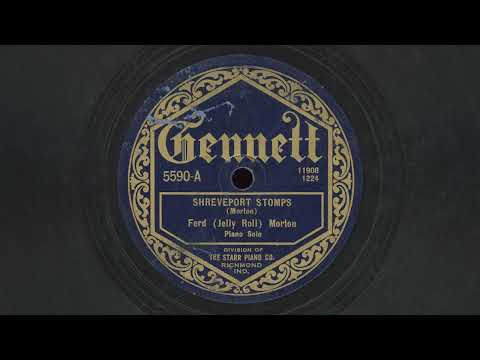
Between July 1923 and April 1926, Jelly Roll Morton recorded twenty piano solos. “Shreveport Stomps” was one of eleven compositions Morton recorded in one epic one-day session in 1924 at the Gennett studio in Indiana where 20 takes were made that resulted in nine sides.
Of these early solos brimming with vitality, William Russell wrote in The Needle in 1944 that “Jelly’s performance is a revelation of rhythmic variety by means of such devices as shifted accents, slight delays, and anticipations.”
Jelly himself would have been more emphatically clear about the merit of these recordings. When he asked one of the Melrose brothers what they thought of a new piece he just played, the publisher encouragingly answered “That’s good, Jelly.” Morton rose to the occasion: “Good, Hell – That’s perfect!”
Perfectly wonderful, to be sure. Please enjoy this gem of American jazz.
Recorded in Richmond, Indiana on Monday, June 9, 1924. Released as Gennett 5590. A master pressing was also released as Silvertone 4036.
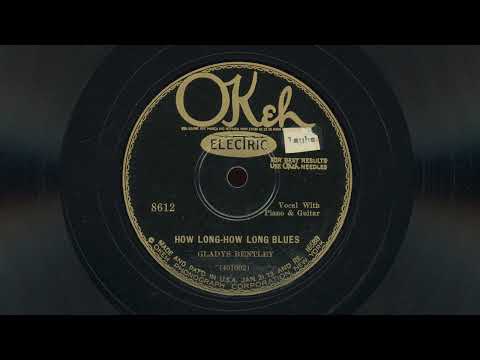
The wonderful Gladys Bentley singing the Leroy Carr tune “How Long How Long Blues”, which had just been released as a single on the Vocalion label by Carr and guitarist Scrapper Blackwell a few months earlier.
Bentley is accompanied by guitarist Eddie Lang and an unidentified pianist. Bentley was an excellent pianist in her own right, but the piano here sounds a bit distant in the recording.
Recorded in New York City on August 31, 1928. Released as Okeh 8612
Credits Gladys Bentley – vocals Eddie Lang – guitar Unidentified – piano
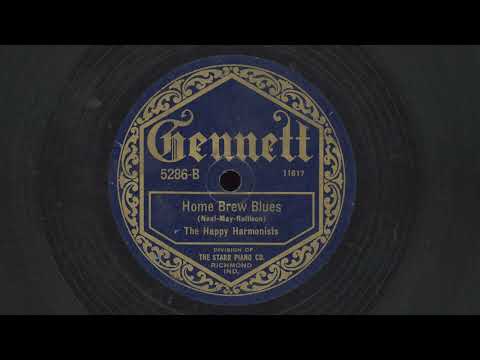
The first recording by Indiana jazz band The Happy Harmonists, later known as Hitch’s Happy Harmonists, after bandleader and pianist Curtis Hitch.
Most information about this band pegs them as fawning acolytes of Bix Beiderbecke and the Wolverine Orchestra – or mentions them only in reference to recording Hoagy Carmichael’s first tunes (“Washboard Blues” and “Boneyard Shuffle”).
It is important to note that at the time of this recording of their original composition “Home Brew Blues” in September of 1923, Bix and his Wolverine Orchestra had only just played their first show at the Stockton Club in Ohio – and didn’t record their first record for Gennett for another six months. And their collaboration with Carmichael was still two years away.
The Happy Harmonists were based in Evansville, Indiana – a city right across the river from Kentucky – so far south that it was closer to Louisville than it was to Indianapolis. They were part of a midwestern territorial jazz scene about which historian Merrill Hammond remarked, “There was a whole separate style of midwest jazz playing, and no one seems to remember that. It flourished in and around Indiana, Illinois, and Ohio long before the so-called ‘Chicago style’ became well-known.”
Hoagy Carmichael opined on this scene in his memoirs, writing, “In the farmlands among the Indiana-Iowa corn, and from the cow-pasture universities, there sprouted a beardless priesthood of jazz players and jazz composers. Instead of buttermilk and Blackstone, we were nurtured on bathtub gin and rhythm. . . It just happened, like a thunder cloud. It may sound sentimental to say that young men caught fire in a quest for beauty, that they dedicated themselves to its realization, starving and striving, laughing, dreaming, and dying.”
0:00 Intro 0:10 Clarinet solo (Wright) 0:44 Cornet solo (Rollison) 1:02 Bass sax solo (Neal) 1:26 Ensemble 1:55 Cornet and Clarinet
Recorded in Richmond, Indiana, on September 19, 1923. Released as Gennett 5286.
Credits: Curtis Hitch – piano, director Fred Rollison – cornet Jerry Bump – trombone Harry Wright – clarinet Rookie Neal – C Melody Sax Dewey Neal – baritone sax Maurice Mays – banjo Earl McDowell – drums
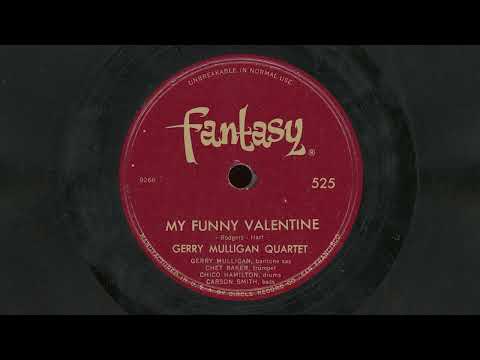
A beautifully haunting recording of the Rodgers-Hart ballad “My Funny Valentine” in the cool Pacific Jazz style featuring the lush slowcore solos of soon-to-be star Chet Baker, who made this song his signature tune.
Fun fact: this version was inducted into the Library of Congress’s National Recording Registry in 2015.
Recorded in San Francisco, California on September 2, 1952. Released as Fantasy 525.
Credits: Gerry Mulligan – baritone sax Chet Baker – trumpet Carson Smith – bass Chico Hamilton – drums
Richard McDonough was a New York City-based banjo player who played with the Ross Gorman Orchestra in 1925. While with Gorman, he began a gradual switch to guitar, playing in the style of Eddie Lang. Carl Kress also started on banjo, switching first to the four-string tenor guitar before making the jump complete.
Kress and McDonough were both prolific sidemen in the late 1920s who played with a wide variety of artists such as Paul Whiteman, Frank Trumbauer, Charleston Chasers, Annette Hanshaw, Nat Shilktret, Boswell Sisters, Boyd Senter, the Cotton Pickers, Miff Mole, Ben Selvin, Fred Rich, Jack Pettis, Red Nichols, Benny Goodman, and the Dorsey Brothers Orchestra.
Along with Eddie Lang and Lonnie Johnson – these two helped to establish the guitar firmly in the jazz tradition during the late 1920s and early 1930s.
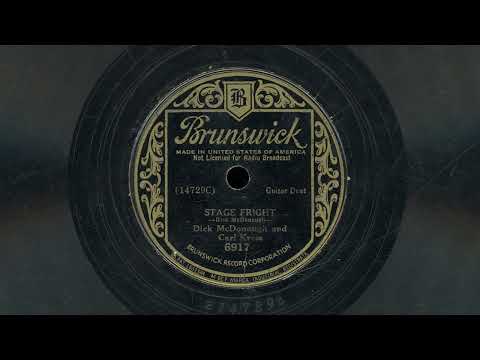
In 1934, during the depths of the Great Depression, they recorded this duet of one of McDonough’s compositions: “Stage Fright”. It is quite an accomplished performance of virtuosity.
Recorded in New York City on April 2, 1934. Released as Brunswick 6917.
Credits: Dick McDonough – guitar Carl Kress – guitar