Ok – an ambitious and uncharacteristically unjazzy choice today – a little Christmas music from my man Tschaikowsky, who I first heard about after hearing Duke Ellington and Billy Strayhorn’s Nutcracker Suite 😉.
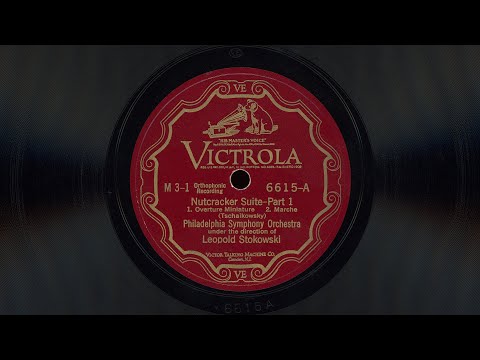
While there were earlier recordings of selected passages from the Nutcracker ballet, this 1926 recording spanning three 12″ discs includes about 20 minutes of the score. It is one of the first multi-record album sets of the ballet to be issued to my knowledge.
Also, it appears to have been recorded electrically – so also is a very early – perhaps the first – electrical recording of the music of the Nutcracker.
A few jazzier holiday tunes to come this week – right up until Xmas.
Recorded in Philadelphia, Pennsylvania on November 10, 1926. Released as a three disc album, Victrola M-3 (individual catalog numbers 6615, 6616, and 6617).
Credits: Conductor: Leopold Stokowski Orchestra: Philadelphia Symphony Orchestra
I’m busy and you can’t come in. No – really. It’s the end of the semester and I am going to be busy for the next week grading projects! But I promise to get some videos up in time for Christmas next week!
To tide you over, here’s a new arrival from Clarence Williams and friends.
Two days before this recording, Williams recorded a vocal version of this tune with his wife, Eva Taylor on vocals (as Irene Gibbons), King Oliver himself on cornet, and Eddie Lang on guitar. With that lineup, it’s no wonder this earlier recording is the better-known version of this song.
However – Williams also recorded an instrumental version with a larger ensemble – and it is an absolute delight!
Highlights in clude Ed Cuffee’s extened trombone solo at 1:23 and Cyrus St. Clair’s unmistakably suave tuba playing.
In October 1928 upon its release, the Chicago Defender said of this record: “looks like another big hit.” I hope it was – but based on the relative scarcity of this title, I’d guess not.
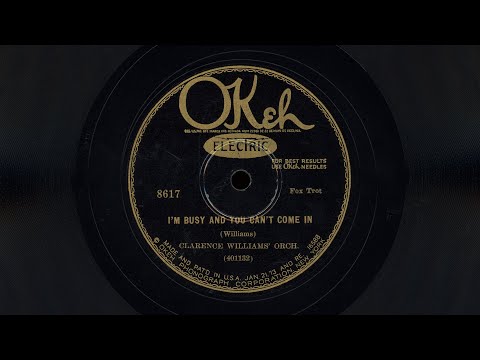
Recorded in New York City on September 20, 1928. Released as Okeh 8617.
Credits: Ed Allen, Ed “Andy” Anderson (?) – cornet Ed Cuffee – trombone Albert Socarras, Russell Procope (?) – clarinet, alto sax Arville Harris – clarinet, tenor sax Clarence Williams – piano Leroy Harris – banjo Cyrus St. Clair – tuba Floyd Casey – drums
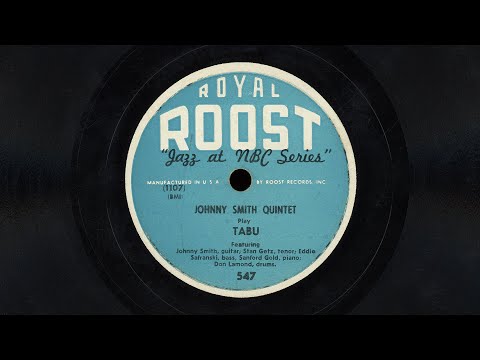
An early Johnny Smith recording on a NYC label named after the Royal Roost jazz club.
“Tabu” was a composition by Cuban songwriter Margarita Lecuona first recorded in 1934 by Cuarteto Machín on Victor 32115. Here, Smith gives it the bebop treatment. We find Johnny uncharacteristically fiery, doing virtuosic single-note speed runs rather than the more relaxed lyricism and refined chord melody playing that he later developed and became known for. Getz keeps a relatively low profile – while the rhythm section really shines, adding a sophisticated energy and syncopated drive.
Recorded in New York City on March 11, 1952. Released as Royal Roost 547.
Credits: Johnny Smith – guitar Stan Getz – tenor sax Sanford Gold – piano Eddie Safranski – bass Don Lamond – drums
This is one of the newest jazz transfers on the channel, dating from the waning years of 78 rpm era, as the 45 rpm 7″ single format and 33 rpm 10″ EP and 12″ LP formats were beginning to dominate production runs.
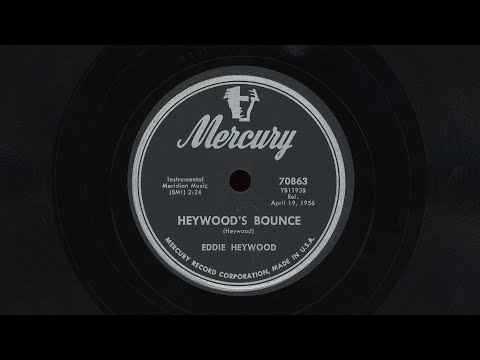
Eddie Heywood Jr. was playing with Bessie Smith in Atlanta when he was a preteen under the tutelage of his father. He would go on to play with Benny Carter, Billie Holiday, and Coleman Hawkins in the 30s and 40s before launching a solo career.
His work in the 50s was a bit of a comeback after his long productive career as a musician was interrupted in 1947 by medical issues with his hands that prevented him from performing.
The flip side of this disc, “Soft Summer Breeze” went to #11 on the pop charts – but I enjoy the b-side a bit more. Perhaps because it’s winter in the midwest, and with temperatures currently at 1 degree Fahrenheit, soft summer breezes seem to be a distant memory.
The beginning arpeggio of this one reminds me a bit of the beginning of “Linus and Lucy” by Vince Guaraldi from “Jazz Impressions of A Boy Named Charlie Brown” recorded in 1964. It has a similar optimistic feel but whereas the Guaraldi tune looks forward, I feel this one is more nostalgic in nature.
Included on his self-titled 1955 EmArcy LP, it was also included on his self-titled 1956 Mercury LP.
Recorded July 15 and 20, 1955. Released on April 19, 1956. Released as Mercury 70863
Credits: Eddie Heywood Jr. – piano Wendell Marshall – bass Jimmy Crawford – drums
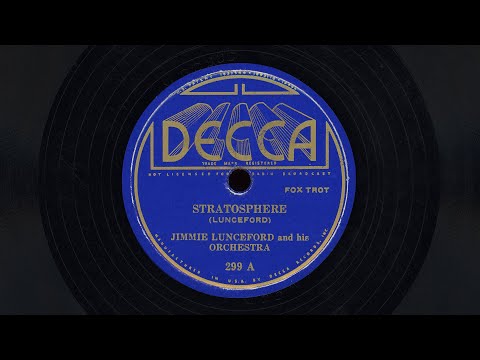
An early disc from the Jimmie Lunceford band featuring the original composition “Stratosphere”.
Great swingin’ arrangement with a syncopated minimalist head melody. And damn if I don’t hear timpani drums booming in at 1:21! The driving, frenetic bass playing of Moses Allen is also a highlight.
Recorded in New York City on September 4, 1934. Released as Decca 299.
Credits: Jimmie Lunceford – director, arranger Eddie Tompkins, Tommy Stevenson, Sy Oliver – trumpet Henry Wells, Russell Bowles – trombone Willie Smith, Earl Carruthers – clarinet, alto sax, baritone sax Laforet Dent – alto sax Joe Thomas – clarinet, tenor sax Edwin Wilcox – piano Al Norris – guitar Moses Allen – string bass Jimmy Crawford – drums, vibes
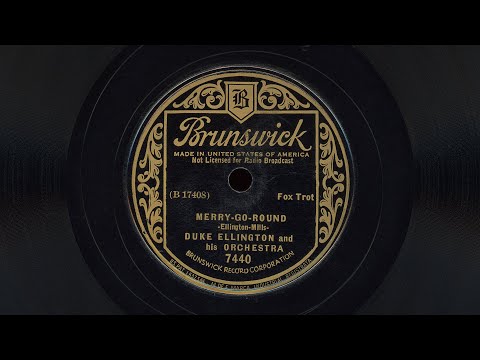
A few weeks ago I posted a blazing side by Charlie Parker’s All Stars called “Merry Go Round”: https://youtu.be/5aQPz0bnx78
Today we’ll hear a different tune with the same name: Duke Ellington’s “Merry-Go-Round.”
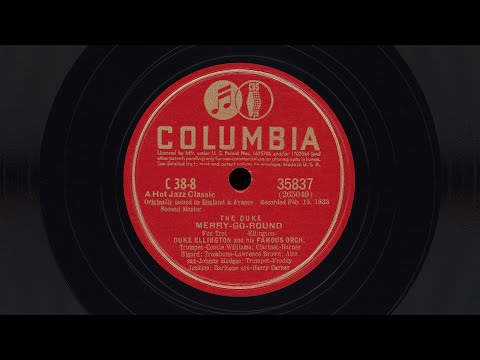
Duke first recorded this tune in 1933 – but this earlier version was only released in Europe and Australia on the Columbia label. An alternate take of “Merry-Go-Round” from this earlier session was reissued domestically in a Columbia “Hot Jazz Classics” album set in the 1940s called “The Duke”. Being the person that I am, I of course had to dig it up for comparison.
This later recording sounds great and seems to be the better recording overall. Listening to both versions – this one feels fresh and immediate. You get the feeling that Duke’s fellahs had been working on perfecting every aspect of this arrangement and knew it backwards and forwards by this point. The 1933 version, while of course, still very good, seems just a bit more tenuous in the soloing and has just a bit less energy to it.
There does seem to be some disagreement about the credits between Rust and other sources.
Recorded in New York City on April 30, 1935. Released as Brunswick 7440.
Credits: Duke Ellington – piano, arranger, director Rex Stewart – cornet Freddy Jenkins, Cootie Williams – trumpet Joe Nanton, Lawrence Brown – trombone Juan Tizol – valve trombone Johnny Hodges – clarinet, soprano sax, alto sax Harry Carney – clarinet, alto sax, baritone sax Otto Hardwick – clarinet, alto sax, bass sax Barney Bigard – clarinet, tenor sax Fred Guy – guitar Hayes Alvis – string bass Fred Avendorf – drums
Source: Jazz and Ragtime Records (1897-1942), 6th edition by Brian Rust.
Recorded in New York City on February 15, 1933. This is take 2. Released as Columbia 35837 as part of Columbia’s Hot Jazz Classics series “The Duke” (C 38). Since this is the first issue of this take, it is the original issue. Take 3 was released in 1933 only on Columbia in Europe and Australia.
Credits: Duke Ellington – piano, arranger, director Arthur Whetsel Freddy Jenkins, Cootie Williams – trumpet Joe Nanton, Lawrence Brown – trombone Juan Tizol – valve trombone Johnny Hodges – clarinet, soprano sax, alto sax Harry Carney – clarinet, alto sax, baritone sax Otto Hardwick – alto sax, bass sax Barney Bigard – clarinet, tenor sax Fred Guy – banjo, guitar Wellman Braud – string bass Sonny Greer – drums
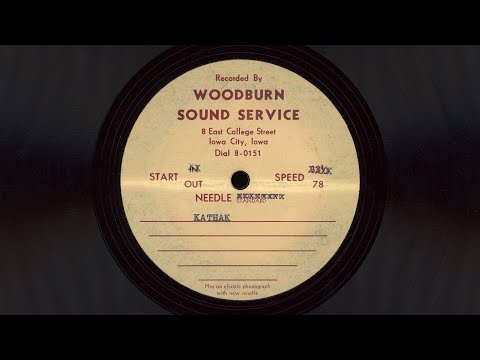
This home-recorded 78 rpm appears to feature Indian musicians playing what one knowledgeable commenter describes as “a very nice performance of a tintal gat in Raag Tilak Kamod on the sarangi, accompanied by tabla.”
It is labeled “Kathak” so I initially guessed it was the musical accompaniment to a Kathak dance. Not sure what the label refers to.
Recorded in Iowa City, Iowa – my guess at some point in the early-to-mid 1950s but perhaps later?
Transferred this for a pal. Kind of curious to know more about this one.