Jazz Crazy Records

An Archive of Early Jazz on 78 RPM

Category: Jazz

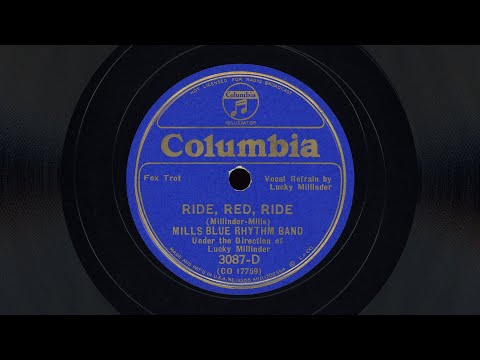
  • “Ride, Red, Ride” – Mills Blue Rhythm Band (1935) 🔥🔥🔥

    “Ride, Red, Ride” – Mills Blue Rhythm Band (1935) 🔥🔥🔥

    In October of 1934, jazz impresario Irving Mills poached trumpet player Henry “Red” Allen, from the Fletcher Henderson orchestra and offered him the role of bandleader. Red joined the band but turned down the leadership role, wanting to focus on his playing. Instead, Mills turned to Lucky Millinder, who was reputed to be an extraordinary conductor – thought he could not read music. Millinder was a spirited front man who added vibrant energy to the band.

    In his fifth recording session with the orchestra, the band records a Millinder composition called “Ride, Red, Ride” which was a contrafact of the early jazz standard “Tiger Rag”. The tune begins with Lucky Millinder announcing “Oh, the name of this song is Ride, Red Ride – Ride Red!” Like the song it is based on, it plows ahead at a furious pace from the get go. We hear fast solos zooming past our ears – interspersed with little slower breaks that allow us to catch our breath before the next onslaught.

    The spotlight is on Allen at 1:49 when he takes off for his showcase solo, punctuated by encouraging shouts from Millinder and the band. At one point at 2:26 we seem to be caught in a massive traffic jam with horns vying against one another before Allen’s trumpet leads the way to the coda.

    One perplexing note is that the presence of Buster Bailey on clarinet, listed in early editions of Rust’s Jazz and Ragtime Records and many other discographies, is omitted from Rust’s final 6th edition. Not sure the story behind that credit removal, but the blistering clarinet solo at 1:09 sure seems like Bailey to me. Anyone know why Rust removed him from this session’s credits?

    Interestingly, after recording the tune, Allen says they were told it was probably not going to be issued. However, it was – and was a big hit for the band.

    Recorded in New York City on July 2, 1935.
    Released as Columbia 3087-D

    Credits:
    Lucky Millinder – vocals, director
    Henry “Red” Allen, Wardell Jones, Shelton Hemphill – trumpet
    J. C. Higginbotham, George Washington – trombone
    Buster Bailey – clarinet
    Gene Mikell, Crawford Washington – clarinet, alto sax
    Joe Garland – clarinet, tenor sax, baritone sax
    Edgar Hayes – piano
    Lawrence Lucie – guitar
    Elmer James – string bass
    O’Neil Spencer – drums
    Will Hudson – arranger

    Sources:
    Ride, Red, Ride: The Life of Henry “Red” Allen, by John Chilton
    Storyville #109, Oct-Nov 1983
    The Recordings of Joe Garland: An Annotated Tentative Personnelo – Discography, by K.B. Rau
  • “18th Street Strut” – Bennie Moten’s Kansas City Orchestra (1925)

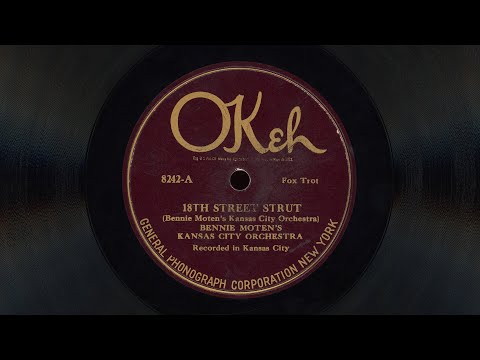
    “18th Street Strut” – Bennie Moten’s Kansas City Orchestra (1925)

    My first Bennie Moten Okeh!! Wonderfully recorded in the city where I fell in love with jazz!

    An upbeat number that features solos by Lammar Wright on cornet, Thamon Hayes on trombone, a wild “wah-wah” clarinet solo by Woody Walder, and an alto sax solo which I think must be Harlan Leonard.

    The Moten band played extensively in the Kansas City area during this time, and during the summers played on nighttime cruises up the Missouri River on steamers, as well as the dance pavilion at Liberty Park in Raytown.

    This 1925 session for Okeh represented a high point for the early Moten band. Recorded by Ralph S. Peer, director of recording for Okeh, with a portable recording unit brought to Kansas City, the sound quality is quite good.

    Peer left Okeh shortly after this session, which was Moten’s last for the label. He didn’t record again until the band auditioned for Victor in Chicago in December of 1926 at a session arranged by Peer – who had joined the Victor label.

    For anyone counting, that’s a sixteen month drought of no recording for one of America’s top jazz bands in its prime!! That’s a crime! We’ll just have to imagine the amazing records they might have recorded during that time period.

    Recorded in Kansas City, Missouri circa May 14, 1925.
    Released as Okeh 8242.

    Credits:
    Bennie Moten – piano, director
    Lammar Wright, Harry Cooper – cornet
    Harlan Leonard – clarinet, alto sax
    Thamon Hayes – trombone
    Woody Walder – clarinet, tenor sax, kazoo effect
    LaForest Dent – banjo
    Vernon Page – tuba
    Willie Hall – drums

    Sources:
    Jazz and Ragtime Records (1897-1942), 6th Ed., Brian Rust
    Kansas City Jazz: From Ragtime to Bebop – A History, by Frank Driggs and Chuck Haddix
    Jazz Style in Kansas City and the South West, by Ross Russell

  • “Let’s Have a Showdown” – Clarence Williams & his Orchestra (1934)

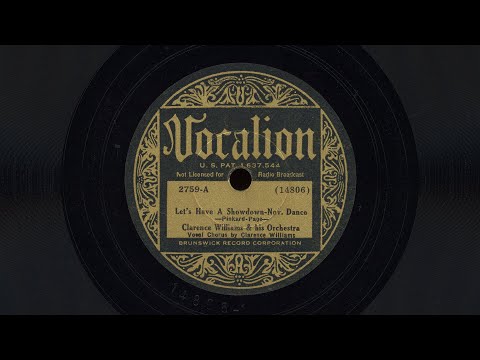
    “Let’s Have a Showdown” – Clarence Williams & his Orchestra (1934)

    A lively tune by Clarence Williams and friends from 1934. Despite the label, Williams does not sing on this one.

    Instead, we get some excellent ensemble playing and soaring solos by Cecil Scott (cl), James P. Johnson (p), an unknown trombonist, and Ed Allen (c).

    Three days after this recording was made, Williams and Eva Taylor performed at the Harlem Opera House with James P. Johnson providing piano accompaniment.

    Recorded in New York City on February 7, 1934.
    Released as Vocalion 2759.

    Credits:
    Ed Allen – cornet
    Cecil Scott – clarinet
    Unknown Artist – trombone
    Clarence Williams – piano
    James P. Johnson – piano solo
    Roy Smeck – guitar
    Cyrus St. Clair – tuba

    The flip side, “I’m Gonna Wash My Sins Away” can be heard at:
    https://youtu.be/PGtTdO_fYP8

  • “Tell Her in the Springtime” – Nathan Glantz & his Orchestra (1924)

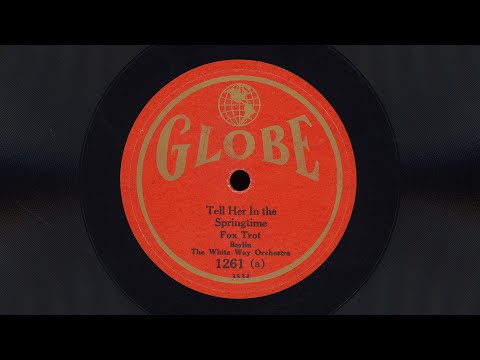
    “Tell Her in the Springtime” – Nathan Glantz & his Orchestra (1924)

    Folks, I am not saying this is the greatest record in the world or anything – but it is truly a rare occasion when you find a disc from the Grey Gull label (or its sister labels, Radiex and Globe) in such excellent condition. I had to make a transfer.

    These dime store records are usually V at best, and often V- or G+. Even when in better condition, its cheap production usually means grainy surface noise. This disc seems to have escaped that fate and sounds quite excellent!

    Nice playing on this side by Nathan Glantz and friends – hopefully someone out there has more definitive credits than Rust’s American Dance Band Discography.

    Funny story – when I first was first collecting 78s and saw records with the “White Way” orchestra credit I immediately feared this was some racially-charged cringe-y thing (as one does encounter during this period of American cultural history) – but fortunately (sigh of relief), the “Great White Way” refers to the bright lights of Broadway in NYC – one of the first areas to be electrically illuminated.

    These sides both have Emerson matrices and were released in February 1925.

    Recorded in New York City circa November 1924.
    Released as Emerson 10826, Globe 1261, Grey Gull 1261, and Radiex 1261.

    Credits:
    Nathan Glantz – alto sax, tenor sax, soprano sax, clarinet, bass clarinet, director
    Herman “Hymie” Farberman, Mike Mosiello – trumpet
    Eph(riam) Hannaford – trombone
    Max Terr – piano, arranger
    Harry Reser – banjo
    John Helleberg Jr. – tuba
    Joe Green – drums
    [see Javier Soria Laso’s detailed comment for more info]

  • “It Isn’t Fair – Nye Mayhew and his Westchester-Biltmore Orchestra (1933)

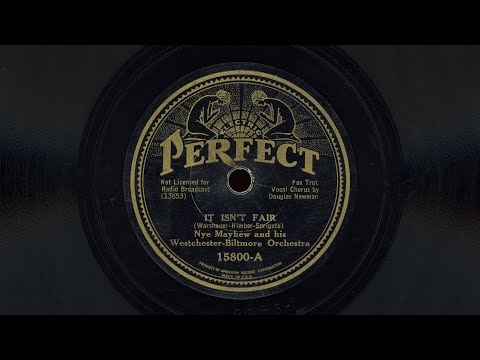
    “It Isn’t Fair – Nye Mayhew and his Westchester-Biltmore Orchestra (1933)

    Nye Mayhew was a reedman who first recorded with Hoagy Carmichael in October 1927 for Gennett at their Richmond, Indiana studio. Within a month, he was recording with Paul Whiteman and Bix Beiderbecke on “Changes” (Victor 21103) and later recorded with Hal Kemp. By 1933 he was leading his own band during the thick of the Great Depression years.

    Roger Kinkle’s Complete Encyclopedia of Popular Music and Jazz notes: “Excellent band but never much popularity.” Nye also had three brothers, Jack (reeds), Gus (trombone), and Bob (trumpet), who also played with artists such as Whiteman, Kemp, and even Louis Armstrong.

    But the reason I’m sharing this is that I found the vocalist, an obscure singer named Douglas Newman, to be quite interesting. He’s got that haunting higher-pitched voice that works so well with numbers like this. He only seems to have recorded with Nye Mayhew and Art Kahn from 1933-34 and then vanished off the map.

    Recorded in New York City on July 27, 1933.
    Released as Perfect 15800, Banner 32827, Melotone M-12757, Oriole 2737, and Romeo 2110.

    Credits:
    Nye Mayhew – clarinet, alto sax, baritone sax, director
    Douglas Newman – vocals
    Unknown artists – alto sax, tenor sax, violin, piano, guitar, string bass, drums

  • “Birmingham Bertha” – Jimmie Noone and his Apex Club Orchestra (1929) w/ May Alix

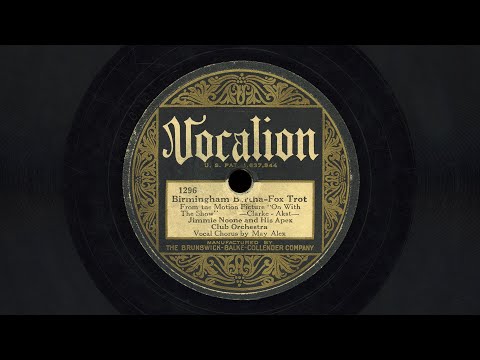
    “Birmingham Bertha” – Jimmie Noone and his Apex Club Orchestra (1929) w/ May Alix

    Chicago jazz vocalist Liza Mae Alix performs “Birmingham Bertha” with the expert accompaniment of Jimmie Noone’s Apex Club Orchestra.

    Noone starts off the tune with a mournful but somehow hopeful clarinet line. I feel the band really is in a fine groove on this number – with such a chill vibe.

    Some voices need time to grow on you. Others charm you from the get-go. I think Alix is in the latter category, as the first time I heard this recording I was duly impressed with her performance.

    Rust lists George Mitchell on cornet and Fayette Williams on trombone, but I sure don’t hear them on this one.

    Recorded in Chicago, Illinois on July 11, 1929.
    Released as Vocalion 1296.

    Credits:
    Jimmie Noone – clarinet, director
    Joe Poston – clarinet, alto sax
    Zinky Cohn – piano
    Junie Cobb – banjo, guitar
    Bill Newton – tuba
    Johnny Wells – drums
    May Alix – vocals

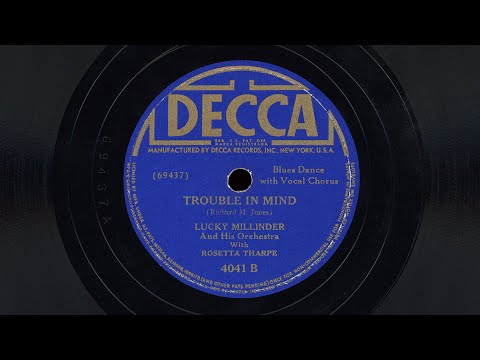
  • “Trouble In Mind” – Lucky Millinder and his Orchestra w/ Rosetta Tharpe (1941)

    “Trouble In Mind” – Lucky Millinder and his Orchestra w/ Rosetta Tharpe (1941)

    An old Richard M. Jones tune first recorded by blues artists such as Thelma LaVizzo and Bertha “Chippie” Hill in the 1920s – reinterpreted for the 1940s with Lucky Millinder’s swing band and Sister Rosetta Tharpe on vocals.

    The song was later recorded by Dinah Washington in 1952 and Nina Simone in 1961. Quite a lineage!

    Here we have the indomitable Sister Rosetta Tharpe singing the blues – though she knows “the sun’s gonna shine in my back door someday.”

    On this Thanksgiving day 2025, may the sun shine for all of you. I’m thankful for all of you who tune in to this channel to listen to great old music together and talk in the comments about it. There’s a lot going on in the world today to be worried about – to give us all trouble in mind. But this music brings us together and shines a little light across time and space to give us all a little solace.

    Enjoy the day, my friends.

    Recorded in New York City on June 27, 1941.
    Released as Decca 4041.

    Credits:
    Lucky Millinder – director
    William Scott, Archie Johnson, Nelson Bryant – trumpet
    George Stevenson, Floyd Brady, Edward Morant – trombone
    Ted Barnett, George James – alto sax
    Stafford Simon – tenor sax
    Ernest Purce – baritone sax
    Bill Doggett – piano
    Trevor Bacon, Rosetta Tharpe – guitar, vocals
    Abe Bolar – string bass
    Panama Francis – drums

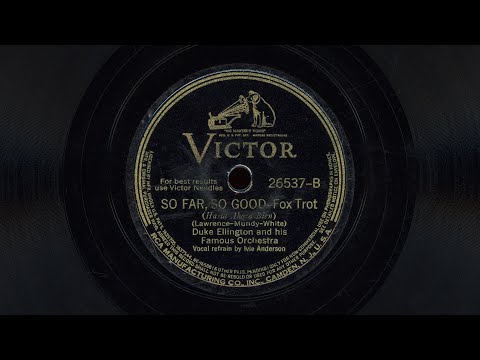
  • “So Far, So Good” – Duke Ellington and his Famous Orchestra (1940)

    “So Far, So Good” – Duke Ellington and his Famous Orchestra (1940)

    This week I’ll be highlighting some really lovely jazz vocal records – starting with a tune that was on the CD set that first turned me on to jazz back in the late 1980s: The Blanton–Webster Band by Duke Ellington, which collected together Duke’s singles from 1940-42.

    I was working at photo-video checkout as a student at the Kansas City Art Institute and my boss, jazz musician Reverend Dwight Frizzell, would constantly play jazz at work – and narrate the history of the bands or comment on the arrangements of each tune. This set was one of the first that perked my ears up and I ended up buying a copy.

    Reading the excellent liner notes of that set – which gave a historical background of the Blanton-Webster band, along with detailed notes on each of the sixty six songs – was like a master class in learning to listen to and understand jazz.

    Decades later when I got into collecting 78s I have tried to find as many of the outstanding tunes on this release as I could on 78 rpm.

    Here we have the lovely Ivie Anderson singing “So Far, So Good”. It was a song I often skipped in my younger years – wanting to focus on the instrumental numbers. This could have been influenced by the liner notes, which introduced this as “a pop song that had been previously recorded by several white artists” and went on to call the arrangement “workaday” and said the band “sounds ready to go home.”

    But this perhaps misses the larger point: The star of this number is the delightful vocal performance by Ivie Anderson. I’ve grown to love it – and hope you do too.

    Recorded in Chicago, Illinois on March 6, 1940.
    Released as Victor 26537.

    Credits:
    Duke Ellington – piano, arranger, director
    Wallace Jones, Cootie Williams – trumpet
    Rex Stewart – cornet
    Joe Nanton, Lawrence Brown – trombone
    Juan Tizol – valve trombone
    Barney Bigard – clarinet
    Johnny Hodges – clarinet, soprano sax, alto sax
    Harry Carney – clarinet, alto sax, baritone sax
    Otto Hardwick – alto sax, bass sax
    Ben Webster – tenor sax
    Fred Guy – guitar
    Jimmy Blanton – string bass
    Sonny Greer – drums
    Ivie Anderson – vocals

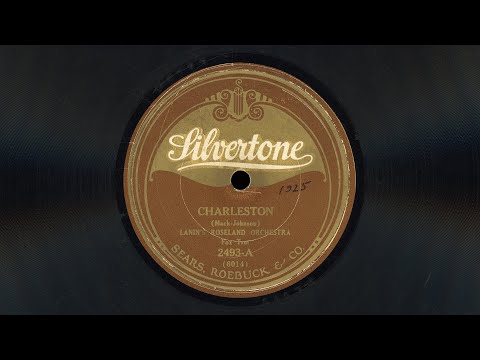
  • “Charleston” – Texas Ten (1925)

    “Charleston” – Texas Ten (1925)

    A rough start for this beat disc (with a repaired crack, no less) – but it cleans up after 10-20 seconds of sizzling bacon.

    Another fun version of “Charleston” by Nathan Glantz and friends (here curiously under the alias of Sam Lanin’s band). They recorded a different take on the same day issued under a different matrix for Pathé-Perfect.

    Recorded in New York City on May 5, 1925.
    Originally issued as Banner 1540, Bell 351, Domino 3510, Oriole 413 and Regal 9835.
    Reissued as Silvertone 2493 credited to “Lanin’s Roseland Orchestra”.

    Credits:
    Nathan Glantz – alto sax, director
    Unknown performers – trumpet (2x), trombone, clarinet, alto sax, tenor sax, piano, banjo, tuba, drums

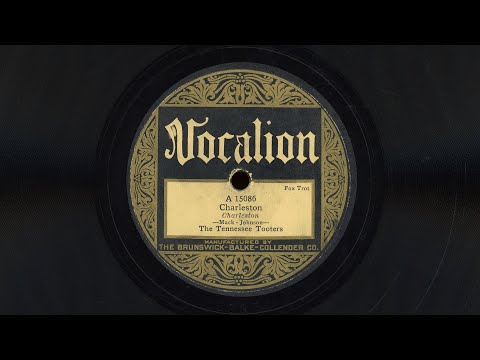
  • “Charleston” – The Tennessee Tooters (1925)

    “Charleston” – The Tennessee Tooters (1925)

    With 2025 drawing to a close, we’re going to celebrate a few versions of one of the biggest dance crazes of the 1920s: The Charleston.

    Here’s one of my favorite versions of the tune first penned by James P. Johnson for the Broadway show Runnin’ Wild in 1923.

    We hear some great syncopated ensemble playing and an extended Rube Bloom piano solo at 1:03, and a sax solo at 1:39.

    If you liked this one, take a listen to another one of my favorite versions of The Charleston by Ben Selvin here:
    https://youtu.be/eA00y3wr0II

    Recorded in New York City on August 12, 1925.
    Released as Vocalion 15086.

    Credits:
    Hymie Farberman (?) or Harry Gluck – trumpet
    Miff Mole – trombone
    Bennie Krueger – alto sax
    Lucien Smith – tenor sax
    Rube Bloom – piano
    Unknown Artist – banjo
    Joe Tarto – tuba
    Ray Bauduc – drums

    Source:
    Jazz and Ragtime Records (1897-1942), 6th Edition, Brian Rust