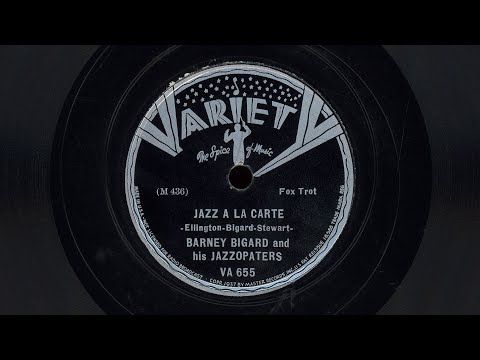
A fun blues in Eb by the Duke’s men in small combo form on the excellent Variety label. Clarinetist Barney Bigard leads this session.
Recorded in New York City on April 29, 1937. Released as Variety VA 655.
Credits: Rex Stewart – cornet Juan Tizol – valve trombone Barney Bigard – clarinet Harry Carney – baritone sax Duke Ellington – piano Billy Taylor – string bass Sonny Greer – drums
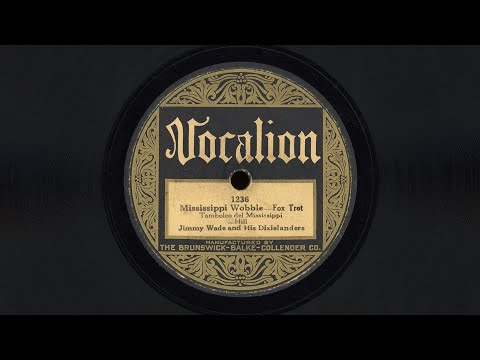
Here’s one you don’t hear every day – one of only seven Jimmy Wade sides – this one from the Vocalion 1000 series.
Wade was based in Chicago and orchestras under his name recorded for Paramount in 1923-24 and Gennett in 1927 before closing with two sides for Vocalion in 1928.
Best of all – this is a test pressing on vinyl which is dead quiet with great fidelity. Not sure if even an original Vocalion pressing would sound this good – and if I ever come across one I’ll let you know!
The real highlights of this side are Alex Hill’s unique arrangement, Alex Hill on piano at 1:39, and Cliff Jones’ kazoo solo starting at 2:20.
Recorded in Chicago, Illinois on October 10, 1928. Released as Vocalion 1236. Test Pressing
Credits: Jimmy Wade – cornet, director Punch Miller – cornet Charles Lawson – trombone Arnett Nelson (?), Unknown Artist – clarinet, alto sax Unknown Artist – tenor sax Alex Hill – piano, arranger Charles Jackson or Stanley Wilson – banjo Unknown Artist – tuba Cliff Jones – drums, kazoo
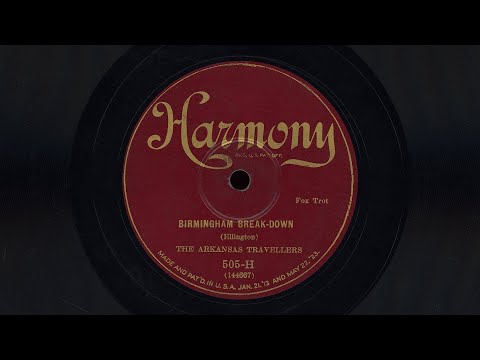
From the last Arkansas Travellers session, a real gem from Red and Miff – their take on the Duke Ellington composition, “Birmingham Break-Down”.
Red and Miff worked together with many similar lineups for various labels alternately called “Red Nichols and his Five Pennies”, “Red and Miff’s Stompers”, “Miff Mole and his Molers”, “The Red Heads”, and “The Charleston Chasers”.
Harmony was the low-budget label owned by Columbia – along with sister labels Velvet Tone and Diva. The surprising quality of the acoustic recording and the outstanding laminated pressings made this label hold its own against even the big labels of the time who were all recording electrically. One could argue that between the Harmony and Edison labels, acoustic recording techniques had reached the height of its sound quality and audio fidelity.
Now, let’s break down the Break-Down: Red and Miff share the intro – playing the head melody in unison. Red takes a solo, followed by clarinet, trombone, and piano before the ensemble brings us back home.
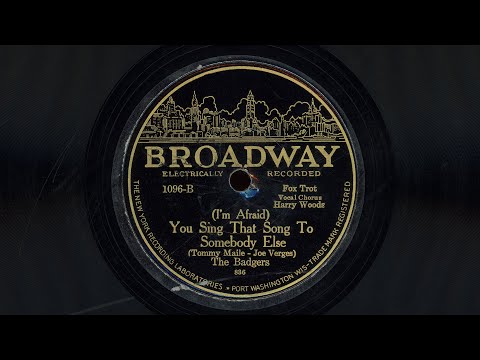
Gosh, you know this is the first Harry Reser record I’ve posted on the channel.
With Reser, you know you’re going to get some energetic banjo playing, and at 1:13 we get the first hot banjo break – and at 1:51 we get a solo. At 2:08 a lively trumpet solo breaks through and gives us a moment of what Brian Rust would call “jazz interest”.
Not sure if that is Tommy Gott or Hymie Farberman or Bob Effros on trumpet, but those eight bars really give this record a big lift.
Recorded in New York City on August 3, 1927. Released as Broadway 1096.
Credits: Harry Reser – banjo, director Red Nichols (?) – cornet Tommy Gott, Hymie Farberman or Bob Effros (?) – trumpet Sam Lewis – trombone Larry Abbott – clarinet, alto sax Bill Wirges – piano Jimmy Johnston – bass sax Tom Stacks – drums, vocals (as “Harry Wood”)
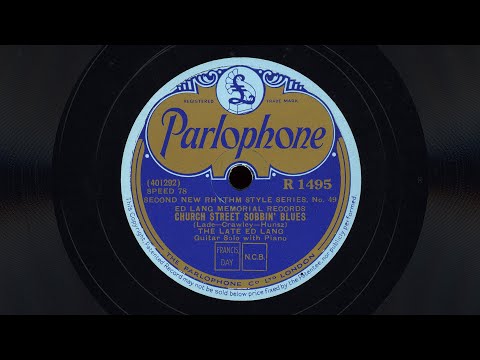
A Louisiana Five tune originally published and recorded in 1919, “Church Street Sobbin’ Blues” was recorded twice by Clarence Williams before this 1928 recording by jazz guitar godfather Eddie Lang.
If you think you’re hearing bells and chimes throughout this song – you are. That’s Okeh studio regular Justin Ring. The first time I listened I was using headphones and thought that someone was ringing my doorbell.
Lang here is charmingly languid – taking a relaxed swing at the tune that is both bluesy and folksy.
Recorded in New York City, November 5, 1928. Released in the U.K. as Parlophone R-1495. Originally released as Okeh 8633 (As “Blind Willie Dunn”).
Credits: Eddie Lang – guitar Frank Signorelli – piano Justin Ring – chimes
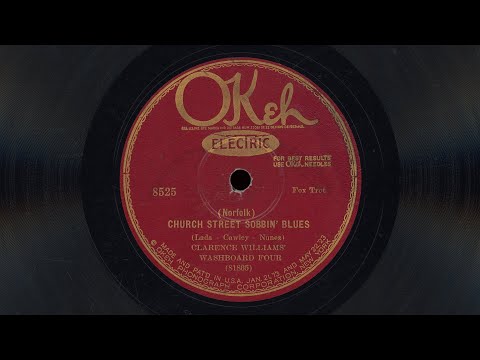
Here’s the Clarence Williams version of “Church Street Sobbin’ Blues” – a real toe tapper with some inspired solos by Ed Allen and Buster Bailey accompanied by Mr. Williams on piano and the no-nonsense rhythm section of Floyd Casey’s washboard.
I have no notes on the performance other than I love it.
The flip side of this one, “Yama Yama Blues”, matches exactly to the same pairing on an early 9″ Emerson record by the Louisiana Five (Emerson 9179). My perhaps unprovable theory is that Williams must have had (and quite liked?) this record himself. Not only did he record “Church Street Sobbin’ Blues” with his wife, Eva Taylor, in 1923 – but he recorded it again here – over eight years after these songs were first popular – paired with the exact same flip side as the Louisiana Five.
These two songs were not popular jazz or dance standards of their day – outside of the 1919 recordings of Louisiana Five, Jockers Dance Orchestra, and the Plantation Dance Orchestra – and the later 1928 version by Eddie Lang (coming soon) – no other jazz or dance band seems to have performed either of these two songs – much less performed both together on the same record.
Mr. Williams was at this time the A&R man at Okeh Records who supervised the 8000 series. The choice of these two particular songs would have come directly from him, I should think. What do you think of my theory?
In the meantime, of course, it has ignited a strong desire to find that Louisiana Five record!
Recorded in New York City on November 25, 1927. Released as Okeh 8525.
Credits: Ed Allen – cornet Buster Bailey – clarinet, alto sax Clarence Williams – piano Floyd Casey – washboard
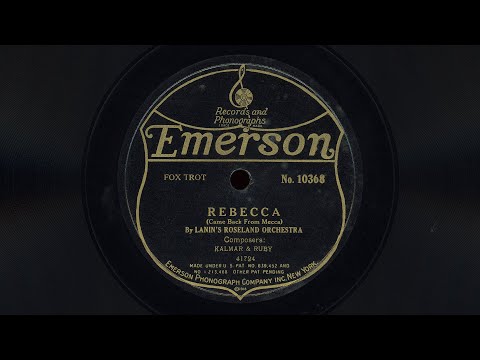
By request: The flip side of “Church Street Sobbin’ Blues” by Harry Raderman’s Plantation Orchestra: An early recording of Sam Lanin’s Roseland Orchestra performing “Rebecca (Came Back From Mecca)”.
Recorded in New York City in April, 1921. This is take 3. Released as Emerson 10368.
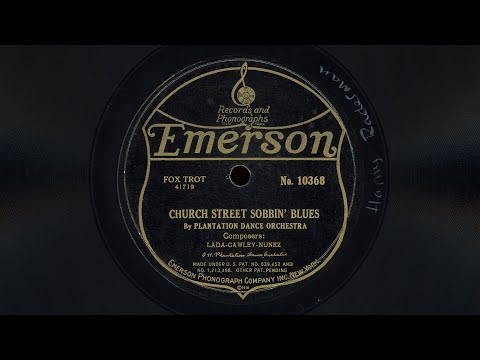
“Church Street Sobbin’ Blues” was written by Alcide Nuñez, Joe Cawley, and Anton Lada of the Louisiana Five – and was originally recorded by that group in 1919. Here we find Harry Raderman’s Plantation Dance Orchestra performing the tune for Emerson in 1921.
Very glad to find a clean copy of this one – the sound quality is quite good for an acoustic recording!
The song was later recorded by Eva Taylor and Clarence Williams in 1923 and again by Clarence Williams Washboard Four in 1927. I wonder if Williams had a copy of Emerson 9179 – which featured the Louisiana Five performing both Church St. Sobbin’ Blues and Yama Yama Blues – both tunes he covered with his washboard band.
Eddie Lang did a wonderful solo version accompanied by Frank Signorelli in 1928. I’ve been meaning to make a transfer of that one – will have to go dig that one out.
Recorded in New York City on March 30, 1921. This is take 3. Released as Emerson 10368. Also released as Regal 952 (as Regal Jazz Syncopators).
Credits: Harry Raderman – director, trombone Harry Glantz, Walter Kahn – trumpet Pincus Glantz – bass clarinet Nathan Glantz – C-melody sax Lou Raderman – violin Henry Scharf – piano Dave Raderman – drums
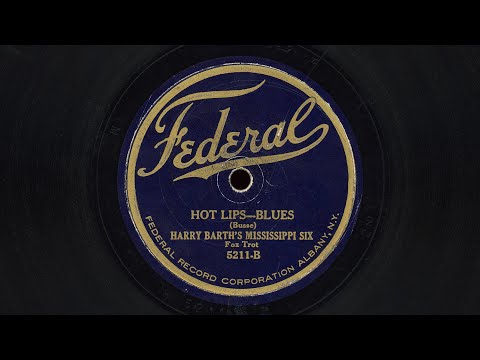
The B side to “I Love Sweet Angeline” also features some great soprano sax work by Doc Berendsohn throughout. Starting at 1:08 he really gets to spread out between the starts and stops of the syncopated rhythms. At 1:50 he switches to clarinet and keeps the vibe going! A really fun listen.
Recorded in New York City circa June-July 1922. Released as Federal 5211. This is take 2 (mx. 2-1538).
Credits: Harry Barth – director, tuba Dave Klein, cornet Bernhard ‘Doc’ Berendsohn, clarinet & soprano saxophone Harry Raderman, trombone Lou Raderman, violin Dick Reynolds, piano
If you enjoyed this one, be sure to watch Colin Hancock’s excellent curated playlist of other tunes by Harry Barth’s Mississippians: https://youtu.be/SROAGc_Op8M
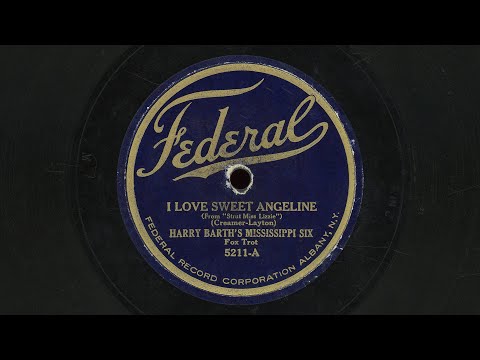
A few weeks ago I was enjoying a video Colin Hancock posted on his excellent channel of Harry Barth records and remembered I had one in the transfer queue that I’d been meaning to get to.
I couldn’t find a transfer of this one online – and it doesn’t appear in either of Brian Rust’s discographies (Jazz and Ragtime Records or American Dance Band Discography), so I offer it to you, dear viewer, to enjoy.
The tune, “I Love Sweet Angeline”, penned by the songwriting team of J. Turner Layton and Henry Creamer, appeared in the all-black Broadway production “Strut Miss Lizzie”, which had a nine-week run at the Times Square and Earl Carroll Theaters during the summer of 1922.
The musical featured the duo’s hit song of 1921 (“Strut Miss Lizzie”), along with several others, including one destined to become a classic: “Way Down Yonder in New Orleans”.
Here we have another tune from the show, “I Love Sweet Angeline”. Love the sax, clarinet, and piano on this one.
Quite interesting to see this secondary tune from the show recorded around the same time the production opened. It was also recorded by Ted Lewis for Columbia and Kaplan’s Melodists for Edison in late July 1922.
Recorded in New York City circa June-July 1922. Released as Federal 5211. This is take 3 (mx. 3-1542).
Credits: Harry Barth – director, tuba Dave Klein, cornet Bernhard ‘Doc’ Berendsohn – clarinet, alto saxophone Harry Raderman, trombone Lou Raderman, violin Dick Reynolds, piano
If you enjoyed this one, be sure to watch Colin Hancock’s excellent curated playlist of Harry Barth’s Mississippians tunes: https://youtu.be/SROAGc_Op8M