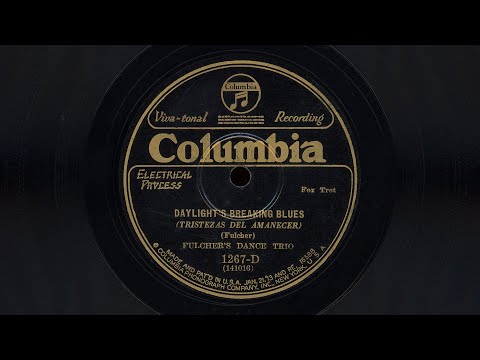
Charles C. Fulcher was a talented jazz musician, composer, and bandleader who led his own orchestra based in Georgia.
This recording is of a small trio led by Fulcher performing two of his original compositions. Fulcher plays multiple instruments accompanied by an unknown pianist and banjo player. It’s cool to hear him seamlessly moving from instrument to instrument throughout the performance!
Recorded in Atlanta, Georgia on September 30, 1925. Released as Columbia 1267-D.
An American in Paris: here’s jazz royalty that many in the U.S. might not know about. Freddy Taylor was a New Yorker who performed at the Cotton Club in Harlem in the early 1930s before going to Europe with the Lucky Millinder Orchestra in 1933, where he stayed to start his own band. He became known there as “the Baron of Swing”. He and his “Swing Men from Harlem” recorded two sessions in Paris – the first of which is represented by the two sides of this record: “Blue Drag” and “Viper’s Dream”.
The four recordings at the second session (where guitarist Oscar Alemán was replaced by Django Reinhardt) were unissued on 78 rpm. No U.S. issue of Taylor’s work as a bandleader was ever pressed on 78 rpm – though he does appear as a vocalist on a few Quintette of the Hot Club of France sides for Victor (25511, 26506, and disc 40-0122 from an album in the Hot Jazz series).
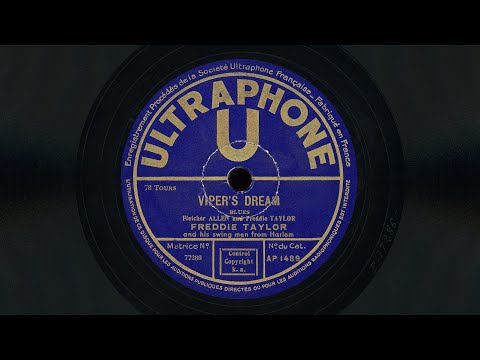
“Viper’s Dream” has a similarly chill vibe to “Blue Drag”, befitting its topic. It swings along at a trot – taking its time and never rushing lines. The primary soloist is Fletcher Allen on tenor – but we also hear brief imagistic interludes where pianist John Ferrier and drummer William Diemer are showcased.
This original composition by Taylor and reedman Fletcher Allen was recorded by Django Reinhardt and the Quintette of the Hot Club of France two years later in 1937 – and that is how most jazz fans might know of this tune.
This very clean Ultraphone U made for a very nice transfer.
Recorded in Paris, France in March 1935. Released as Ultraphone U AP 1489 (Mx. 77285).
Credits: Freddy Taylor – trumpet, vocals Charlie Johnson – trumpet Arthur “Chester” Lanier – clarinet, alto sax, baritone sax Fletcher Allen – clarinet, tenor sax, arranger John Ferrier – piano Oscar Alemán – guitar Eugene d’Hellemmes – string bass William Diemer – drums
An American in Paris: here’s jazz royalty that many in the U.S. might not know about. Freddy Taylor was a New Yorker who performed at the Cotton Club in Harlem in the early 1930s before going to Europe with the Lucky Millinder Orchestra in 1933, where he stayed to start his own band. He became known there as “the Baron of Swing”. He and his “Swing Men from Harlem” recorded two sessions in Paris – the first of which is represented by the two sides of this record: “Blue Drag” and “Viper’s Dream”.
The four recordings at the second session (where guitarist Oscar Alemán was replaced by Django Reinhardt) were unissued on 78 rpm. No U.S. issue of Taylor’s work as a bandleader was ever pressed on 78 rpm – though he does appear as a vocalist on a few Quintette of the Hot Club of France sides for Victor (25511, 26506, and disc 40-0122 from an album in the Hot Jazz series).
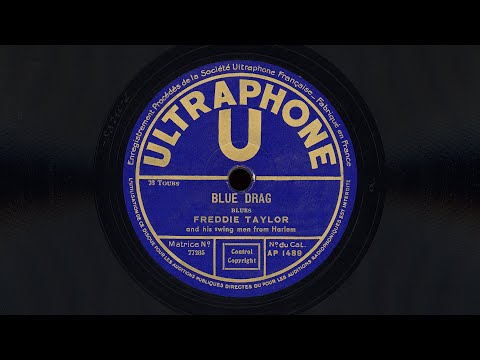
“Blue Drag” comes out swinging, with a solid but laid back groove – as Freddy sings: “it’s got that new lazy swing”. Freddie Taylor sings a few more lines about “that low down blue drag” before we hear a sax solo followed by a trumpet solo that takes us back into that “new crazy swing” groove.
This very clean Ultraphone U made for a very nice transfer.
Recorded in Paris, France in March 1935. Released as Ultraphone AP 1489 (Mx. 77285).
Credits: Freddy Taylor – trumpet, vocals Charlie Johnson – trumpet Arthur “Chester” Lanier – clarinet, alto sax, baritone sax Fletcher Allen – clarinet, tenor sax, arranger John Ferrier – piano Oscar Alemán – guitar Eugene d’Hellemmes – string bass William Diemer – drums
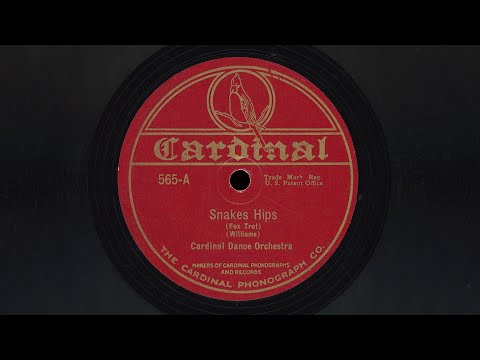
Here’s a label you don’t see every day – the NYC-based Cardinal label.
The label was only active from 1921 – 1924. Like several labels at the time, Cardinal made its own line of phonographs and started a label to make records to sell with its machines. Cardinal did not have its own studio and leased its masters from various sources, including from the Clarion, Black Swan, Paramount, and Gennett labels.
Here we have Gennett artists Bailey’s Lucky Seven performing the Spencer Williams tune “Snakes Hips” under the pseudonym “Cardinal Dance Orchestra”.
Recorded in New York City on March 19, 1923. Released as Cardinal 565 (mx. 8285C) Originally released as Gennett 5110.
Credits: Phil Napoleon, Jules Levy, Jr. – trumpet Charlie Panelli (?) – trombone Jimmy Lytell – clarinet, alto sax Benny Krueger – alto sax Nick Lucas (?) – banjo Jack Roth – drums
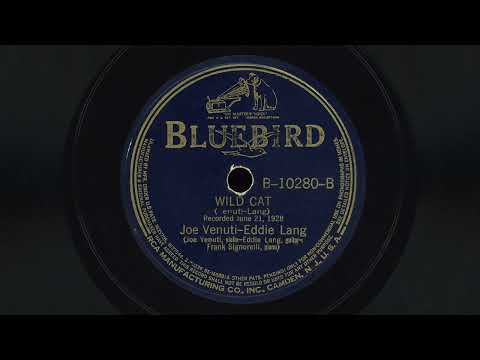
Here is the third version of “Wild Cat” released on 78 rpm: Take 1 from the 1928 session.
Take 3 was released on the Victor label that same year, but take 1 was held back until it was reissued on Victor’s Bluebird label in the late 1930s. This issue was pressed at some point between Fall 1938 and Fall 1943. Take 2 was never issued on 78 rpm, but does appear on a 10″ vinyl EP issued in the 1950s.
You can hear stylistic differences in this take – such as the way Venuti emphasizes a passage in his solo by making the bow pleasantly distort a bit (for example, from 0:23-0:25) – but in much of the tune, Venuti is largely inventive with his improvisation and you hear him play through different changes with entirely fresh and lively approaches.
Interesting to note the writer credit on this pressing omits the “V” from Venuti’s name. At first I thought maybe it smudged off somehow but other copies I’ve run across have this same typo.
Recorded in New York City on June 21, 1928. Released as Bluebird B-10280.
Credits: Joe Venuti- violin Eddie Lang – guitar Frank Signorelli – piano
Here are two other versions of this tune for comparison:
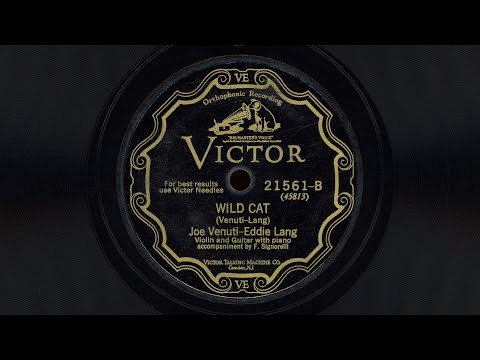
Nearly 18 months after first recording “Wild Cat” for Okeh as a duo in early 1927, Venuti and Lang recorded it again for Victor.
It is an interesting comparison to listen to – as it demonstrates a couple of interesting things. Firstly, this performance is noticeably faster and more fluid – you hear how these two greats have gotten very comfortable playing with one another. Where the Okeh recording could feel a bit tentative at times, the Victor leaps forward with a vibrant confidence.
Secondly, you really hear the sound quality difference between the Okeh session and Victor session in these early days of electric recording. The Victor recording sounds cleaner and the three instruments are mixed well. Eddie’s guitar is bright and present where on the Okeh recording it was a little muddy and hollow.
Both great performances in their own right – but the Victor really lives up to its name in this match-up!
Recorded in New York City on June 21, 1928. Released as Victor 21561.
Credits: Joe Venuti- violin Eddie Lang – guitar Frank Signorelli – piano
Here are two other recorded versions of this tune for comparison:
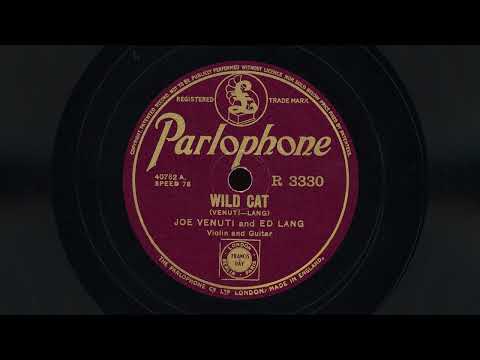
A very early recording featuring the dynamic duo of guitarist Eddie Lang and violinist Joe Venuti. By my count, this was only their second record as a pair, following the 1926 release of “Stringing the Blues / Black and Blue Bottom” on Columbia.
While their playing here – as ever – is near faultless, I hear a slight tentative quality as they get into the tune – which improves as they warm up. While these two men had been playing together in Roger Wolfe Kahn’s band throughout 1926, playing as a duet without an orchestra’s support is certainly a different context.
Venuti and Lang today are unfortunately not as well known as they should be. When lists of jazz guitar greats are compiled, you’ll more likely hear names like Django Reinhardt and Charlie Christian than Eddie Lang. However – worthy of note – Lang preceded their careers by a good decade or more.
I thought this record would be a good starting point – and posting two subsequent versions of this same tune that they re-recorded 18 months later is a fascinating way to hear the transformation they made over this same period.
Recorded in New York City on January 24, 1927. Released in the U.K. as Parlophone R 3330. Released domestically as Okeh 40762.
Credits: Joe Venuti – violin Eddie Lang – guitar
Here are two later versions of this tune for comparison:
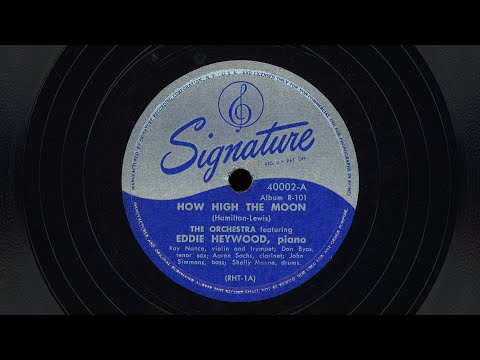
I found a post-war album set called “Eddie Heywood on the 88” and, (embarrassingly) not recognizing the name at first, assumed it was a popular pianist a la Eddie Duchin sort of record and put it in the sell pile. Recently I got it out and took a closer look – seeing Ray Nance and Johnny Hodges in the credits immediately piqued my interest. As I was in the middle of learning “How High The Moon” on guitar, I put this one on.
Nance’s violin starts us out with the pleasant melody – and by the time Heywood is set to go, he is literally chomping at the keys. Aaron Sachs jumps in on clarinet followed by Nance again (on trumpet now!). Don Byas takes us out, sounding decidedly more modern and giving us a taste of the bop he had been woodshedding with Coleman Hawkins, Bird, and Diz on 52nd St.
Heywood’s pops (Heywood Sr.), it turns out – was a jazz pianist going way back – playing with artists like Mamie Smith, Sara Martin, Wilton Crawley, George McClennon, and Lucille Bogan for Okeh in the early 1920s. Heywood Jr. got his start playing with Benny Carter in the late 30s
The Signature label was started by Bob Thiele, an avid jazz enthusiast, in the early 1940s. Their early releases were full of jazz artists like Coleman Hawkins, Meade Lux Lewis, and James P. Johnson. Kind of reminds me of the type of stuff early Blue Note put out. Signature even went a step further and even reissued old jazz and blues classics from King Oliver, Ida Cox, Will Ezell, and Henry Brown.
Unfortunately, poor sales led the Signature label to abandon jazz in early 1947 in favor of popular vocalists and orchestras. This didn’t help matters – and the label ran aground in the late 40s. It was revived a few times over subsequent decades.
Recorded in New York City on May 2, 1944. Released as Signature 40002 as part of the 12″ album “Heywood on the 88” (Signature R-101).
Credits: Eddie Heywood – piano Ray Nance – violin, trumpet Don Byas – tenor sax Aaron Sachs – clarinet John Simmons – string bass Shelly Manne – drums
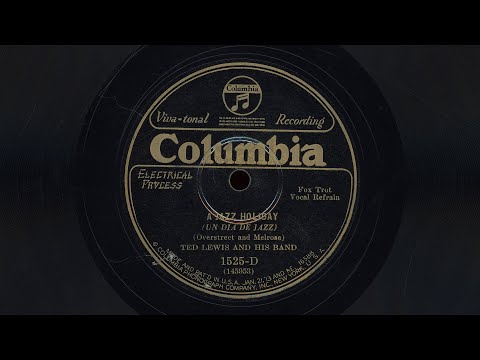
Have a jazzy holiday courtesy of Ted Lewis and his Band.
Recorded in New York City on April 3, 1928. Released as Columbia 1525-D.
Credits: Ted Lewis – clarinet, alto sax, director, vocals Walter Kahn, Dave Klein – cornet Don Murray – clarinet, alto sax, tenor sax, baritone sax George Brunies – trombone Sol Shapiro – violin Tony Gerhardi – banjo Frank Ross – piano Harry Barth – tuba John Lucas – drums