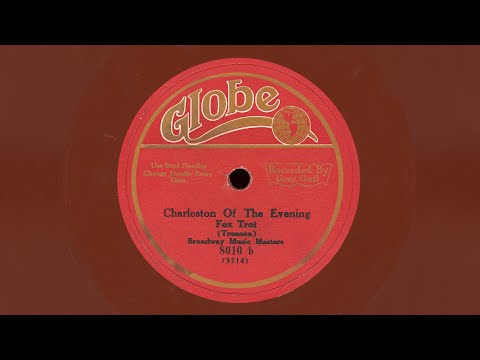
At first I assumed the Broadway Music Masters must be a Grey Gull studio band – but upon further research, it appears to be a pseudonym for Nathan Glantz and his Orchestra from an Emerson session for their 3000 series in 1925.
These later Emerson recordings were released on the Grey Gull family of labels through mid-1926, as they were opening the Grey Gull studio with Fred Hall as their musical director.
This release does not appear in either of Brian Rust’s comprehensive discographies that cover Jazz and Dance Band records – however, it can be found in Allan Sutton’s Emerson Records: The Complete Discography. A full breakdown of personnel for this session also appears in the excellent Jack Stillman: An Annotated Discography, by Javier Soria Laso and Andrew Jon Sammut.
As such, we have here a hot dance number that capitalized on the Charleston dance craze of the 1920s. I found that it needed to be pitched slightly slower than 78 rpm to sound in tune to my non-golden ears – Let me know what you think.
Recorded in New York City on August 16, 1925. Released as Globe 8010 (mx 3714). This appears to be take 2. Also released as Grey Gull 1311, Radeix 1311, Madison 8010, National Music Lovers 1122, and Supreme 1311.
Credits: Nathan Glantz – alto sax, director Jack Stillman, unknown artist – trumpet Eph Hannaford – trombone Larry Abbott – clarinet, alto sax William Perry – piano John Cali – banjo John Helleberg Jr. – tuba
Thanks very much to Javier Soria Laso for reaching out to help with this information!
The pre-Cotton Club Duke Ellington orchestra in a relatively early recording made at the same Columbia session where “East St. Louis Toodle-Oo” and “Hop Head” were cut.
Later in 1927, the band would get the gig that made their fortune – a steady headlining gig at the Cotton Club in Harlem.
The name “Washingtonians” was often used in the early days as Ellington (along with Hardwick and Greer) had moved to NYC in 1922 from Washington D.C. The band that has become so associated with the NYC jazz scene in the 20s and 30s at Harlem’s premier jazz club were out-of-towner Washingtonians!
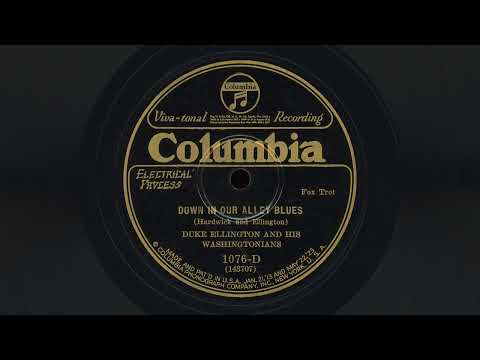
“Down in our Alley Blues” gets off with a bang – with a short syncopated percussive intro – Sonny Greer’s cymbals are heard very clearly and articulately throughout due to the relatively new electric recording technology used.
Starting at 1:46 we get to hear a piano solo by the Duke himself.
I was lucky enough to get a very clean copy of this one a few years ago and am just now getting around to making a transfer. I’ll also be posting the flip side by the Charleston Chasers – which is also very good – in the near future.
Enjoy!
Recorded in New York City on March 22, 1927. Released as Columbia 1076-D.
Credits: Duke Ellington- piano, arranger, director Bubber Miley, Louis Metcalf – trumpet Joe Nanton – trombone Otto Hardwick – soprano sax, alto sax, baritone sax Prince Robinson (?) (and another ?) – clarinet, tenor sax Fred Guy – banjo Henry Edwards – tuba Sonny Greer – drums
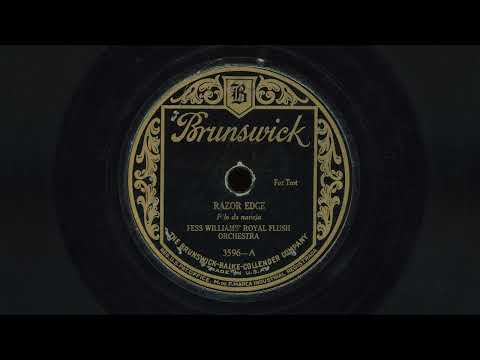
Another request – this time from a friend on TikTok – “Razor Edge” by Fess WIlliams’ Royal Flush Orchestra.
This one is a bit beat but I found it in the wild here in Iowa. It was part of a small collection of Brunswick inventory that were found in the basement of a drugstore near Oskaloosa, Iowa. I later found that this building had been a phonograph dealer back in the late 20s. Mostly electric dance band Brunswicks – mostly in great shape and some even still in dealer sleeves. Unfortunately they suffered some heat damage over the years.
This one was pretty well played and scuffed up – but it was the first Fess Williams record in my collection so there’s some sentimental value there!
I was just reading a passage in “Hear Me Talkin’ To Ya” where Duke Ellington was talking about the scene in Harlem in the early 20s. Duke said, “The earliest bands I can remember (about 1923) were those of Fess Williams, Wilbur Sweatman, Jack Hatton the trumpet-player, and the famous trumpeter, Johnny Dunn… There were many colorful hot spots scattered about Harlem, and no curfew to dampen the spirits or curtail early morning activities.”
Duke wasn’t kidding – in another passage, Lloyd Scott tells of the extraordinary battles of music that would sometimes go on at Harlem clubs – sometimes between as many as eight different bands. Scott said, “These battles were fiercely contested affairs for much prestige was at stake. Bands would have extensive preparation ahead of time for the largest of these battles and would fire their best in the way of arrangements at one another. One particularly brutal one was a victory over three bands – Fess Williams, Cab Calloway, and Fletcher Henderson. Our winning was clear cut but only after an all-night struggle which ended at seven o’clock Sunday morning.”
We can only imagine the intensity of those battles – and listen to this tune and wonder how much hotter Fess Williams might have played this number in the heat of battle in the early morning hours all those years ago.
Recorded in New York City on June 24, 1927. Released as Brunswick 3596.
Credits Fess Williams – clarinet, alto sax, director, arranger George Temple, Kenneth Roane – trumpet David “Jelly” James – trombone Otto Mikell – alto sax Perry Smith – clarinet, tenor sax Henry Duncan – piano Ollie Blackwell – banjo Clinton Walker – tuba Ralph Bedell – drums
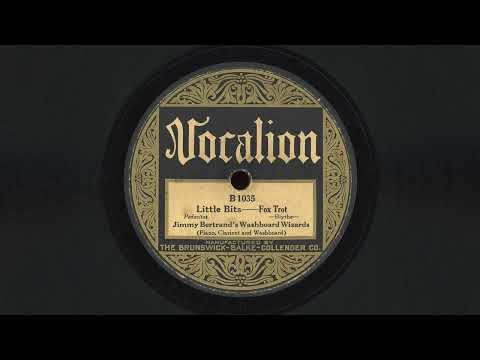
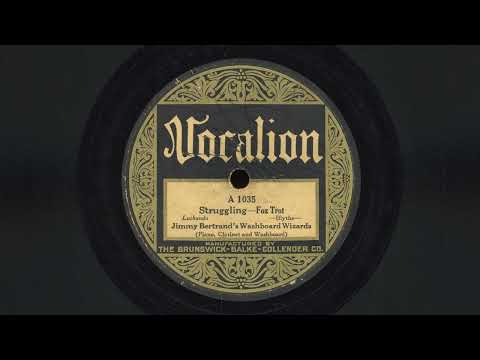
An early issue on the Vocalion 1000 race series – the first record by a trio led by drummer Jimmy Bertrand – who most famously was a member of Erskine Tate’s Vendome Orchestra in Chicago.
On this pleasant number, we hear Bertrand on the washboard and wood blocks – while clarinetist Junie Cobb lays down some truth accompanied by Jimmy Blythe on piano. The tune, “Struggling” is credited to Blythe.
Recorded in Chicago, Illinois on May 29, 1926. Released as Vocalion 1035
Credits: Junie Cobb – clarinet Jimmy Blythe – piano Jimmy Bertrand – washboard, blocks
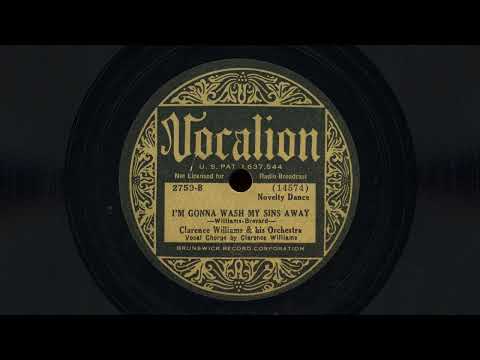
A laid back little gem written by Clarence Williams and performed with many of his longtime washboard bandmates and collaborators: Ed Allen, Cecil Scott, Floyd Casey, and Cyrus St. Clair – along with guitarist Roy Smeck.
While the vibe is mellow – it’s rich with a melancholy optimism.
“I’m going down to that river about the break of the day ‘Cause I’m feeling kind of low down Gonna wash all my sins away!
Goodbye you wicked sinners I’m through messin’ around Y’all had better get ready I’m Hallalujah bound!
Brothers I’m through Sinnin’ like you I’m bound for the promised land If you agree with what I say Then let me see your right hand
Goodbye you old backsliders I don’t care what you say about me going down to that river washing my sins away.”
After I first heard this tune, I found myself humming the melody for the rest of the day. It’s a reminder of how great a songwriter Williams was.
Recorded in New York City on January 10, 1934. Released as Vocalion 2759.
Credits: Ed Allen – cornet Cecil Scott – clarinet Clarence Williams – piano, vocals Roy Smeck – guitar Cyrus St. Clair – tuba Floyd Casey – washboard
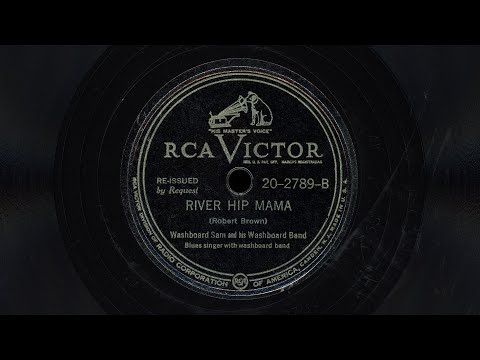
Here’s a fun Washboard Sam tune to take us into the weekend – and one that sounds ahead of its time in many ways.
“Men’s all crazy ’bout her She make them whine and cry She’s a river hip mama and they all wanna be baptized”.
Born as Robert Clifford Brown, Washboard Sam began performing in Memphis in the 1920s, before moving to Chicago in the 1930s, where he made many popular recordings. This session took place just a few months before the musician’s strike that began in August of 1942 and lasted over two years.
Recorded in Chicago, Illinois on February 10, 1942. Released as RCA Victor 20-2789 (“Re-Issued By Request”) Originally released as Bluebird B-9039.
Credits: Washboard Sam – washboard, vocals Big Bill Broonzy – guitar Roosevelt Sykes – piano Frank Owens – alto sax
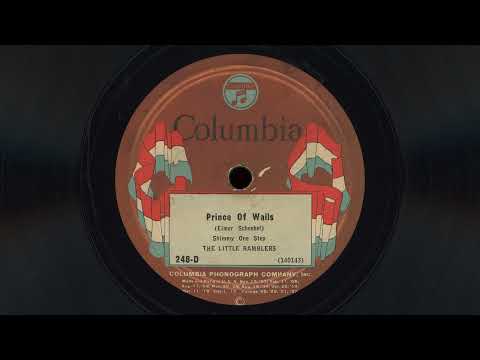
While working on the transfer of this Little Ramblers record, I noticed that it was recorded exactly 100 years ago today!
The Little Ramblers was a small combo made up of members of the California Ramblers. This “band within a band” was one of many that the Ramblers and manager Ed Kirkleby cooked up to record more records for more labels without breaking any contract agreements. The Little Ramblers, the Vagabonds, the Goofus Five, the Five Birmingham Babies and the Kentucky Blowers In the last six months of 1924 collectively made more records in total than the California Ramblers did!
The offshoot bands often played hotter and were jazzier. On this Elmer Schoebel tune, the gang lets loose with “wailing” solos – getting progressively more heated until the frantic ensemble-driven climax.
Recorded in New York City on November 14, 1924. Released as Columbia 248-D.
Credits: Bill Moore – trumpet Bobby Davis – clarinet, soprano sax, alto sax Adrian Rollini – bass sax Irving Brodsky – piano Tommy Felline – banjo Stan King – drums, kazoo
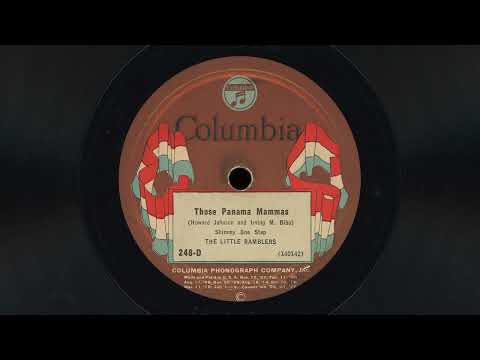
While working on the transfer of this Little Ramblers record, I noticed that it was recorded exactly 100 years ago today!
The Little Ramblers was a small combo made up of members of the California Ramblers. This “band within a band” was one of many that the Ramblers and manager Ed Kirkleby cooked up to record more records for more labels without breaking any contract agreements. The Little Ramblers, the Vagabonds, the Goofus Five, the Five Birmingham Babies and the Kentucky Blowers In the last six months of 1924 collectively made more records in total than the California Ramblers did!
The offshoot bands often played hotter and were jazzier. Of this recording, Ate Van Delden writes (in his biography of Adrian Rollini): “It shows that the group had fully mastered playing at breakneck speed and all the soloists had developed into jazz men.”
Recorded in New York City on November 14, 1924. Released as Columbia 248-D.
Credits: Bill Moore – trumpet Bobby Davis – clarinet, soprano sax, alto sax Adrian Rollini – bass sax Irving Brodsky – piano Tommy Felline – banjo Stan King – drums, kazoo