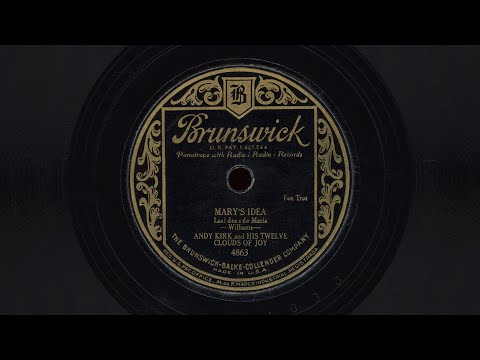
“Mary’s Idea” is an invigorating Mary Lou Williams composition performed by the Kansas City-based Andy Kirk and his Twelve Clouds of Joy. This session finds the band coming off a long series of engagements out East at the Roseland Ballroom. Savoy Ballroom and Apollo Theater. They sound super tight and they fly through this unique proto-swing arrangement like a well-oiled machine.
Lots of brief beautiful moments of inspired solos throughout – though curiously, the composer herself does not take a piano solo.
Recorded in Chicago, Illinois on May 1, 1930. Released as Brunswick 4863.
Credits: Andy Kirk – director, bass sax, tuba Edgar Battle, Harry Lawson – trumpet Allen Durham – trombone John Harrington – clarinet, alto sax John Williams – alto sax, baritone sax Lawrence Freeman – tenor sax Claude Williams – violin Mary Lou Williams – piano, arranger William Dirvin – guitar Edward McNeil – drums
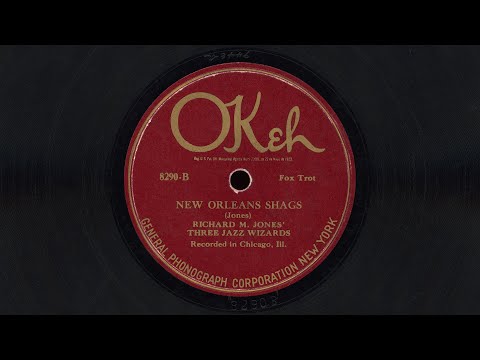
One of Richard M. Jones’ first group outings under his own name, this early Okeh is a lovely small combo blues number featuring clarinetist Albert Nicholas and banjo player Johnny St. Cyr.
Recorded in Chicago, Illinois on November 6, 1925. Released as Okeh 8290
Credits: Albert Nicholas – clarinet Richard M. Jones – piano Johnny St. Cyr – banjo
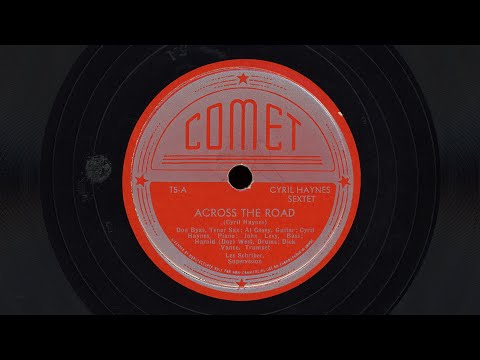
Cyril Haynes was a New York pianist who played with Billy Hicks, Al Cooper’s Savoy Sultans, Sidney and Wilbur De Paris, and Roy Eldridge in the late 30s and early 40s before recording four 12″ sides for Comet under his own name as bandleader.
This self-penned tune, “Across the Road” has a catchy head and peppy vibe. Haynes gets some time to showcase his piano chops at the 0:34 mark, followed by an extensive 64 bar solo by tenor sax player Don Byas. Byas – who in 1944 head been playing extensively with the bebop crowd – showcases some of his bop-infused credentials without ever losing the swingin’ feel of this tune.
The extra playing time of a 12″ 78 gives the soloists a chance to spread out – and they take full advantage. Dick Vance takes 32 bars on trumpet, followed by 32 bars of Al Casey on guitar – who was voted best guitarist in Esquire magazine that same year.
All told, it’s a great record full of unsung heroes who deserve to be heard again. Take a listen and see what you think.
Though you can hear the typical Comet graininess due to lower quality WWII-era shellac composition, this copy is in good enough shape that after a while you forget about it.
Recorded in New York City in late 1944. Released in July, 1945 as Comet T5.
Credits: Cyril Haynes – director, piano Don Byas – tenor sax Dick Vance – trumpet Al Casey – guitar John Levy – bass Harold (Doc) West – drums
Ain’t no jazz as immediately gratifying as washboard jazz. From the first washboard skritches in the intro, you’ll find your toes tapping and body instinctually responding to the infectious rhythms and melodies.
“Folks in Georgia’s ’bout to go insane Since that new dance down in Georgia came.”
This hot lil’ instrumental number features great solo and ensemble performances in a small combo setting made up of members who would later become Johnny Dodd’s Washboard Band. Let’s not spoil the fun by talking about it – just listen and enjoy!
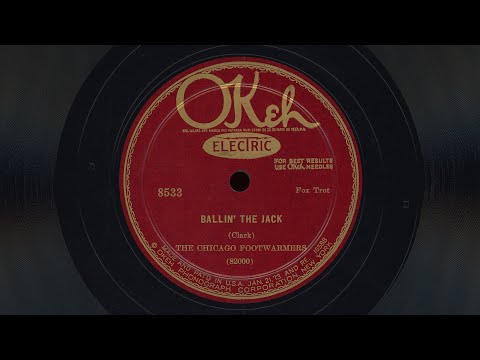
Ballin’ The Jack is an older song – first published in 1913. It was composed by Chris Smith and James Reece Europe, with lyrics by songwriter James Henry Burris. The tune was first recorded by Prince’s Band (for Columbia), National Promenade Band (for Edison) and the Victor Military Band (for Victor) in 1914. I even have an abbreviated version on the Little Wonder label from 1915!
Oddly, while Europe was credited on the Victor label in 1914 – he was not credited on the Columbia release or in the sheet music published in 1913 by Smith Burris Music Company. Here, the Okeh label misattributes songwriting credits to “Clark” – perhaps a reference to Tin Pan Alley composer Grant Clarke?
The phrase comes from the railroad industry. The Jack is a locomotive, and ballin’ the jack means running that locomotive at high speed. In the context of this song, Ballin’ the Jack is a new dance – said to be similar to the shimmy. The lyrics give us a clue as to how the dance was done:
“First you put your two knees close up tight, Then you sway ’em to the left, Then you sway ’em to the right, Step around the floor kind of nice and light, Then you twist around and twist around with all your might, Stretch your lovin’ arms straight out in space, Then you do the Eagle Rock with style and grace. Swing your foot way ’round then bring it back, Now that’s what I call ‘Ballin’ the Jack’.”
Recorded in Chicago, Illinois on December 3, 1927. Released as Okeh 8533.
Credits: Natty Dominique – cornet Johnny Dodds – clarinet Jimmy Blythe – piano Baby Dodds – washboard
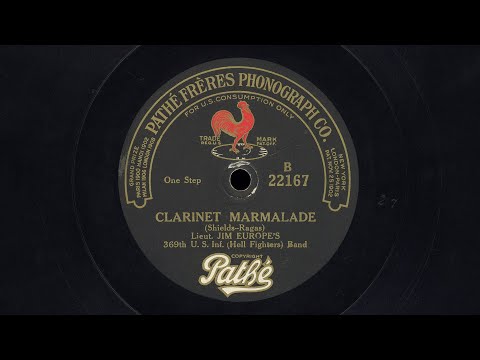
It’s Monday – and we need a rousing tune to start off the week! Here’s James Reece Europe’s legendary Hell Fighters band performing their version of “Clarinet Marmalade” – written by clarinetist Larry Shields and pianist H. W. Ragas of the Original Dixieland Jazz Band a year earlier.
Europe was on a real high point in his career – recording prolifically and touring the country. Tragically, two days after this recording was made he was stabbed in the neck by a drummer in the band who he had an argument with during intermission of a concert in Boston. He was taken to the hospital and died shortly thereafter. After his death, he was given a public funeral in New York City and was buried at Arlington National Cemetery.
These vertical-cut Pathé discs are a bit tricky to transfer – I have a rewired cartridge to play vertical cut records but using it also means it basically functions as a mono cartridge, and I can’t get the noise reduction that I get when transferring 78s with a stereo cart and summing the two channels to mono. The playback speed of this one was much higher than 78 rpm – to get in tune it was playing at just under 84 rpm. EQ was by ear, as I don’t have curves for Pathé. Hopefully it sounds as good to your ears as it does to mine!
Recorded in New York City circa May 7, 1919. Released as Pathé 22167. Also released as Pathé Actuelle 020928 and Perfect 14110.
Credits: James Reese Europe – director Probably including: Frank De Braithe (or De Broite), Russell Smith, Pops Foster (not the well-known bassist), Jake Porter – trumpet Dope Andrews, Herb Flemming – trombone Pinkhead Parker – alto sax Noble Sissle – violin Battle Ax Kenny – drums
California Ramblers put out hundreds of records under a smokescreen of pseudonyms across a wide spectrum of labels. But their primary label from late 1923 onward under the California Ramblers moniker was Columbia.
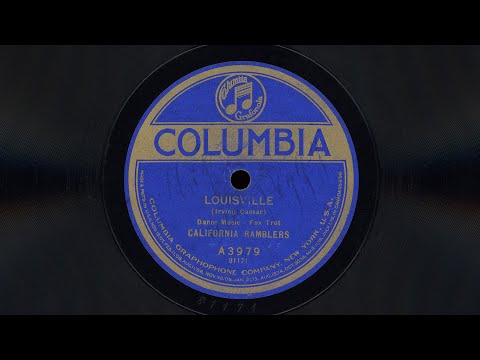
While they recorded a few sides with Columbia in 1922, the relationship came to a head in the summer of 1923, when the Ramblers recorded five sessions for Columbia that resulted in seven sides that sold quite well – including this one, an energetic arrangement of Irving Caesar’s “Louisville”.
It features fine ensemble playing and solos – including some doo-wacka-doo-ing starting at 1:08, punctuated by Adrian Rollini’s hot breaks on the bass sax.
Based on the success of these records, in November of 1923, Ed Kirkleby signed an exclusive artist agreement with Columbia on behalf of the Ramblers. After this agreement, only Columbia could use the name “California Ramblers”. While they could record for other labels – they just could not use that name.
Recorded in New York City on August 8, 1923. Released as Columbia A3979.
Credits: Arthur Hand – violin, director Frank Cush, Bill Moore – trumpet Lloyd “Ole” Olsen – trombone Bobby Davis – clarinet, soprano sax, alto sax Arnold Brilhart – clarinet, alto sax Freddy Cusick – tenor sax Adrian Rollini – bass sax Ed Sutton, Joe LaFaro, Sid Harris – violin (when used) Irving Brodsky – piano, arranger Ray Kitchingman – banjo Stan King – drums
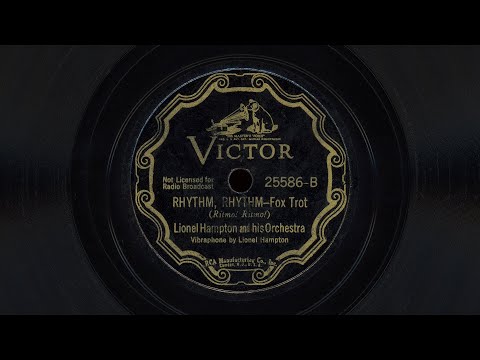
Gosh, it sure sounds like this contrafact of Gershwin’s “I Got Rhythm” is foreshadowing the bebop sensibility! I feel Hamp often gets overlooked in jazz history – he really was a force of nature!
His career took off in 1936 after becoming part of Benny Goodman’s small combo with Gene Krupa and Teddy Wilson – and in 1937 he was invited by Victor to record under his own name. This tune is from his third session for Victor in 1937.
Hamp and an incredible lineup of jazz talent drives this tune home – fueled by the rhythm section of Cozy Cole, John Kirby, and Allan Reuss. Buster Bailey and Johnny Hodges dance around one another for a bit leading into a line of extended solos.
While most 78 collectors know about the Iowa-based Claxtonola label, there was a lesser-known second Iowa label that also pressed records using licensed masters from Paramount.
The National label pressed records from 1922-23, including records by many jazz artists such as Jelly Roll Morton, Perry Bradford, Fletcher Henderson, Lucille Hegamin, and others. For me, finding a Claxtonola or a National record is always exciting – and has just as much (if not more) of a thrill as finding an original Paramount.
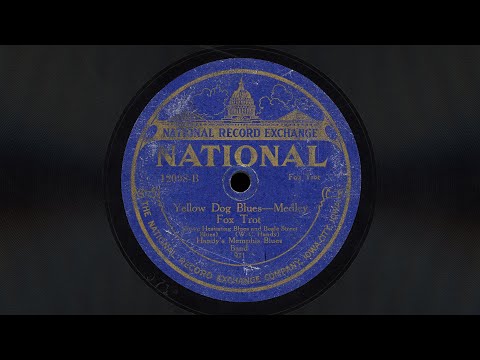
Here we have the legendary W. C. Handy leading his Memphis Blues Band performing “Yellow Dog Blues”, an original Handy composition. It is labeled as a medley, and includes snippets of two of his other compositions: “Beale Street Blues” and “Hesitating Blues”.
I’ve listened to a lot of Handy’s earlier Columbia output – and this recording seems to my ears to be of a higher caliber, despite the record itself not being in top shape.
Recorded in New York City in January, 1922. Released as National 12098. Original release: Paramount 20098.
While most 78 collectors know about the Iowa-based Claxtonola label, there was a lesser-known second Iowa label that also pressed records using licensed masters from Paramount.
The National label pressed records from 1922-23, including records by many jazz artists such as Jelly Roll Morton, Perry Bradford, Fletcher Henderson, Lucille Hegamin, and others. For me, finding a Claxtonola or a National record is always exciting – and has just as much (if not more) of a thrill as finding an original Paramount.
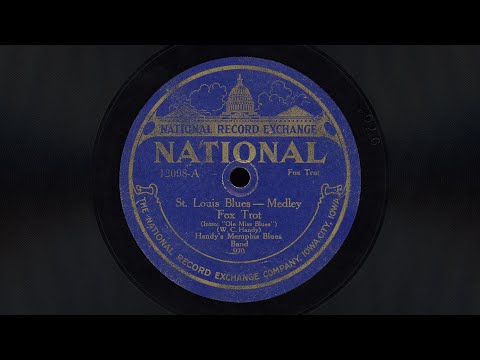
Here we have the legendary W. C. Handy leading his Memphis Blues Band performing “St. Louis Blues”, Handy’s most popular and successful composition. It is labeled as a medley, as it begins with a quick take on the “Ole Miss Blues” before segueing into the main attraction.
I’ve listened to a lot of Handy’s earlier Columbia output – and this recording seems to my ears to be of a higher caliber, despite the record itself not being in top shape.
Recorded in New York City in January, 1922. Released as National 12098. Original release: Paramount 20098.
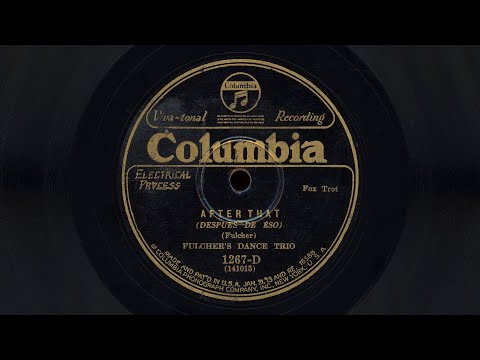
Charles C. Fulcher was a talented jazz musician, composer, and bandleader who led his own orchestra based in Georgia.
This recording is of a small trio led by Fulcher performing two of his original compositions. Fulcher plays multiple instruments accompanied by an unknown pianist and banjo player. It’s cool to hear him seamlessly moving from instrument to instrument throughout the performance!
Recorded in Atlanta, Georgia on September 30, 1925. Released as Columbia 1267-D.