Jazz Crazy Records

An Archive of Early Jazz on 78 RPM

Category: Jazz

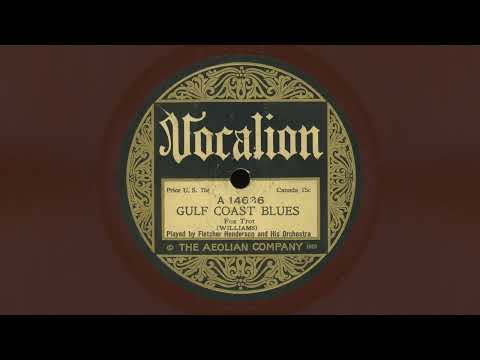
  • “Gulf Coast Blues” – Fletcher Henderson and his Orchestra (1923)

    “Gulf Coast Blues” – Fletcher Henderson and his Orchestra (1923)

    “Gulf Coast Blues” was recorded several times by the Henderson band. The first was on May 16 as Henderson’s Hot Six in a rejected session for Columbia. The same week, a session for Paramount yielded another version that was also released on Puritan, Famous, and Harmograph. Next up was a session for Pathé Actuelle in early June that was also released on Perfect. On June 7, a session for Columbia resulted in another version.

    This session for Vocalion was the 5th and last recording of “Gulf Coast Blues” by the Henderson orchestra. The session produced two takes (11662 and 11663), both of which were issued.

    On this tune we hear some excellent early bass sax playing by Billy Fowler (?), along with a showcase of Don Redman on clarinet and alto sax and Elmer Chambers on cornet. The tune lives up to its name and with each chorus the playing seems to get progressively bluesier.

    Recorded in New York City circa June 25, 1923.
    Released as Vocalion 14636.

    Fletcher Henderson – piano, arranger, director
    Elmer Chambers – cornet
    Teddy Nixon – trombone
    Don Redman – clarinet, alto sax
    Billy Fowler (?) – tenor sax, bass sax
    Charlie Dixon – banjo
  • “You’se A Viper” – Stuff Smith and his Onyx Club Boys (1936)

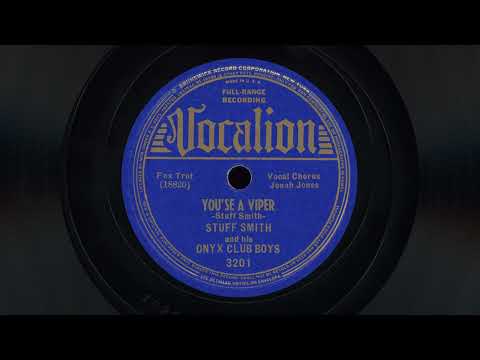
    “You’se A Viper” – Stuff Smith and his Onyx Club Boys (1936)

    I’ve been meaning to post this one on 4-20 for the past two years but this is a busy time of year for me and I always don’t get to it in time. This year – I’m scheduling it ahead of time to make sure it gets posted!

    Dedicated to all youse vipers out there – jazz violinist Stuff Smith and his Onyx Club Boys perform the reefer anthem “You’se A Viper” with Jonah Jones taking lead vocals.

    Recorded in New York, March 13, 1936.
    Released as Vocalion 3201.

    Credits
    Jonah Jones – trumpet, vocals
    Stuff Smith – violin, vocals
    James Sherman – piano
    Bobby Bennett – guitar
    Mack Walker – bass
    Cozy Cole – drums

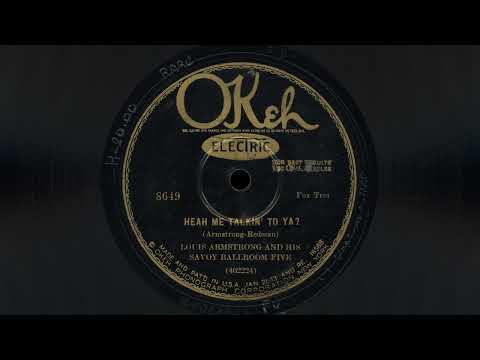
  • “Heah Me Talkin’ To Ya?” – Louis Armstrong and his Savoy Ballroom Five (1928)

    “Heah Me Talkin’ To Ya?” – Louis Armstrong and his Savoy Ballroom Five (1928)

    I’m out of town this week – but here’s a hot one to tide y’all over.

    “Aw, Heah Me Talkin’ To Ya!” remarks Satch in the first few moments of this 1928 tune featuring members of his Hot Seven – under the moniker of the Savoy Ballroom in Chicago.

    Recorded in Chicago, Illinois on December 12, 1928.
    Released as OKeh 8649.

    Credits
    Louis Armstrong – trumpet, speech
    Fred Robinson – trombone
    Don Redman – clarinet, alto sax
    Jimmy Strong – clarinet, tenor sax
    Earl Hines – piano
    Mancy Cara – banjo
    Zutty Singleton – drums

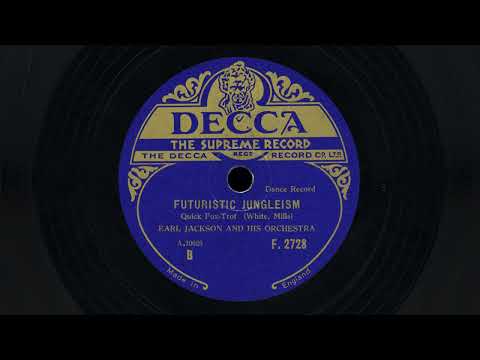
  • “Futuristic Jungleism” – Mills Blue Rhythm Band (1931)

    “Futuristic Jungleism” – Mills Blue Rhythm Band (1931)

    While this label may credit “Earl Jackson and his Orchestra”, this a later U.K. reissue of a deep depression cut from the Mills Blue Rhythm Band.

    Irving Mills began managing the band in 1931 and as a result, they played at the Cotton Club in Harlem where Duke Ellington and Cab Calloway’s bands played (who Mills also managed).

    Many jazz greats played in the Mills Blue Rhythm Band at one time or another throughout their eight year run, including Henry Red Allen, Buster Bailey, Carroll Dickerson, Lucky Millinder, Wilbur de Paris, and Charlie Shavers.

    Let’s admit it, “Futuristic Jungleism” is a super cool name for a song from 1931. Sounds more like a 12″ out of Bristol from 1997 than a 10″ from 1931.

    I’m not completely satisfied with this transfer – while it is supposed to be a master pressing it sounds a little thin and the horns can blare a bit at times. I really had to wrestle with the EQ on this one – and not sure I completely dialed it in. But then again – maybe I’m just suffering from ear fatigue. Let me know how it sounds to you.

    Recorded in New York, May 12, 1931.
    Originally released in the U.S. as Banner 32240, Oriole 2318, Perfect 15505, and Romeo 1690.
    Released in the U.K. as Decca F.2728.

    Credits:
    George Morton – vocals
    Wardell Jones, Shelton Hemphill, Ed Anderson – trumpet
    Harry White, Henry Hicks – trombone
    Charlie Holmes – clarinet, alto sax
    Ted McCord, Castor McCord – clarinet, tenor sax
    Edgar Hayes – piano
    Benny James – banjo
    Hayes Alvis – string bass
    WiIlie Lynch – drums

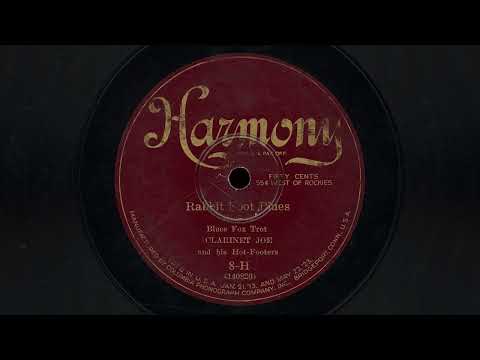
  • “Rabbit Foot Blues” – Clarinet Joe and his Hot-Footers (1925)

    “Rabbit Foot Blues” – Clarinet Joe and his Hot-Footers (1925)

    Apologies in advance for the rough start at the beginning – I think someone tried to play this record with a rusty nail! I lowered the volume a bit at the start so as not to cause undue alarm. It cleans up after a few seconds and after that is fine. Thankfully these laminated Harmony records hold up pretty well.

    Found this one while carefully digging through the vast bins of 78s at Vintage Music Company in Minneapolis. Didn’t recognize the artist but knew it was going to be good! I really love Glascoe’s delightful playing on this disc, joyfully scampering around and never losing steam. There are a few moments of expressionistic gas pipe squeals and stutters that may unhinge the haters, but most of the playing here is fairly straightforward.

    Fowler keeps right up, providing the swingin’ rhythmic drive that propels the clarinet solos forward. Aiding the rhythm section, an unidentified percussionist keeps a steady backbeat.

    Percy Glascoe only put out two records as a soloist (both with Lem Fowler accompaniment) in the summer of 1925. He recorded a few records with Lem Fowler’s Washboard Wonders in 1925-26 and also one record as part of the Jim Dandies in late 1925.

    It would seem Mr. Glascoe fell off the map after 1926 – though newspaper articles place him in Baltimore in 1930 leading a band called “Percy Glascoe’s Plantation Orchestra”. A Baltimore Sun article notes that in a “battle of the bands” event “Percy’s outfit went out with a blare of brass that nearly knocked down music racks. He blasted away with full might.”

    Recorded in New York City on August 8, 1925.
    Released as Harmony 8-H.

    Live West of the Rockies? That’s an extra five cents for you, buddy.

    Credits:
    Percy Glascoe – clarinet
    Lemuel Fowler – piano
    Richard Ward – drums

    There’s a nice writeup on Percy Glascoe and a curious analysis of the song form of this tune at:
    https://www.pointofdeparture.org/archives/PoD-58/PoD58FickleSonance.html

    Read the 1930 Baltimore Sun account of Percy Glascoe’s band:
    https://www.newspapers.com/article/the-baltimore-sun-percy-glascoe-armistic/29397382/

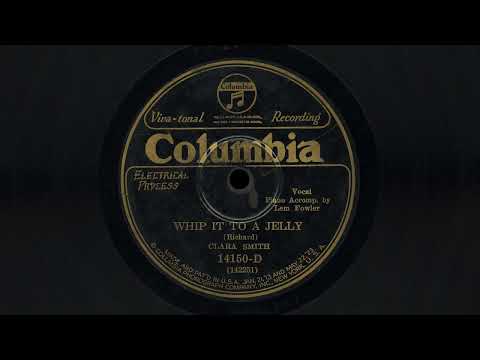
  • “Whip it to a Jelly” – Clara Smith (1926) – Blues Vocal with Lem Fowler on Piano

    “Whip it to a Jelly” – Clara Smith (1926) – Blues Vocal with Lem Fowler on Piano

    One of my favorite Clara Smith songs: “Whip it to a Jelly”

    “Jelly Roll”, among other things, is a jazz-age euphemism for sexual intercourse, and one can imagine what Smith must mean when she sings:

    “Whip it to a Jelly
    and stir it in a bowl
    Now you whip it to a jelly
    if you like good jelly roll.”

    “Whip it to a Jelly” is a slow burner – and Clara is taking her time with this one. Jazzer Lem Fowler is right there with her, whipping up the perfect bluesy piano accompaniment.

    Recorded in New York City on May 25, 1926.
    Released as Columbia 14150-D.

    Credits
    Clara Smith – vocals
    Lemuel Fowler – piano

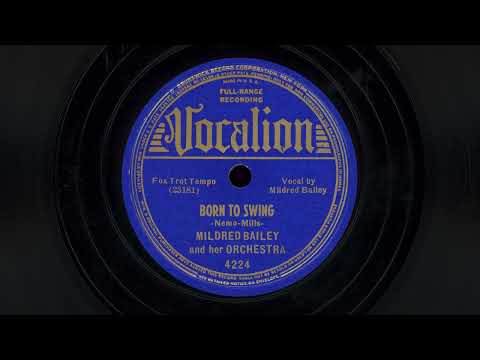
  • “Born to Swing” – Mildred Bailey and her Orchestra (1938)

    “Born to Swing” – Mildred Bailey and her Orchestra (1938)

    Native American jazz artist Mildred Bailey (born Mildred Rinker) was swinging with Rhythm Boys Al Rinker (her brother) and Bing Crosby in Los Angeles in the late 1920s. She found them work when they moved there from Spokane and Crosby returned the favor by introducing her to Paul Whiteman. She was singing with the Paul Whiteman Orchestra, the Casa Loma Orchestra, and Dorsey Brothers Orchestra in the early 1930s.

    In 1933 she married xylophonist Red Norvo and the two formed their own band – which went recorded a steady stream of records with a veritable who’s who of 1930s jazz: Chu Berry, Teddy Wilson, Dick McDonough, Bunny Berigan, Johnny Hodges, Cozy Cole, Roy Eldridge, Zutty Singleton, Edmond Hall, Hank D’Amico, Charlie Shavers, and many others.

    This tune’s a veritable jazz-bo anthem – but it was the flip side, the slower show tune “Small Fry”, that went to number 9 on the charts.

    Recorded in New York City on June 29, 1938.
    Released as Vocalion 4224.

    Credits:
    Mildred Bailey – vocals
    Red Norvo – xylophone, director
    Jimmy Blake, Zeke Zarchey, Barney Zudecoff – trumpet
    Wes Hein – trombone
    Hank d’Amico – clarinet
    Len Goldtstein – alto sax
    Jerry Jerome, Charles Lamphere – tenor sax
    Bill Miller – piano
    Alan Hanlon – guitar
    Pete Peterson – bass
    George Wettling – drums

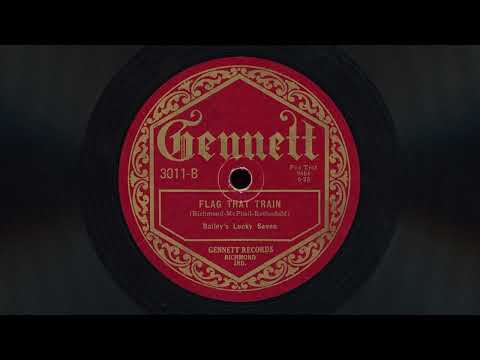
  • “Flag That Train” – Bailey’s Lucky Seven (1925)

    “Flag That Train” – Bailey’s Lucky Seven (1925)

    Some very real=sounding train sound effects start this romp off – which includes peppy ensemble playing by Red & Miff and company. One of many hot sides by this prolific band.

    Recorded in New York City on April 15, 1925.
    Released as red label Gennett 3011 – and also as blue label Gennett 5710.

    Credits:
    Red Nichols, Vic d’Ippolito – trumpet
    Miff Mole – trombone
    Dick Johnson – clarinet, alto sax
    Unknown Artists – piano, banjo, tuba, drums

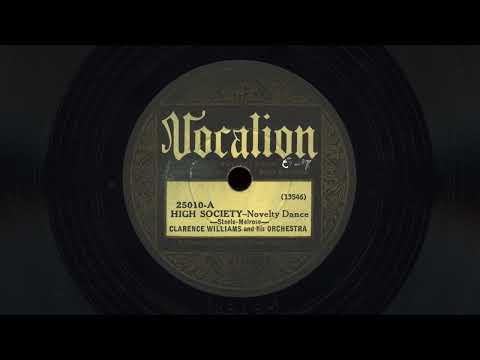
  • “High Society” – Clarence Williams and his Orchestra (1933)

    “High Society” – Clarence Williams and his Orchestra (1933)

    Our final stop on the “High Society” express is a deep depression cut from 1933.

    This version is played in Eb/Bb and has a different arrangement from the 1929 recordings.

    Once again, the identity of the clarinetist is shrouded in mystery and guesses – and we also have a mystery percussionist keeping a steady beat on a bass drum or tom throughout!

    We also notice a curious songwriter credit: “Steele-Melrose” on this composition – which was credited on the 1929 version to A.J. Piron. Record Research #124 contains a history of this song – which was *originally* composed and copyrighted by Porter Steele in 1901. In 1929 Steele neglected to renew his copyright on the work, and it passed into the public domain. A.J. Piron and Clarence Williams – who at the time had a music publishing business – filed copyright on the work on May 13, 1929. Melrose publishing in Chicago created a new arrangement of the work by George Leaman and filed a separate copyright in 1931. Piron and Williams filed an additional copyright on an arrangement of the tune with words on August 13, 1933 – a month after this recording session and ostensibly just before the record was released. Why then, Vocalion chose to credit the song to Steele-Melrose is another mystery.

    Read all about it on page six of Record Research if you want to nerd out completely:
    https://archive.org/details/RecordResearch124/page/n5/mode/2up

    Recorded in New York City on July 14, 1933.
    Released as Vocalion 25010.

    Credits –
    Ed Allen – cornet
    Unknown Artist – clarinet
    Clarence Williams – piano
    Floyd Casey – washboard
    Unknown Artist – bass drum or tom-tom.

    If you liked this one, check out these earlier 1929 versions:

    Okeh 8706 (take A)
    https://youtu.be/xzbJwOpWn4o

    Columbia D.B. 3513 (take C)
    https://youtu.be/fP39_YQVlao

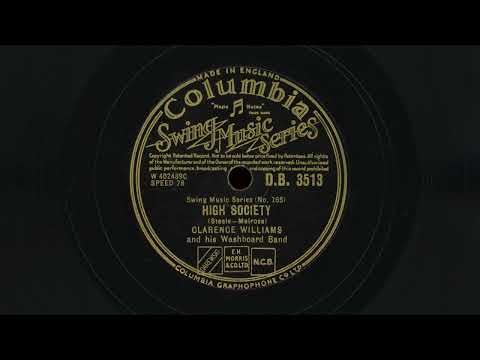
  • “High Society” – Clarence Williams and his Washboard Band (1929) – Columbia D.B. 3513 (take C)

    “High Society” – Clarence Williams and his Washboard Band (1929) – Columbia D.B. 3513 (take C)

    Continuing our romp through Clarence Williams’ recordings of “High Society”, here we have take C from the same 1929 session that I posted yesterday.

    Note that this record is credited to “Steele-Melrose” rather than A.J. Piron, as the OKeh release was credited. This is due to a very interesting history of copyright shenanigans that I will get into tomorrow when I post yet another later version of this tune recorded by Williams.

    I was surprised to hear this take also had what sounds like a “clam” by Ed Allen around the 0:47 mark. Just serves as a reminder that these tunes were recorded live in one or two takes – sometimes after only one brief rehearsal – and what you got was what you got. I’ve also noticed that while I’ve seen certain classical artists or symphonies recording on Victor Red Seal could get 10 or even 15+ takes during a session, jazz and blues artists were often given just one – and three at best.

    Two issued takes were recorded and released – this is take C. Yesterday I posted take A. Both takes were pressed as Okeh 8706 – and I’m not sure which take is more common – but take C was the only one master pressed for this later U.K. reissue.

    Recorded in New York City on July 2, 1929.
    Released in the U.K. as Columbia D.B. 3513 (take C) on their Swing Music Series.

    Credits:
    Ed Allen – cornet
    Unknown Artist – clarinet, alto sax
    Clarence Williams – piano
    Floyd Casey – washboard

    You can hear take A at:
    https://youtu.be/xzbJwOpWn4o