Jazz Crazy Records

An Archive of Early Jazz on 78 RPM

Category: Postwar Jazz

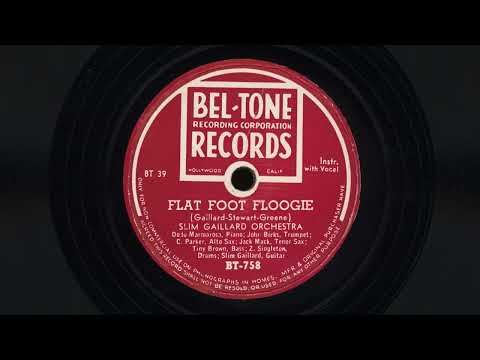
  • “Flat Foot Floogie” – Slim Gaillard Orchestra featuring Charlie Parker (1945)

    “Flat Foot Floogie” – Slim Gaillard Orchestra featuring Charlie Parker (1945)

    December 1945: Charlie Parker had just recorded one of the most important sessions of his career the month before in New York City – where he recorded the seminal “Ko Ko”, “Now’s The Time”, and “Billie’s Bounce” for Savoy.

    He was in Los Angeles for an engagement at a club there and in December, he recorded this session with guitarist Slim Gaillard (of “Slim and Slam” fame).

    “Flat Foot Floogie” was a big hit for Gaillard in 1938 when it was originally released – it peaked at number two on the Billboard charts. Many jazz artists covered the tune that year, including Benny Goodman, Louis Armstrong, Count Basie, and even Django Reinhardt. So by the time of this recording, it was a bit of an oldie.

    An interesting session with bebop heavyweights Bird and Diz playing a comedic novelty tune from the 30s. The solos are down to earth, complementing the tune and giving the listener a slight sense of their bop sensibilities without imposing outright.

    While December 29 is sometimes given as the date for this session, Peter Losin places the date at December 17 due to some studio banter recorded at the session.

    Recorded at Electro-Vox Recording Studios in Hollywood, California on December 17, 1945.
    Released as Bel-tone BT 758

    Credits:
    Bulee “Slim” Gaillard – guitar, vocals, director
    Charlie Parker – alto sax
    John Birks “Dizzy” Gillespie – trumpet
    Jack McVea – tenor sax
    Michael “Dodo” Marmarosa – piano
    Tiny “Bam” Brown – bass
    Arthur “Zutty” Singleton – drums
  • “Dance of the Infidels” – Bud Powell’s Modernists (1949)

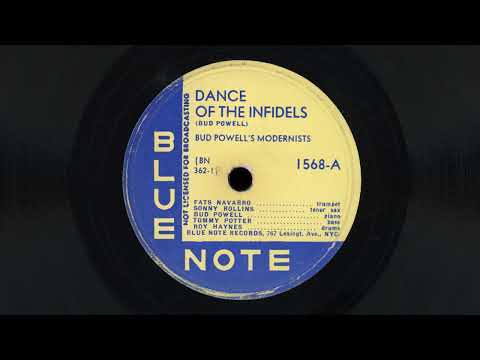
    “Dance of the Infidels” – Bud Powell’s Modernists (1949)

    An original tune from Bud Powell’s first session for Blue Note in 1949 with an eighteen-year-old Sonny Rollins and an exuberant Fats Navarro.

    During Powell’s piano solo, we can faintly hear someone (I am guessing Powell?) singing along as they play. His playing is confident, fluid, and elegant. Fats Navarro provides the high point of the track, raising the spirits with a fine trumpet solo. The young Rollins then gives us a very brief preview of things to come as he offers a few lines to ponder.

    0:00 Intro / Head
    0:49 Piano solo (Bud Powell)
    1:54 Trumpet solo (Fats Navarro)
    2:11 Sax solo (Sonny Rollins)
    2:28 Outro

    Recorded at WOR Studios in New York City on August 9, 1949.
    Released as Blue Note 1568 (Mx BN 362-1).

    Credits:
    Bud Powell – piano
    Fats Navarro – trumpet
    Sonny Rollins – tenor sax
    Tommy Potter – bass
    Roy Haynes – drums

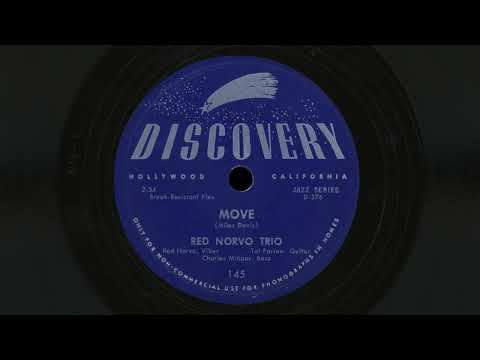
  • “Move” – Red Norvo Trio (1950) f/ Charles Mingus and Tal Farlow

    “Move” – Red Norvo Trio (1950) f/ Charles Mingus and Tal Farlow

    The Red Norvo Trio is one of those underrated jazz bands that can get lost in the shuffle. I love everything they recorded – which unfortunately isn’t a whole lot.

    Norvo had been playing jazz since the 1920s, so by 1950 I suppose by this time he was a bit of an old timer. And vibes can sometimes unfairly get a bad rap by jazz fans who need to hear horns to deliver adequate dopamine to their jazzistic nerve. So there are two strikes already against this act. Not to mix metaphors here, but Norvo found two aces to play a winning hand.

    He started the trio with Mundell Howe (g) and Red Kelly (sb) but they left and he turned to two relatively unknown artists who turned out to be future deities in the pantheon of jazz.

    Talmage “Tal” Farlow, only started learning guitar in 1943 and was working the night shift as a sign painter before Norvo invited him to join the trio – which turned out to be his big break.

    Mingus had been playing as a sideman in the NYC scene for years with cats like Howard McGhee, Illinois Jacquet, Dinah Washington, Ivie Anderson, and Lionel Hampton – even leading a few of his own sessions. But he was far from the legendary status and fame that he would go on to earn later that decade and beyond.

    This tune “Move” was here oddly credited to Miles Davis but was written by drummer Denzil Best (part of the excellent rhythm section of the George Shearing Quintet) and arranged by John Lewis.

    “Move” was famously recorded by the Miles Davis Nonet in early 1949 and was released on Capitol records as a 78 rpm single. It later famously started off the seminal “Birth of the Cool” album which compiled eleven tunes from these early sessions but was not released as an LP until 1957.

    The original arrangement for nonet called for tuba and french horn – and the stripped down instrumentation of a trio might at first cause some alarm. However, the trio here clips through the tune like an ice storm – driven by Mingus’ furious bop tempo – and it’s telling how immaculately cool they sound while playing so hot!

    0:00 Intro
    0:28 Vibe solo (Red Norvo)
    1:18 guitar solo (Tal Farlow)
    2:08 Outro

    Recorded in Chicago on October 31, 1950.
    Released as Discovery 145.

    Credits:
    Red Norvo – vibes
    Tal Farlow – guitar
    Charles Mingus – bass

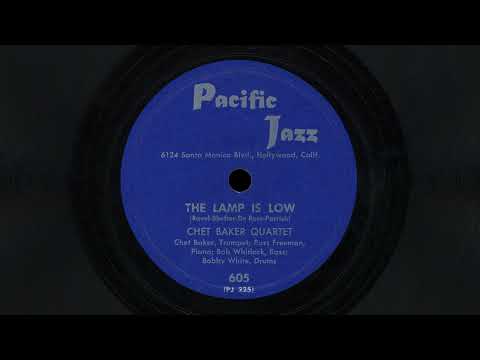
  • The Lamp is Low – Chet Baker Quartet (1953)

    The Lamp is Low – Chet Baker Quartet (1953)

    Some chill Pacific jazz to get you through the week featuring a very young 24 year old Chet Baker in only his second session as a leader.

    Recorded in Los Angeles, California on July 27, 1953.
    Released as Pacific Jazz 605.

    Credits
    Chet Baker, trumpet
    Russ Freeman, piano
    Bob Whitlock, bass
    Bobby White, drums

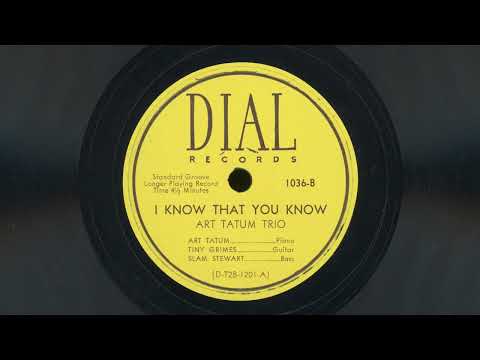
  • “I Know That You Know” – Art Tatum Trio (1944)

    “I Know That You Know” – Art Tatum Trio (1944)

    The blazingly fast Art Tatum burning up the keys on this classic track originally recorded for the Comet label in 1944 for an excellent album set of three 12″ records. Unfortunately, the Comet pressing is not great and the sound is a bit grainy and noisy.

    Luckily, Dial saw fit to reissue this a few years later with a much nicer pressing. Oddly – this Dial reissue is a 10″ 78 rpm disc format rather than 12″ disc. The format is called a “Standard Groove Longer Playing Record” and somehow they fit nearly four and a half minutes of music on a standard 10″ disc!

    Tatum is zooming at 110% throughout this delightful treat of a track – Racing along like a speeding bullet, he whizzes and gallops up and down the keyboard, driving the rhythm section to at times seem a bit out of breath! Stewart and Grimes both get in energetic solos of their own, with Grimes coming the closest to matching Tatum’s frantic and masterful pace.

    Recorded in New York City on May 1, 1944.
    Originally released as Comet T-2.
    Reissued in 1949 as Dial 1036.

    Credits:
    Art Tatum – piano
    Tiny Grimes – guitar
    Slam Stewart – bass

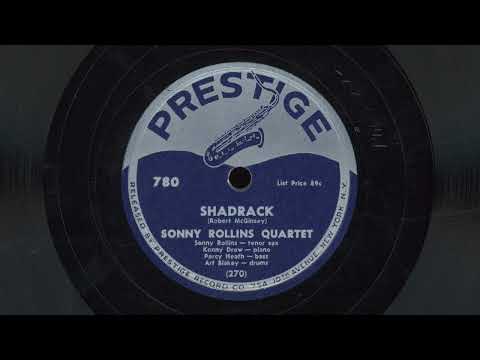
  • “Shadrack” – Sonny Rollins Quartet (1951)

    “Shadrack” – Sonny Rollins Quartet (1951)

    Sonny Rollins at age 21 in his second session for Prestige as a leader. He had only been playing tenor sax for about five years.

    After getting his start recording with Babs Gonzales, J.J. Johnson, and Bud Powell in 1949, Rollins spent most of 1950 in Riker’s Island on a robbery charge. In 1951, he recorded extensively with Miles Davis – and here at the end of the year, recorded eight tunes with his own quartet.

    The tune alternately showcases the talents of Rollins and pianist Kenny Drew, as Art Blakey and Percy Heath keep a lower profile in the rhythm section.

    Recorded in Apex Studios, NYC on December 17, 1951.
    Released as Prestige 780.

    Credits:
    Sonny Rollins, tenor sax
    Kenny Drew, piano
    Percy Heath, bass
    Art Blakey, drums

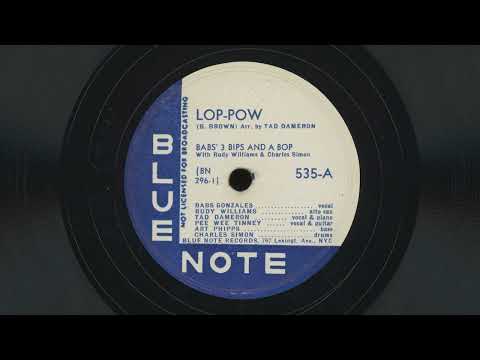
  • “Lop Pow” – Babs’ 3 Bips and a Bop (1947)

    “Lop Pow” – Babs’ 3 Bips and a Bop (1947)

    Lee Brown was the youngest of three brothers growing up in Newark, New Jersey and was nicknamed “Little Babs”. He changed his last name to “Gonzales” in the mid 40s to try to avoid discriminatory Jim Crow laws. Babs worked as a band boy for Jimmie Lunceford, Charlie Barnet, and Lionel Hampton’s bands out West, before moving to New York City in 1945 and meeting Dizzy Gillespie, who opened his eyes to the blossoming bebop scene.

    Babs decided to pursue a career in singing and formed this group with the intention of bringing bebop “to the people”. Though tunes like this are associated with scat vocals, Babs made a distinction between his improvised singing and traditional scat singing. Babs’ improvised vocal solo can be heard starting at 0:49.

    “Lop Pow” is an exuberant ear worm – you can’t help but feel and share the optimism and joy of the performers as they bop merrily along. If Babs’ goal was to make bebop more accessible to the masses – he certainly succeeded.

    Babs went on to work with a variety of jazz greats, including Bud Powell, Fats Navarro, Sonny Rollins, and Jimmy Smith. He went on to perform and release records throughout the 50s, 60s and early 70s.

    Recorded at WOR Studios in New York City on February 24, 1947.
    Released as Blue Note 535.

    Credits:
    Babs Gonzales – vocal
    Rudy Williams – alto sax
    Tad Dameron – vocal & piano
    Pee Wee Tinney – vocal & guitar
    Art Phipps – bass
    Charles Simon – drums

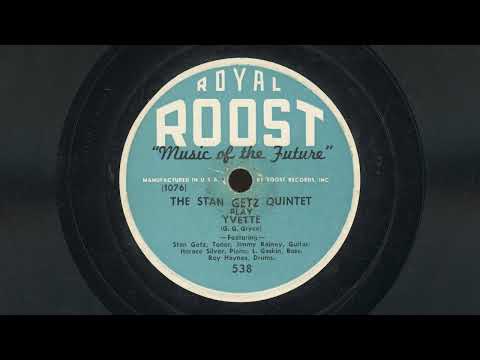
  • “Yvette” – The Stan Getz Quintet (1951)

    “Yvette” – The Stan Getz Quintet (1951)

    A cool tune with a warm vibe recorded by a very talented combo led by Stan Getz that included guitarist Jimmy Raney and pianist Horace Silver.

    Recorded in New York City on August 15, 1951.
    Released as Royal Roost 538.

    Credits
    Leonard Gaskin – Bass
    Roy Haynes – Drums
    Jimmy Raney – Guitar
    Horace Silver – Piano
    Stan Getz – Tenor Saxophone

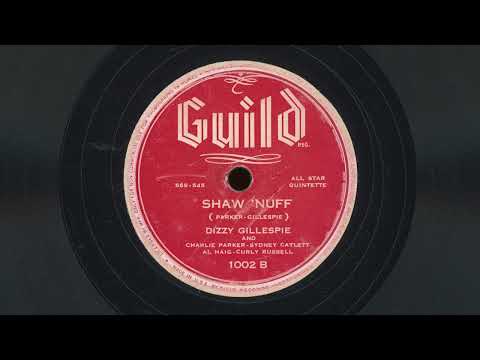
  • “Shaw ‘Nuff” – Dizzy Gillespie and his All Stars (1945)

    “Shaw ‘Nuff” – Dizzy Gillespie and his All Stars (1945)

    Hear the blazingly fast birth of bebop at the dawn of the postwar era – amazingly syncopated unison lines played by Diz and Bird at high velocity. Bursting with optimism and boldly leading the way forward – one has to marvel at the magnitude of a track like “Shaw ‘Nuff”.

    Recorded in New York City on May 11, 1945
    Released as Guild 1002.

    Credits:
    Dizzy Gillespie – trumpet
    Charlie Parker – alto sax
    Al Haig – piano
    Curly Russell – bass
    Sidney Catlett – drums

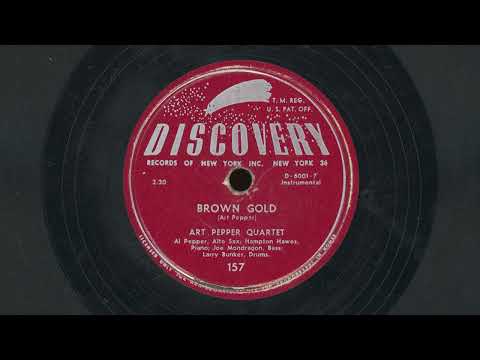
  • “Brown Gold” – Art Pepper Quintet (1952)

    “Brown Gold” – Art Pepper Quintet (1952)

    Time for a cool breeze of West Coast jazz from the Art Pepper Quartet.

    This affable tune was released as a 78 rpm 10″ and 45 rpm 7″ single in 1952 and then appeared on both Pepper’s self-titled debut EP on Discovery in 1953 and then later on the 1957 LP Surf Ride on the Savoy label.

    1952 was a year of accomplishment for Pepper, who came in at #2 in the Downbeat reader’s poll in the Alto Sax category that year – right behind Charlie Parker who took top honors.

    Unfortunately, a drug bust in 1954 would see him behind bars for two years – putting a temporary pause on his career until 1956.

    Recorded in Los Angeles, California on March 4, 1952.
    Released as Discovery 157.

    Credits
    Art Pepper – alto sax
    Hampton Hawes – piano
    Joe Mondragon – bass
    Larry Bunker – drums