Jazz Crazy Records

An Archive of Early Jazz on 78 RPM

Category: Postwar Jazz

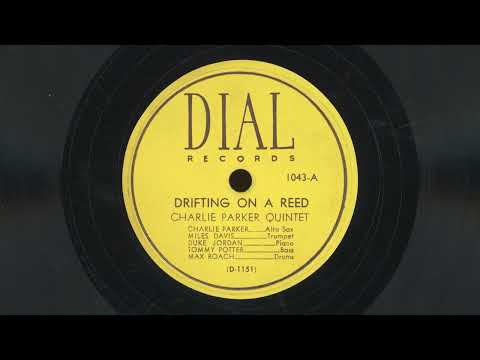
  • “Drifting on a Reed” – Charlie Parker Quintet (1947)

    “Drifting on a Reed” – Charlie Parker Quintet (1947)

    Charlie Parker’s Dial and Savoy sessions can rightly be regarded as some of the most exciting jazz in recorded history – right up there with Louis Armstrong’s Hot Five and Hot Seven sessions in the 1920s. The deep underlying optimism of postwar America is perfectly expressed in the fleet-footed bebop of Bird.

    This tune, alternately known as “Big Foot”, “Giant Swing”, and “Air Conditioning”, was recorded at his very last session for Dial in late 1947. The label contains an omission: Trombonist J.J. Johnson was a part of this session (thus making it a sextet rather than a quintet) but was not listed on the label.

    This session comes in the middle of a very prolific period in New York City after being hospitalized and returning from a tumultuous stay in California in 1946.

    0:00 Head
    0:27 Alto Sax solo (Charlie Parker)
    1:07 Trombone solo (J.J. Johnson)
    1:34 Trumpet solo (Miles Davis)
    2:01 Piano solo (Duke Jordan)
    2:27 Bass solo (Tommy Potter)
    2:40 Outro

    Matrix D1151-E
    Recorded at WOR Studios in New York City on December 17, 1947.
    Released as Dial 1043.

    Credits:
    Charlie Parker – alto sax
    Miles Davis – trumpet
    Duke Jordan – piano
    Tommy Potter – bass
    Max Roach – drums
  • “Jay Bird” – Jay Jay Johnson (1946)

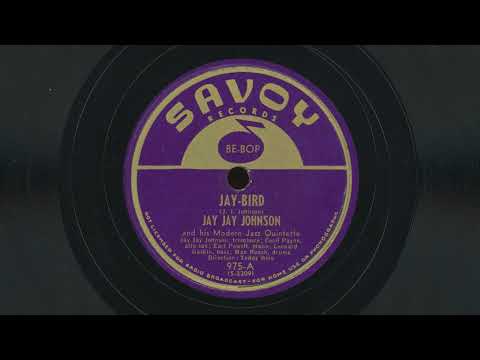
    “Jay Bird” – Jay Jay Johnson (1946)

    I haven’t posted much bebop lately – so here’s a great track from 1946 from trombonist J. J. Johnson’s band featuring Max Roach and Bud Powell.

    0:00 Intro
    0:40 Alto Sax solo (Cecil Payne)
    1:14 Trombone solo (J.J. Johnson)
    1:47 Piano solo (Bud Powell)
    2:19 Outro

    Recorded in New York City on June 26, 1946.
    Released as Savoy 975.

    Credits:
    J.J. Johnson – trombone
    Cecil Payne – alto sax
    Bud Powell – piano
    Leonard Gaskin – bass
    Max Roach – drums

  • “My Funny Valentine” – Gerry Mulligan Quartet f/ Chet Baker (1952)

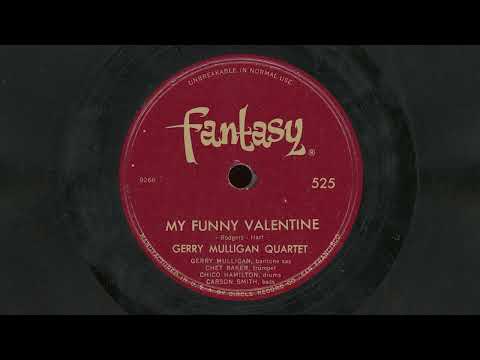
    “My Funny Valentine” – Gerry Mulligan Quartet f/ Chet Baker (1952)

    A beautifully haunting recording of the Rodgers-Hart ballad “My Funny Valentine” in the cool Pacific Jazz style featuring the lush slowcore solos of soon-to-be star Chet Baker, who made this song his signature tune.

    Fun fact: this version was inducted into the Library of Congress’s National Recording Registry in 2015.

    Recorded in San Francisco, California on September 2, 1952.
    Released as Fantasy 525.

    Credits:
    Gerry Mulligan – baritone sax
    Chet Baker – trumpet
    Carson Smith – bass
    Chico Hamilton – drums

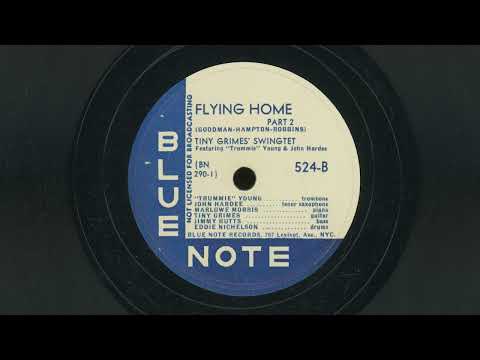
  • “Flying Home” – Tiny Grimes’ Swingtet (1946)

    “Flying Home” – Tiny Grimes’ Swingtet (1946)

    Lloyd “Tiny” Grimes broke into the music business by playing tenor guitar with the vocal quartet The Cats and the Fiddle during the early 1940s. In 1943 he joined forces with virtuoso pianist Art Tatum and bassist Slam Stewart in the powerhouse Art Tatum Trio.

    He is probably most well known for a few sides he recorded as a bandleader for the Savoy label in 1944 with a young sideman named Charlie Parker.

    This session from 1946 finds Tiny recording for the Blue Note label. This blazingly fast rendition of “Flying Home”, a relaxed Benny Goodman/Lionel Hampton small combo composition from 1939, shows both the growing influence of bop and R&B on Tiny’s playing. The extended solos meant the track had to be divided into two parts to fit on a 10″ 78 rpm record – which could only hold a little over three minutes of music per side.

    Here, I’ve put both parts together – the transition happens around the 3:00 mark.

    0:00 Intro
    0:34 Trombone solo (Young)
    1:24 Tenor Sax solo (Hardee)
    2:14 Piano solo (Morris)
    3:03 Guitar solo (Grimes)
    4:18 Ensemble

    While his choice of composition and some aspects of his playing clearly drew inspiration from Charlie Christian, the accelerated tempo and virtuosic solos show the influence of bebop.

    Recorded in New York City on August 14th, 1946.
    Released as Blue Note 524.

    Credits:
    Trummy Young – trombone
    John Hardee – tenor sax
    Marlowe Morris – piano
    Tiny Grimes – guitar
    Jimmy Butts – bass
    Eddie Nicholson – drums

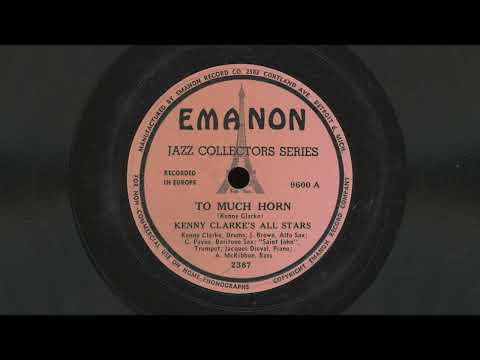
  • “To Much Horn” – Kenny Clarke’s All Stars (1948)

    “To Much Horn” – Kenny Clarke’s All Stars (1948)

    Kenny Clarke began his career in New York City in the late 30s and early 40s, performing at Minton’s and recording with Count Basie, Billie Holiday, Sidney Bechet, Edgar Hayes, and many others. He also met and befriended Dizzy Gillespie during this time. After serving in the U.S. Army from 1943-46, Clarke joined Dizzy Gillespie’s band (replacing Max Roach) and recorded several tracks with them, including “Oop Bop Sh’ Bam” which I posted last week.

    In 1948 he toured Europe and it was during this time that this recording was made. If anyone has a copy of “Klook: The Story of Kenny Clarke” there may be more information about this session in that book.

    Emanon was a Detroit-based jazz record label started by Dave Usher in 1948 focusing on French recordings and recordings made in France. Not a lot out there about the label or how it sourced its masters. Its name, no doubt, comes from the Dizzy Gillespie tune, which is “No Name” spelled backwards. At any rate, the label appears to have only pressed two titles, 9600 and 9601, both European Kenny Clarke recordings.

    In December of 1948, Down Beat reviewed the record, writing: “These sides were cut in Europe… and he made these and subsequent of the Emanon sides with European men and whatever American boppers… happened to be passing by at the moment.”

    Of the track “Too Much Horn” (misspelled on the label), Down Beat awarded the record two out of four eight notes – a designation it described as “Tepid”. Despite this, they sorta dug the track, writing, “[Horn] comes on at a flash tempo, and if those are European cats, they get around on their horns pretty good.”

    The label credits “Saint John” on trumpet, which is very likely a pseudonym for John “Dizzy” Gillespie. Sure sounds like him – what do you think?

    Recorded in Paris, France circa March of 1948.
    Released as Emanon 9600.

    Alto Saxophone – John Brown
    Baritone Saxophone – Cecil Payne
    Trumpet – Saint John (Probably an alias for Dizzy Gillespie)
    Piano – Jacques Dieval
    Bass – Al McKibbon
    Drums – Kenny Clarke

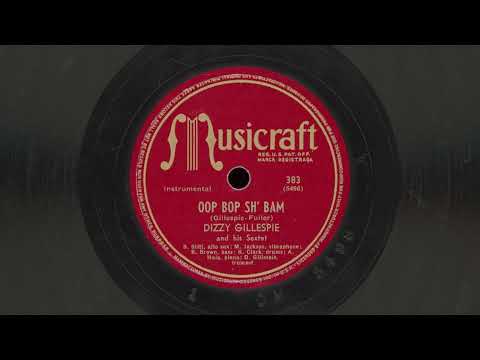
  • “Oop Bop Sh’ Bam” – Dizzy Gillespie and his Sextet (1946)

    “Oop Bop Sh’ Bam” – Dizzy Gillespie and his Sextet (1946)

    “Oop Bob Sh’ Bam. A klook a mop”
    Quintessential be bop from Dizzy Gillespie.

    Recorded in NYC on May 15, 1946
    Released as Musicraft 383.

    Credits:
    Dizzy Gillespie – trumpet
    Sonny Stitt – alto sax
    Milt Jackson – vibraphone
    Al Haig – piano
    Ray Brown – bass
    Kenny Clarke – drums

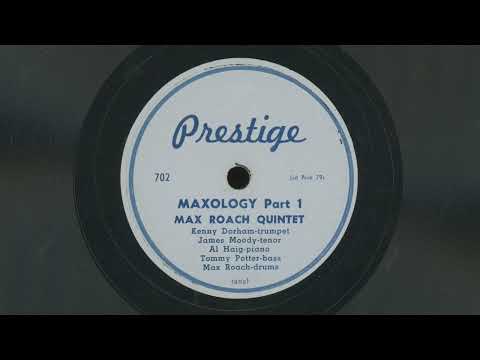
  • “Maxology” (“Little Sis”) – Max Roach Quintet (1949)

    “Maxology” (“Little Sis”) – Max Roach Quintet (1949)

    What I believe to be the first Max Roach Quintet record on a very early Prestige label release from 1949 featuring Kenny Dorham and James Moody.

    After playing on many of the seminal bebop records of the mid to late 40s (with Charlie Parker, Dizzy Gillespie, Miles Davis, and Bud Powell), on this record, Max Roach fronts his own band. Though curiously later Prestige pressings of this title were attributed to “The James Moody Quintet” instead.

    Recorded in Studio Technisonor, Paris, France on May 15, 1949.
    Released as Prestige 702.
    Found in the 78 crates at the back of Bob’s Blues and Jazz Mart in Chicago, Illinois in January, 2023.

    Credits
    Kenny Dorham – trumpet
    James Moody – tenor sax
    Al Haig – piano
    Tommy Potter – bass
    Max Roach – drums
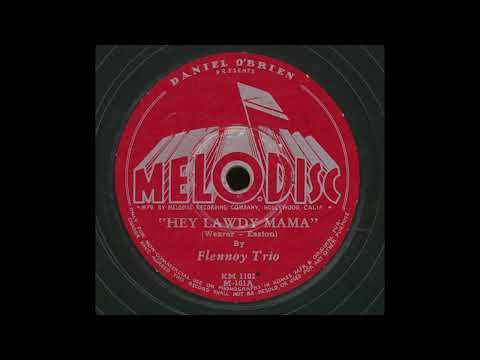
  • “Hey Lawdy Mama” – Flennoy Trio (1945)

    “Hey Lawdy Mama” – Flennoy Trio (1945)

    Lorenzo Flennoy was a Los Angeles pianist who was playing at the Savoy Ballroom fronting his own band when he was 22. His bands of various incarnations played frequently at California hotels and clubs throughout the 30s and early 40s with acts such as Earl Hines, Art Tatum, Stuff Smith, T-Bone Walker, Nellie Lutcher, and Meade Lux Lewis.

    In the early 40s, Flennoy and his band started getting more national exposure by appearing in Hollywood movies such as Lady Luck (1942) and When Strangers Marry (1944).

    In 1943, Flennoy formed a trio with Gene Phillips on Guitar and Robert Lewis on bass. Phillips was replaced in 1945 by Jimmie Edwards, who also sang.

    In April (or May?) of 1945, while the rest of the world was watching WWII come to a close in the European theatre, The Flennoy Trio recorded two sides on a new local label called Melodisc – including this one called “Hey Lawdy Mama”.

    When I first heard this lively and innovative song I was amazed by all of the prototypical elements of early rock and roll in this song from 1945. It’s catchy and also somewhat unpredictable. While Melodisc advertised the single in Billboard, no review followed and it seems to have disappeared off the radar.

    Flennoy, on the other hand, continued to play music throughout the 40s, 50s, and 60s. He died at age 61 in 1971.

    Released as Melodisc M-101 in May 1945.

    Credits:
    Lorenzo Flennoy – piano
    Jimmie Edwards – guitar, vocals
    Robert Lewis – bass

    Thanks to Marv Goldberg’s excellent timeline of Lorenzo Flennoy’s life for much of this information. It can be found at:
    https://www.uncamarvy.com/FlennoyTrio/flennoytrio.html

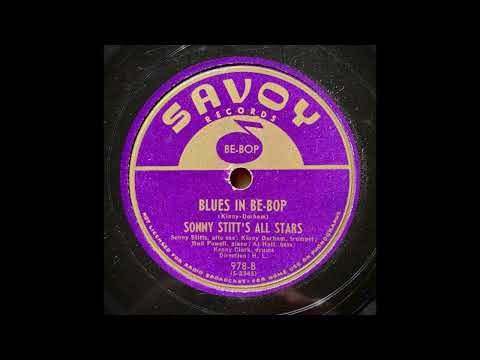
  • Sonny Stitt’s All Stars – “Blues in Be-Bop” (1946)

    Sonny Stitt’s All Stars – “Blues in Be-Bop” (1946)

    An early bebop tune I find liberating and energizing by a powerhouse combo led by Sonny Stitt that included Bud Powell and Kenny Dorham, whose name was misspelled as “Kinny Dorham” on the label.

    0:00 Head In
    0:22 Sonny Stitt (alto sax)
    0:52 Bud Powell (piano)
    1:24 Kenny Dorham (trumpet)
    1:55 Piano and bass duet
    2:11 Sonny Stitt (alto sax)
    2:26 Head Out

    Recorded in NYC on August 23, 1946.
    Released as Savoy 978.

    Credits
    Kenny Dorham – trumpet;
    Sonny Stitt – alto sax
    Bud Powell – piano
    Al Hall – bass
    Kenny “Klook” Clarke – drums

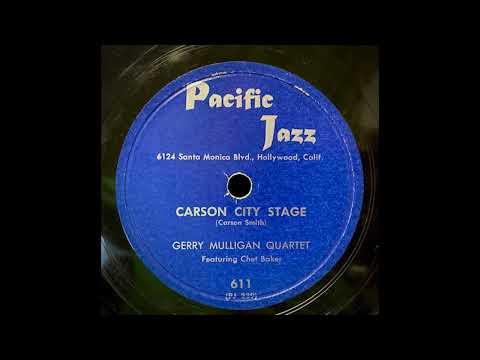
  • “Carson City Stage” – Gerry Mulligan Quartet Featuring Chet Baker (1953)

    “Carson City Stage” – Gerry Mulligan Quartet Featuring Chet Baker (1953)

    After working with Miles Davis’ influential nonet in NYC from 1948 – 1951, Gerry Mulligan moved to L.A. in 1952. He started playing at a local jazz club with a young trumpeter from Oklahoma named Chet Baker. They hit it off and began recording for the fledgling Pacific Jazz label.

    Their collaboration came to an abrupt end a few months later when Mulligan was arrested on a narcotics charge that sent him to prison for six months.

    Here we have an original composition by bassist Carson Smith that starts off with a driving descending bass riff. The two horns seem to glide and meander like a pair of ice skaters circling one another on a frozen pond, resulting in a mesmerizing performance.

    Recorded in Hollywood, Gold Star Studios on February 24, 1953
    Released as Pacific Jazz PJ 611.

    Credits
    Chet Baker – trumpet
    Gerry Mulligan – baritone sax
    Carson Smith – bass
    Larry Bunker – drums