Jazz Crazy Records

An Archive of Early Jazz on 78 RPM

Category: African

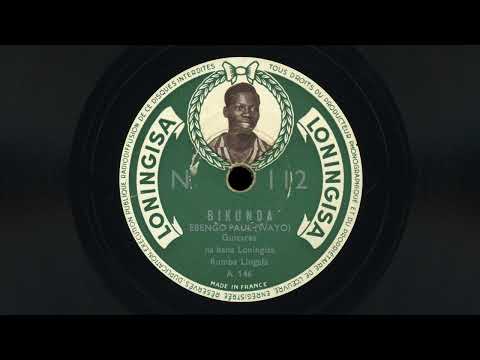
  • “Bikunda” – Paul Ebengo (1953) Rumba Congolaise

    “Bikunda” – Paul Ebengo (1953) Rumba Congolaise

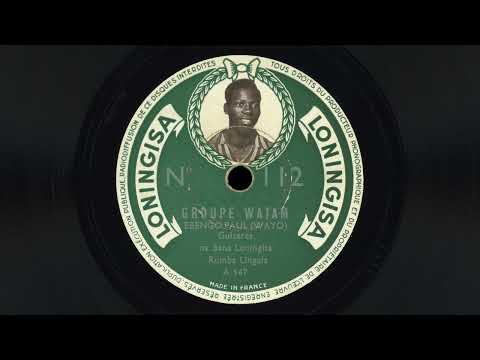
    This is truly one of the gems of the collection: a Loningisa issue by Paul Ebengo (aka Wayo, or De Wayon) that came with an original sleeve!

    Ebengo Isenge Paul was born in 1934 in the Maï-ndombe province of Belgian Congo, the eldest of four brothers. He became a well-known guitarist who had a flamboyant personality, described as a “Boute-en-train” (party animal) by the Dictionnaire Des Immortels De La Musique Congolaise Moderne. He is credited as being the musician who instilled in Franco (of OK Jazz) the passion for the guitar, though he was not his direct mentor on the instrument.

    In 1952 he formed the Watam Group, who performed frequently at wedding festivities, mourning events or at other popular celebrations.

    In 1953, Ebengo – via Henri Bowane – signed a long term contract with Basile Papadimitriou (owner of the Loningisa label). They immediately started recording for the label – and this disc was among their first records for Loningisa.

    After a long musical career, Ebengo passed away in Kinshasa, on June 29, 1990.

    Recorded in Léopoldville, Belgian Congo on August 12, 1953.
    Released as Loningisa 112 and His Master’s Voice LON 1019.

    Credits (based on personnel in Groupe Watam):
    Paul Ebengo (aka Wayo, aka De Wayon) – guitar
    Mutombo (?), Ganga Mongwalu (?), Bikunda (?), Nganga (?), Kadiadia (?), Sébastien (?) – vocals, maracas
    Nicolas Bossuma Dessoin (?) – tam-tam

    The flip side of this record can be heard at:
    https://youtu.be/wIsF_VFzlHM

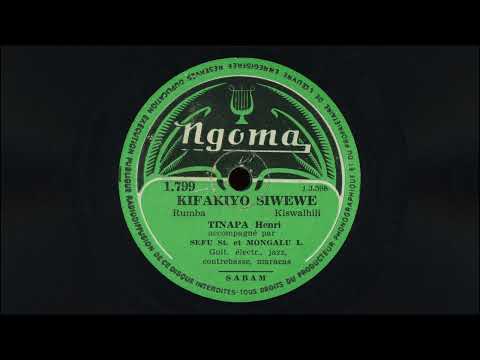
  • “Kifakiyo Siwewe” – Henri Tinapa (1957) Rumba Congolaise

    “Kifakiyo Siwewe” – Henri Tinapa (1957) Rumba Congolaise

    Recorded in Léopoldville, Belgian Congo on August 7, 1957.
    Released as Ngoma 1799.

    Credits:
    Henri Tinapa – guitar, vocals
    accompanied by Sefu Stephane and Louis Mongalu on bass and maracas/percussion.

    The other side of this record, “” can be heard at:
    https://youtu.be/qnFTINQAHiQ

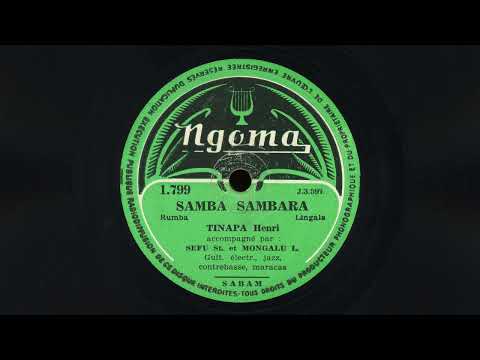
  • “Samba Sambara” – Henri Tinapa (1957) – Rumba Congolaise

    “Samba Sambara” – Henri Tinapa (1957) – Rumba Congolaise

    Recorded in Léopoldville, Belgian Congo on August 7, 1957.
    Released as Ngoma 1799.

    Credits:
    Henri Tinapa – guitar, vocals
    accompanied by Sefu Stephane and Louis Mongalu on bass and maracas/percussion.

    The other side of this record, “Kifakiyo Siwewe” can be heard at:
    https://youtu.be/WEHpjlx2Ps4

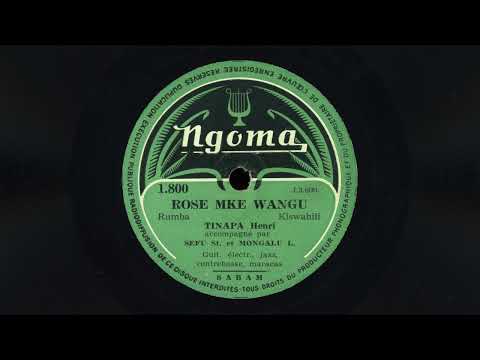
  • “Rose Mke Wangu” – Henri Tinapa (1957) Rumba Congolaise!

    “Rose Mke Wangu” – Henri Tinapa (1957) Rumba Congolaise!

    Henrique Tinapa was a guitarist, singer, and songwriter originally from Angola who found himself in Kinshasa (then Léopoldville) in 1957, where he recorded four records for Ngoma in July of that year (Ngoma 1799, 1800, 1801, and 1802).

    He moved to Kisangani in 1958 where he formed the Rico Jazz Orchestra. They recorded again for Ngoma in 1963 – releasing 8 songs on two 45 rpm EPs (Ngoma No. 83 and No. 84).

    He later found a career as a griot who performed at hotels in Kinshasa – and was regularly performing at the Intercontinental Hotel as recently as the 1980s.

    This lilting rumba is endearing, with Tinapa’s guitar solos between verses.

    Recorded in Léopoldville, Belgian Congo, on August 7, 1957.
    Released as Ngoma 1800 (mx. J.3.600)

    Credits:
    Henri Tinapa – guitar, vocals
    Sefu Stephane – bass
    Louis Mongalu – maracas

    The flip side of this record, “Mambo Zille”, can be heard at:
    https://youtu.be/WTb6GSbIXgs

    Sources:
    Dictionnaire Des Immortels De La Musique Congolaise Moderne by Jean-Pierre François Nimy Nzonga, Bruylant-Academia, 2010.

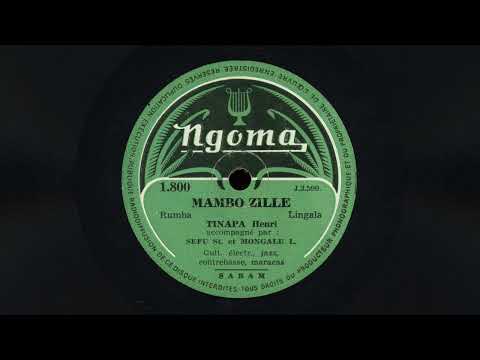
  • “Mambo Zille” – Henri Tinapa (1957) Rumba Congolaise!

    “Mambo Zille” – Henri Tinapa (1957) Rumba Congolaise!

    Henrique Tinapa was a guitarist, singer, and songwriter originally from Angola who found himself in Kinshasa (then Léopoldville) in 1957, where he recorded four records for Ngoma in July of that year (Ngoma 1799, 1800, 1801, and 1802).

    He moved to Kisangani in 1958 where he formed the Rico Jazz Orchestra. They recorded again for Ngoma in 1963 – releasing 8 songs on two 45 rpm EPs (Ngoma No. 83 and No. 84).

    He later found a career as a griot who performed at hotels in Kinshasa – and was regularly performing at the Intercontinental Hotel as recently as the 1980s.

    Here we hear an excellent upbeat rumba sure to get you out on the dance floor – with several dramatic starts and stops that add excitement to this tune.

    Recorded in Léopoldville, Belgian Congo, on August 7, 1957.
    Released as Ngoma 1800 (mx. J.3.599)

    Credits:
    Henri Tinapa – guitar, vocals
    accompanied by Sefu Stephane and Louis Mongalu on bass and maracas/percussion.

    The flip side of this record, “Rose Mke Wangu” can be heard at:
    https://youtu.be/jcLh1EOs04k

    Sources:
    Dictionnaire Des Immortels De La Musique Congolaise Moderne by Jean-Pierre François Nimy Nzonga, Bruylant-Academia, 2010.

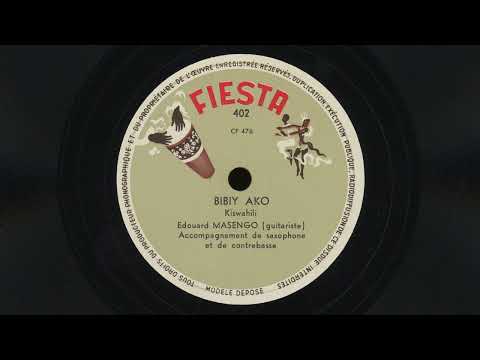
  • “Bibiy Ako” – Edouard Masengo (1950s) Congolese Guitarist

    “Bibiy Ako” – Edouard Masengo (1950s) Congolese Guitarist

    Edouard Masengo was born in 1933 in the village of Kafubu in the Katanga province in the southern Copperbelt region of Congo – so named for the many mining camps in the region. He started playing guitar when he was eleven.

    He formed a group called JECOKE – The Young Comedians of Katanga – who first sang at the Regina Hotel in Léopoldville. One of their signature tunes was a cover of “Paper Doll”, the hit song made famous in the U.S. by the Mills Brothers. Masengo ultimately ended up in Nairobi, Kenya, where he recorded extensively with Gallotone Records and partnered with advertising agencies to promote Coca-Cola as a kind of celebrity spokesperson.

    Along with his cousin, Jean Bosco Mwenda, Masengo became a dominant force in the African music scene in the 1950s and early 1960s. Both were known as progenitors of the wildly popular Katanga guitar style that also went on to greatly influence the music of Kenya and Tanzania.

    The Fiesta label was a Fonior / Decca France sublabel that began in 1947 specializing in North African artists. In 1950 their focus shifted to West Africa and Congo and I believe this record was released at some point in the early 1950s.

    Released as Fiesta 402.

    Credits:
    Edouard Masengo – guitar, vocals
    Unknown artists – saxophone, bass, glass bottle

    The flip side of this record, “Mapendano” can be found at:
    https://youtu.be/Bc6zpxgpLYA

    Sources:
    “Revisiting the Katanga Guitar Style(s) and Some Other Early African Guitar Idioms” by David Racanelli, Black Music Research Journal, Vol 36, No. 1. Spring 2016.

    Amazing interview with Edouard Masengo:
    https://www.youtube.com/watch?v=gOtwTNBy1o8

  • “Mapendano” – Edouard Masengo (1950s) Congolese guitarist

    “Mapendano” – Edouard Masengo (1950s) Congolese guitarist

    Edouard Masengo was born in 1933 in the village of Kafubu in the Katanga province in the southern Copperbelt region of Congo – so named for the many mining camps in the region. He started playing guitar when he was eleven.

    He formed a group called JECOKE – The Young Comedians of Katanga – who first sang at the Regina Hotel in Léopoldville. One of their signature tunes was a cover of “Paper Doll”, the hit song made famous in the U.S. by the Mills Brothers. Masengo ultimately ended up in Nairobi, Kenya, where he recorded extensively with Gallotone Records and partnered with advertising agencies to promote Coca-Cola as a kind of celebrity spokesperson.

    Along with his cousin, Jean Bosco Mwenda, Masengo became a dominant force in the African music scene in the 1950s and early 1960s. Both were known as progenitors of the wildly popular Katanga guitar style that also went on to greatly influence the music of Kenya and Tanzania.

    The Fiesta label was a Fonior / Decca France sublabel that began in 1947 specializing in North African artists. In 1950 their focus shifted to West Africa and Congo and I believe this record was released at some point in the early 1950s.

    Released as Fiesta 402.

    Credits:
    Edouard Masengo – guitar, vocals
    Unknown artists – saxophone, bass, glass bottle

    The flip side of this record, “Bibiy Ako” can be found at:
    https://youtu.be/Wc-dEbHzuv4

    Sources:
    “Revisiting the Katanga Guitar Style(s) and Some Other Early African Guitar Idioms” by David Racanelli, Black Music Research Journal, Vol 36, No. 1. Spring 2016.

    Amazing interview with Edouard Masengo:
    https://www.youtube.com/watch?v=gOtwTNBy1o8

  • “Francisque Wa Ngai” – Léon Bukasa (1957)

    “Francisque Wa Ngai” – Léon Bukasa (1957)

    Another excellent track by Léon Bukasa with a perfectly iconic intro – a delightful guitar line by Papa Noël.

    Recorded in Léopoldville, Belgian Congo on May 6, 1957.
    Released as Ngoma 1789.

    Credits:
    Léon Bukasa – guitar, vocals
    Kalombo Albino – vocals
    Antoine Nedule aka Papa Noël – guitar
    Mwena Joseph – bass

    The flip side of this record is a great tune, “Monique Wa Baba” – which can be heard at:
    https://youtu.be/Zl6hNQ0xtv8

    If you are also a fan of Rumba Congolaise, you will want a copy of this release:
    https://planetilunga.bandcamp.com/album/the-soul-of-congo-treasures-of-the-ngoma-label-1948-1963

    If you’d like to hear more, be sure to check out my interview with producer Alastair Johnson:
    https://youtu.be/2BSsWpb49AA

  • “Monique Wa Baba” – Léon Bukasa (1957)

    “Monique Wa Baba” – Léon Bukasa (1957)

    When I first heard this track by Léon Bukasa on the amazing Planet Ilunga release “The Soul of Congo – Treasures of the Ngoma label (1948​-​1963)” I was immediately a huge fan.

    From the first bass line, you know this is going to be a good. and then when the guitar joins in, you realize it’s even better.

    I despaired at probably never being able to locate a copy of this amazing record but was incredibly lucky to find a very decent copy earlier this year.

    Sung in the Tshiluba language spoken in the central Kasai region.

    Recorded in Léopoldville, Belgian Congo on May 6, 1957.
    Released as Ngoma 1789.

    Credits:
    Léon Bukasa – guitar, vocals
    Kalombo Albino – vocals
    Antoine Nedule aka Papa Noël – guitar
    Mwena Joseph – bass

    The flip side of this record, “Francisque Wa Ngai” can be heard at:
    https://youtu.be/TtOofKHKWoA

    If you are also a fan of Rumba Congolaise, you will want a copy of this release:
    https://planetilunga.bandcamp.com/album/the-soul-of-congo-treasures-of-the-ngoma-label-1948-1963

    If you’d like to hear more, be sure to check out my interview with producer Alastair Johnson:
    https://youtu.be/2BSsWpb49AA

  • “Kuwowa Wata Kuwowa” – Fred Kish (1957) – Congolese guitarist with glass bottle accompaniment

    “Kuwowa Wata Kuwowa” – Fred Kish (1957) – Congolese guitarist with glass bottle accompaniment

    I know very little about this wonderful Congolese guitarist.

    The tune follows a familiar format: fingerstyle guitar, two harmonizing vocals, and a glass bottle accompaniment.

    Released as Gallotone CO.163.

    The flip side, “Alesi”, can be heard here:
    https://youtu.be/GnQgakuJC1A