Jazz Crazy Records

An Archive of Early Jazz on 78 RPM

Category: Jazz

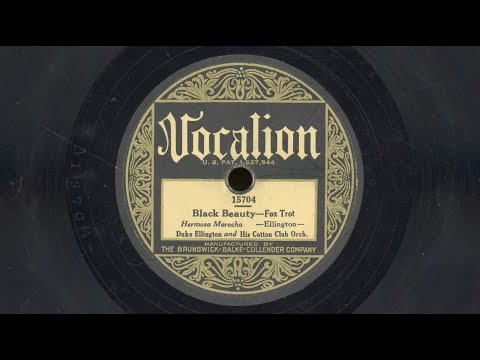
  • “Black Beauty” – Duke Ellington and his Cotton Club Orchestra (1928)

    “Black Beauty” – Duke Ellington and his Cotton Club Orchestra (1928)

    “Black Beauty” began as a tune with the working title “Firewater” that Ellington would play at the Cotton Club after an intermission. As he arranged the composition for his orchestra, he changed the title to “Black Beauty”, in tribute to “Queen of Happiness” Florence Mills, a singer, dancer, and comedian who died unexpectedly at a very young age in 1927. Mills was revered as an entertainer for her performances in Shuffle Along, Dixie to Broadway, Lew Leslie’s Blackbirds of 1926 and 1927, and many other productions.

    This is the first recording of the tune at an early 1928 session for Brunswick and is notable for the absence of Bubber Miley, whose growling trumpet was a calling card for the band. It also includes a piano solo by Duke himself.

    Ellington would re-record this tune for Victor a week later with Miley – and then again for Okeh in October arranged for solo piano. It remained in his repertoire throughout his life

    Recorded on in New York City on March 21, 1928.
    Released as Vocalion 15704 and Brunswick 4009.

    Duke Ellington – piano, arranger, director
    Arthur Whetsel, Louis Metcalf – trumpet
    Joe Nanton – trombone
    Otto Hardwick – soprano sax, alto sax, baritone sax, bass sax
    Harry Carney – clarinet, alto sax, baritone sax
    Barney Bigard – clarinet, tenor sax
    Fred Guy – banjo
    Wellman Braud – string bass
    Sonny Greer – drums
  • “I’m Walkin’ The Chalk Line” – The Six Swingers (1934)

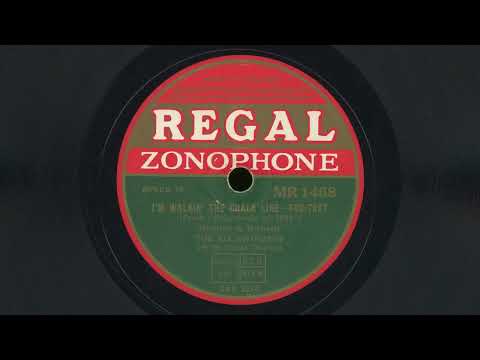
    “I’m Walkin’ The Chalk Line” – The Six Swingers (1934)

    Hot British dance bands from the 1930s are a topic I am a little lax on, so I asked an English collector friend of mine for some recommendations. This record was one of them: The Six Swingers!

    Recorded in London on October 29, 1934.
    Released as Regal Zonophone MR 1468.

    Credits:
    George Scott Wood – director, piano
    Max Goldberg – trumpet
    Lew Davis – trombone
    Freddy Gardner – clarinet, alto sax, baritone sax
    Dick Ball – string bass
    Max Bacon – drums
    Sam Browne – vocals

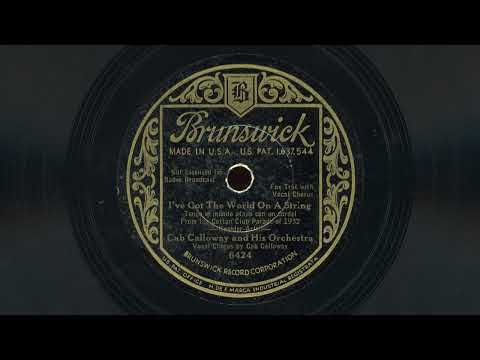
  • “I’ve Got The World On A String” – Cab Calloway and his Orchestra (1932)

    “I’ve Got The World On A String” – Cab Calloway and his Orchestra (1932)

    The Cotton Club Parade of 1932 saw Cab Calloway and his Orchestra performing a sunny tune by Ted Koehler and Harold Arlen called “I’ve Got The World On A String” at Harlem’s famous Cotton Club. Calloway recorded it for Brunswick that fall and it became a hit record for the band.

    While Bing Crosby and Louis Armstrong both recorded the tune the following year, the tune got a big break when Frank Sinatra revived it in 1953 with his successful version for Capitol records.

    Calloway’s version begins with Cab belting it out primarily accompanied by piano, bass, and rhythm guitar. A lone trumpet takes over the melodic chores at 1:20 followed by a second trumpet at 1:55. Later, Cab scats a chorus and takes us to the outro.

    Songwriter Arlen later wrote the songs in the 1939 blockbuster film production of “Wizard of Oz”, including the iconic Judy Garland standard “Over The Rainbow”.

    Recorded in New York City on November 9, 1932.
    Released as Brunswick 6424.

    Credits:
    Cab Calloway – director, vocals
    Edwin Swayzee, Lammar Wright, Doc Cheatham – trumpet
    De Priest Wheeler, Harry White – trombone
    Arville Harris. Eddie Barefield – clarinet, alto sax
    Andrew Brown – bass clarinet, tenor sax
    Walter Thomas – alto sax, tenor sax, baritone sax, flute
    Bennie Payne – piano
    Morris White – guitar
    Al Morgan – string bass
    Leroy Maxey – drums

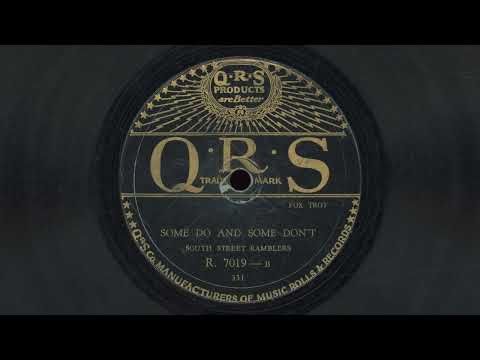
  • “Some Do and Some Don’t” – South Street Ramblers (1929)

    “Some Do and Some Don’t” – South Street Ramblers (1929)

    This record is the object of some discussion in the collecting world, as some copies exist with two songs from Gennett 6552 by the State Street Ramblers – and other copies have the same two songs recorded by the Clarence Williams small combo calling itself the Barrel House Five Orchestra and originally released as Paramount 12875.

    This copy is the Clarence Williams band – playing a wonderfully chill little tune called “Some Do and Some Don’t”. The band feels lightheaded and playful – and at 2:19 we hear the classic exhortation from an unidentified band member to bandleader Williams as he takes a solo: “Aw, play that thing, boy!”

    0:00 Intro – ensemble
    0:31 Alto sax solo (Arville Harris)
    1:02 Cornet solo (Ed Allen)
    1:33 Alto sax solo (Arville Harris)
    2:04 Piano solo (Clarence Williams)
    2:36 Outro – ensemble

    Recorded in Long Island City, New York in January 1929.
    Released as QRS 7019.

    Credits
    Arville Harris – clarinet, alto saxophone
    Ed Allen – cornet
    Clarence Williams – piano
    Floyd Casey – washboard

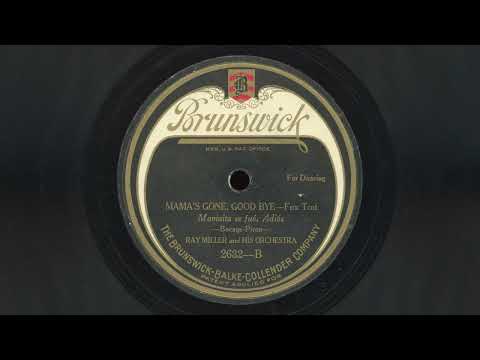
  • “Mama’s Gone, Good Bye” – Ray Miller and his Orchestra (1924)

    “Mama’s Gone, Good Bye” – Ray Miller and his Orchestra (1924)

    “The Ray Miller band was already well known when it appeared [at the Beaux Arts Club in Atlantic City] as the biggest attraction of the 1924 season, moving later in the year into New York’s Hippodrome and then the Arcadia Ballroom. Miller’s organization of thirteen men, in addition to himself, was larger than most bands of that date, and included such stars as Frankie Trumbauer and Miff Mole.” [1]

    In this recording of “Mama’s Gone, Goodbye” from shortly after Mole had joined the band, we can excellent performances and ensemble playing – including a duet segment that author Richard Sudhalter writes “presages the saxophonist’s forthcoming ‘chase’ choruses with Bix.”

    Recorded in New York City on June 3, 1924.
    Released as Brunswick 2632 in August, 1924.

    Credits
    Ray Miller – director
    Charles Rocco, Roy Johnston – trumpet
    Miff Mole, Andy Sindelar – trombone
    Frank Trumbauer – C melody saxophone
    Bernard Daly, Andy Sannella – clarinet, alto sax
    Don Yates – violin
    Harry Perrella, Tom Satterfield – piano
    Frank di Prima – banjo
    Unknown Artist – tuba

    Sources:
    1. The Wonderful Era of the Great Dance Bands, Leo Walker
    2. Jazz and Ragtime Records (1897-1942), 6th Ed, Brian Rust
    3. Lost Chords, Richard Sudhalter

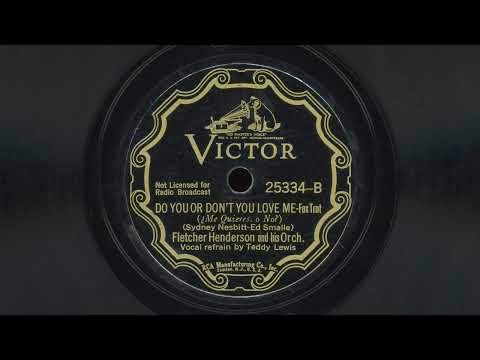
  • “Do You Or Don’t You Love Me” – Fletcher Henderson and his Orchestra (1936)

    “Do You Or Don’t You Love Me” – Fletcher Henderson and his Orchestra (1936)

    In May of 1936 the hugely popular Henderson band – fresh off their national hit “Christopher Columbus” a few weeks earlier – began another contract at the Grand Terrace in Chicago with a new bass player – a 17-year-old named Israel Crosby. They had also added Jerome Pasquall on sax.

    Metronome wrote: “His first Sunday night at the Terrace was the biggest they have had in a long time.” His performances were broadcast nationally on radio stations across the country.

    Here we hear a lighter – but no less swingin’ – number with vocals by Teddy Lewis – a Chicago singer who joined the band that April. Teddy can be seen with the band in a famous photo taken at this time featuring Fletcher in a white suit sitting at a piano while the band is gathered round.

    At this time, according to John Hammond, Grand Terrace Director Ed Fox apparently chose Fletcher’s tunes and vocalists. Later that year, poor Teddy Lewis would be fired by Ed Fox “in an abusive tirade before a large group of onlookers.” Consequently, this is the only Henderson record he appears on. You deserved better, Teddy.

    Following Teddy’s vocals, Chu Berry and Roy Eldridge each take solos – with Eldridge’s the more daring of the two, giving this sweet tune a bit of a bite.

    0:00 Intro
    0:58 Vocals (Teddy Lewis)
    1:48 Tenor sax solo (Chu Berry)
    2:12 Trumpet solo (Roy Eldridge)
    2:36 Outro

    Recorded in Chicago, Illinois on May 23, 1936.
    Released as Victor 25334

    Credits
    Teddy Lewis – vocals
    Fletcher Henderson – piano, director
    Roy Eldridge, Dick Vance, Joe Thomas – trumpet
    Fernando Arbello, Ed Cuffee – trombone
    Buster Bailey, Jerome Pasquall – clarinet, alto sax
    Chu Berry, Elmer Williams – tenor sax
    Horace Henderson – arrangement
    Bob Lessey – guitar
    Israel Crosby – string bass
    Sidney Catlett – drums

    Sources:
    Hendersonia by Walter C. Allen, pp. 337-339, 363

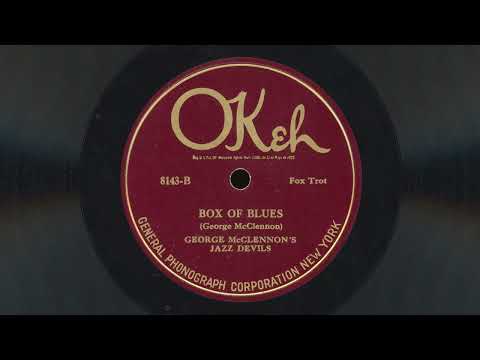
  • “Box of Blues” – George McClennon’s Jazz Devils (1924)

    “Box of Blues” – George McClennon’s Jazz Devils (1924)

    George McClennon was a clarinetist who played in the “gaspipe” style. Clarence Williams, who first met him in 1917, recalled that he could spin on his stomach or backside like a top while playing the clarinet – showmanship that was influenced by his time playing vaudeville theaters in the 1910s.

    McClennon first recorded in 1923 with a small combo called the Harlem Trio. Their “Clarinet Laughing Blues” contained many novelty clarinet “laughing” effects – a style popular at the time with many players (Louis Panico’s “laughing” cornet comes to mind).

    “Box of Blues”, the first track of the first recording session of George McClennon’s Jazz Devils, is performed by a bit of a super group that included Bob Fuller (later to record many small combo tunes as a clarinetist in his own right), Clarence Williams (who should need no introduction), and Tom Morris & Charlie Irvis (who had recorded several records together in 1923 as Thomas Morris Past Jazz Masters) and Buddy Christian (who seems to have played with everyone – Sidney Bechet, Buster Bailey, Bubber Miley, Louis Armstrong, Bessie Smith… the list goes on!).

    The tune’s a fun romp – with excellent ensemble accompaniment even when one instrument is taking the lead. It’s a treat to hear Bob Fuller on alto sax – who fans of his later clarinet work will find interesting – and I’m not well-informed when it comes to wah-wah style trumpet, but Tom Morris’ playing here seems quite ahead of its time.

    0:00 Intro
    0:35 Trombone solo (Charlie Irvis)
    1:27 Alto sax solo (Bob Fuller)
    1:53 Cornet solo with wah wah effects (Tom Morris)
    2:20 Clarinet solo with laughing effects (George McClennon)

    Recorded in New York City, May 9, 1924.
    Released as Okeh 8143.
    From the collection of Joe Bussard.

    Credits:
    Tom Morris – cornet
    Charlie Irvis – trombone
    George McClennon – clarinet
    Bob Fuller – alto sax
    Clarence Williams – piano
    Buddy Christian – banjo
    Unknown Artist – drums

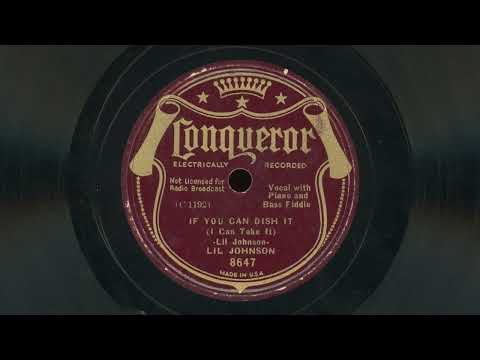
  • “If You Can Dish It (I Can Take It)” – Lil Johnson (1935)

    “If You Can Dish It (I Can Take It)” – Lil Johnson (1935)

    The wonderful Lil Johnson delivers her sly come-on song “If You Can Dish It” to the lively accompaniment of Black Bob on piano and Bill Settles on the “bass fiddle” as it’s referred to on the label.

    You can feel her delightful and commanding stage presence through this record almost 90 years later. During the instrumental break Johnson playfully exhorts her accompanists: shouting “Dish it out – dish it out, Bob!” and “Hit that Fiddle!”

    Recorded in Chicago, Illinois on December 17, 1935.
    Released as Conqueror 8647.

    Credits
    Lil Johnson – vocals
    Bill Settles – string bass
    Black Bob – piano

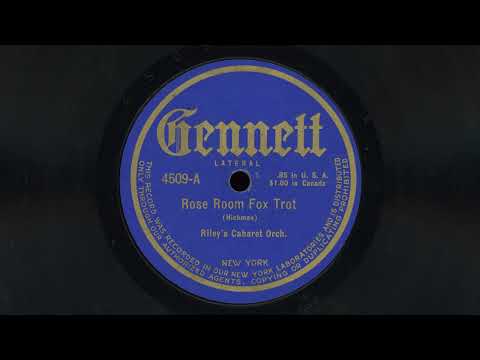
  • “Rose Room” – Riley’s Cabaret Orchestra (1919)

    “Rose Room” – Riley’s Cabaret Orchestra (1919)

    A very early version of the jazz standard “Rose Room” on a very early lateral cut Gennett from the 4500 series that began in 1919.

    The Rose Room was a ballroom in the St. Francis Hotel in San Francisco, California where bandleader Art Hickman’s dance orchestra played. Hickman wrote the tune in 1917 and it was recorded in 1918 by Prince’s Orchestra and Joseph C. Smith and his Orchestra. Hickman himself did not record it with his band until September 1919. When it was released in 1920 on the Columbia label, it was a big seller.

    The 32-bar form of the song and interesting chord changes make it a treat to play – and it’s no wonder it gained wider currency as a standard in the 30s when it got reinterpreted by Duke Ellington and Charlie Christian (playing with the Benny Goodman Sextet).

    Riley’s Cabaret Orchestra was a New York-based dance band about which not much is known. By my count, they were the third to record this tune.

    Recorded in New York City in January 1919.
    Released as Gennett 4509 in April 1919.

    Credits:
    Unknown Artists – trumpet, trombone, alto saxophone, violin, piano, banjo, trums

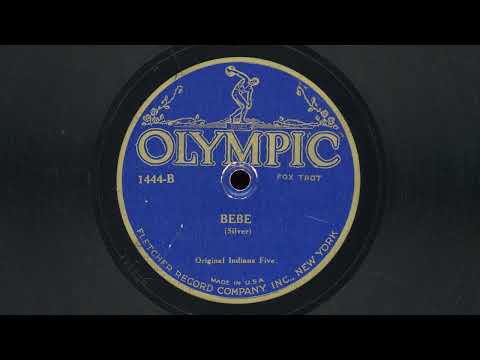
  • “Bebe” – Original Indiana Five (1923)

    “Bebe” – Original Indiana Five (1923)

    An early iteration of the Original Indiana Five on the Olympic label featuring the Johnny Sylvester lineup.

    OI5 formed in 1920 but did not record until 1923. The original lineup had featured young clarinetist Jimmy Lytell, who left the group in late 1921 to join the Original Dixieland Jazz Band and was also a member of the Original Memphis Five.

    After a rousing intro, the band settles into the melodic head, where the ensemble playing is quite nice and represents the most interesting performances throughout the record. At 1:06, we do hear a solo from what sounds to me like an alto sax while Tony Colucci’s banjo accompanies – but improvisation is minimal and the lines stick closely to the melody. At 2:02 a similarly straightforward melodic solo is heard from trombonist Vincent Grande.

    In 1925 Johnny Sylvester left the band and the remaining OI5 members went on to record many excellent titles over the next four years.

    The Olympic label was founded by musician John Fletcher in January of 1921. Sales were not good, however, and by the end of the year, the company went into receivership. The assets went up for auction – and were purchased by Fletcher himself (and two partners), who founded the Fletcher Record Company in 1922, and by the end of that year, Olympic records were again being pressed, recording jazz artists such as Fletcher Henderson, Bennie Krueger, Original Georgia Five, and OI5. The label struggled to attract buyers, and by the end of 1923 went bankrupt. The label was later revived for a brief period in Chicago.

    Recorded in Long Island City circa May of 1923.
    Released as Olympic 1444. Also issued as Majestic 1444 and Broadway 11282, Puritan 11282, and Triangle 11282 (as the Majestic Dance Orchestra).

    Credits:
    Newman Fier – piano, director
    Johnny Sylvester – trumpet
    Vincent Grande – trombone
    Johnny Costello – clarinet, alto sax
    Tony Colucci (?) – banjo
    Tom Morton – drums

    More on Olympic label:
    https://adp.library.ucsb.edu/pdfs/Olympic-Discography.pdf